Press Release

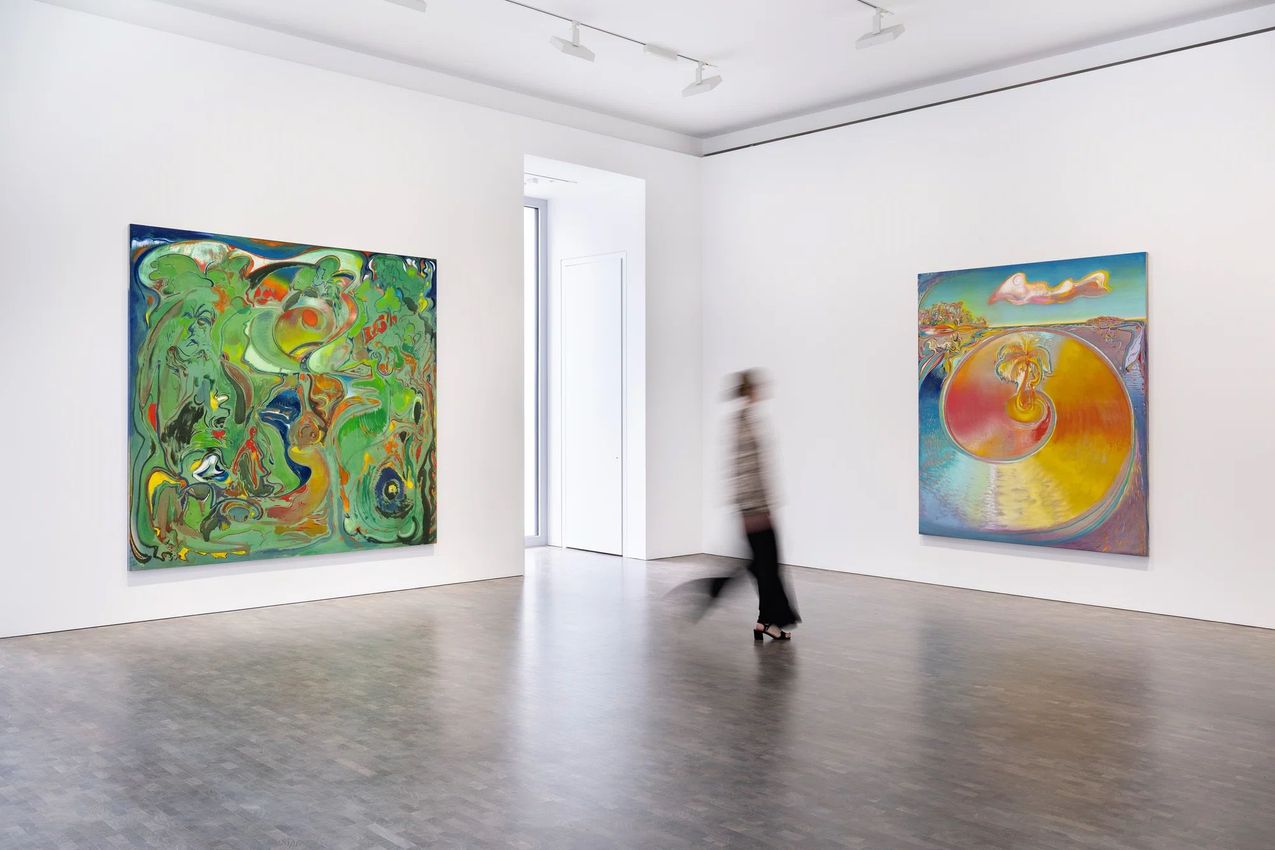
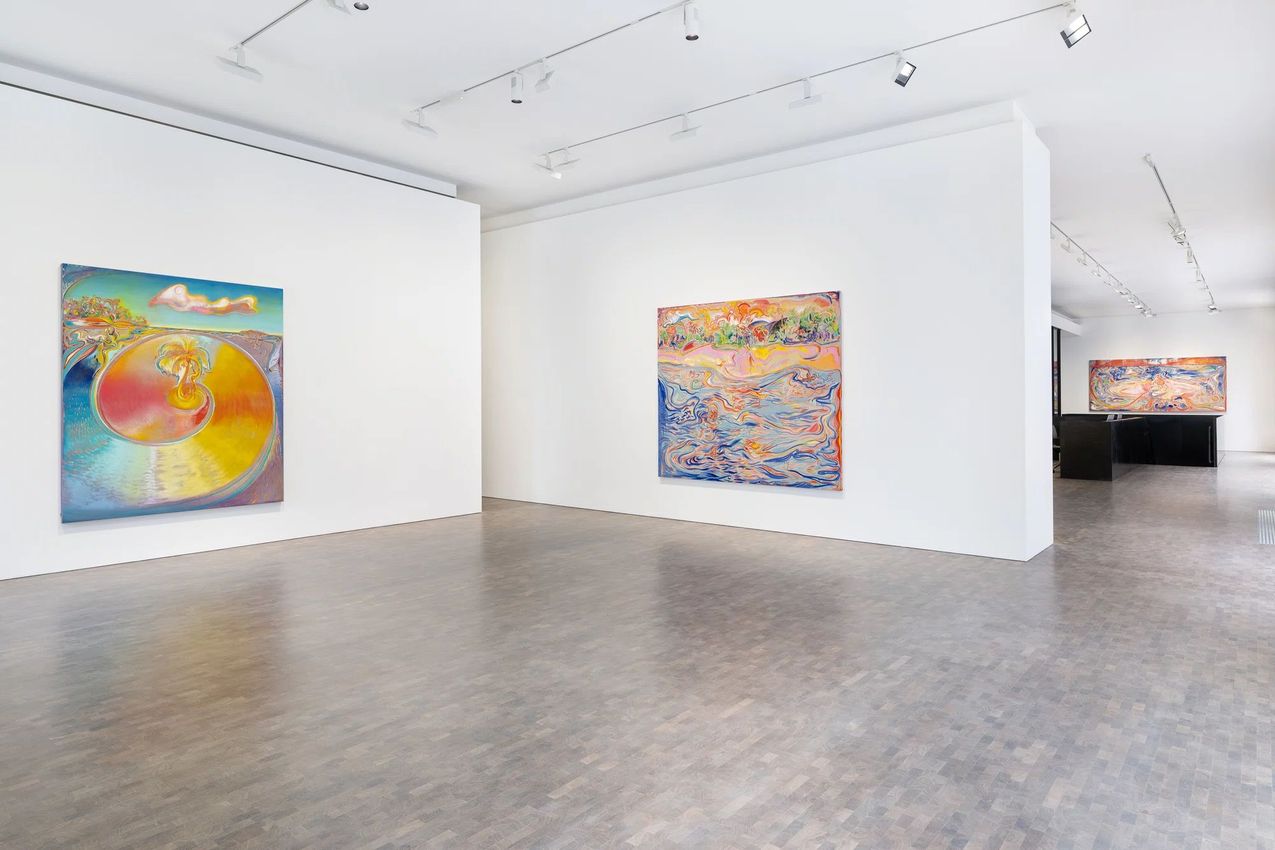
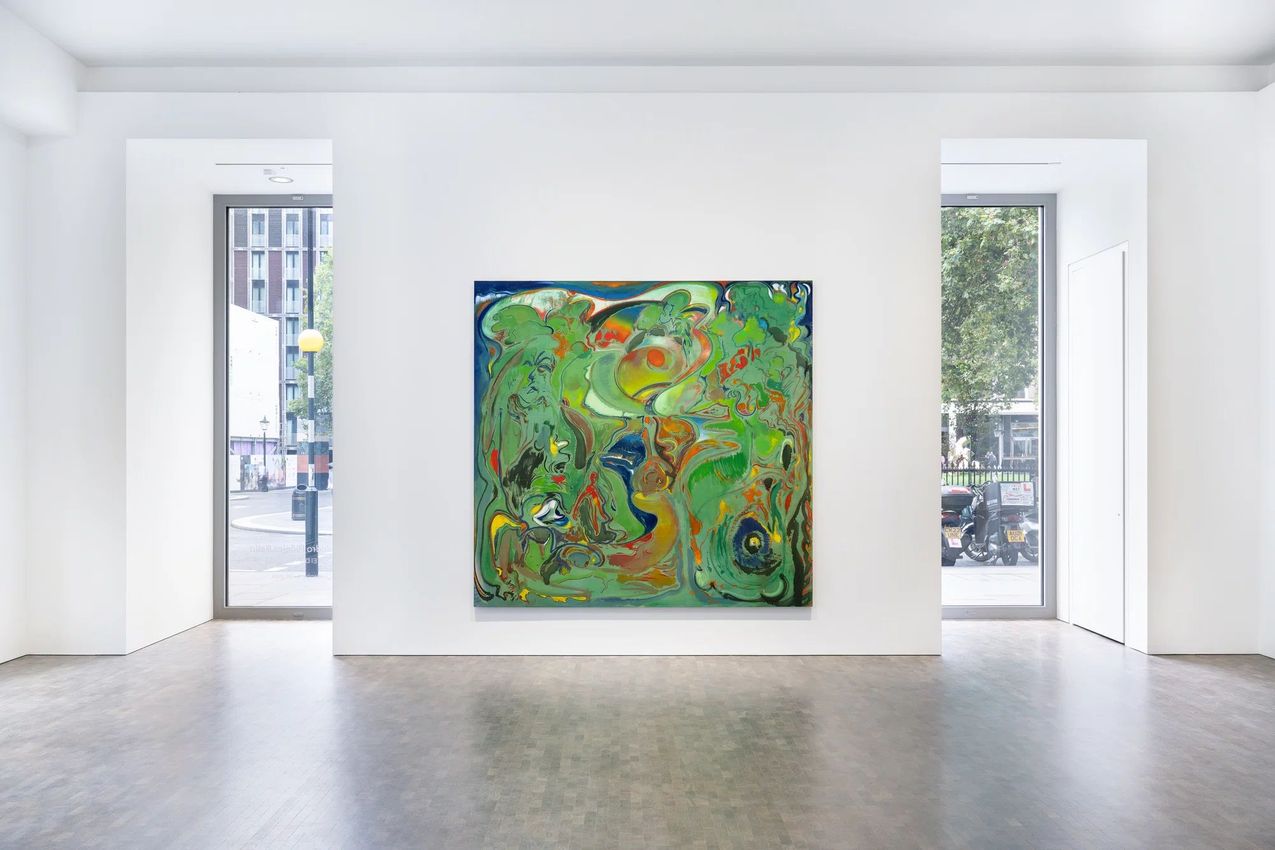
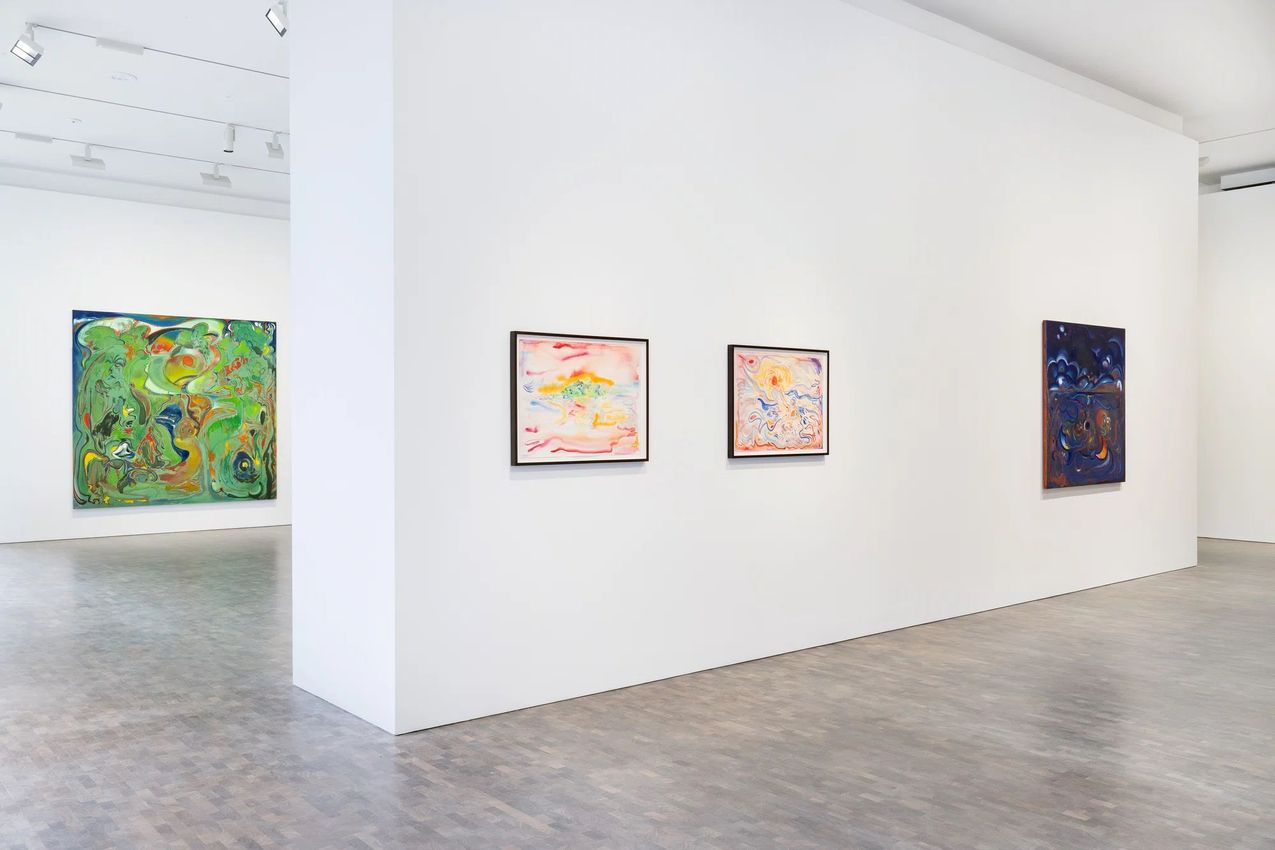
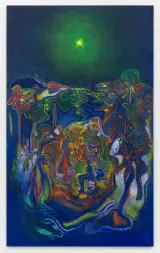
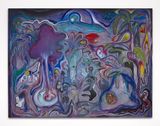
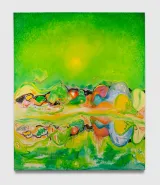
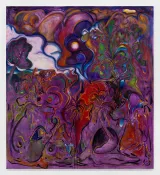
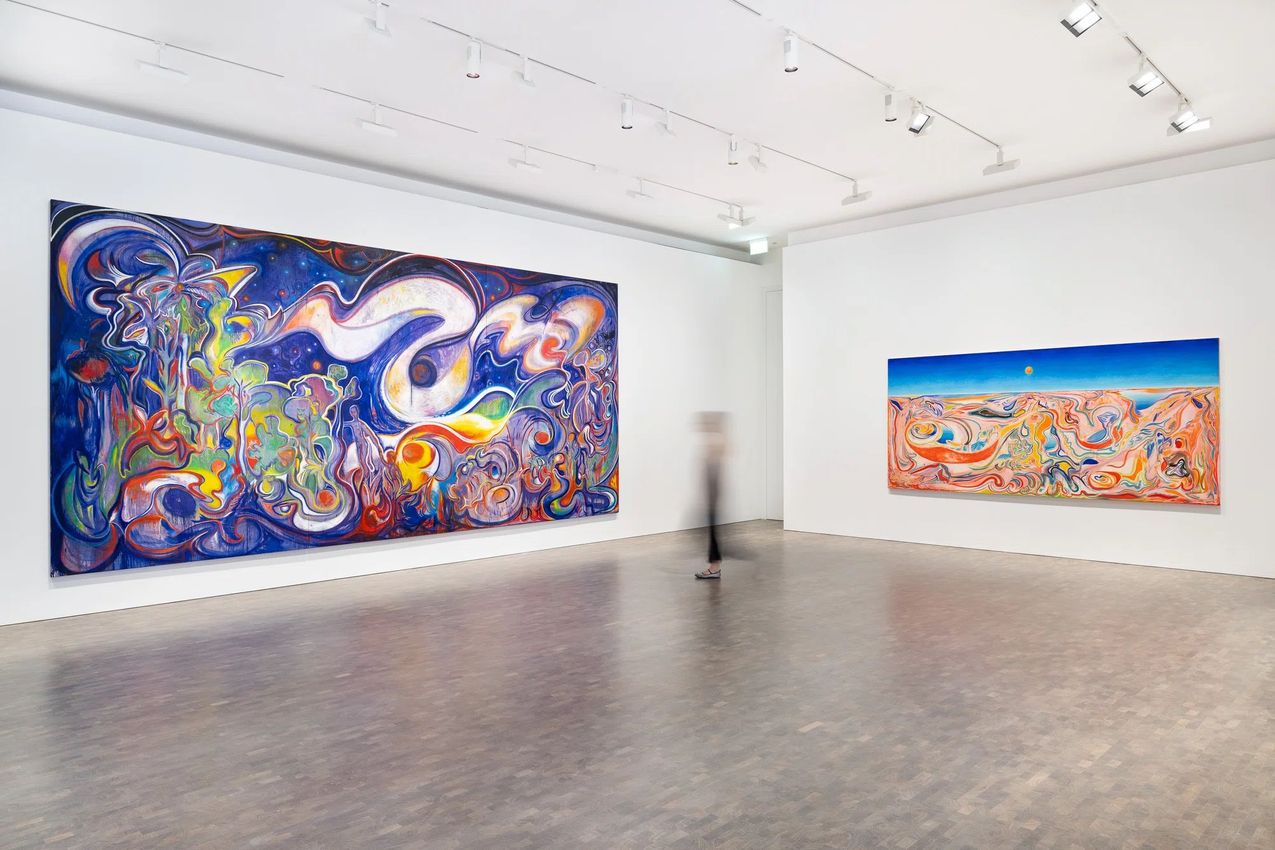
Titled Entre El Día Y La Noche (Between Day and Night), Piñeiro Bello’s exhibition will feature new paintings and works on paper that symbolically and formally explore cyclical journeys through time, and within the self. Alejandro Piñeiro Bello paints the sociocultural mystic splendor of Caribbean culture with a focus Cuba and the surrounding island nations’ identities and histories. Using traditional materials, such as oil on raw linen or burlap, he creates striking dialogues between the deep beige of the canvas and an iridescent palette of jade greens, oranges, purples, and teals. Chromatic interplay in Piñeiro Bello’s work fortifies essential compositional structures, which often appear to revolve around an unseen center point. In these images, his fluidly handled paint forms endless landscapes that travel from dreamlike figuration to pure abstraction. Drawing inspiration from dreams and memories, Piñeiro Bello’s paintings describe fleeting, timeless feeling.

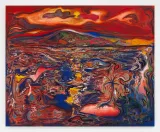
Taking their inspiration from the atmospheric and emotional changes throughout a Cuban night and day, the scale of works in Entre El Día Y La Noche represent some of the artist’s most ambitious to date. El Misterio De La Noche (2024), the largest painting featured in the exhibition, spans over six meters. Here, Piñeiro Bello employs the structural qualities of classical Western art history while upending expectations of the landscape through his alchemical use of colour and non-linear storytelling.

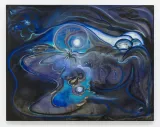
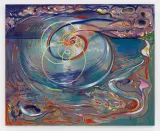
Spirals, shells, and whorls abound throughout the works in Entre El Día Y La Noche, reflecting Piñeiro Bello’s interest in Transcendentalist and Buddhist belief systems. The spiral that dominates three-quarters of the painting La Espiral Luminosa (2024) draws viewers into the artist’s unique painterly vision. Sweeping from deep aquatic shades at its outer edge into increasingly flame-like hues toward its centre, it is unclear if this depicts the cross-section of a deep ocean or if Piñeiro Bello has lifted the surface of the water to reveal the reflection of a blazing midday sun. Like its dappled sea blues—created with an economical use of bright, light brushstrokes—the painting quivers between its marine depiction and a field of colourful abstraction.

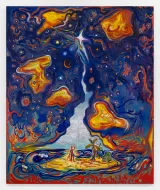
Nature is dominant in Piñeiro Bello’s worlds. Figures, when they appear, are small, loosely rendered, and nestled within the dynamic landscapes that surround them. Formally echoing the arcs of the waves, wind, and flora that shape the compositions, these bodies appear to emerge from—and of—the very brushstrokes that describe their setting. Citing Antonio Gaudi, Piñeiro Bello reminds us that “there are no straight lines or sharp corners in nature.” This impression of interconnectedness is present in Nacimiento (2023-24), whose central figure materialises from a rose-blushed, lotus-like bowl. Recalling Botticelli’s The Birth of Venus (c.1484-1486), Piñeiro Bello’s painting is similarly infused with an environmental vitality that raises the natural world to the status of personhood.

Reflecting the island’s rich intercultural heritage, his practice is equally informed by the fiction, poetry, and music of his birthplace. Just as in the literary genre of lo real maravilloso (the marvelous real), these paintings depict the fantastic through an amplification of perceived reality. Inhered in the layers of Piñeiro Bello’s compositions lie the metamorphic, expressive juxtapositions of Latin America.

In the lower ground floor gallery, Piñeiro Bello will display a selection of his works on paper and sketches alongside books and poems that have inspired his practice. Employing watercolour, gouache, and ink, the artist’s works on paper respond to their medium: the ivory paper background, which Piñeiro Bello keeps partially exposed, lends a backdrop of luminosity to the deliberate pen-marked crosshatching. Included reference texts are the 1943 poem “La isla en peso” by Virgilio Piñera, the 1966 novel Paradiso by José Lezama Lima, and Alejo Carpentier’s 1949 novel El reino de este mundo—the text that introduced lo real maravilloso to the world of literature. Amongst these, Piñeiro Bello has placed a childhood photograph of himself, taken in Havana. With this gesture, the artist affirms the awareness of selfhood and origin that saturates his paintings.

Read More

Installation Views

About the Artist

Cuban artist Alejandro Piñeiro Bello’s colourful abstract paintings capture the vibrancy of his homeland and the Caribbean diaspora. His works celebrate Cuba’s nature and life, defiantly reacting against the repression of the island’s population and in 2024 he became the first Cuban contemporary artist to be represented by Pace Gallery.

View Artist Profile

Also Exhibiting at Pace Gallery

Address
5 Hanover Square
London
United Kingdom
Opening Hours
Tuesday – Saturday
9:30am – 6pm
(1)
London 5 Hanover Square
Pace Gallery
5 Hanover Square, London, United Kingdom
+44 020 3206 7600
http://pacegallery.com

Opening hours
Tuesday – Saturday
9:30am – 6pm
The art world in focus