‘Everything in life is a drawing, if you want. Drawing is quite essential to knowing the self. Art that survives from one generation to the next is the art that actually carries something that tells society about self.’-Richard Tuttle
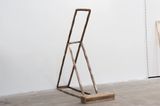
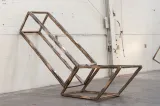
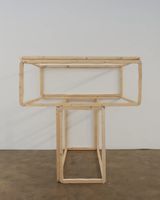
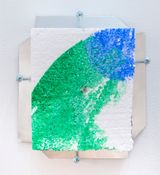
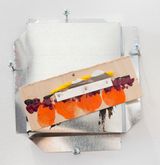
New York-Pace Gallery is pleased to present in its newly opened headquarters in New York an exhibition of seminal works by pioneering conceptual and Postminimalist artist Richard Tuttle. The exhibition is split into two bodies of work from the early and late 1970s-a decade marked by the birth of many new art forms, ranging from process-based art to land art and institutional critique. Always a maverick, Tuttle was at the forefront of these experimental practices. His works of this period defied categorisation and went against the monumentalising aesthetic and austere industrial precision of much art at the time-most notably Minimalism-through their modest scale, emphasis on the artist’s idiosyncratic touch, and embrace of everyday, humble materials. Bringing together his series of ninety-four ‘basis’ drawings and the sculptural piece 8th Wood Slat (1974), this exhibition offers a unique glimpse into the formative years of Tuttle’s groundbreaking creative process, which elevated the perception of drawing to that of painting and sculpture. Presented together for the first time, these elegantly elemental works operate as visual poems that convey the artist’s open mind and freshness of vision in the 1970s. Richard Tuttle basis, 70s Drawings will be on view from October 25 through December 21, 2019.
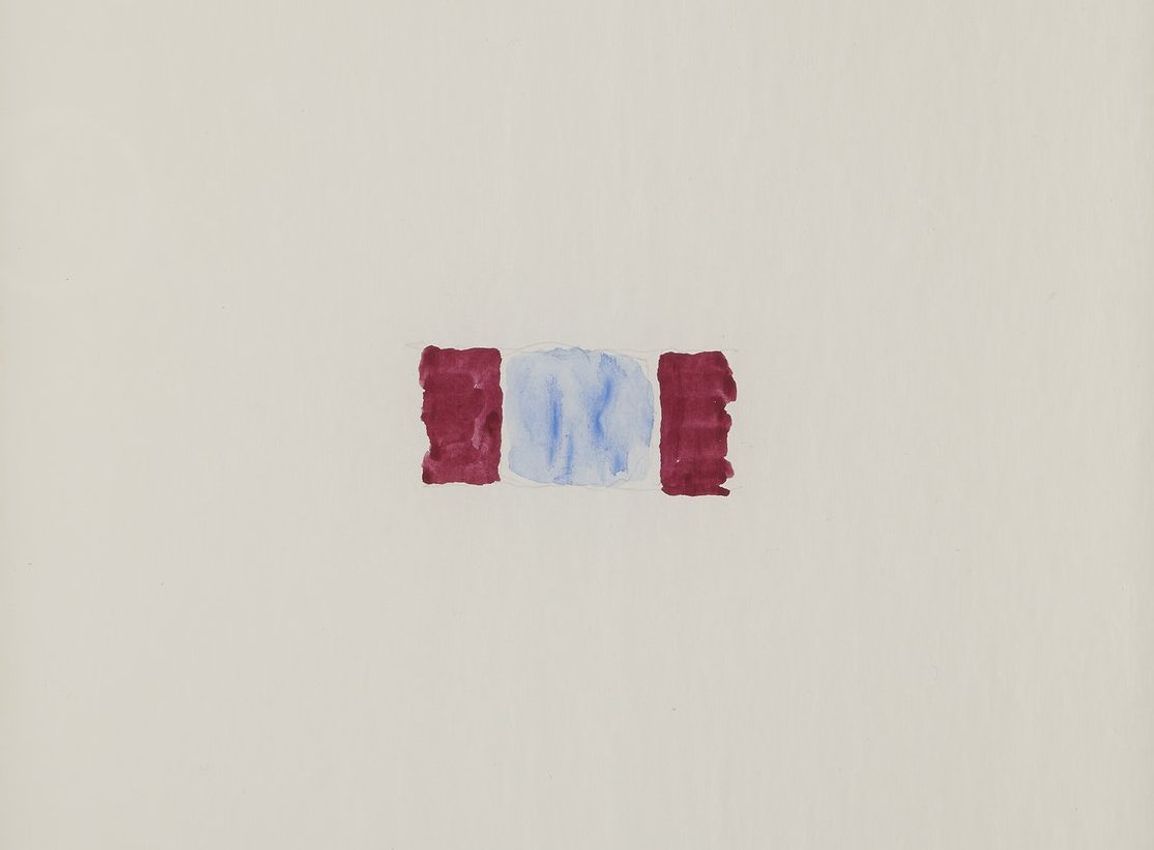
As evinced by their vivid colours, intimate scale, and sustained experimentation with line, the works in Richard Tuttle basis, 70s Drawings are akin in style to the artist’s most renowned pieces. Like all of Tuttle’s oeuvre, they seek to challenge our preconceived notions on the nature of art and how we experience it. ‘In some sense, an artist is...a true philosopher,’ Tuttle explains. ‘You can go to the limit of any and all disciplines.’ His two sets of drawings-forty-one from the early ‘70s and fifty-three from the late ‘70s-articulate a visual vocabulary that would form the basis of much of his later work of the ‘80s, including the series ‘Loose Leaf Notebook Drawings,’ ‘India Work,’ and ‘Hong Kong Set.’ They are part of Tuttle’s then-controversial reinvention of the medium: drawing as a performative act occurring within the gallery space and through the use of materials deemed extraneous to the arts.
Created soon after the pinnacle of Minimalism, which disrupted the strict distinction between painting and sculpture, the works in this exhibition similarly break down the boundaries between drawing and sculpture. The series achieves this by combining bright watercolours with collage and assemblage, producing a pronounced tactile quality. The artist’s carefully designed shadowbox frames, at first in ash wood and subsequently overlaid in gold leaf, extend this breakdown of boundaries to the work’s presentation and further blur the line separating the work of art from the realm of everyday objects.
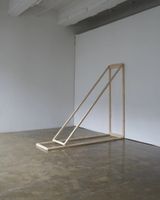
In a performative act that eroded the medium specificity and autonomy of sculpture, Tuttle himself installed 8th Wood Slat-the last of eight thin, plywood trapezoids the artist made in 1974-in this exhibition. The wall-bound, low-relief brings the viewer’s attention to the marginal and liminal spaces of the gallery specifically, the meeting point of the wall and the floor-by acting as both a dividing marker and hinge between these spaces. In this manner, Tuttle invites audiences to reconsider the relationship between their bodies and the gallery space, and between their routinised trajectories through architecture. The artist’s expressed hope is that this exhibition in Pace’s new galleries will enable the viewer to ‘learn something new about themselves, art, and the art world.’
Richard Tuttle basis, 70s Drawings is accompanied by a fully illustrated catalogue. It features the artist’s poems, as well as an essay in the form of letters by Art Historian Kent Mitchell Minturn, professor at the Institute of Fine Arts at New York University. Additionally, Richard Tuttle: A Fair Sampling. Collected Writings 1965-2018, a 500-page book spanning the artist’s prolific career, will be released by German publisher Buchhandlung Walther König in 2020.
Richard Tuttle has revolutionised the landscape of contemporary art, challenging rules and notions of genre and media. His work exceeds rational determinations, sensitising viewers to perception and the unconscious, and engages aspects of painting, drawing, sculpture, bookmaking, printmaking, and installation.
Exposed to the Pop movement and the beginnings of Minimalism as a young artist, Tuttle began to explore the possibilities of material and form freed from historical allusion and precedent. Early investigations into the merging of painting and sculpture are evident in his ‘Constructed’ paintings which exist in a liminal space between mediums. For Tuttle, the 1980s and 1990s marked wider experimentation with material and a move toward in the-round constructions. He began incorporating the frame as an element in his compositions, collapsing the boundaries between the artwork and its surrounding space.
Richard Tuttle (b. 1941, Rahway, New Jersey) is one of the most significant artists working today. Since the mid-1960s, he has created an extraordinarily varied body of work that eludes historical or stylistic categorization. Tuttle’s work exists in the space between painting, sculpture, poetry, assemblage, and drawing. He draws beauty out of humble materials, reflecting the fragility of the world in his poetic works. Without a specific reference point, his investigations of line, volume, colour, texture, shape, and form are imbued with a sense of spirituality and informed by a deep intellectual curiosity. Language, spatial relationship, and scale are also central concerns for the artist, who maintains an acute awareness for the viewer’s aesthetic experience. Tuttle was the Artist in Residence at the Getty Research Institute from September 2012–June 2013. The artist lives and works in Mount Desert, Maine; Abiquiu, New Mexico and New York City.


Pace is a global art gallery of and for the future, modeled on a set of core values established during its founding in 1960 and designed to serve its artists, estates, and collectors in a way that is focused, responsive, and aligned with its enduring mission.

A respected voice in contemporary art discourse.
Focusing on ambitious storytelling and insightful art-world commentary. Ocula Magazine publishes in-depth interviews, critical essays and timely analysis on the artists, exhibitions and ideas driving the global art world.
Learn more about Ocula Magazine
Showcasing the best of the art world.
Ocula partners with galleries from around the world to highlight their artists, artworks and exhibitions. Gallery membership is by application and invitation, with each member vetted by an independent panel.
Learn more about Ocula Membership

Specialises in the sale of major artworks.
Led by a team with deep ties to the world’s leading auction houses, galleries and collectors. Ocula’s advisory team offers bespoke services to high-net-worth clients from around the world who are looking to acquire the best of contemporary and modern art.
Learn more about our team and services