Press Release

Pace Gallery is pleased to share details of a forthcoming solo exhibition of the American abstract painter Kenneth Noland.

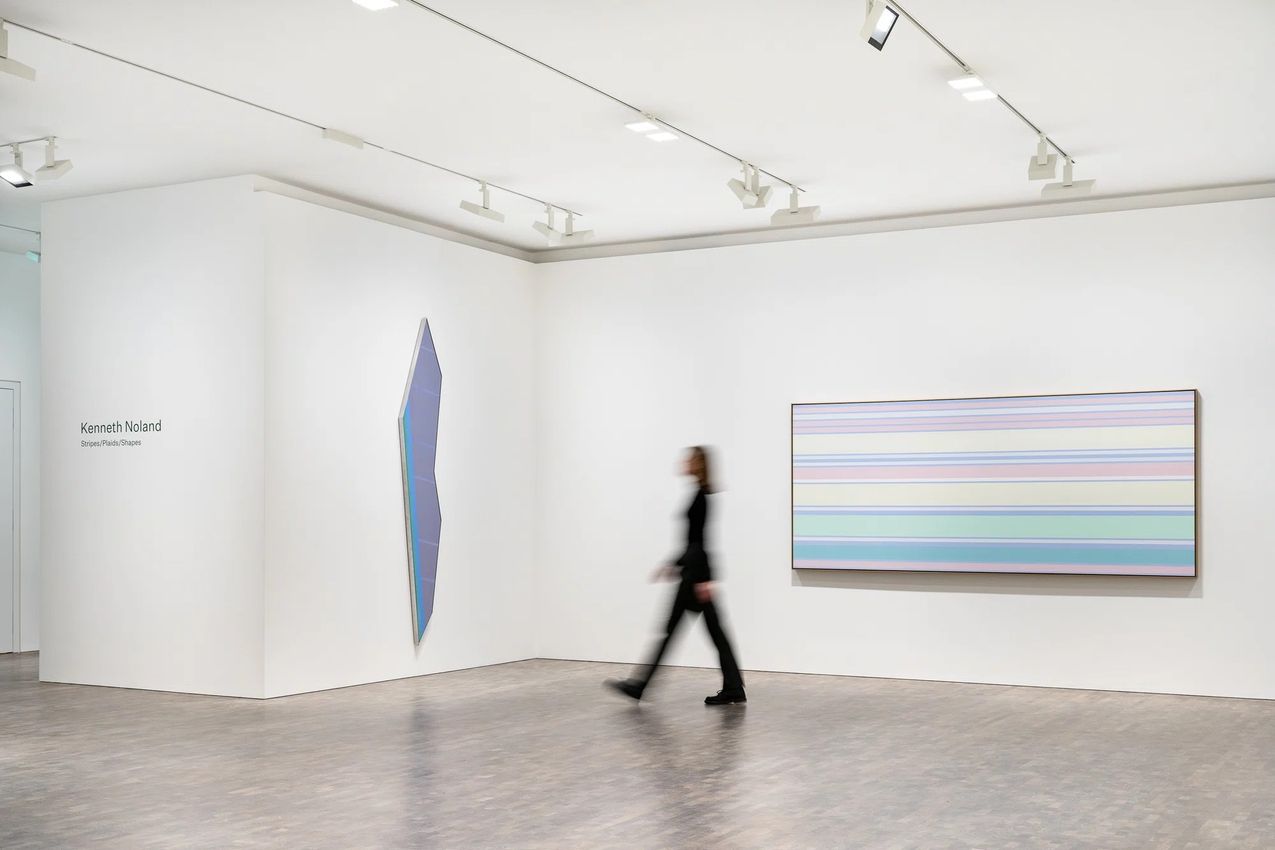
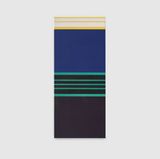
Stripes/Plaids/Shapes, the opening show of 2023, will survey canvases from a significant period in the artist’s remarkable career. Marking Noland’s first solo presentation in London for more than two decades, this exhibition will chart the development of his iconic Stripe paintings of the late 1960s through to his Shape canvases in the early 1980s. A founding member of the Washington Color School–which included figures such as Sam Gilliam, Morris Louis, and Alma Thomas–Noland was instrumental in creating the language of post-war abstraction in the US.

His experimental approach to form, material, and colour gave rise to radical works that redefined the notion of painting. Between 1946 and 1948, Noland studied at the Black Mountain College in his native North Carolina where he was exposed to the ideas of seminal figures such as Josef Albers and John Cage and developed an early interest in the expressive potential of colour and chance. His mature style would come to render colour a resonant force and built a visual language that included Circles, Chevrons, as well as the series on view in this current exhibition.

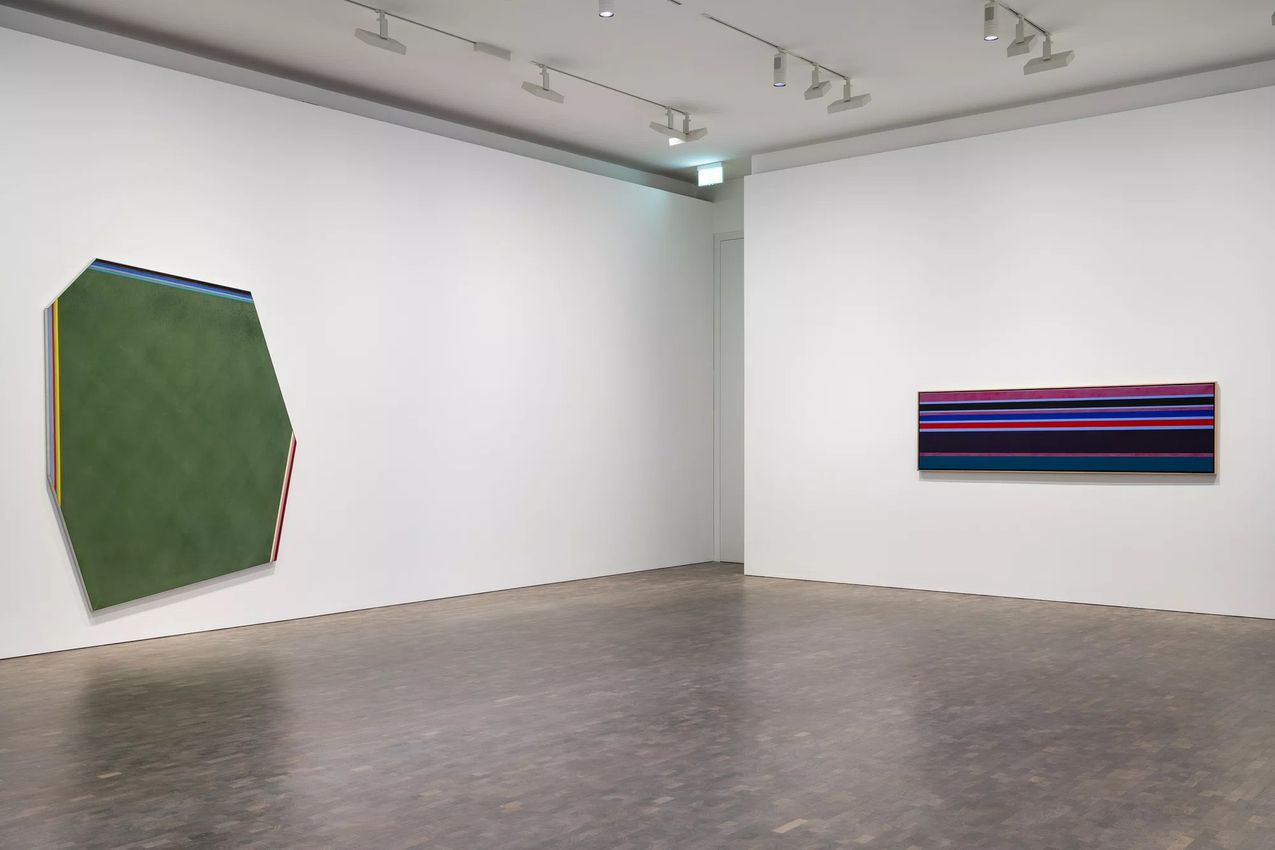
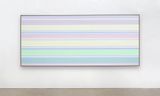
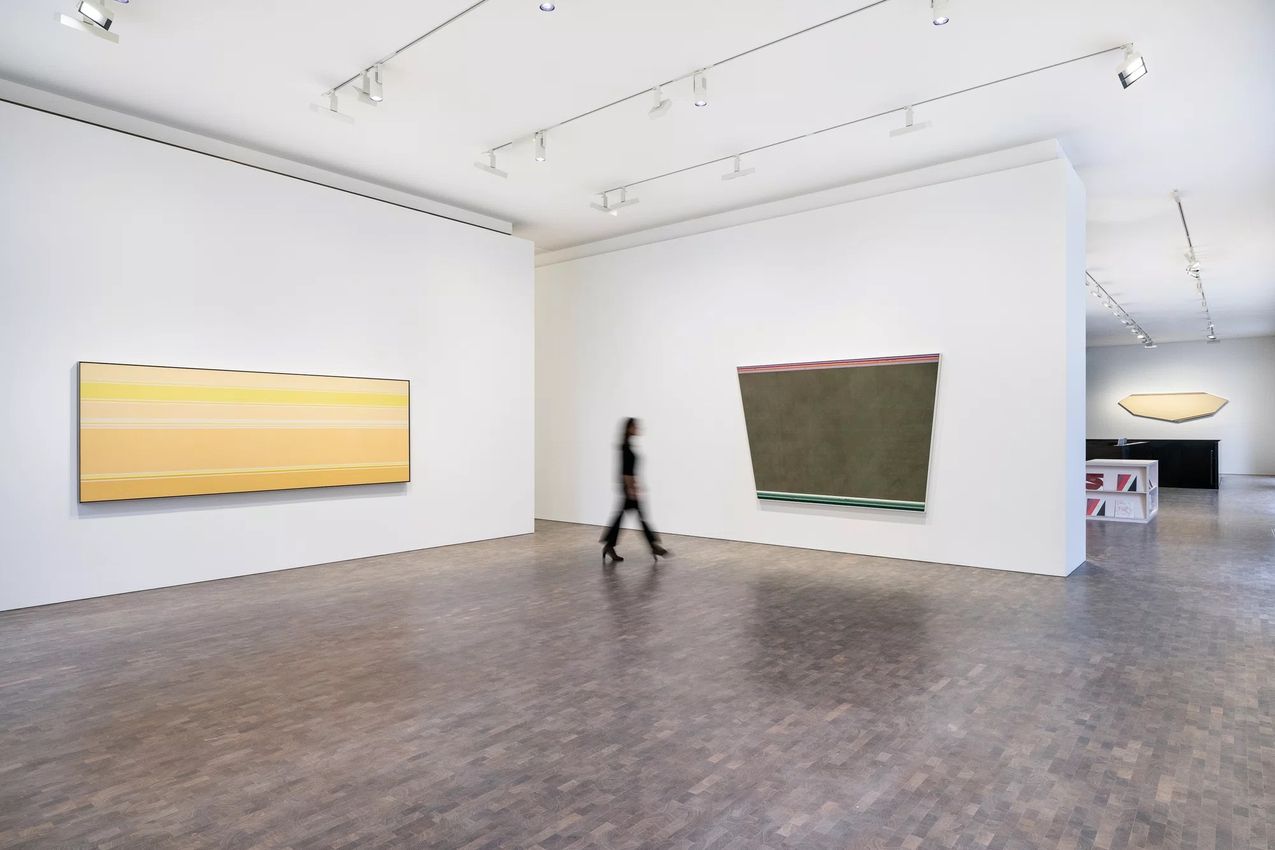
Kenneth Noland: Stripes/Plaids/Shapes begins with early examples of the artist’s striped works from the late 1960s, such as Early Flight (1969) or Via Mojave (1968), both of which stretch horizontally across several meters to expand beyond the viewer’s peripheral vision and evoke the feel of a vast, enveloping landscape. Noland would use an array of techniques to apply the bands of colour in specific proportions, including staining the raw canvas or using a traditional paint roller, to create textural variation. In choosing acrylic paint, which cannot be reworked as easily as oil, Noland embraced the risk factor, quipping that he was a ‘one-shot painter’. Regardless of the technique used, Noland’s painting practice intentionally removed traces of the artist’s hand in order to focus attention on the materiality of the works, while also allowing for chance reactions where the bands of paint meet. Following his poured circle paintings of the late 1950s, Noland’s paintings of the 1960s were in radical opposition to the gestural, painterly canvases of Abstract Expressionism which had dominated the American art scene of the mid-20th century.

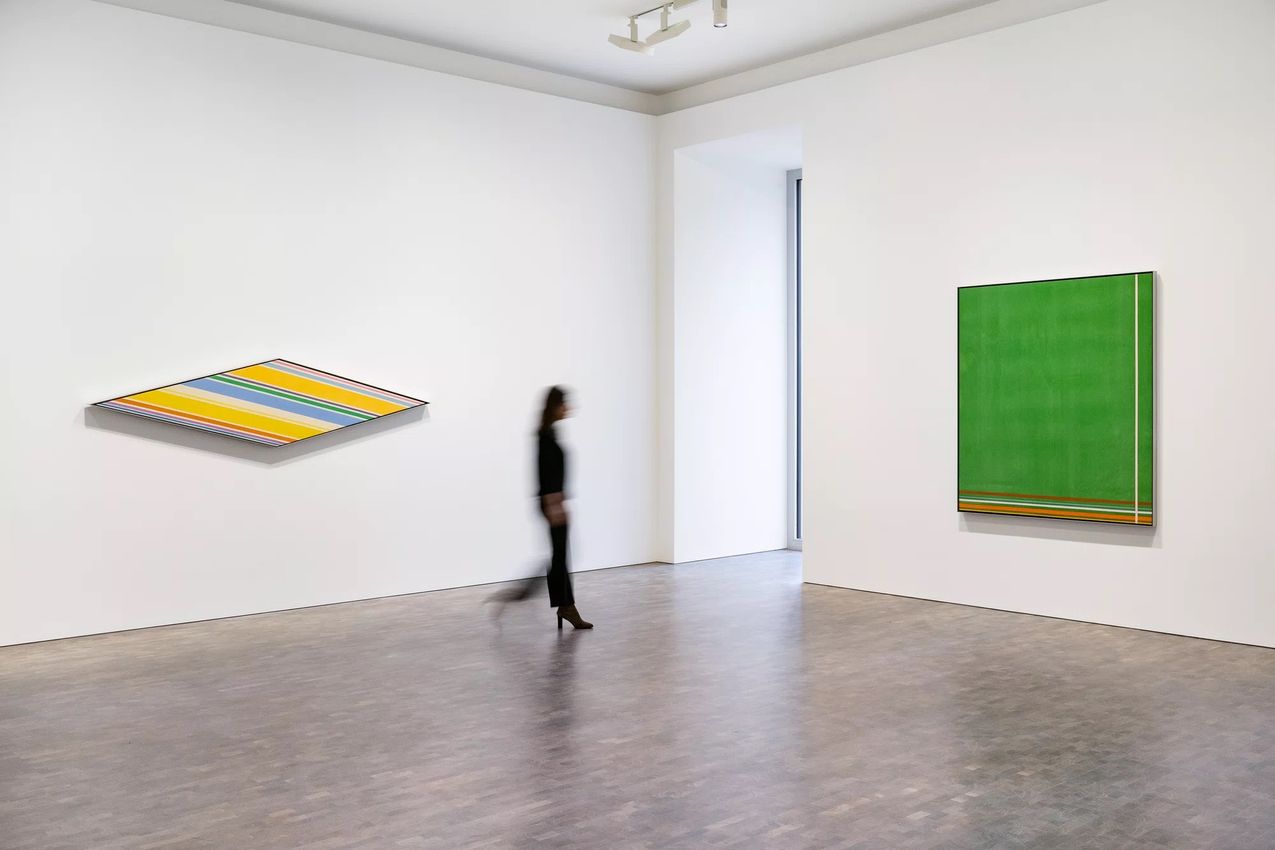
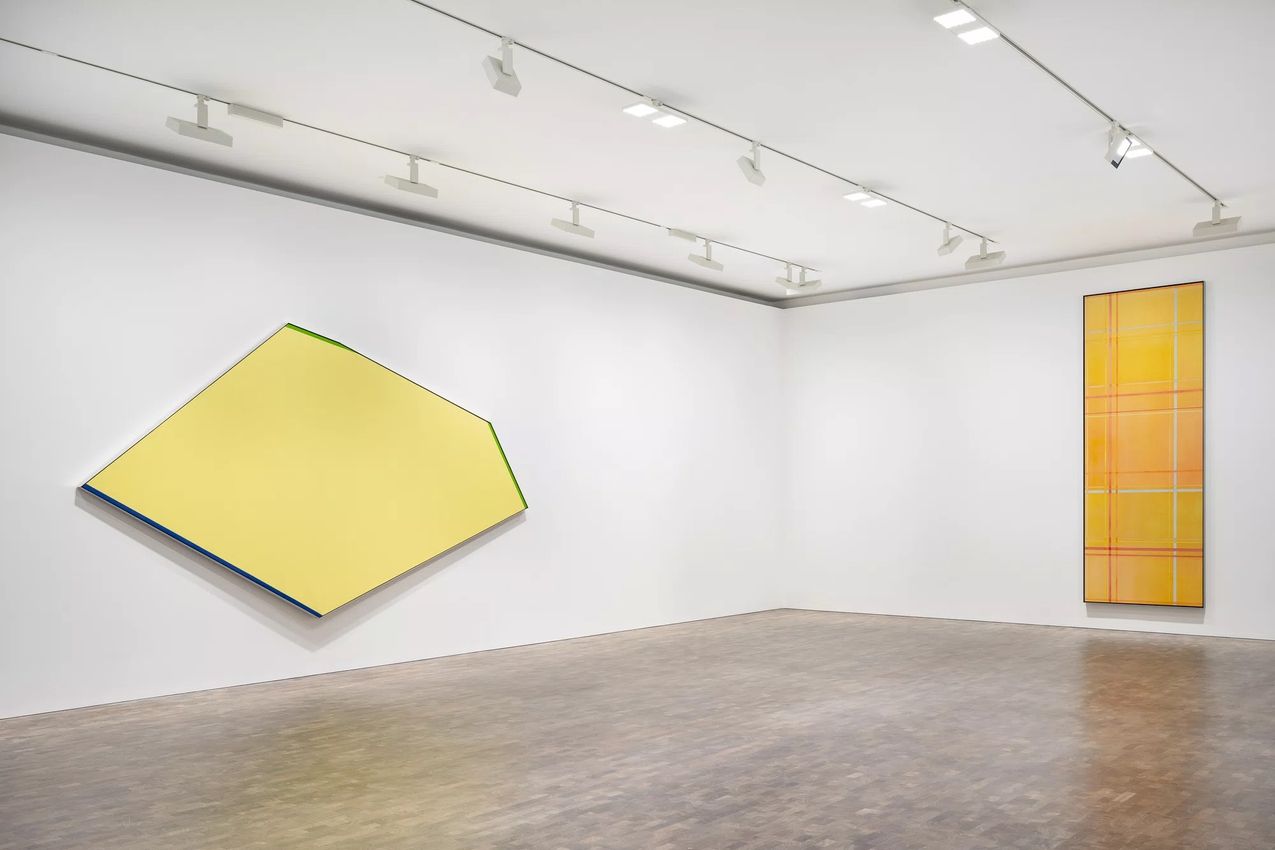
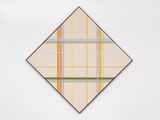
At the turn of the 1970s, Noland began including vertical stripes over his horizontal bands. The resulting works, titled Plaid paintings, draw parallels to the paintings of Piet Mondrian, an early influence on Noland via his Black Mountain teacher Ilya Bolotowsky, a well-documented proponent of De Stijl art theory. However, unlike Mondrian, Noland’s lines retained the soft blur of stained canvas, creating a quasi-alchemical effect as the colours overlap and knit together. In Interface (1973), striking lines of warm yellow, orange, green, red, and sky blue interweave across the diamond shaped canvas, inviting viewers to closely examine the interaction of colour, form, and mark.

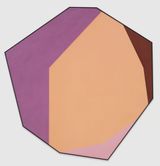
In the ensuing years, Noland continued his experimentation by turning his attention to the canvas support itself. By creating shaped paintings that took unusual, asymmetrical forms, Noland emphasized the objecthood of the painting. In Glean (1977) and Field of Green (1978), the picture plane is stained with earth-toned hues of green while borders of brightly coloured stripes are positioned opposite one another, creating a spatial tension in the composition. These works, with their large expanses of a single colour, have a textural richness resulting from the paint’s interaction with the raw canvas and the artist’s distinct and often uneven application.

Read More

Installation Views

About the Artist

Kenneth Noland (b. 1924, Asheville, North Carolina; d. 2010, Port Clyde, Maine) attended Black Mountain College in the late forties and developed an early interest in the emotional effects of colour and geometric forms. He taught at various art schools including the Institute of Contemporary Art, Washington, D.C., Catholic University, Washington, D.C., Washington Workshop Center of the Arts and Bard College, Annandale-on-Hudson, New York. In 1977 a major traveling retrospective of the artist’s work was presented by the Solomon R. Guggenheim Museum in New York. In response, late art critic of The New York Times Hilton Kramer wrote, ‘An art of this sort places a very heavy burden on the artist’s sensibility for colour, of course—on his ability to come up, again and again, with fresh and striking combinations that both capture and sustain our attention, and provide the requisite pleasures...Mr. Noland is unquestionably a master.’ The first in-depth survey of Noland’s career was written by Kenworth Moffet and published by Abrams in 1977.

View Artist Profile

Also Exhibiting at Pace Gallery

Address
5 Hanover Square
London
United Kingdom
Opening Hours
Tuesday – Saturday
9:30am – 6pm
(1)
London 5 Hanover Square
Pace Gallery
5 Hanover Square, London, United Kingdom
+44 020 3206 7600
http://pacegallery.com

Opening hours
Tuesday – Saturday
9:30am – 6pm
The art world in focus