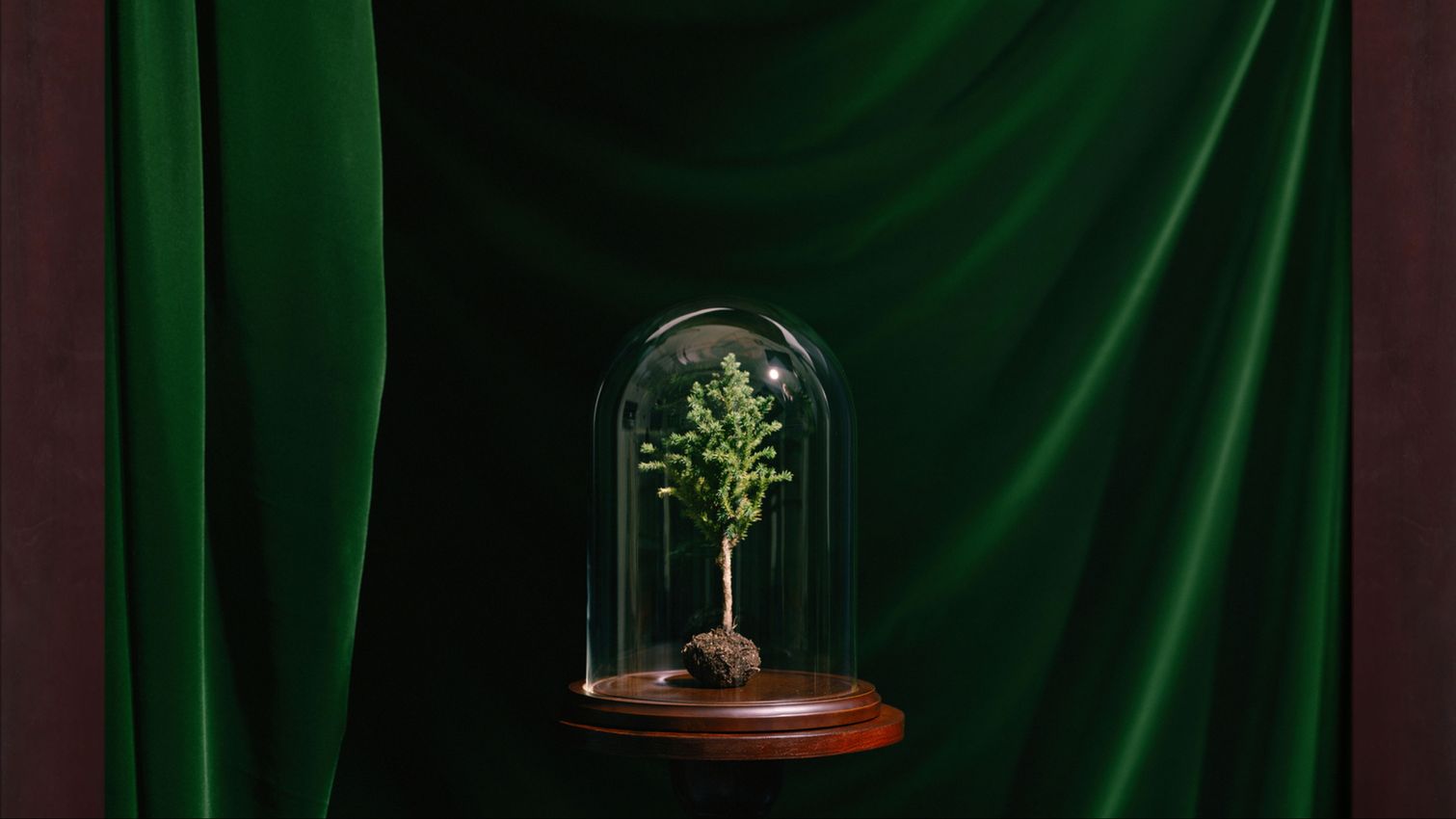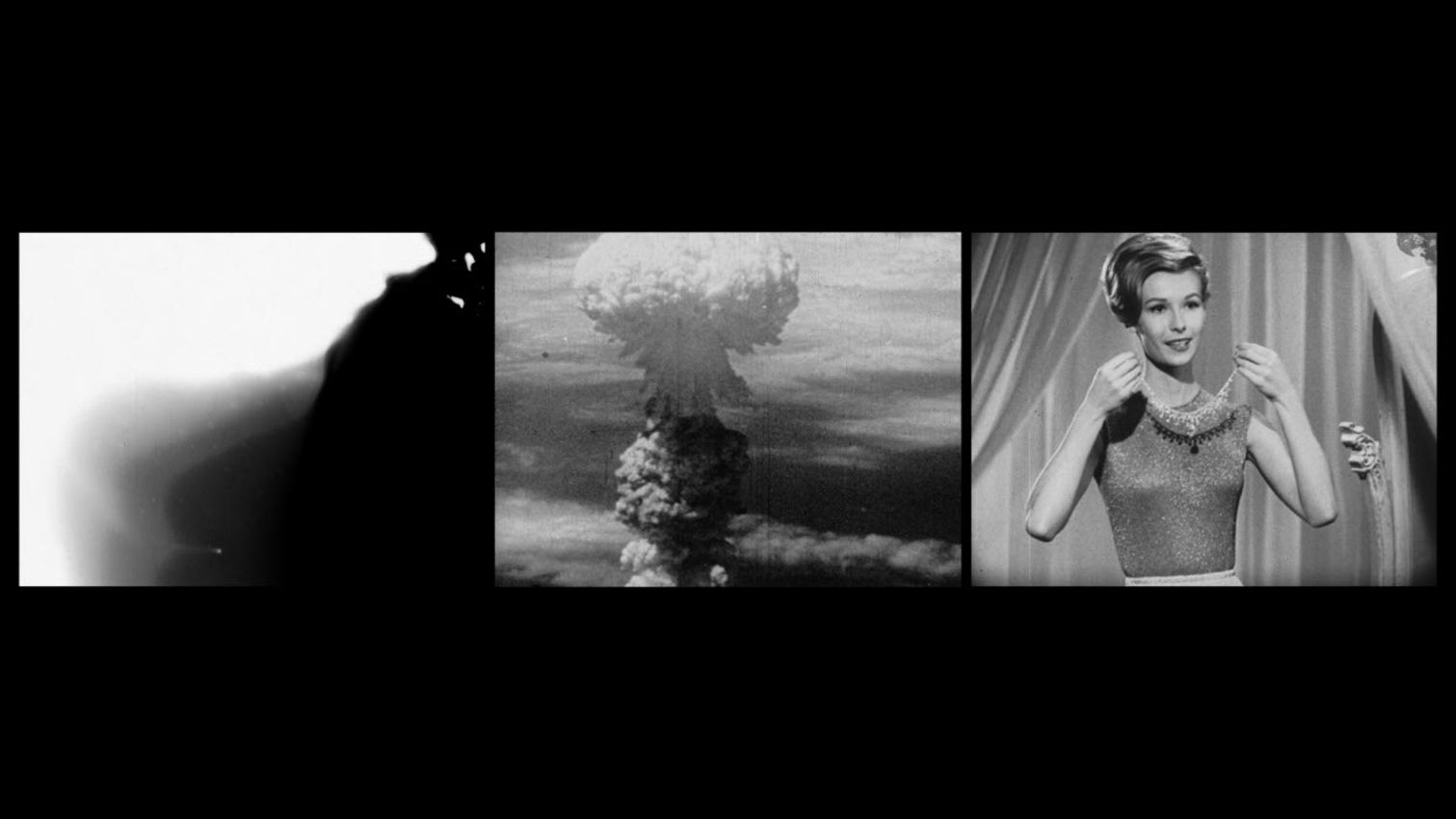
Paula Cooper Gallery will present Bruce Conner’s three-channel film installation THREE SCREEN RAY (2006) at 521 West 21st Street in January 2026. THREE SCREEN RAY is the artist’s re-edited and expanded reworking of the experimental COSMIC RAY (1961), which pioneered techniques of vertical montage and subliminal messaging with 16mm film long before rapid-fire editing pervaded popular culture. This presentation precedes BRUCE CONNER / RECORDING ANGEL, an exhibition of seven Bruce Conner films curated by Douglas Fogle for the Marciano Art Foundation in Los Angeles (February 21 – July 25, 2026).
Conner moved from Kansas to San Francisco in 1957 and quickly became a key member of the city’s countercultural art, music, and film movements. Following his foundational 1958 found footage film A MOVIE, 1961’s COSMIC RAY combined found material with his own footage of Bay Area artist Beth Pewther dancing, painter Joan Brown in costume, and a fireworks display. Meticulously spliced to a live recording of Ray Charles’ hit rhythm and blues song, What’d I Say (1959), the film is an explosive homage to the blind musician. In 1965, Conner reformatted the single projection into a silent, three-screen installation titled EVE-RAY-FOREVER, opening the possibility for mutability and dynamism within his own body of work.
While digitally restoring the 8mm film stock of EVE-RAY-FORVER in the 2000s, Conner discovered the potential of digital editing to expand upon the mechanical and physical properties of celluloid film. In collaboration with editor Michelle Silva, he took a detour away from the restoration and created an entirely new iteration of the original footage in THREE SCREEN RAY. The centerpiece of the three-part installation is COSMIC RAY, flanked by two symmetrical panels with footage that floats in and out of sync. Images excised from television advertisements, cartoons, and war documentation are interwoven with Pewther joyfully dancing in a mesmerizing assault on continuity and conformity, authoritarianism and desire. One of his final films, THREE SCREEN RAY is a summation of Conner’s career-long experimentation with the endless possibility of film.
Following the triumph of THREE SCREEN RAY, Conner revisited and reconstructed multiple of his films from the 1960s, mining his own archive using the methods he had originated with found footage. To Conner, “the work is never finished, period. It’s always changing, through time and how people experience it.”[1]
[1] Bruce Conner in Bruce Conner: The 70s, exh. cat. (Nuremberg: Moderne Kunst Nürnberg, 2011), p. 92.
Bruce Conner was an experimental filmmaker, sculptor, drawer, and collagist whose practice explored different facets of American modernism, from nuclear warfare to consumer culture. He received his BA from the University of Nebraska in 1955 before studying at the Brooklyn Museum Art School for six months on a Max Beckmann Memorial Scholarship. He then transferred to the University of Colorado Boulder, but eventually dropped out and relocated to San Francisco, where he formed the Rat Bastard Protective Association in the late 1950s.


Paula Cooper Gallery, the first art gallery in SoHo, opened in 1968 with an exhibition to benefit the Student Mobilization Committee to End the War in Vietnam. The show included works by Carl Andre, Dan Flavin, Donald Judd, Robert Mangold and Robert Ryman, among others, as well as Sol LeWitt’s first wall drawing.

A respected voice in contemporary art discourse.
Focusing on ambitious storytelling and insightful art-world commentary. Ocula Magazine publishes in-depth interviews, critical essays and timely analysis on the artists, exhibitions and ideas driving the global art world.
Learn more about Ocula Magazine
Showcasing the best of the art world.
Ocula partners with galleries from around the world to highlight their artists, artworks and exhibitions. Gallery membership is by application and invitation, with each member vetted by an independent panel.
Learn more about Ocula Membership

Specialises in the sale of major artworks.
Led by a team with deep ties to the world’s leading auction houses, galleries and collectors. Ocula’s advisory team offers bespoke services to high-net-worth clients from around the world who are looking to acquire the best of contemporary and modern art.
Learn more about our team and services