Press Release

We live in a world accustomed to measurement. Minerals are designated as reserves, plants are assigned to genera and species, subterranean spaces are mapped as energy grids, and the earth’s surface is organized into transportation and logistics networks. The earth appears already measured, classified, and named. Yet when we trace the histories of these ways of knowing, we find that they are far from neutral forms of knowledge. Rather, they are processes through which reality is organized and order is produced.

Since the seventeenth century, alongside colonial expansion and the formation of global trade networks, European naturalists began systematically documenting and cataloguing plants, animals, minerals, and landscapes from around the world. Observers such as Georg Eberhard Rumphius spent years recording the natural world across the islands of Southeast Asia, producing notebooks that combined meticulous morphological descriptions with poetic imagination and personal experience. Later, Carl Linnaeus established a systematic taxonomy that brought nature into a clear, reproducible, and transmissible system of classification. At the same time, maps, images, specimens, archives, and commodity packaging gradually became essential tools for knowing and circulating the world. From poetic observation to standardized numbering, from lived experience to abstract systems, the earth ceased to be merely an environment inhabited by humans and became something that could be measured, recorded, displayed, and exchanged.

Yet measurement is never an endpoint, nor is it the only way of knowing. Before these epistemic systems emerged, encounters between humans and the earth unfolded more slowly and with greater uncertainty. Even after such systems took hold, the experiences and forms of perception they excluded never entirely disappeared. Our understanding of the world is not completed once and for all; it is continuously shaped through the interplay of history, power, technology, and circulation, while being repeatedly unsettled and rewritten through the echoes of ruins, new forms of growth, and the overflow of feeling.

Titled The Other Measure, this exhibition considers “measurement” not only as scientific calculation or quantification, but also as the acts of naming, classifying, recording, mapping, and displaying through which humans come to understand the world. Rather than offering a broad account of the Anthropocene, the exhibition approaches these questions through specific materials, images, sounds, and embodied experiences. In doing so, it asks how systems of knowledge shape our relationship with the earth, and whether other modes of perception and understanding might exist beyond them.

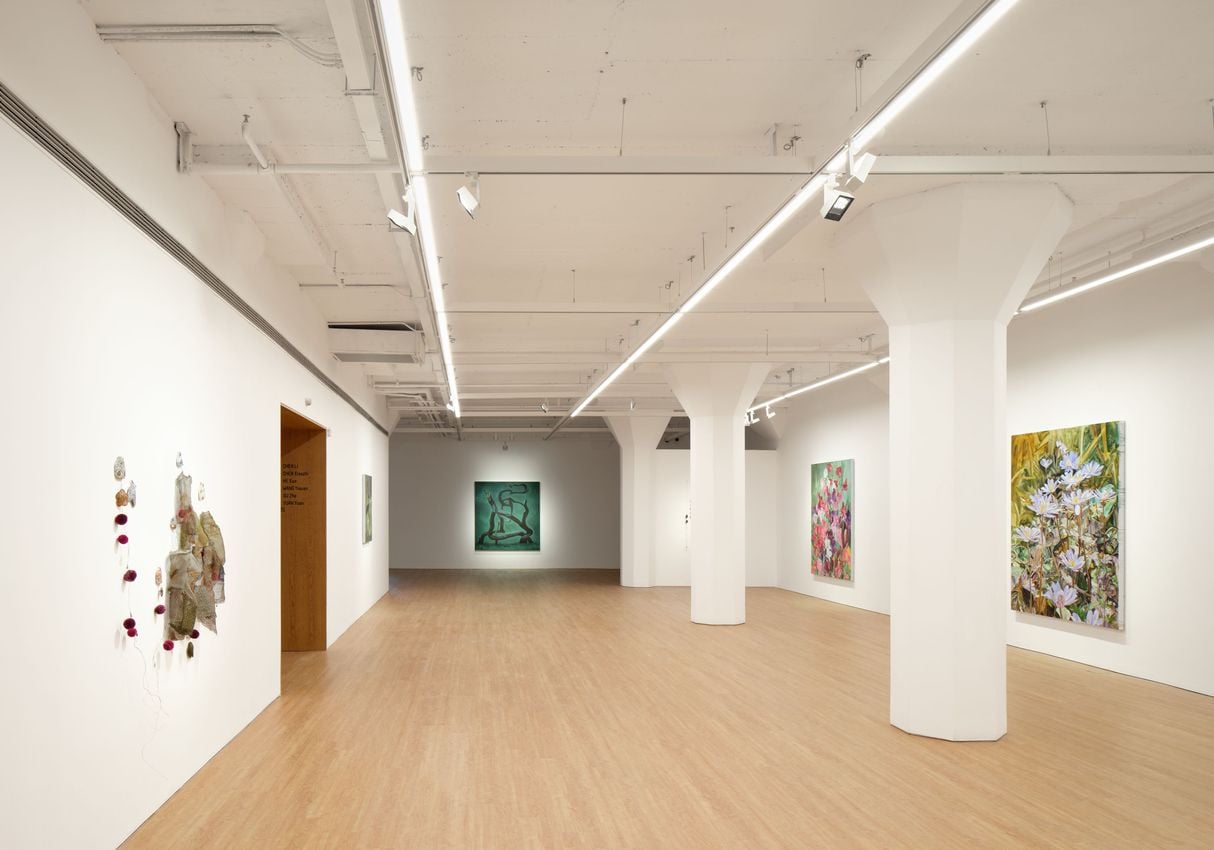
The six participating artists approach this theme from distinct perspectives. C****HEN Xiaozhi takes spices such as clove, ginger, and nutmeg as points of departure, layering botanical illustrations, maritime maps, and trade routes onto mirrored glass surfaces. Her works trace how things once embedded within local ecologies and everyday life are continually redefined through surveying, classification, and global trade networks. C****HEN Li’s works revolve around moths, pond snails, and crab floss. The pond snail, a familiar species from her hometown, carries both local memory and personal experience; moths and crab floss evoke childhood imaginings of unfamiliar windows and the unknown lives concealed behind them. In her practice, living creatures become not only natural beings but also emotional vessels onto which meanings are continually projected and transformed. HE Xun explores the relationship between Buddhist seed syllables and sound, bringing together seeds, letters, and vocalization. Existing prior to linguistic meaning, these vowels and symbols function as a medium between bodily perception and spiritual experience, suggesting an alternative path of understanding that exceeds naming and classification. W****ANG Yiquan draws upon export commodity packaging, printed imagery, and trade archives to examine how nature is reshaped through circulation and representation. As plants, landscapes, and natural products are transformed into visual motifs on commercial packaging, they become embedded within systems of production, trade, and image-making. X****U Zhe’s sound installation begins with archival materials from residential architecture of the 1970s and 1980s. Through reconstructed architectural ornamentation, sound devices, and memory-based imagery, the work places personal experience alongside collective aspirations of its era. Within the traces left behind by architecture, fragments of memory, visions of the future, and the residues of everyday life are brought back into presence. YUAN Yuan constructs a female utopia composed of flowers. Figures appear in floral form, growing and proliferating within intensely saturated fields of colour. Exceeding fixed identities and categories, they form an open and expansive landscape of life.

The exhibition unfolds as a layered structure concerned not only with how knowledge is constructed, but also with how it loosens, transforms, and becomes available to sensation once again. When the measures through which we habitually understand the world are slowed down, questioned, and pushed to their limits, how might the earth, living beings, and material things appear differently? The exhibition invites visitors to pause among these works and attend to what remains unnamed, unmeasured, or perhaps no longer measurable at all.

Read More

Installation Views

Selected Works

Loading...

Artists Exhibiting

Also Exhibiting at Arario Gallery

About the Gallery
ARARIO GALLERY opened its first Chinese branch in 2005 in the Jiu Chang Art District, Beijing. The Beijing space, which operated successfully for over seven years, closed its doors in 2012. In 2014, ARARIO GALLERY SHANGHAI opened in Xujiahui, Shanghai, operating until June 2017. It then relocated to West Bund, Shanghai, from July 2017 to August 2020, and once again within the West Bund from October 2022 to April 2024. The gallery has played a significant role in introducing the works of not only Korean artists but also a diverse range of Asian artists from Japan, India, China, the Philippines, and Indonesia to the Chinese art scene. Building on decades of experience and expertise, ARARIO GALLERY SHANGHAI reopens its new space in Jing’an District, Shanghai, in March 2025. As the oldest Korean gallery in China, ARARIO GALLERY SHANGHAI is firmly established and continues to provide a sustainable foundation for Asian artists through the continuous discovery of emerging talents and the creation of advanced exhibition opportunities.
View Gallery Profile
Address
2F-205
30 Wen'an Road
Jing'an District
Shanghai
China
Opening Hours
Tuesday – Saturday
11am – 6pm
(1)
Shanghai 2F-205, 30 Wen'an Road
Arario Gallery
2F-205, 30 Wen'an Road, Jing'an District, Shanghai, China
+86 21 5424 9220
http://www.arariogallery.com

Opening hours
Tuesday – Saturday
11am – 6pm
The art world in focus