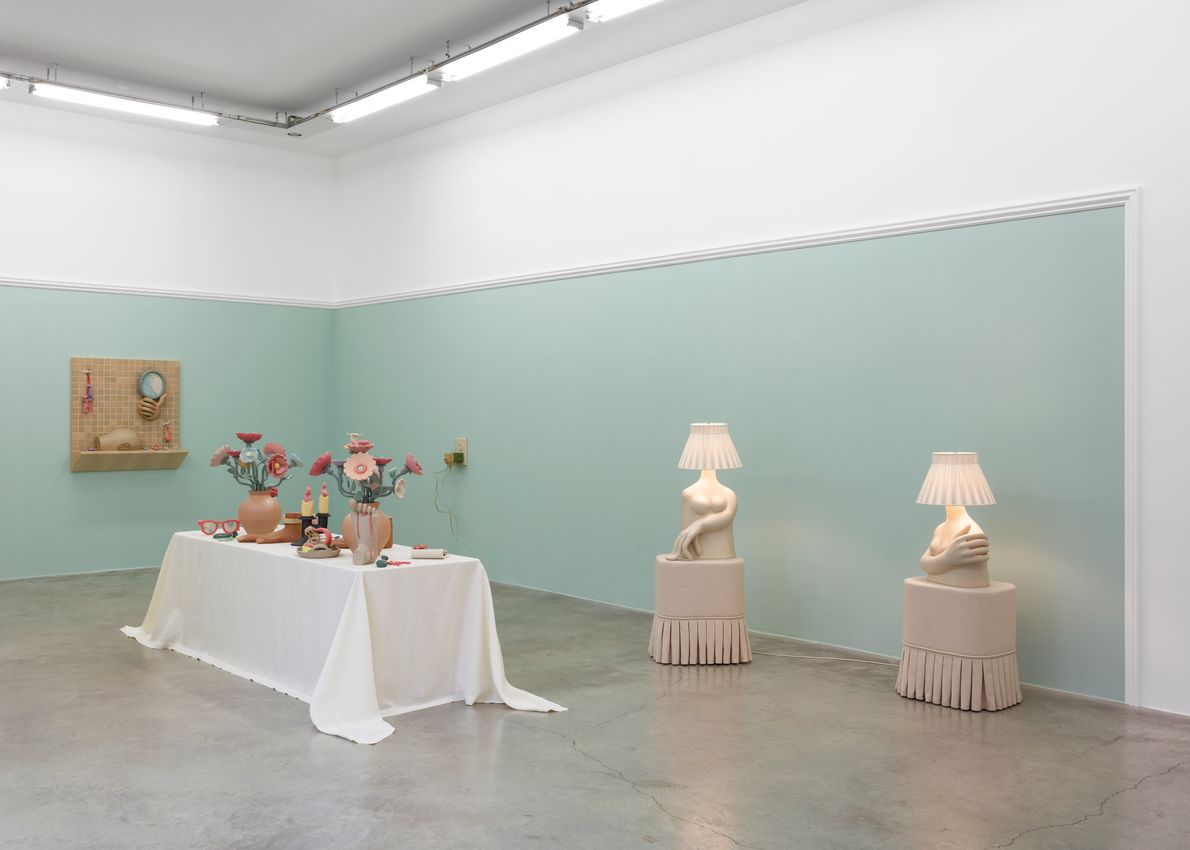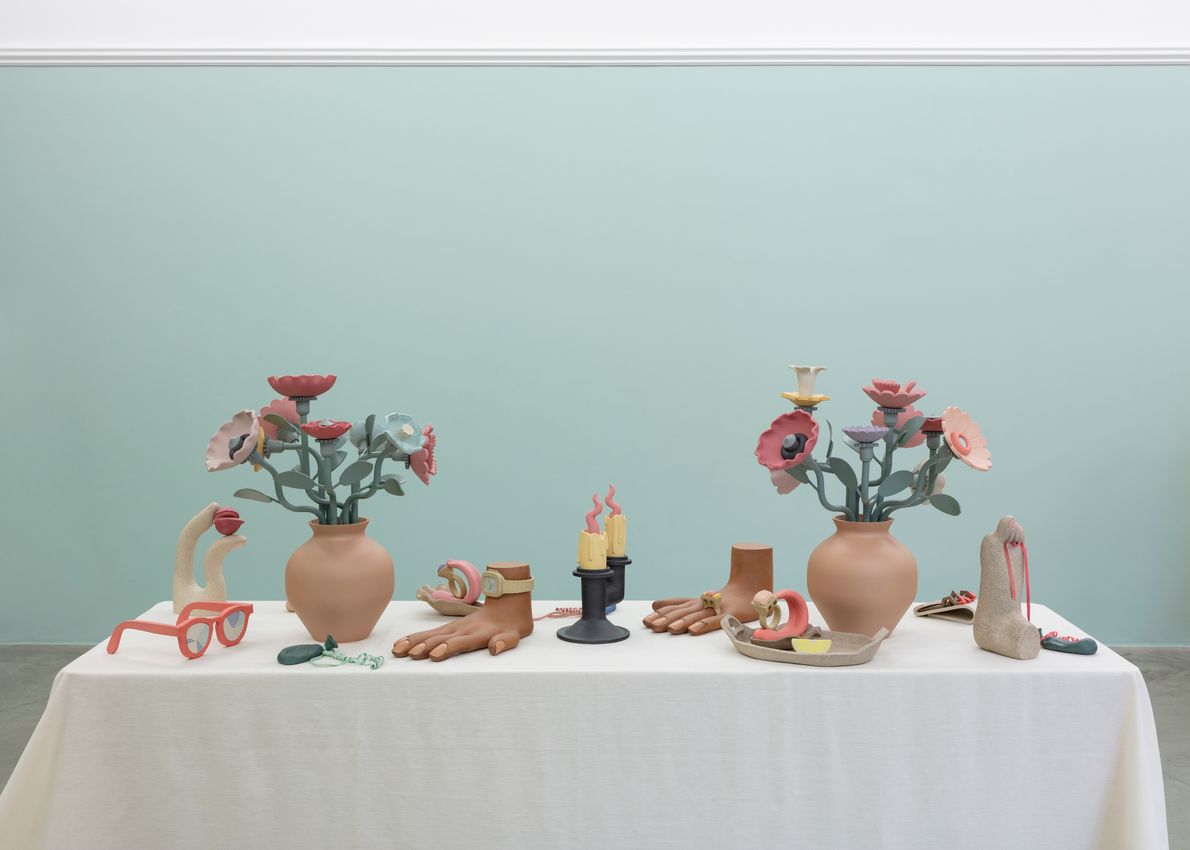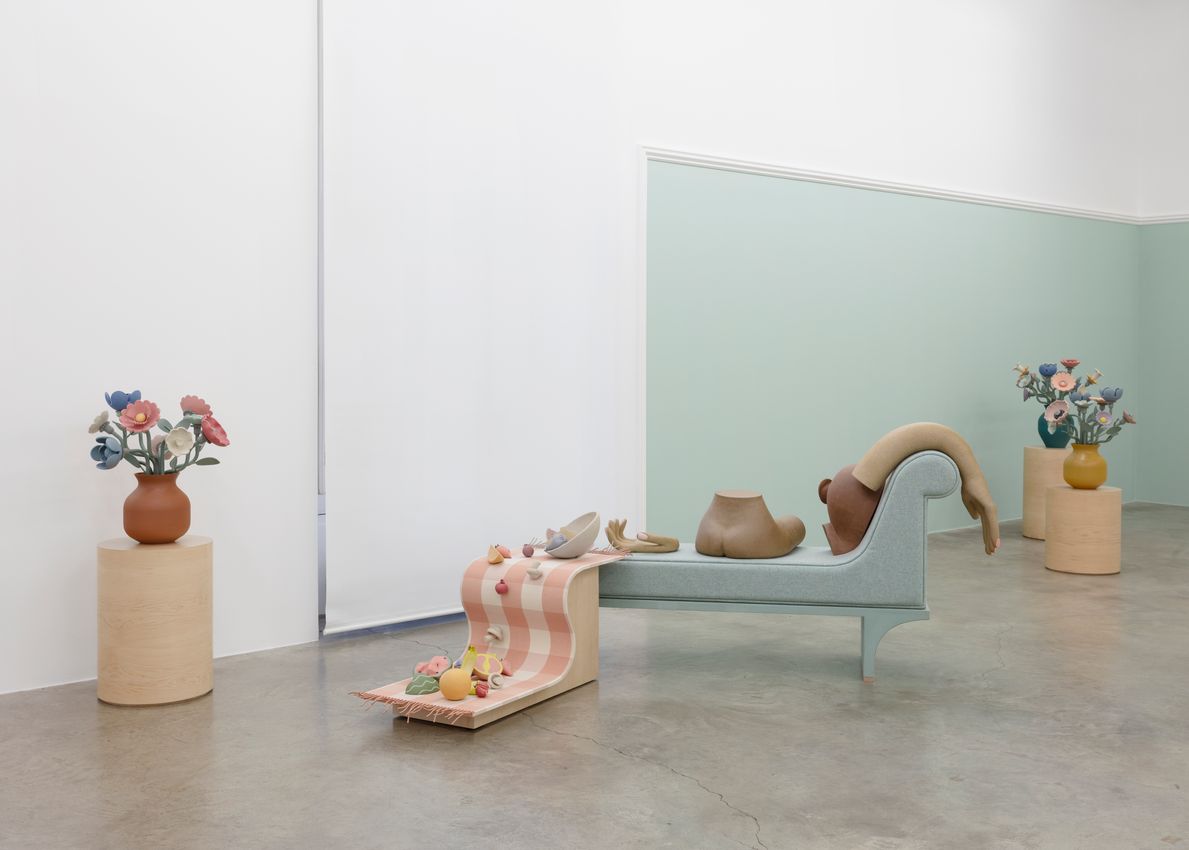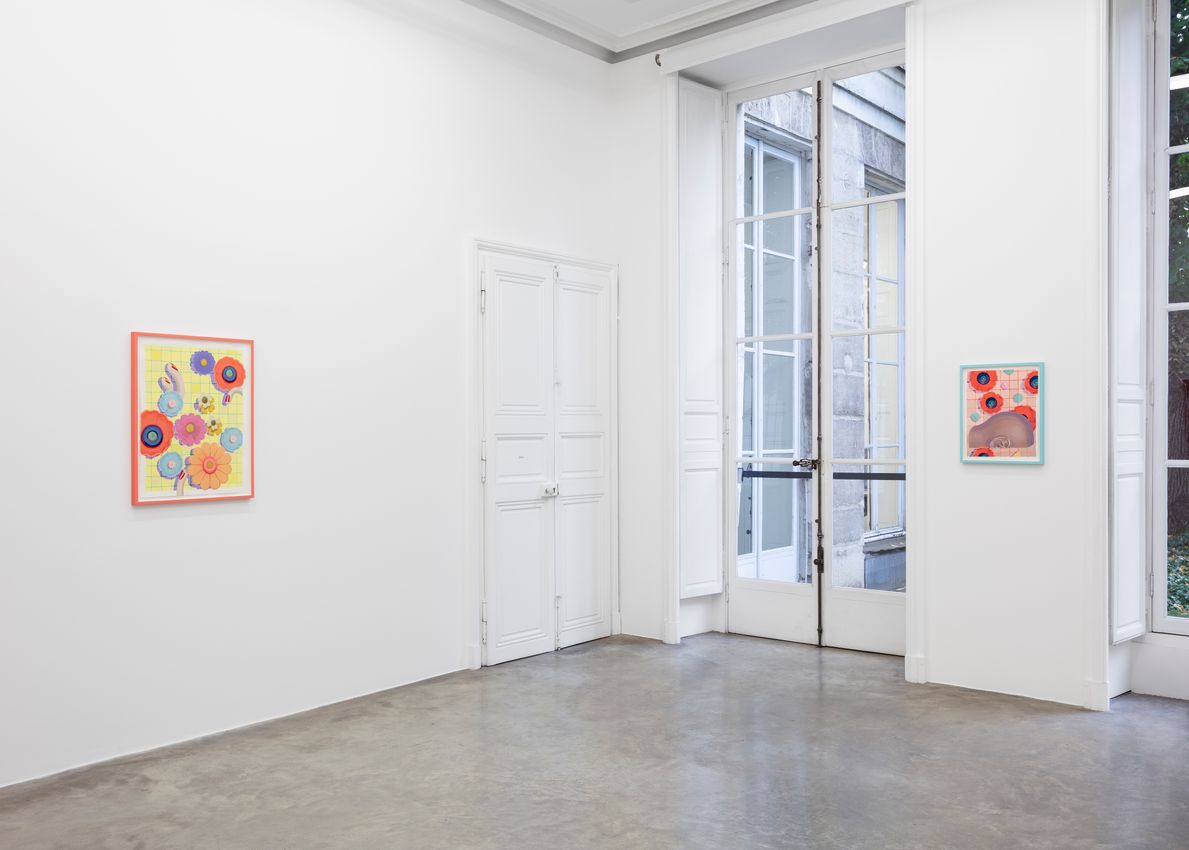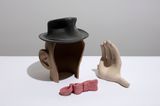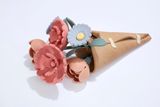
Blow Out, the title for Genesis Belanger’s second solo exhibition at the gallery, features all-new mixed-media sculptures as well as works on paper that narrate a meta storyline about high-living heartbreak. Belanger has fashioned three linked mise-en-scènes—a closeout sale, banquet hall, and operating room—turning the gallery into a Surrealist theatre. Each chamber is designed to dramatise an outtake on the title’s many-sided meanings.
Belanger’s practice at large is centred on the creation of sculptural objects and tableaux that perform narratives about gender and power. With subject matter informed by centuries of visual culture, from advertising and comics to art history, her magnetic and moody objects traffic in hyper-capitalist torment. She weaponises glamour and humour to survey an image-possessed present. Her content and approach are informed by art movements, from the Baroque, Pop art and Surrealism, to Chicago Imagism, as well as her professional experiences inside the fashion industry. She hand-builds her objects from flat patterns carved out of clay sheets rolled out as a slab. Sometimes she combines them with furniture of her own invention. She never uses glazes but pigments her clay bodies with powdered tints whisked in with a kitchen mixer. Her palette is soft and honeyed and flaunts a midcentury air. Over time, her installations have become more complex as her narratives have grown thornier. She composes spaces where time is suspended, intensified, and tangible, riffing on waiting areas, hospital rooms, funeral parlours, and banquet halls. Her vanitas symbolism spotlights aspiration and deceit to expose the hidden extremes dwelling inside everyday objects we consume, wear, and carry.
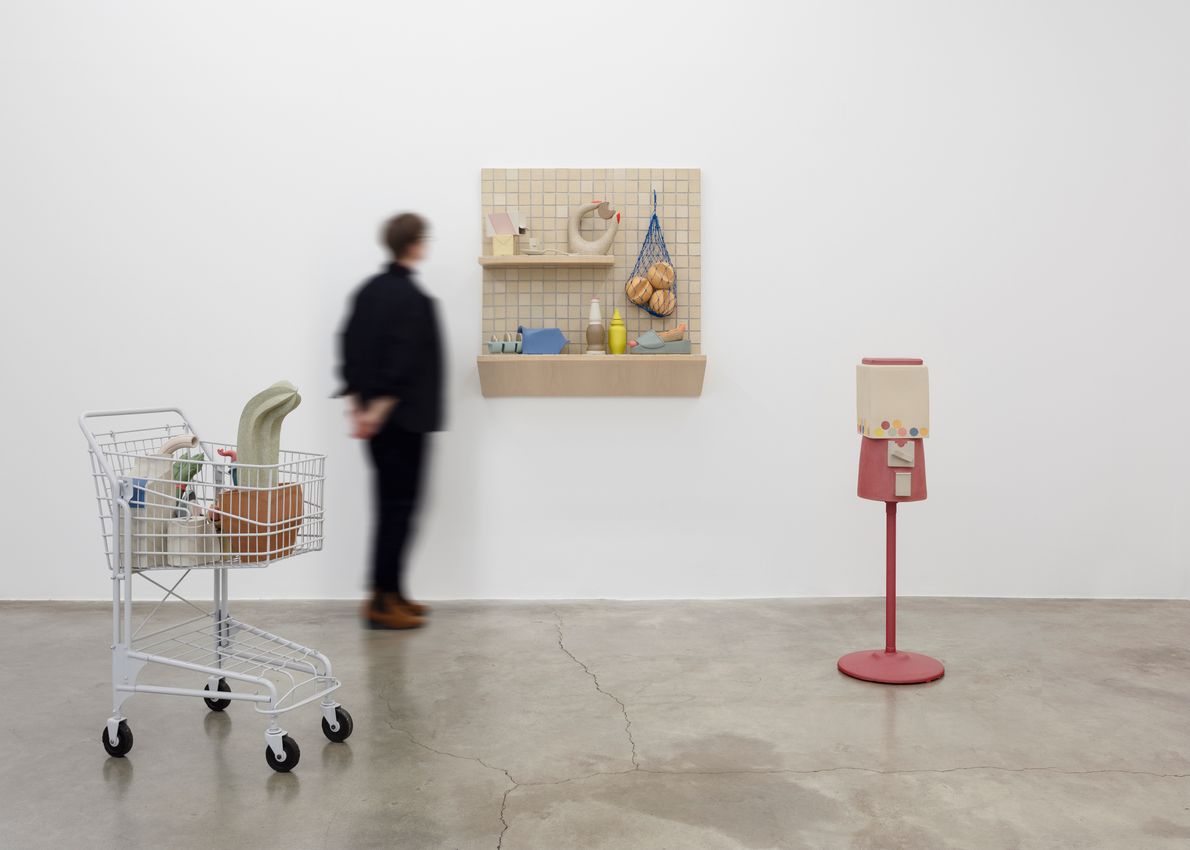
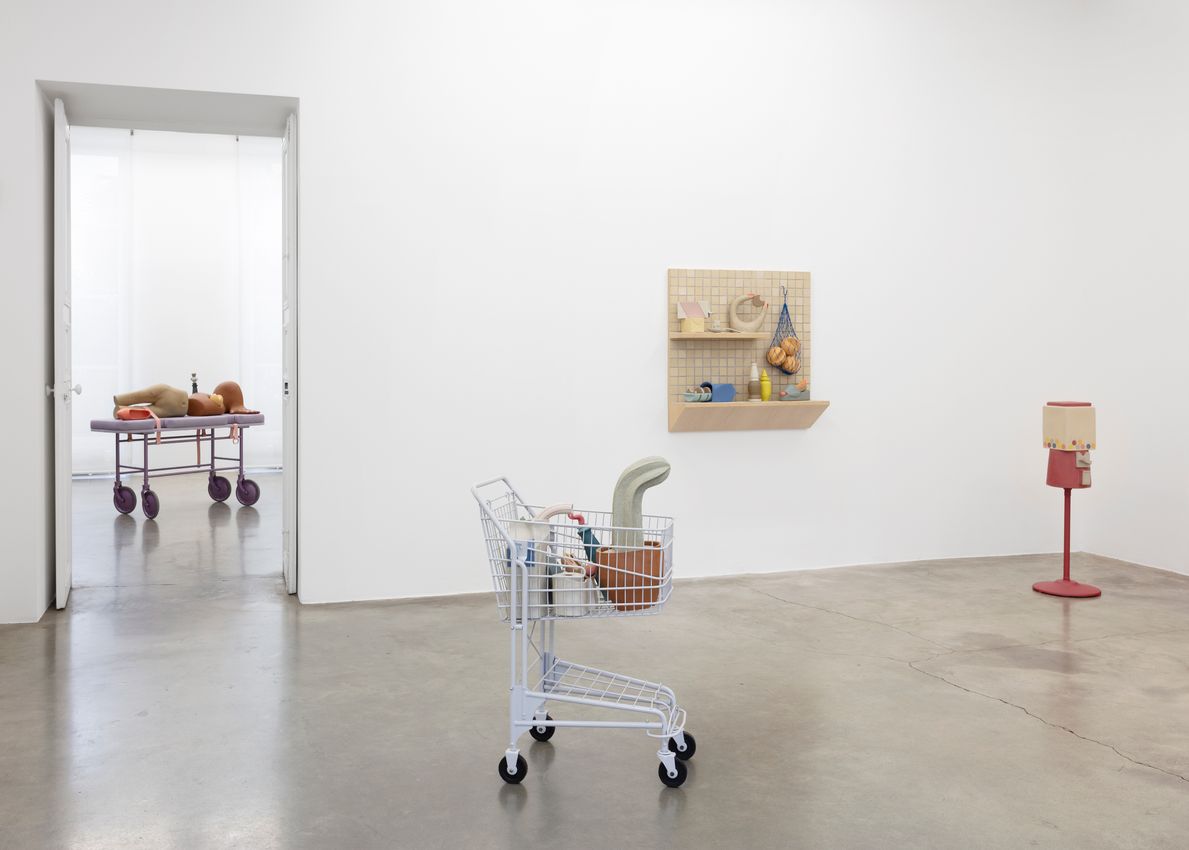
Visitors to Blow Out move through Belanger’s world building in discreet interiors designed to unfold like acts in an absurd play. The first scene is a deserted ‘discount store.’ Three ceramic and powder coated steel sculptures impersonate a shopping cart, retail shelf, and vending machine—avatars for the bubbles and busts of the American dream. Ironically titled Healthy Living is a gleaming pushcart brimming with a surplus of phallic goods: a soda pop baring a writhing tongue, an open container of milk with a flaccid straw, a saggy asparagus bunch, a hot dog in a bun, and a potted cactus. Impulse Buy debuts Belanger’s latest experimentations in the studio: wall mounted dioramas with personalised cameos. Replete with handmade tiles, it parades condiments, sweets, and a woman’s manicured hand and shoe. The room’s centrepiece is a life-size bubble gum machine, Three for One. Its sunny demeanour masks a darker yarn about illogical aspirations and washed-up ambitions.
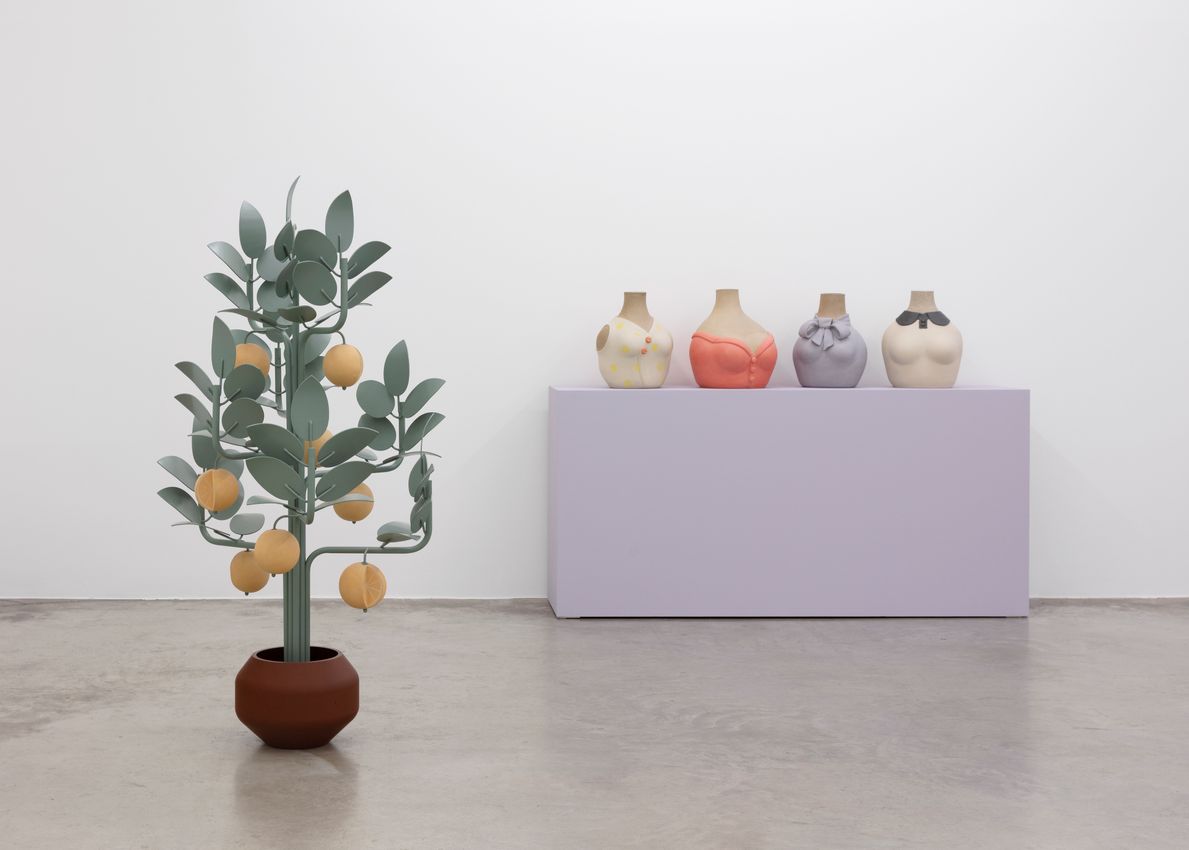
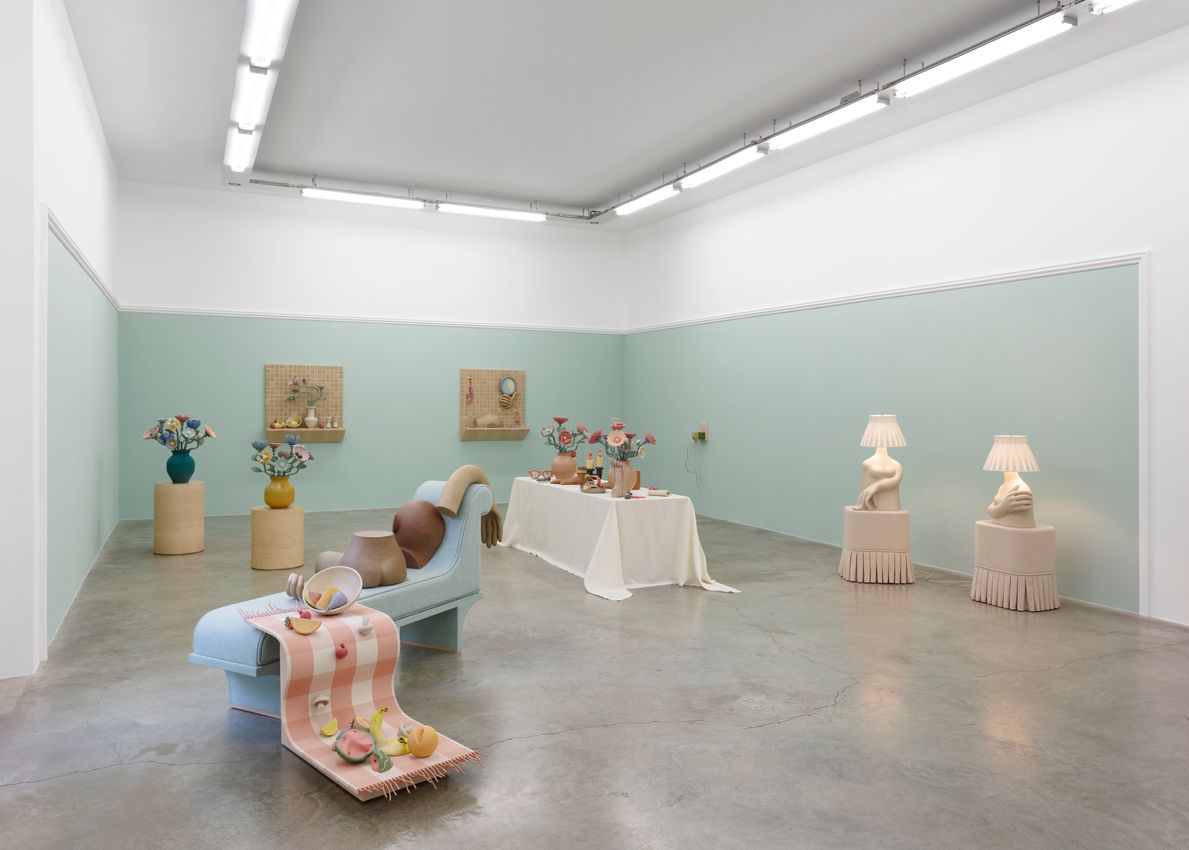
The next room reveals the debauched remains of a decadent party. A reposing nude in pieces lounges on a shapely upholstered teal chaise. Lavish flower arrangements, a succulent orange plant, and a pair of table lamps in a frilly chemise flank the extravagant mess of a spilled bowl of fruit sailing on a magic carpet. A dejected neurotic is personified in a sequence of wall-mounted dioramas resembling miniaturised stages that amplify Belanger’s scale shifts on repeat throughout the show. A downcast head and a hand clutching a shattered mirror is encircled by prescription drugs, deflated balloons, and fancy candies. A busted outlet overstuffed with king-size adaptors dangles a pair of fried wires. A chorus of four big-chested ladies, headless and prettily bloused, flank the room. Did they just leave the party or are they trying to get in?
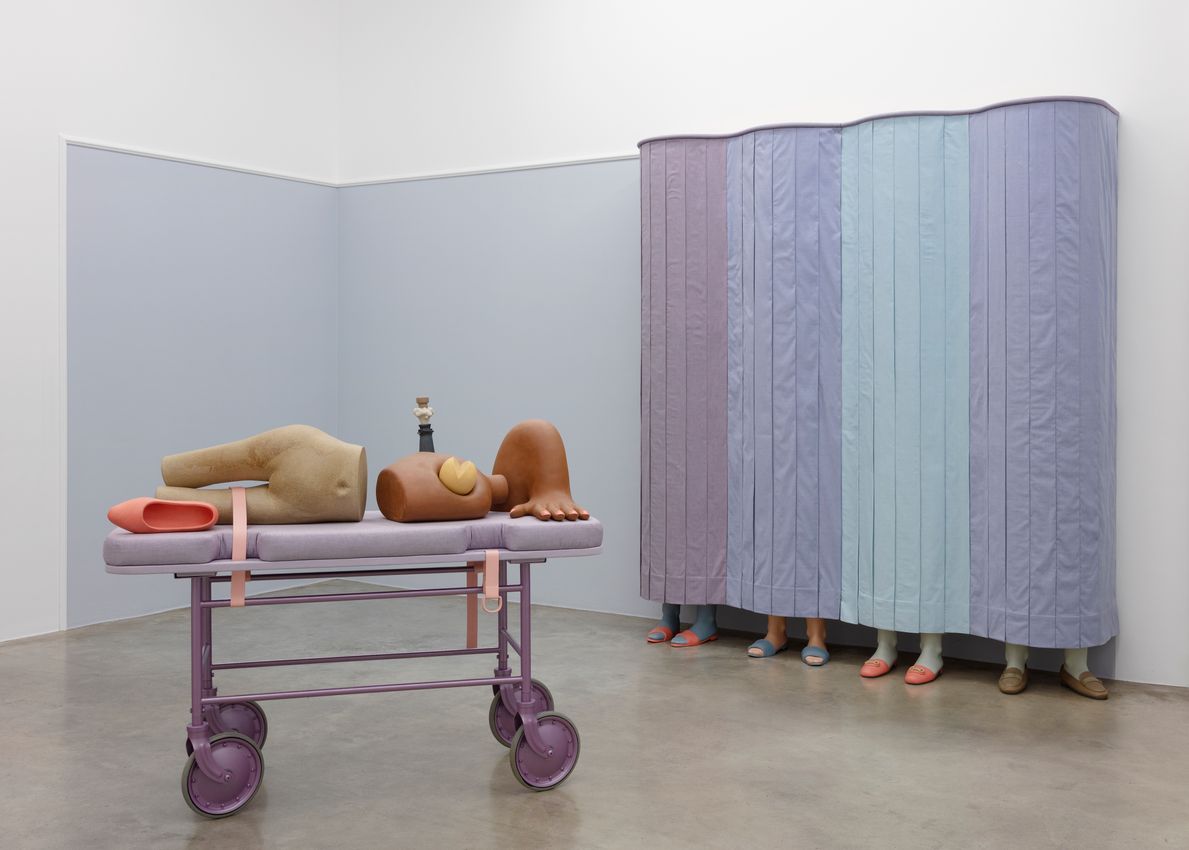
The third room possesses an even more sinister vibe. It is the office of a depraved plastic surgeon. A woman’s minced body parts, an uncorked champagne bottle, and a sectioned orange are scattered on a purple gurney. Pink straps loop slackly around her limbs. Sited on a nearby surgery table is an oddball cast of jokey and creepy items, a prickly plant, a tape dispenser wagging a frisky tongue, three prettified finger stubs, a wrench, and a jumbo molar. Behind a privacy screen, in alternating shades of blues and lilac, is a line of ladies in waiting. Their identities are almost entirely concealed except for the stylish footwear that protrudes out from under the curves of its substantial folds.
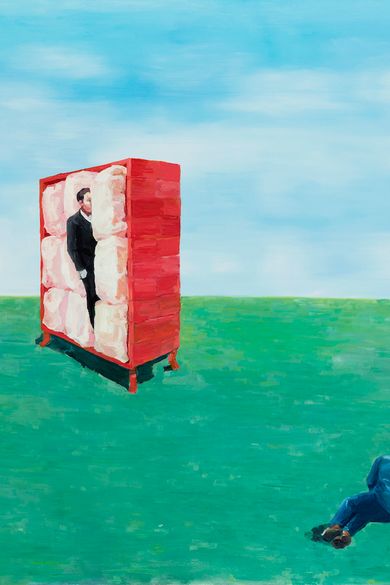
The exhibition closes with a series of animated and dreamlike watercolours and gouaches—Belanger’s latest foray into paintings on paper. Her process always starts with drawing. Her objects and settings are based on sketches she makes daily in graphite and ink inside bound notebooks and on loose paper. Each is set inside vibrant lacquered frames colour-matched to eye-catching palettes. Their themes show off Belanger’s signature fem-pop glossary—high-gloss hands and feet, delicately shaded prescription pills, allAmerican edibles, and fleshy flowers—echoed throughout the exhibition.
What makes Belanger’s creations so disconcerting is their in-built humanism. Biases and stereotypes are trumpeted in objects choreographed in redolent vignettes that are characteristically relatable. A seductive conjuring that manifests life’s horror and splendour.
Press release courtesy Perrotin. Text: Amy Smith-Stewart.

Genesis Belanger’s work is characterized by the treatment of objects as surrogates for the body. Sculpted in porcelain and concrete and tinted in fondant hues, everyday objects take on human features, made uncomfortably familiar as they begin to resemble us. Belanger’s still life sculptures—compositions of furniture, fruit, and flowers loaded with signs and symbols—are increasingly contextualized by their surroundings, psychologically charged spaces created by the artist. The effect is uncanny, toeing the line between comfort and disquiet, the beautiful and the strange.
Emmanuel Perrotin founded his first gallery in 1989 at the age of 21. He has opened since then over 17 different spaces, with the aim of continuing to offer increasingly vibrant and creative environments to experience artists work. He has worked closely with his roster of artists, some since more than 25 years, to help fulfil their ambitious dreams and projects.

A respected voice in contemporary art discourse.
Focusing on ambitious storytelling and insightful art-world commentary. Ocula Magazine publishes in-depth interviews, critical essays and timely analysis on the artists, exhibitions and ideas driving the global art world.
Learn more about Ocula Magazine
Showcasing the best of the art world.
Ocula partners with galleries from around the world to highlight their artists, artworks and exhibitions. Gallery membership is by application and invitation, with each member vetted by an independent panel.
Learn more about Ocula Membership

Specialises in the sale of major artworks.
Led by a team with deep ties to the world’s leading auction houses, galleries and collectors. Ocula’s advisory team offers bespoke services to high-net-worth clients from around the world who are looking to acquire the best of contemporary and modern art.
Learn more about our team and services