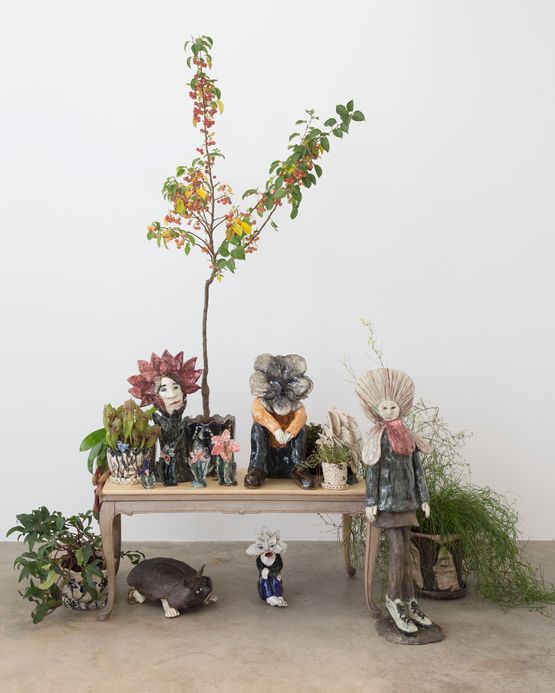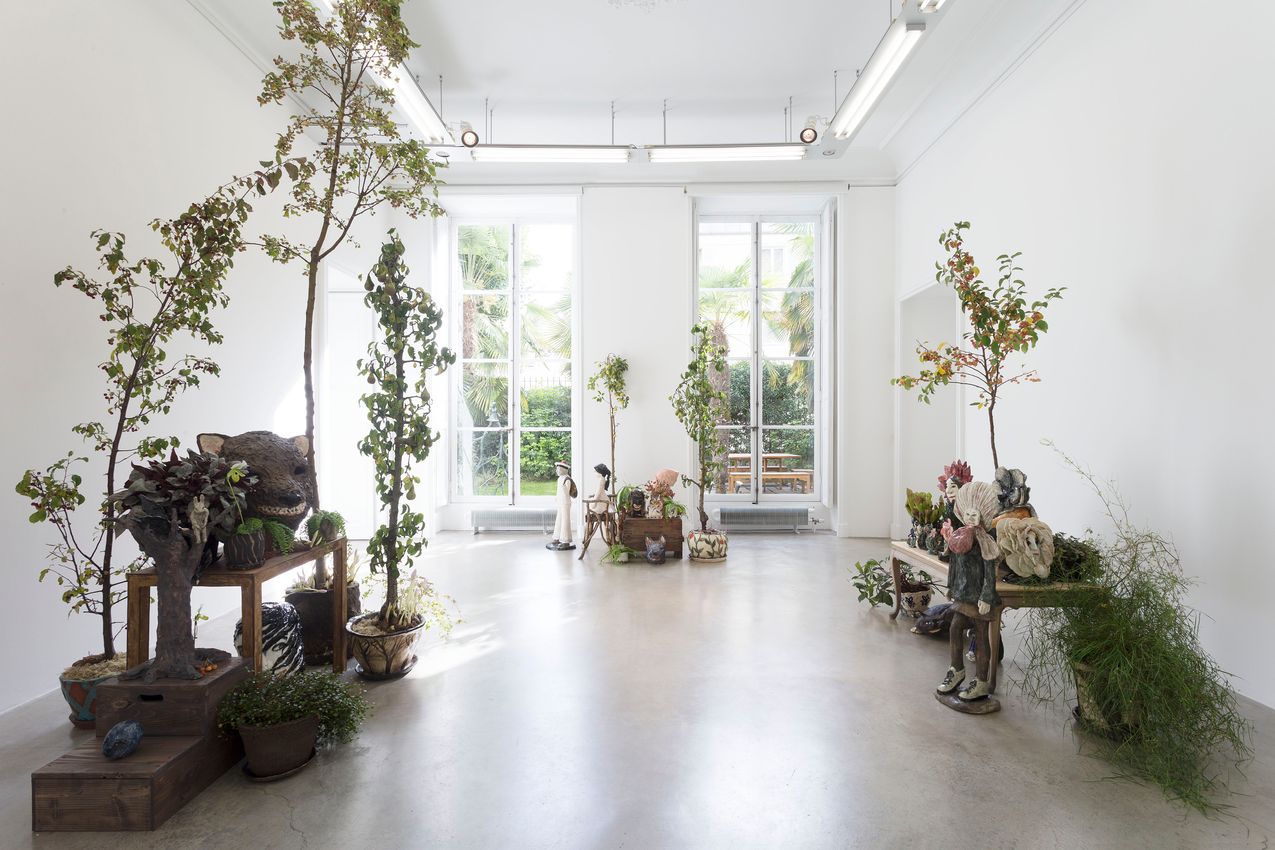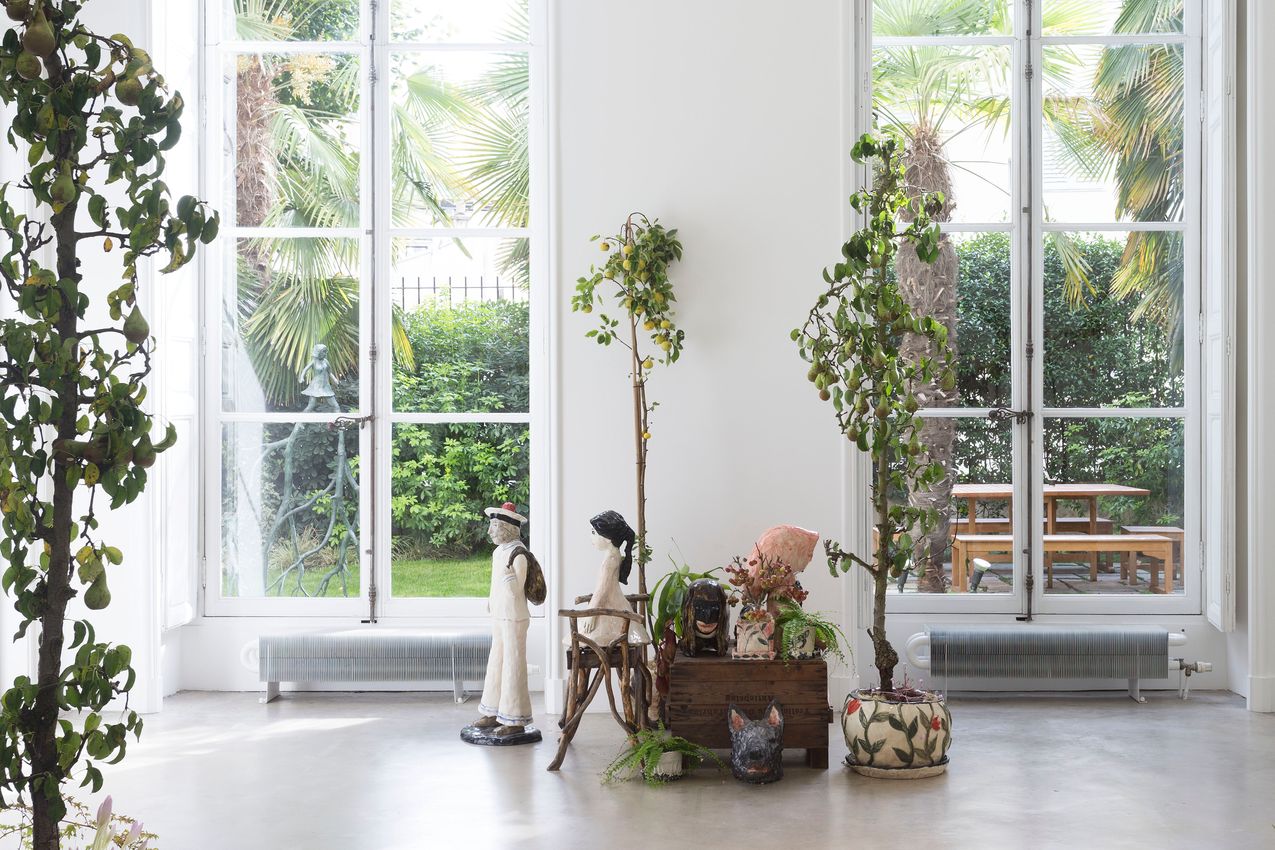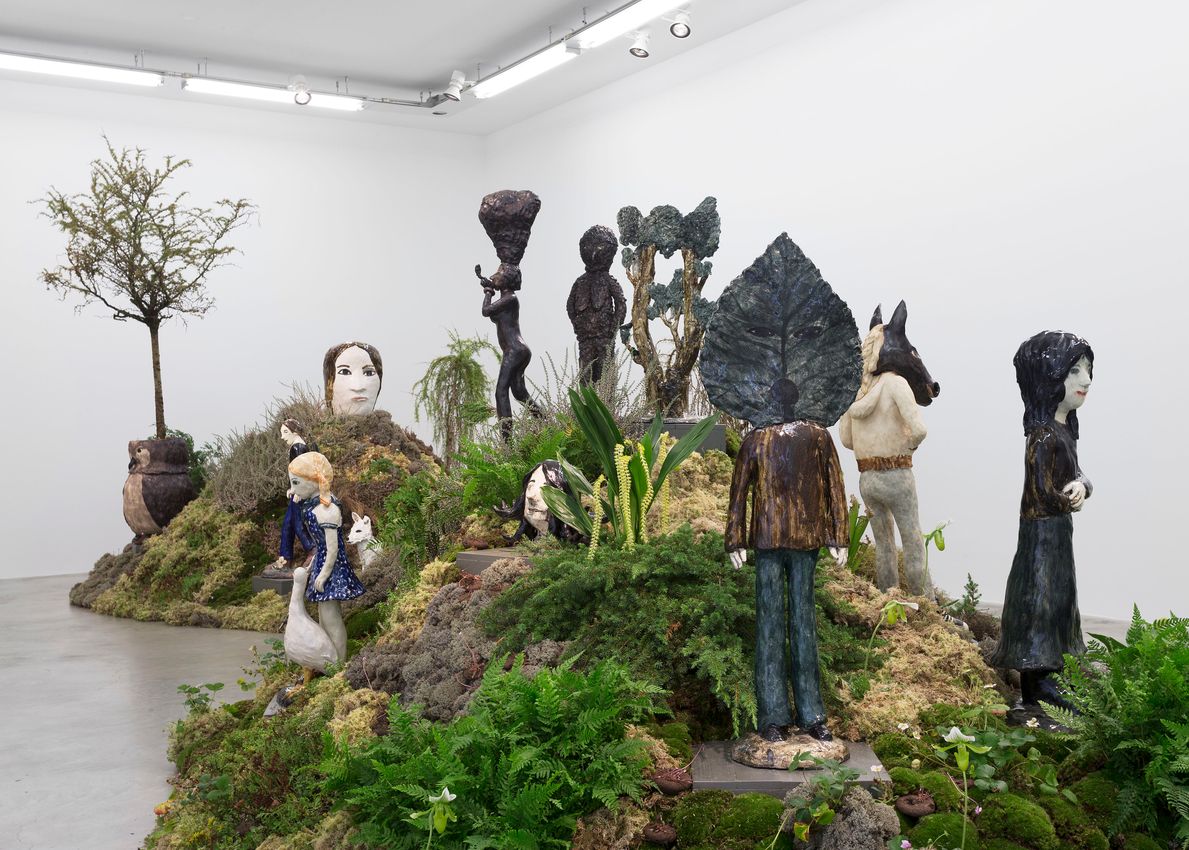
An essential component without being literally represented in it, the landscape occupies Klara Kristalova’s mental and physical universe, without being a theme in and of itself. It is inferred in fragments from the drawings, ceramics and bronzes that populate the dark and mysterious exhibitions she has unveiled in recent years. She prefers evocation, the sensation of the landscape, to its literal representation. Selected from new productions created specially for this exhibition, the pieces first inhabited her immediate surroundings, before being installed in Paris. Her studio is located in the Swedish countryside, in the forest by a lake, North of the Stockholm region. The scenography designed with the expertise of florist Thierry Boutemy is not a faithful reconstitution, but rather an evocation of this pregnant environment that infuses Kristalova’s imagination.
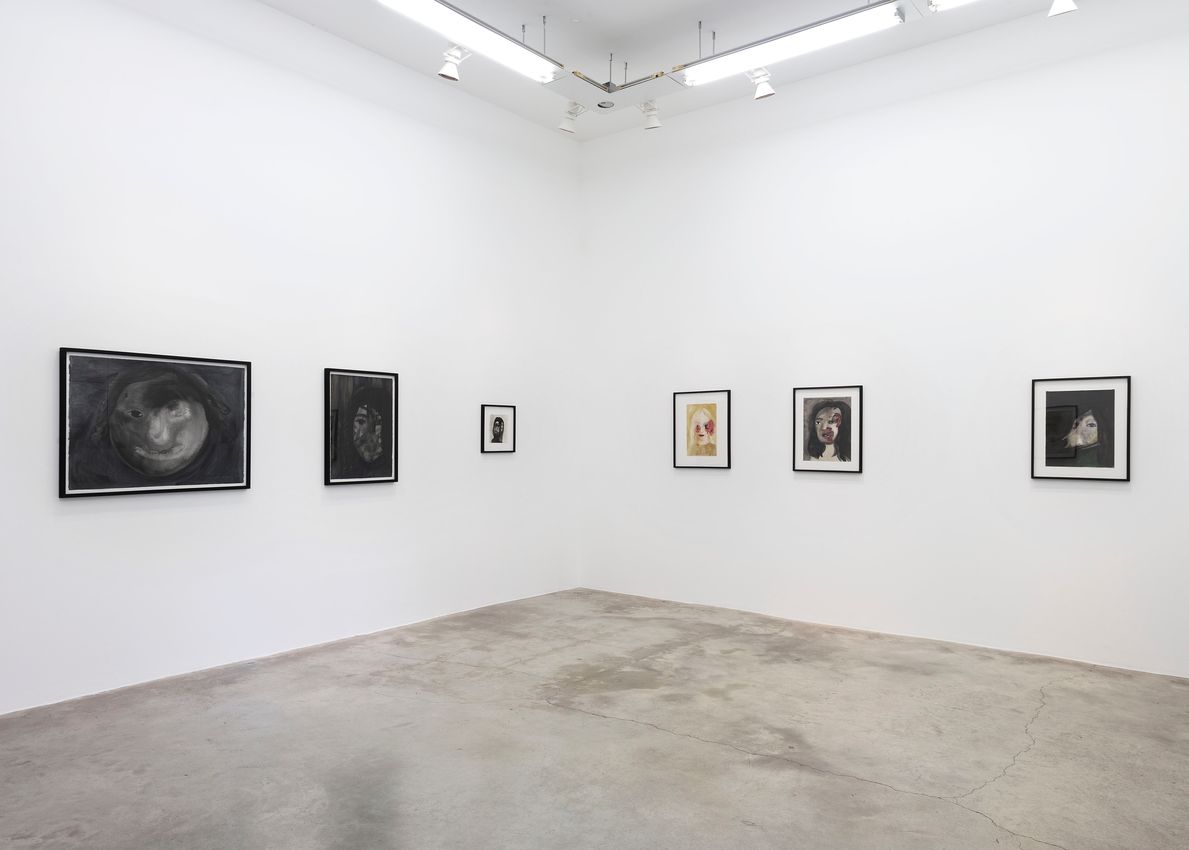
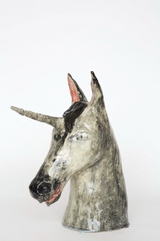
In her new exhibition at Perrotin Paris, one room is dedicated to drawings, the others to the installation of her painted ceramics and bronzes. There we find hybrid characters with female bodies and heads of birds or flowers, out of scale heads, boys with flies’ wings, strange dogs, humans wearing animal masks, or yet shown in full metamorphosis.
Kristalova’s inspiration is not made of concrete and linear narratives, nor extraordinary and surreal facts, but rather it is innervated by a more “normal” presence, a normality that is certainly a bit strange but ultimately quite common, part of a reality that offers a peek into the unbridled unconscious. Her community of characters accompanies her according to a narrative thread on its own. Undoubtedly, they are connected to the ordinary world and touch our unconscious; in a way, they are reassuring.
The landscape where the characters find themselves in Kristalova’s working environment is not exceptional in the eyes of the artist, even though it enchants her visitors. Accustomed to this natural presence, Kristalova takes inspiration from it without copying it. It is a landscape that she admires without idealizing it, from which she draws great inspiration from the marvelous to the strange. The familiarity of this place is the best substrate for her roaming imagination, giving birth to beings with heads of nasturtium, branchy roots, bodies covered with heavy feathers. Boredom is in fact the best vector for the imaginary. The strangeness that sneaks around and escapes the banality of everyday life takes the spectator on a wander through feelings mingling fear and fascination. Nature occupies a very large space, anxious, haunted by its own disappearance, by its exposure to the climate changes that trigger its alteration. This sense of loss is everywhere in her work, infusing forms with a certain melancholy, the desire to embrace this powerful and fragile resource.
The works of Klara Kristalova follow one another, responding from one exhibition to the next. They are nourished by each other, and by thisnature that produced them. They are so close to the artist, populatingher relationship with the world, day after day; she lives with them. Herstudio is filled with their presence. In the landscape, they arise fromthe moss, the leaves, the earth. This is what she wishes toreconstitute with this exhibition, without resorting to transposition.In Paris, reunited around a bronze dancing figure, they offer a new perspective on the disparate and tender family that emerges from clay under Klara Kristalova’s hands and brushes.
Bénédicte Ramade, July 2017
Kristalova was born in former Czechoslovakia in 1967 and moved to Sweden with her parents when she was only a year old. She studied at the Royal University College of Fine Art in Stockholm and lives in Norrtälje, Sweden. Klara Kristalova constructs a dark, odd, and yet familiar world. The characters that inhabit her universe are peculiar, alone, quiet, perhaps lost, as if they have just escaped from a cruel tale, waiting for a passer-by to stop and indicate the way. Made from glazed ceramics, Kristalova ‘s figures carry a raw, vulnerable, human feel to them. Drawing from Nordic storytelling and traditional myths, Kristalova manages to convey basic human emotions such as fear, love, sadness and guilt, which emerge from her work like memories from our own childhood. An essential component without being literally represented in it, the landscape occupies Klara Kristalova’s mental and physical universe, without being a theme in and of itself. It is inferred in fragments from the drawings, ceramics and bronzes that populate the dark and mysterious exhibitions she has unveiled in recent years.
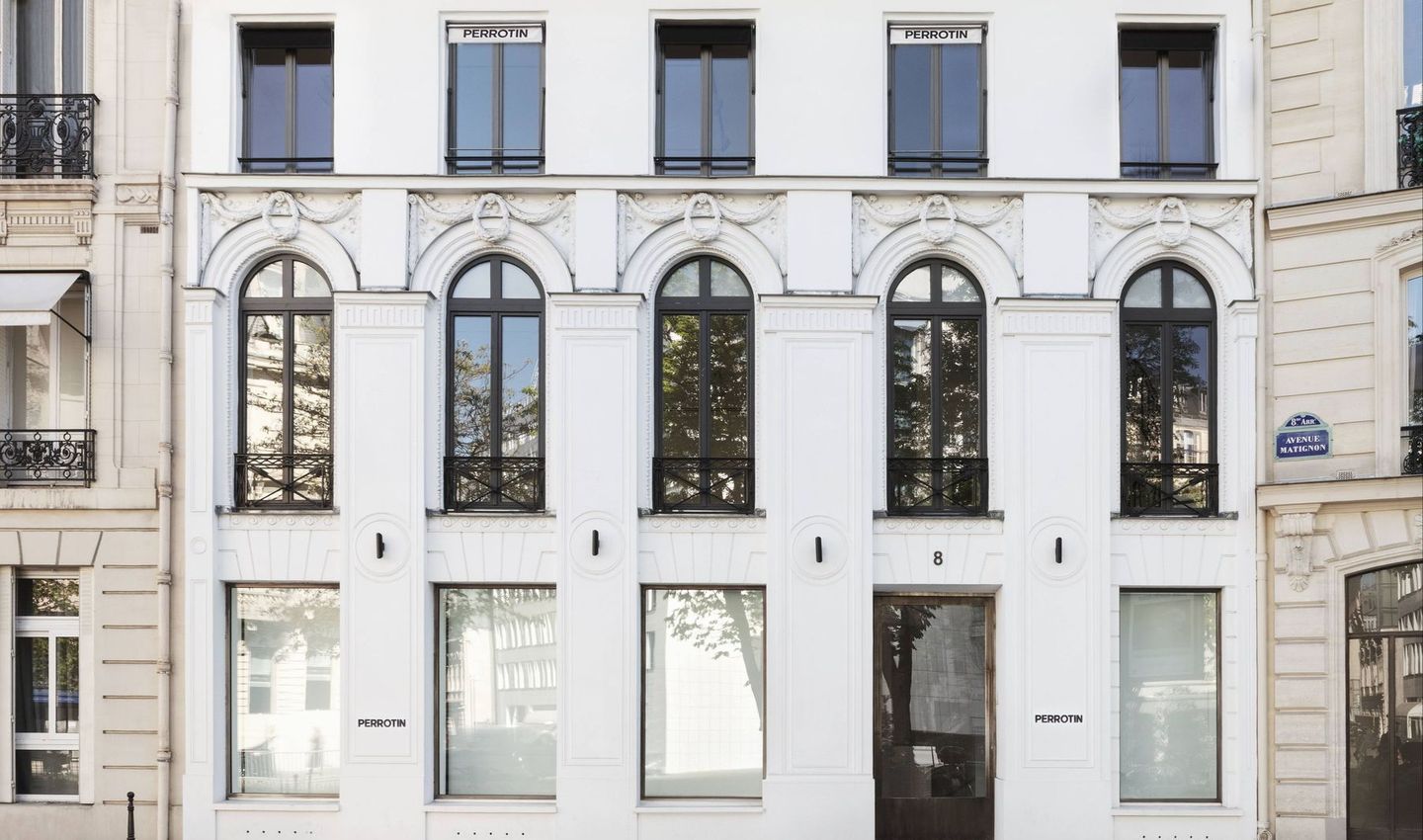
Emmanuel Perrotin founded his first gallery in 1989 at the age of 21. He has opened since then over 17 different spaces, with the aim of continuing to offer increasingly vibrant and creative environments to experience artists work. He has worked closely with his roster of artists, some since more than 25 years, to help fulfil their ambitious dreams and projects.

A respected voice in contemporary art discourse.
Focusing on ambitious storytelling and insightful art-world commentary. Ocula Magazine publishes in-depth interviews, critical essays and timely analysis on the artists, exhibitions and ideas driving the global art world.
Learn more about Ocula Magazine
Showcasing the best of the art world.
Ocula partners with galleries from around the world to highlight their artists, artworks and exhibitions. Gallery membership is by application and invitation, with each member vetted by an independent panel.
Learn more about Ocula Membership

Specialises in the sale of major artworks.
Led by a team with deep ties to the world’s leading auction houses, galleries and collectors. Ocula’s advisory team offers bespoke services to high-net-worth clients from around the world who are looking to acquire the best of contemporary and modern art.
Learn more about our team and services