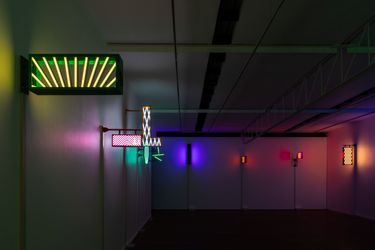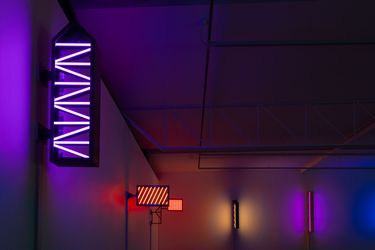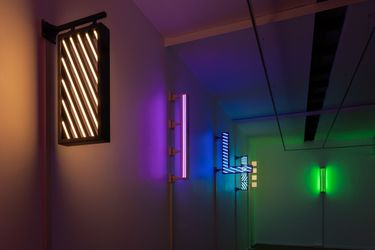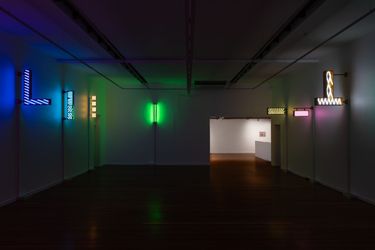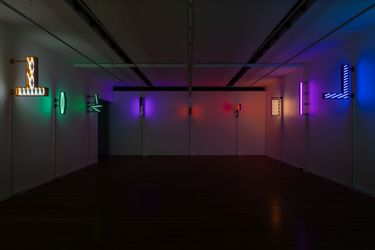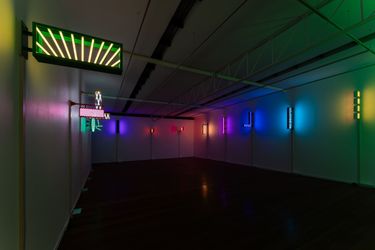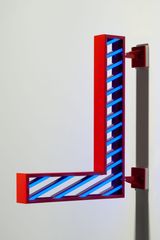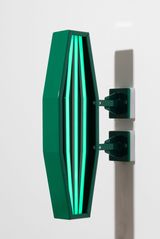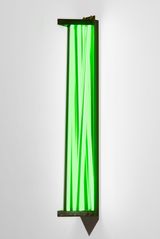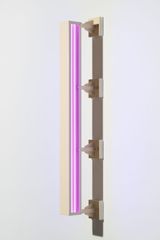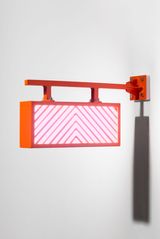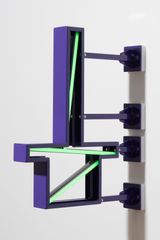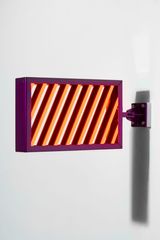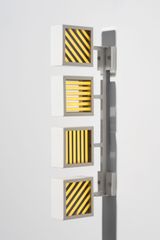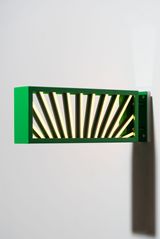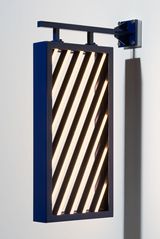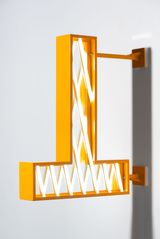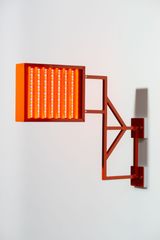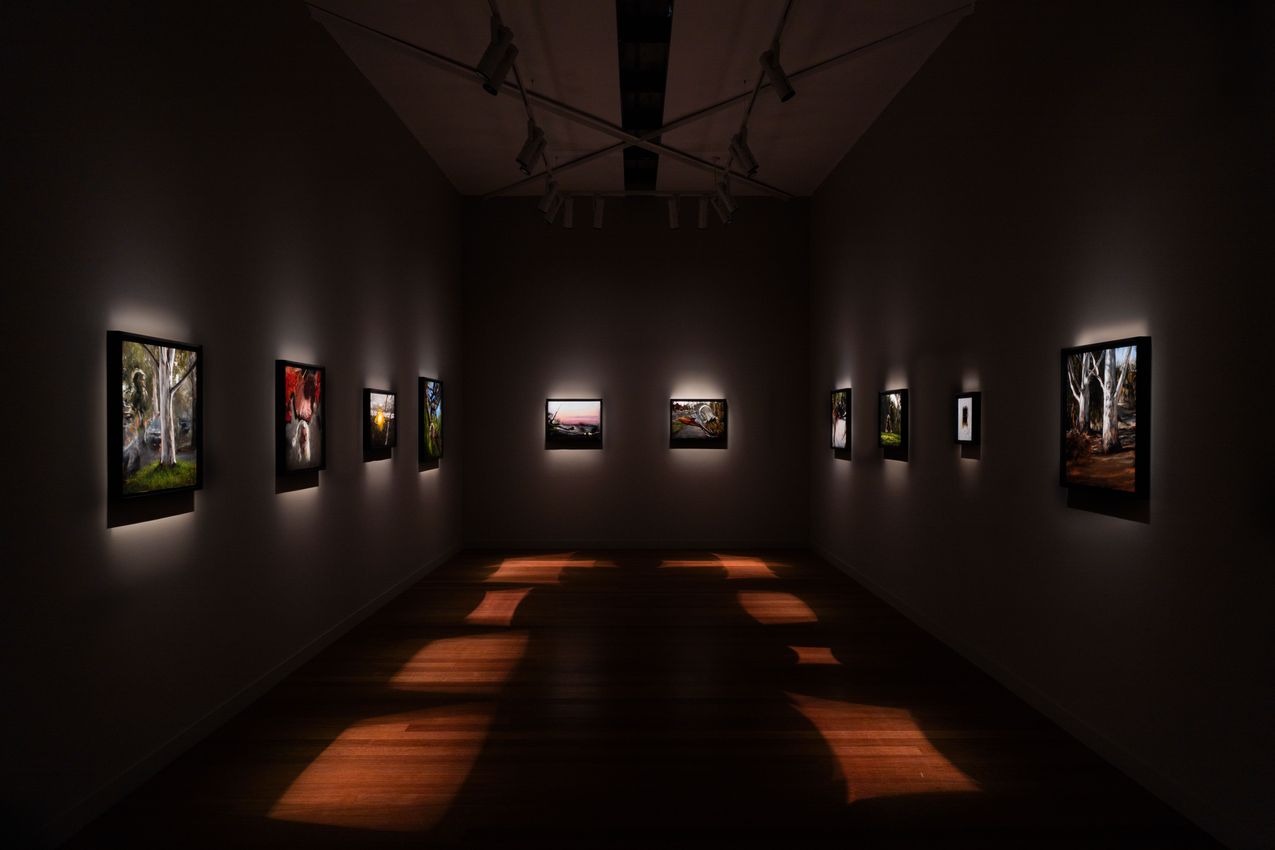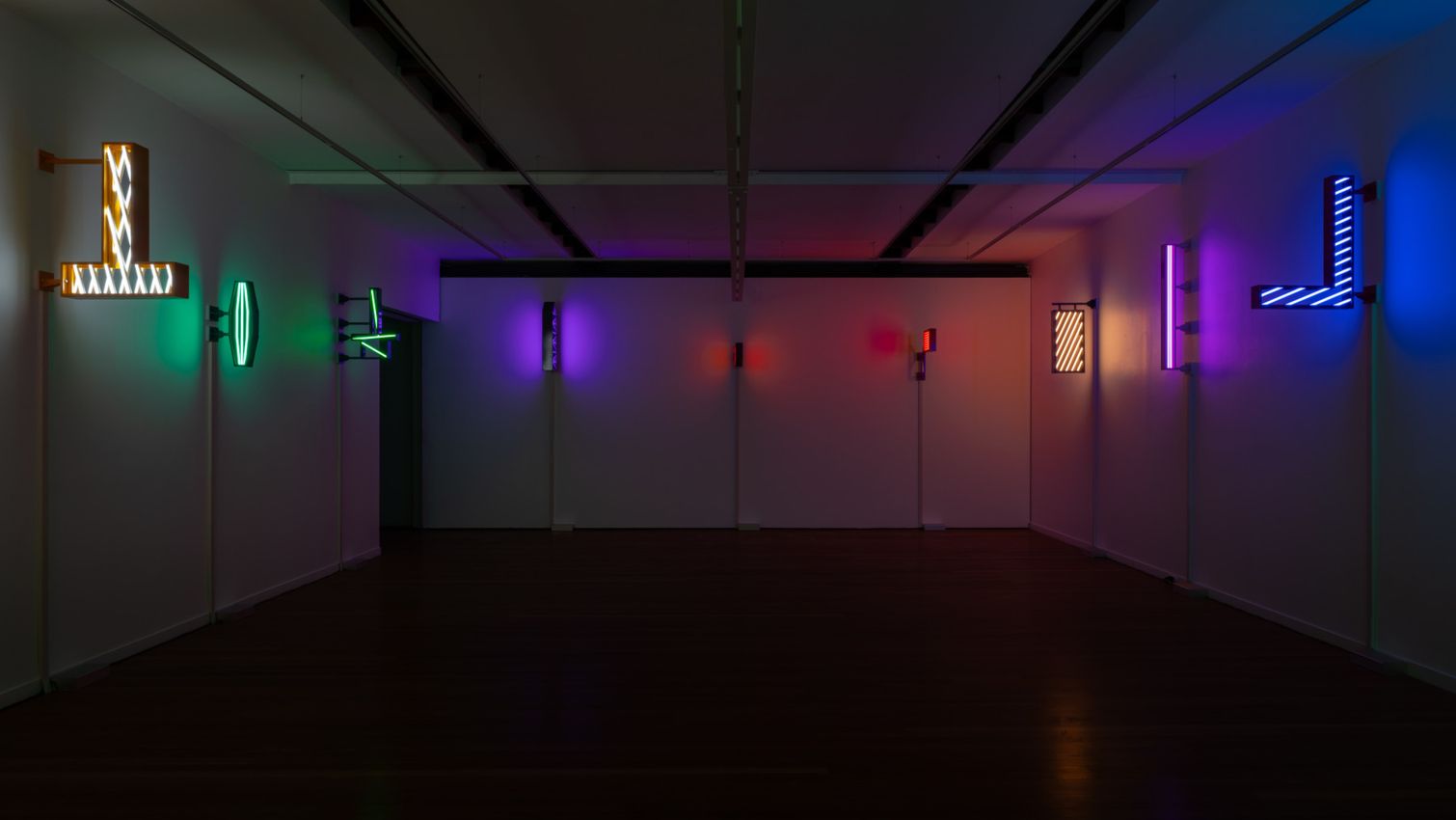
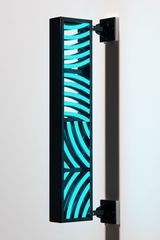
The fourteen light works scattered up high through the main gallery are copies of the forms of cheap hotel signs. They are hotels without a specific name, at once generic and hardly noticeable. Hidden spaces for hidden moments.
You need to cast your eyes upwards to see them, crane your neck a little. When we spend most of our time these days with downcast eyes staring at those little screens, this, at the very least, is an opportunity to exercise another muscle.
These works resemble abandoned signs in as much as their use, their language, what they signify, has been removed and erased. But instead of being a rough copy with a gritty skeleton left behind, they are reimagined here with newly assembled and overly complicated structure, pattern and colour.
This is an excess borrowed from the random combinations of the street and indeed I have imagined the gallery, this very particular room, to resemble a public square in a small town.
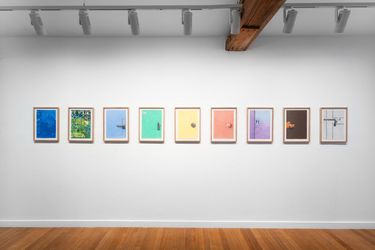
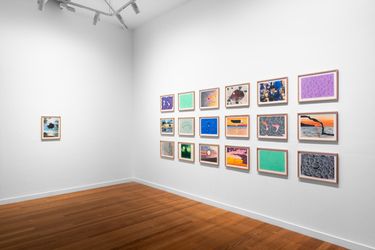
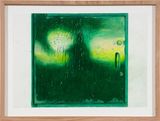
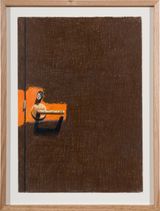
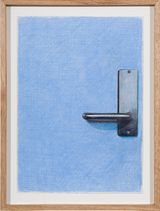
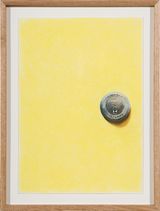
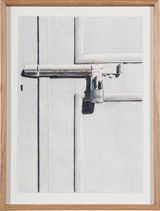
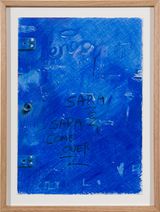
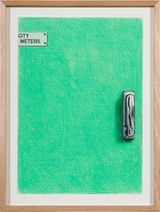
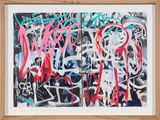
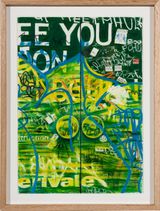
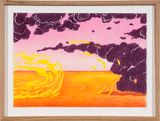
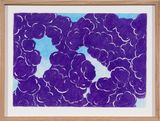
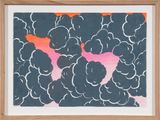
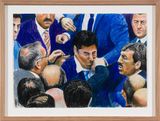
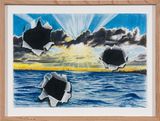
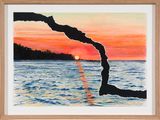
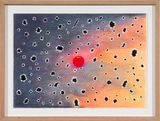
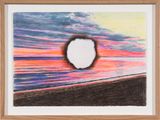
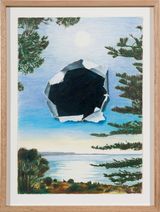
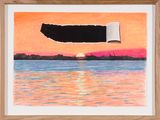
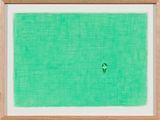
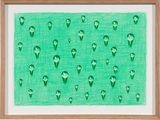
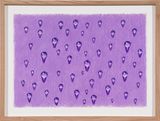
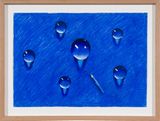
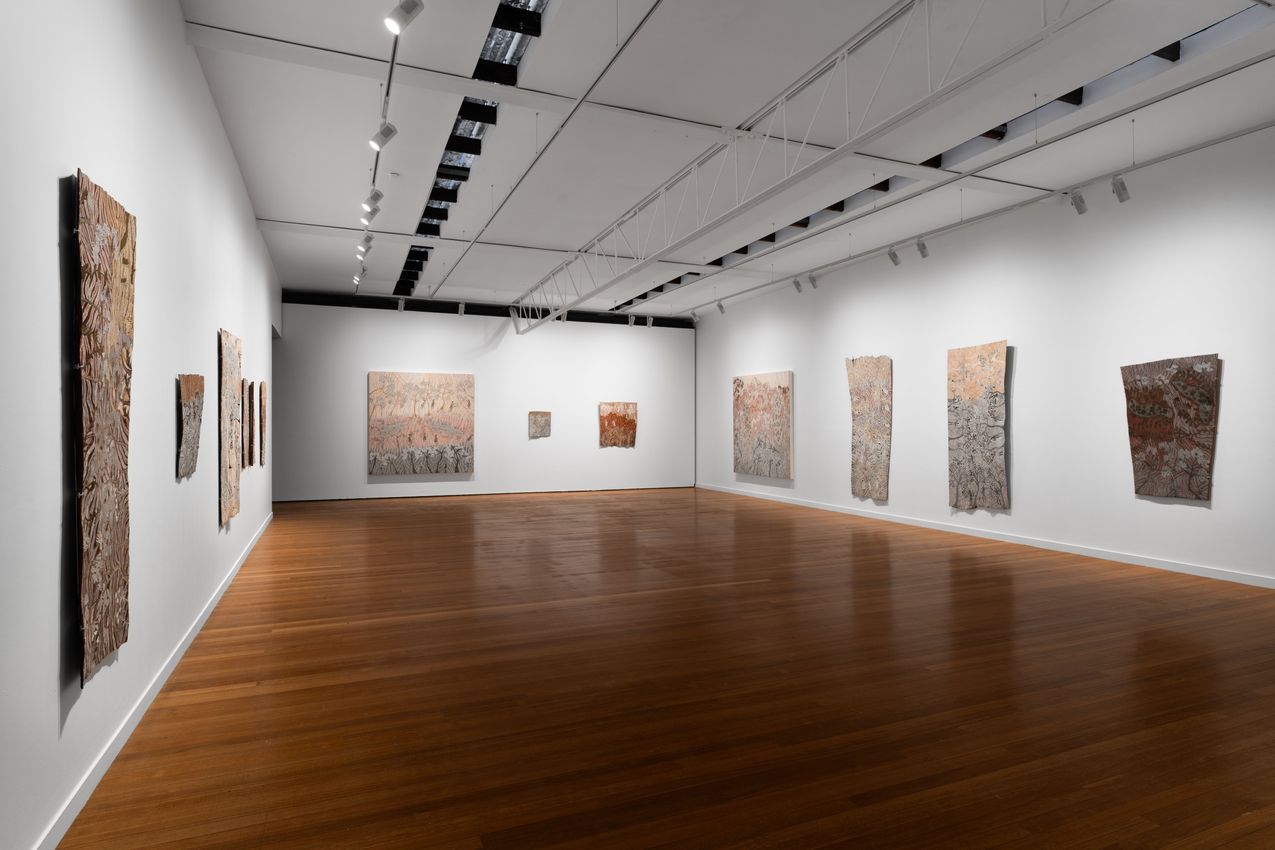
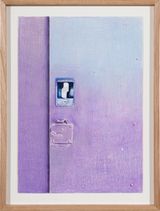
At the gallery entrance are a series of ten small, close cropped pencil and gouache drawings of nameless doors. Some of these were found down laneways, back entrances in hidden alcoves. Others are doors to utility boxes or doors erased by dense graffiti. In the small gallery a gridded collection of more drawings that range across repeated themes. Water drops, liquid spills, drawn holes in fading and smoke filled skies and comic smoke puffs. All of them intimate something at the edge of things, of our natural resources teetering and delicate.
Through this week with the install crew, we have been humming, whistling and singing that working class anthem ‘Dirty Old Town’ over and over. The song, originally written in 1949 by Ewan MacCall about his hometown of Salford, a heavily industrialized town in North West England, was popularised by Shane MacGowan and The Pogues in 1985. Macgowan’s rasping and raucous lilt, singing about lovers, factory walls, smoke stacks and the old canal, somehow binds this show together, with its combination of sweet longing and gritty lives.
I have been worried about reinventing the cheap and desolate as a bit pretty, but as a friend said quite simply the other day; “There’s nothing wrong with pretty.”
There’s nothing wrong with pretty.
Text by Callum Morton. Courtesy Roslyn Oxley9 Gallery, Sydney


Established in Sydney by influential Australian art dealer and gallerist Roslyn Oxley and her husband Tony Oxley in 1982, Roslyn Oxley9 Gallery is one of Australia’s leading commercial galleries.
A respected voice in contemporary art discourse.
Focusing on ambitious storytelling and insightful art-world commentary. Ocula Magazine publishes in-depth interviews, critical essays and timely analysis on the artists, exhibitions and ideas driving the global art world.
Learn more about Ocula Magazine
Showcasing the best of the art world.
Ocula partners with galleries from around the world to highlight their artists, artworks and exhibitions. Gallery membership is by application and invitation, with each member vetted by an independent panel.
Learn more about Ocula Membership

Specialises in the sale of major artworks.
Led by a team with deep ties to the world’s leading auction houses, galleries and collectors. Ocula’s advisory team offers bespoke services to high-net-worth clients from around the world who are looking to acquire the best of contemporary and modern art.
Learn more about our team and services