Press Release

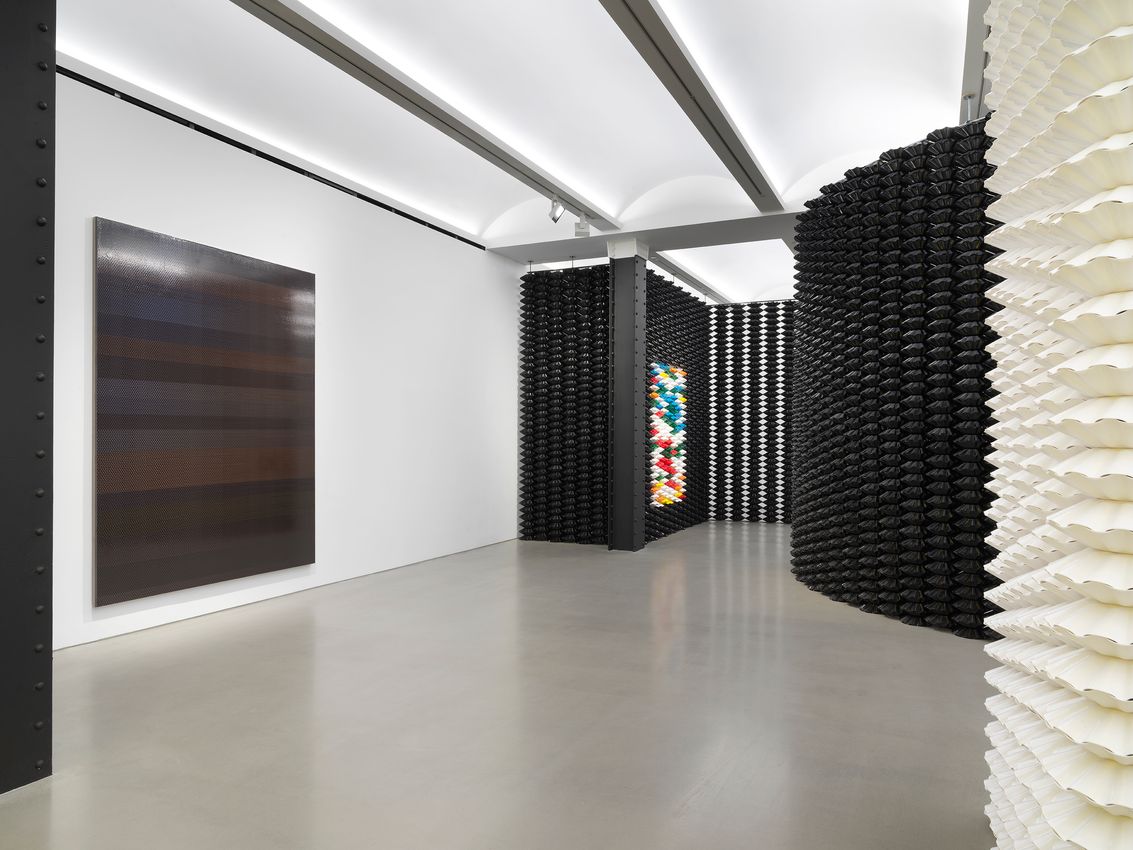
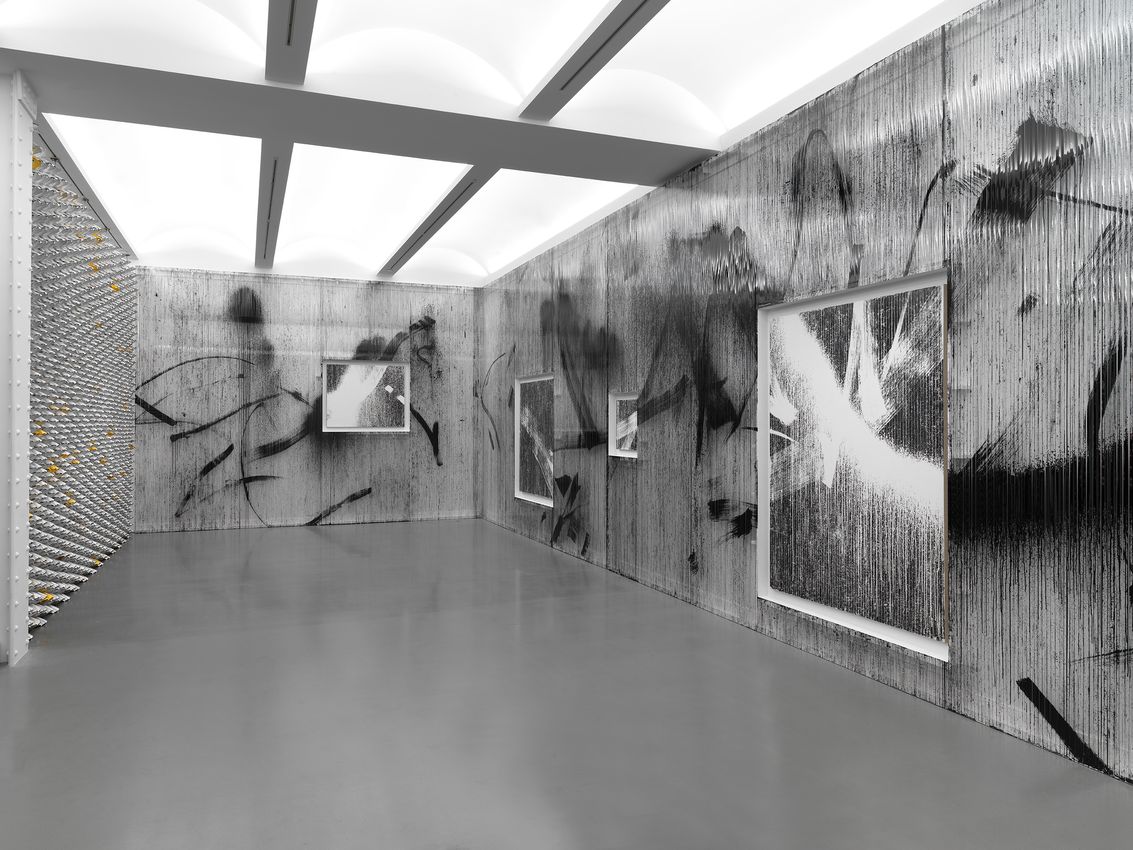
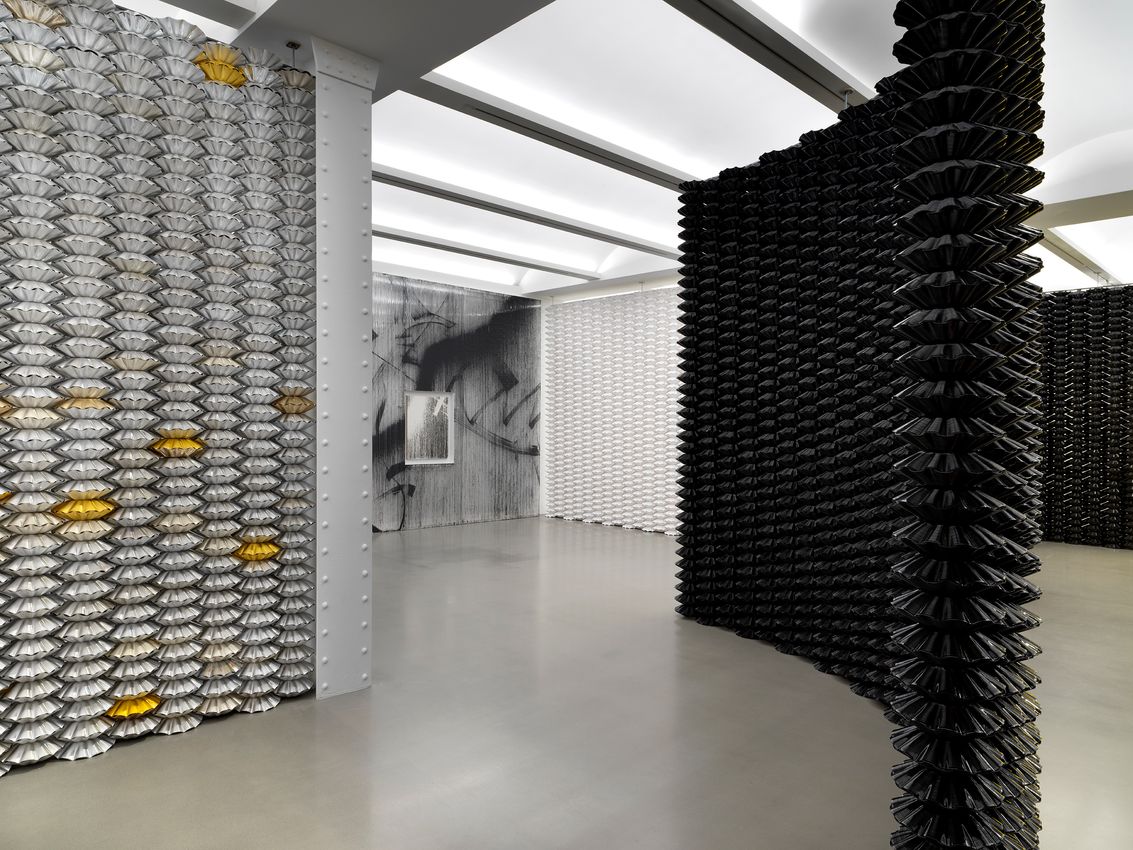
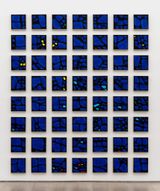
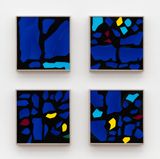
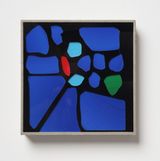
Gregor Hildebrandt uses audio as visual material. His work uses outmoded analogue recording technologies—the magnetic tape of cassettes, vinyl records—to create pieces that point beyond their sleek, reflective surfaces. Contemplating a work by Hildebrandt is a synaesethetic experience, as audio takes physical form. For his show at Perrotin, his 5th with the gallery, he has a created a labyrinth of panels made with various media.

Hildebrandt’s interest in magnetic tape extends beyond its visual potential. His selection of the recordings contained therein is as carefully intended. The artist himself is inextricably at the center of his work; it documents his musical tastes as much as his lived experiences, given music’s associative power. A viewer’s familiarity with a recording used by Hildebrandt, something a work’s title might give away, affords an experience of the piece beyond its visual impact.

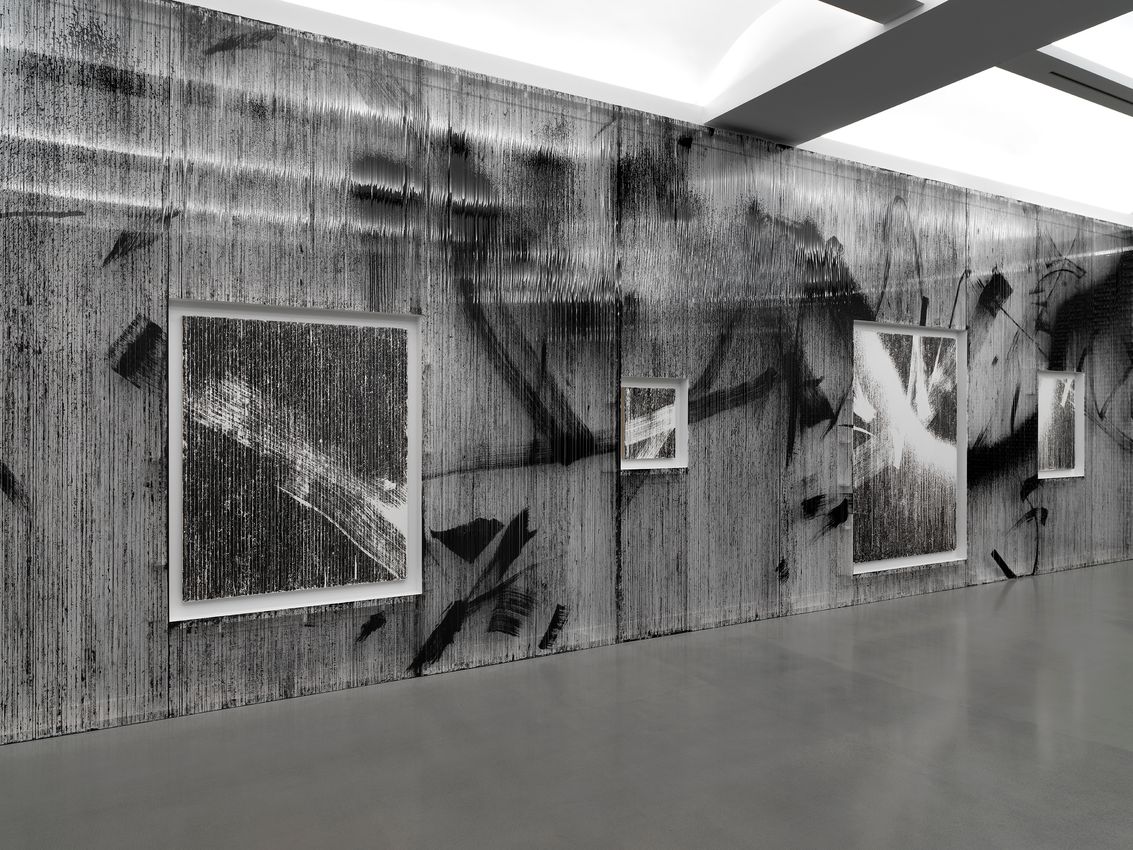
There is a kind of embedding that occurs in Hildebrandt’s work—of music, of course, but also of Hildebrandt’s own history with that music. Though the works have the appearance of blankness—black, white, and silvery tones dominate—they are rich, and multilayered with histories both cultural and personal. This, however, is subtextual and separate from the formal merits of his work, as magnetic tapes weave in and out, to and fro, in an impressive show of arachnid handiwork.

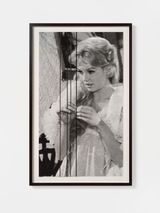
Hildebrandt’s magnetic tape works are a postmodern exercise in that they combine and and recombine known fragments. Though his works are allusive, they don’t over-rely on their source material and are shrouded in a mystery that is a product of their encrypted material. His stark minimalist aesthetic belies a kind of built in nostalgia that is natural of works that are an homage to a thing loved, albeit a tacit one. (Other works by Hildebrandt wear their nostalgic streak right on their sleeve, as in his series of photos of Hollywood movie stars seen through a Saul Leiter- inspired rain speckled lens.)

The infinite musical variety contained in Hildebrandt’s work doesn’t seem to perturb the relative consistency of its physical form, magnetic ribbons woven in intricate patterns. Sleek surfaces, stark forms, and a restrained colour palate make Hildebrandt’s work instantly recognisable for its graphic sensibility. His preference for black recalls Ad Reinhardt’s interest in the seemingly interminable range of that colour, as well as Wade Guyton’s shared exploration of reproduction technologies, to name a contemporary of Hildebrandt’s.

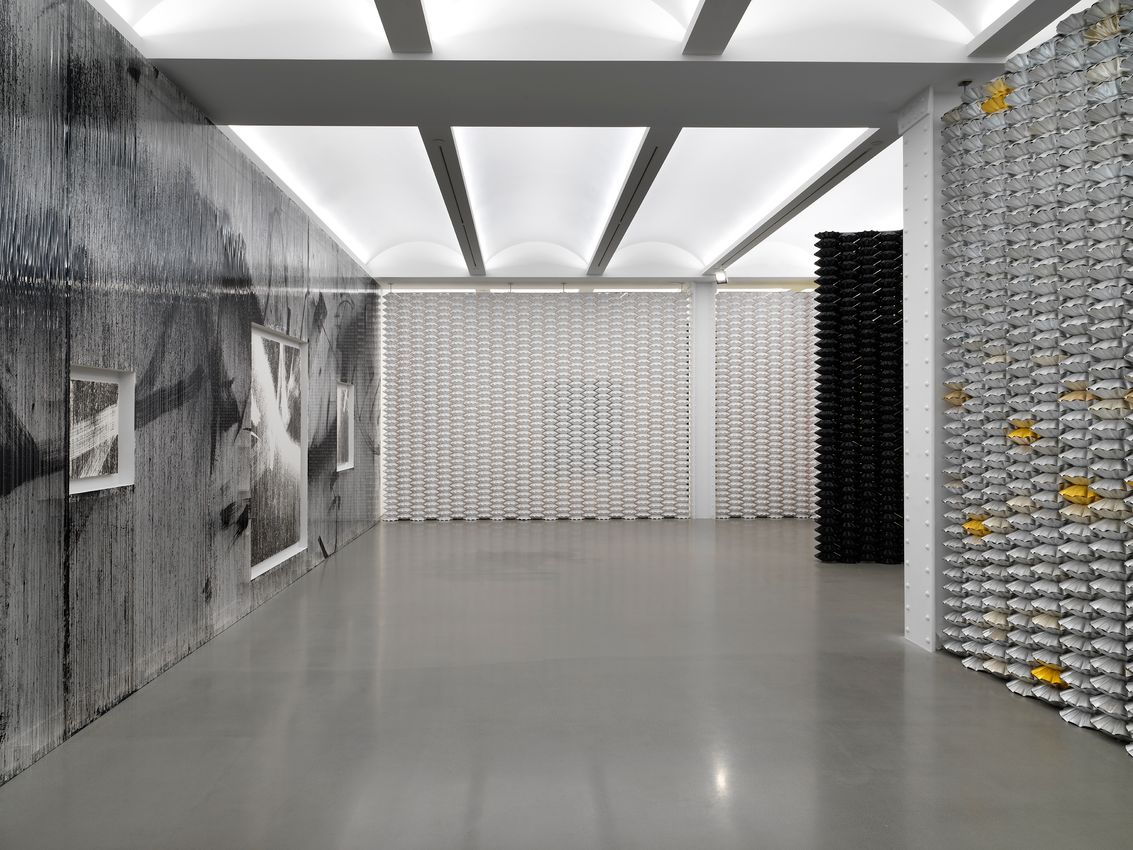
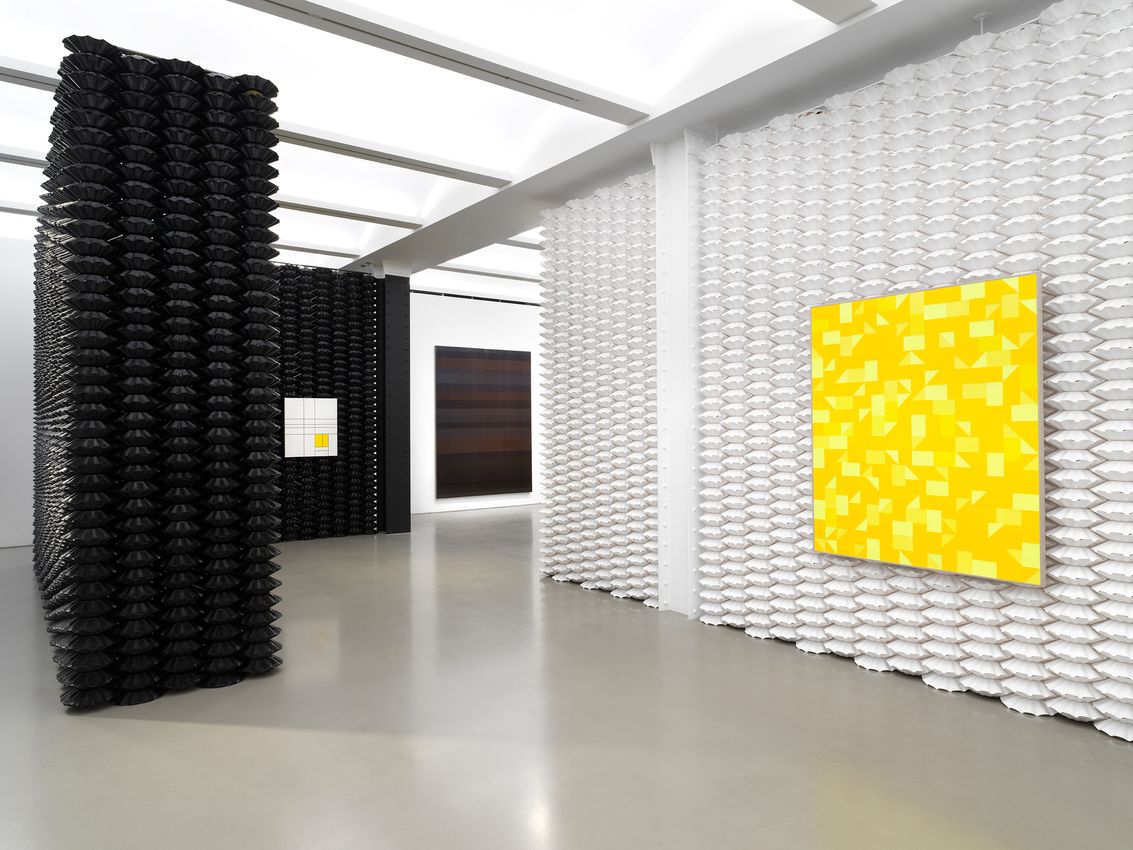
For this exhibition at Perrotin, Hildebrant has envisioned a total environment. Works take on architectural proportions, acting as a series of screens that organise the space and determine how the viewer moves throughout it. Here, Hildebrandt’s experiments in the visual form of music are amplified, as the viewer is enveloped in a mute musical fabric.

Gregor Hildebrandt (born 1974 in Bad Homburg vor der Höhe, Germany) lives and works in Berlin und Munich. He is professor of Painting and Graphics at the Academy of Fine Arts in Munich since 2015. His works are present in renowned collections, such as the collection of Centre Pompidou in Paris, the Contemporary Art Collection of the Federal Republic of Germany, the Yuz Museums’s collection in Shanghai, the Martin Z. Margulies Collection and the Rubell Family Collection in Miami and the Burger Collection in Hong Kong. Hildebrandt will have a solo show at the Kunsthalle Recklinghausen this fall.

Read More

Installation Views

About the Artist

Gregor Hildebrandt’s signature mediums are cassette tape and vinyl, which he collages and assembles into apparently minimalist yet latently romantic paintings, sculptures and installations. Resting in silence behind the glossy surface of his analog aesthetics, which verges on black-and-white monochrome, music and cinema haunt his practice. Whether pictorial or sculptural, all his works contain pre-recorded materials, which are referenced in the titles. Usually a single song, these pop-cultural sources are meant to trigger both collective and personal memories. Like analog storage mediums, his distinctive rip-off technique is a metaphor for the mnestic process itself: it consists in rubbing magnetic coating against double-sided adhesive tape glued on canvas to trace intricate and elusive powdery patterns. Further relating to architectural Gesamtkunstwerk, Gregor Hildebrandt’s monumental sonic barriers made of stacked, bowl-shaped records, as well as his sensual wall curtains made of unreeled tapes, draw and envelop wandering paths for the visitors of his shows.

View Artist Profile

Also Exhibiting at Perrotin

About the Gallery
Emmanuel Perrotin founded his first gallery in 1989 at the age of 21. He has opened since then over 17 different spaces, with the aim of continuing to offer increasingly vibrant and creative environments to experience artists work. He has worked closely with his roster of artists, some since more than 25 years, to help fulfill their ambitious dreams and projects. The gallery is now based in New York, Paris, Hong Kong, Seoul, Tokyo, and participates in all the significant worldwide art fairs each year (Art Basel (Hong Kong, Miami, Basel), Frieze (London, New York), FIAC (Paris), Dallas Art Fair, Art Cologne, Art Stage Jakarta, Expo Chicago, Art021 & West Bund Art & Design, Shanghai, Zona Maco Mexico, amongst others).
View Gallery Profile
Address
130 Orchard Street
New York
United States
Opening Hours
Tuesday – Saturday
10am – 6pm
(1)
New York 130 Orchard Street
Perrotin
130 Orchard Street, New York, United States
+1 212 812 2902
http://www.perrotin.com

Opening hours
Tuesday – Saturday
10am – 6pm
The art world in focus