Press Release

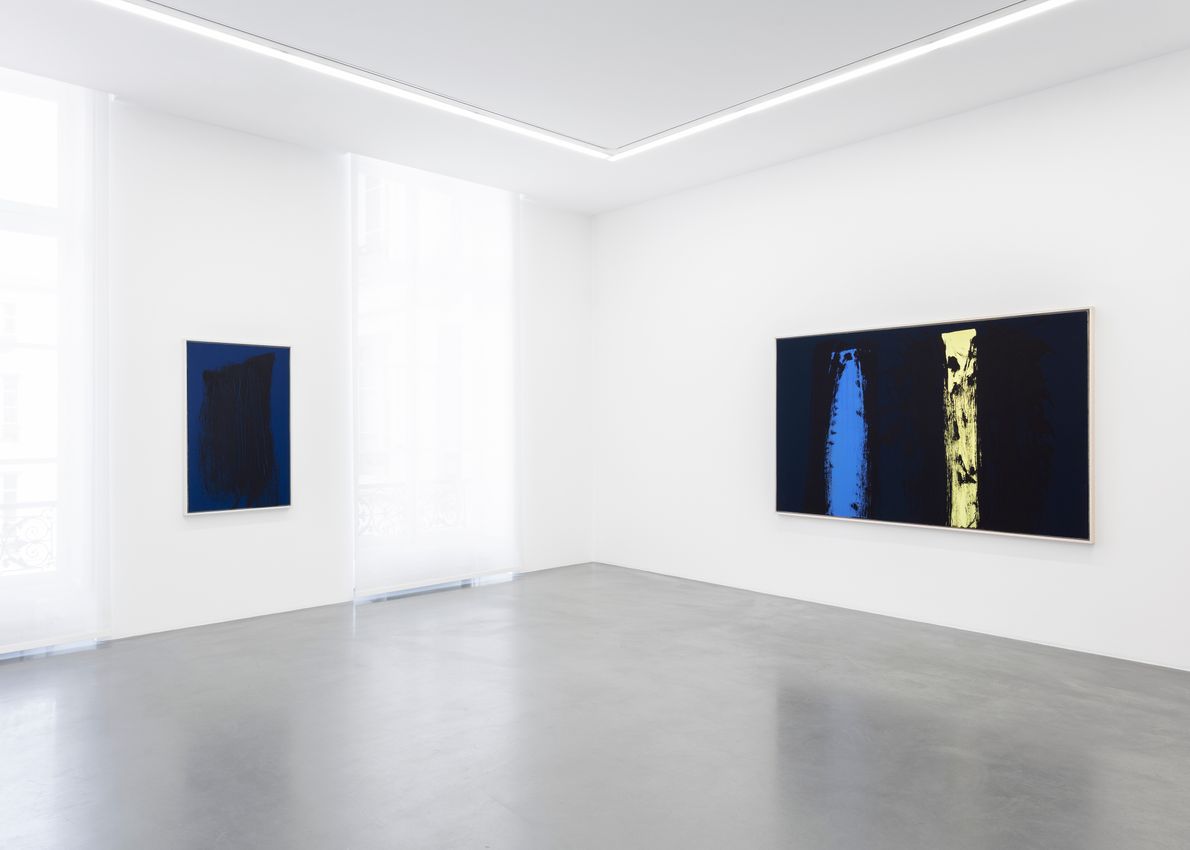
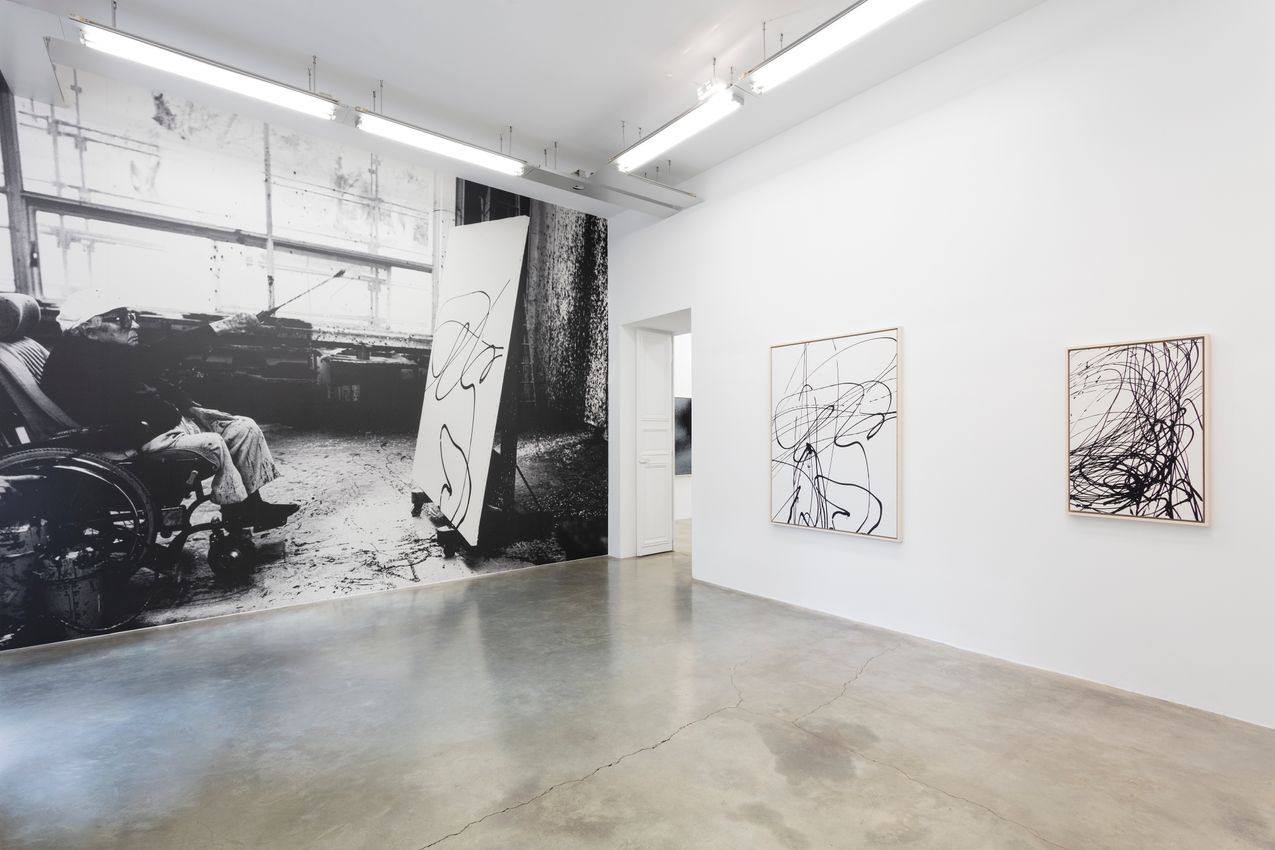
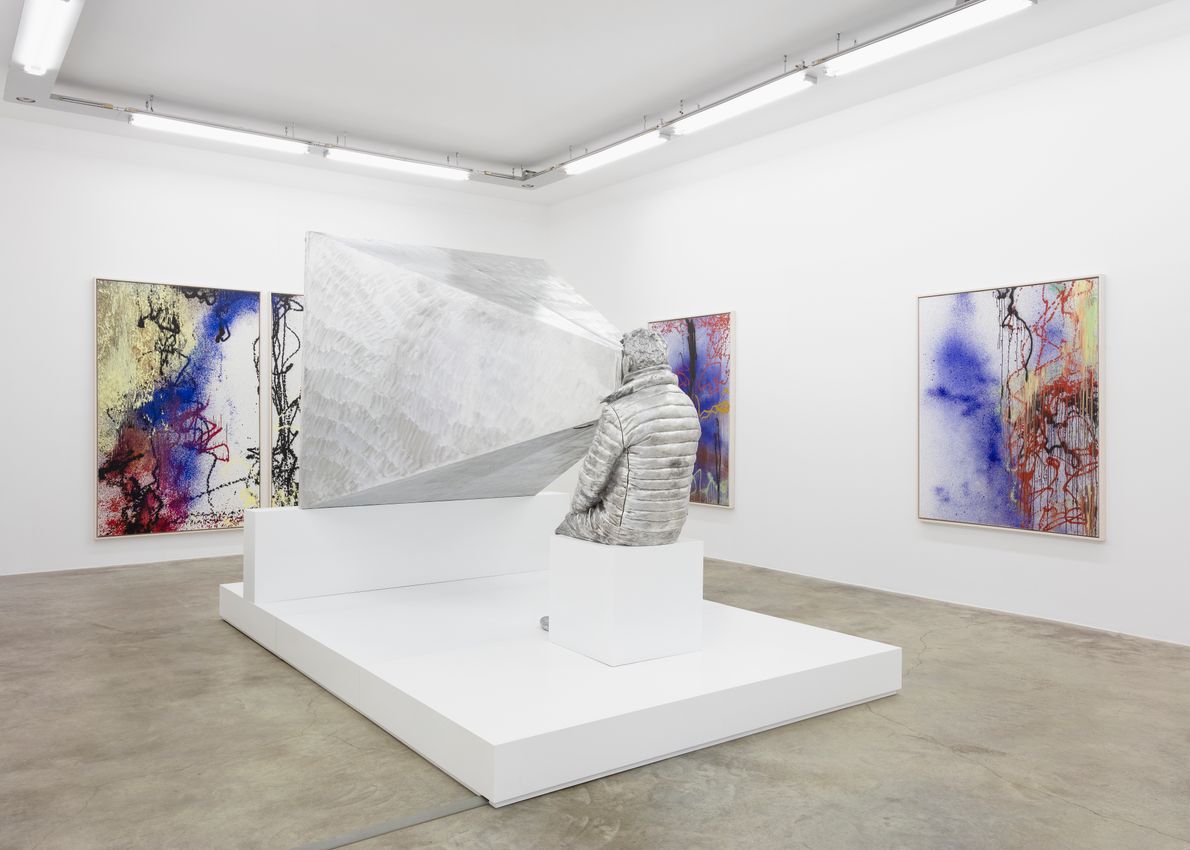
Explosive, aerial, vitalist: the adjectives that describe Hans Hartung‘s production in the 1980s are wholly antithetical to what one might expect of an artist’s ‘late period.’ Through countless variations and technical experiments—particularly in the use of different paint projectors (airless guns, ziplines, portable sulphate sprayers)—Hartung created works of unprecedented breadth. He combined this methodology with a total freedom of expression that, thanks to his procedural recollection and more than six decades of gestural precision, worked in perfect harmony with what he created throughout his lifetime. The 1980s highlighted the ultimate achievement of his abstraction: liberty of form, maximum energy of the line, associations between accident and virtuoso mastery.

Perrotin presents an in-depth exploration of this era of Hartung’s work, divided into seven sequences and organised by form and technique. The period is too little-known, despite the full scope of the artist’s 2019 retrospective at the Musée d’art moderne de Paris.

Between the ages of 75 and 85, Hartung developed and renewed his techniques in his atelier in Antibes, where he had a space suitable for these experiments. The artist was physically diminished by both old age and an amputation following the war, yet he maintained a tremendously vital psychology and energy; furthermore, being an established figure throughout the world, he sought no other satisfaction than to delight in producing the most inventive abstraction, emancipated from all external gazes.

Paintings from this period were exhibited in the past, during the 1980s and 1990s, but they experienced a long purgatory, critically speaking. Interest has recently been revived—driven, on the one hand, by institutional rediscoveries (through the exhibition Hartung and the Lyric Painters in Landerneau, as well as the acquisition of four works from 1989 by the Musée d’art moderne de Paris in 2016–2017). But it is also thanks to contemporary artists, who cite him with deep admiration: among them Christopher Wool, Katharina Grosse, and Larry Clark,.

Read More

Installation Views

About the Artist

Hans Hartung achieved international recognition as a seminal figure of Art Informel, which arose in France during the Second World War. Besides the apparent spontaneity of his distinctively bold and almost calligraphic gestural abstraction, rationalism equally informed his style out of an early interest in the relationship between aesthetics and mathematics, particularly the harmony of the golden ratio, but also out of necessity: he used to meticulously square up his successful abstract sketches in order to reproduce them onto larger canvases, which he couldn’t afford to risk losing to improvisation. The Grand International Prize for painting, which he won at the 1960 Venice Biennale, marked a decisive turn in his practice. He began improvising directly onto canvas and experimenting with new mediums, namely fast-drying acrylic and vinyl paints, as well as scraping and spraying techniques. The quest for a balance between spontaneity and perfection remained at the core of Hans Hartung’s painterly aesthetics until the end of his life, in 1989.

View Artist Profile

Also Exhibiting at Perrotin

About the Gallery

Emmanuel Perrotin founded his first gallery in 1989 at the age of 21. He has opened since then over 17 different spaces, with the aim of continuing to offer increasingly vibrant and creative environments to experience artists work. He has worked closely with his roster of artists, some since more than 25 years, to help fulfil their ambitious dreams and projects.

View Gallery Profile
Address
76 rue de Turenne
Paris
France
Opening Hours
Tuesday – Saturday
10am – 6pm
(1)
Paris 76 rue de Turenne
Perrotin
76 rue de Turenne, Paris, France
+33 1 42 16 79 79
http://www.perrotin.com

Opening hours
Tuesday – Saturday
10am – 6pm
The art world in focus