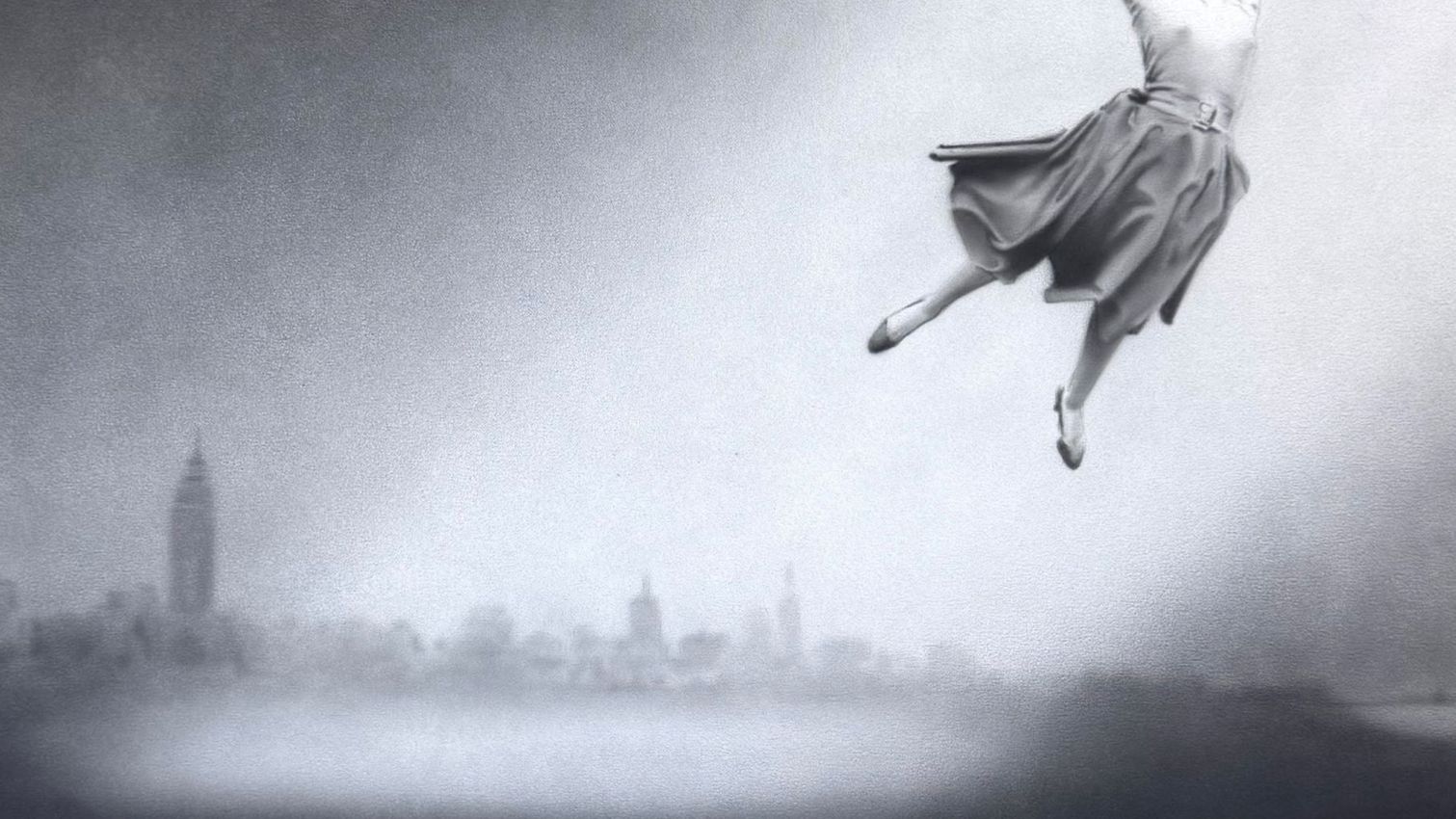




Perrotin New York is pleased to present Jesper Just’s film Interfears, alongside the debut of an accompanying series of MRI prints. Screened for the first time in New York this November, the film originally debuted last year at Perrotin LA—in the historic Del Mar Theatre—followed by an exhibition at Musée d’art contemporain de Lyon. In Interfears, Just monitors the brain activity of an actor in character, exploring our relationship with emotionality and the daily performance of being human.
Jesper Just’s video installations combine his technical knowledge of film with a desire to disrupt linear narrative structure, creating surrealist encounters that leave us with more questions than answers. Over the last three decades, Just has developed a stylized approach that weaves fragmented, inconclusive storylines into his sensorially loaded environments. While watching his films, viewers must search for clues, focusing not only on the actions of his characters but the emotional discourse. Interested in how public and private spaces define human interaction, Just utilizes his character’s surrounding environments to guide plot lines. And, his elaborate film scores build narrative progression, where music often serves as an integral means of communication.
_Interfears _explores the claim that emotions can be learned, and staged, following the protocols of our social and cultural environments. In the film, Academy Award nominee Matt Dillon is seen enclosed in an fMRI as he recites a monologue. While Dillon plays a character, the machine records the actor’s authentic response, blending both beings into one shared existence. Over the course of the film, the seemingly emotionless character becomes overwhelmed, in a failed attempt to control his emotions.
In the film, Just’s elaborate sound design cultivates a narrative on screen, guiding us through the development of Dillon’s character. Throughout the course of the film, the actor’s emotional response is mirrored by intense musical transformation. At first, Dillon’s monologue is accompanied by the cold, monotonous sound of the fMRI machine, which over time is replaced by orchestral melodies of Gustave Mahler’s Fifth Symphony Adagietto. As we watch Dillon become overwhelmed by his emotions, the haunting Adagietto reaches its climax.
Supplementing the film, Just debuts a series of MRI prints which map the topography of Dillon’s acted emotions. The captured array of emotions—terror, joy, sadness—each light up a specific part of the brain. In his prints, Just blends various angles of the brain during each emotion in a collage of neurological activity, resulting in two dimensional representations of the mind throughout the performance.
In Interfears, the actor and character come together, blurring the boundary between real and simulated emotional response. As Jesper Just says, “What do you do with your ego when you are playing a role? Are you possessed? Are you still aware of who you are?”
More about the artist
Jesper Just (b. 1974 in Denmark) is a New York-based artist who is known for his immersive video environments. He has exhibited at global institutions, including Stedelijk Museum, Amsterdam; Kunsthalle Vienna; Brooklyn Museum; Tampa Museum of Art; The 55th Venice Biennale; The National Museum of Modern and Contemporary Art, South Korea; Palais de Tokyo, France; Museum of Art Architecture & Technology, Lisbon, Portugal; Marino Marini Museum, Italy; and recently a permanent project “The Garden in the Machine” at Filmby Aarhusin Denmark.
Jesper Just uses the language of cinema to confront and divert the stereotypical Hollywood constructs of masculinity and femininity, as well as the biased representation of minorities and people with disabilities in mainstream culture. His short films and multi-projection video installations question the mechanisms of cinematic identification and break the viewers’ expectations of narrative closure by unfolding surreal-like, emotionally ambiguous, open-ended, and often silent situations of encounters. Whereas his use of lush, elaborated film scores plays a crucial part in creating an overall deceitful sense of narrative progression, music rather than speech also often serves as the sole means of communication between the protagonists of his unfathomable plots. Being interested in how public and private spaces define and shape the nature and extent of human interactions, Jesper Just further plays with the notion of architecture performing in his films and installations to echo and expand his characters’ enigmatic journeys.


A respected voice in contemporary art discourse.
Focusing on ambitious storytelling and insightful art-world commentary. Ocula Magazine publishes in-depth interviews, critical essays and timely analysis on the artists, exhibitions and ideas driving the global art world.
Learn more about Ocula Magazine
Showcasing the best of the art world.
Ocula partners with galleries from around the world to highlight their artists, artworks and exhibitions. Gallery membership is by application and invitation, with each member vetted by an independent panel.
Learn more about Ocula Membership

Specialises in the sale of major artworks.
Led by a team with deep ties to the world’s leading auction houses, galleries and collectors. Ocula’s advisory team offers bespoke services to high-net-worth clients from around the world who are looking to acquire the best of contemporary and modern art.
Learn more about our team and services