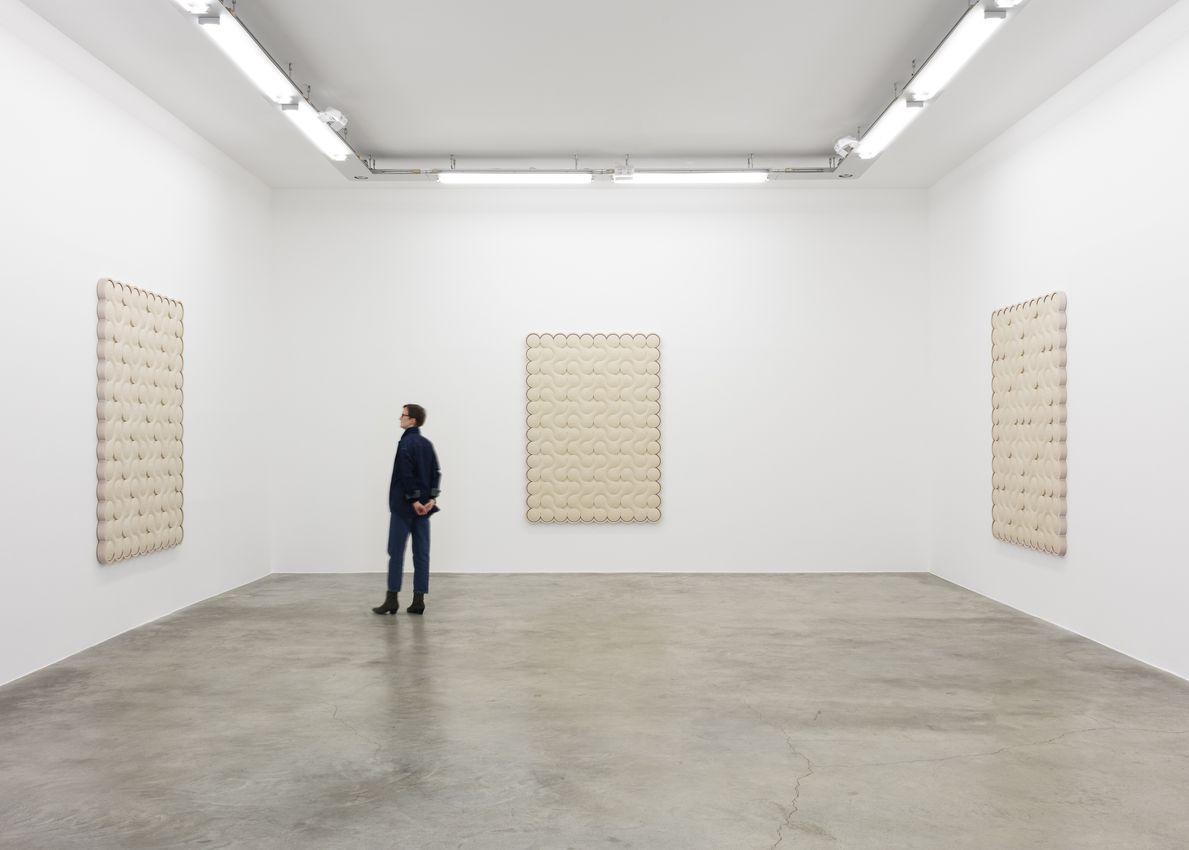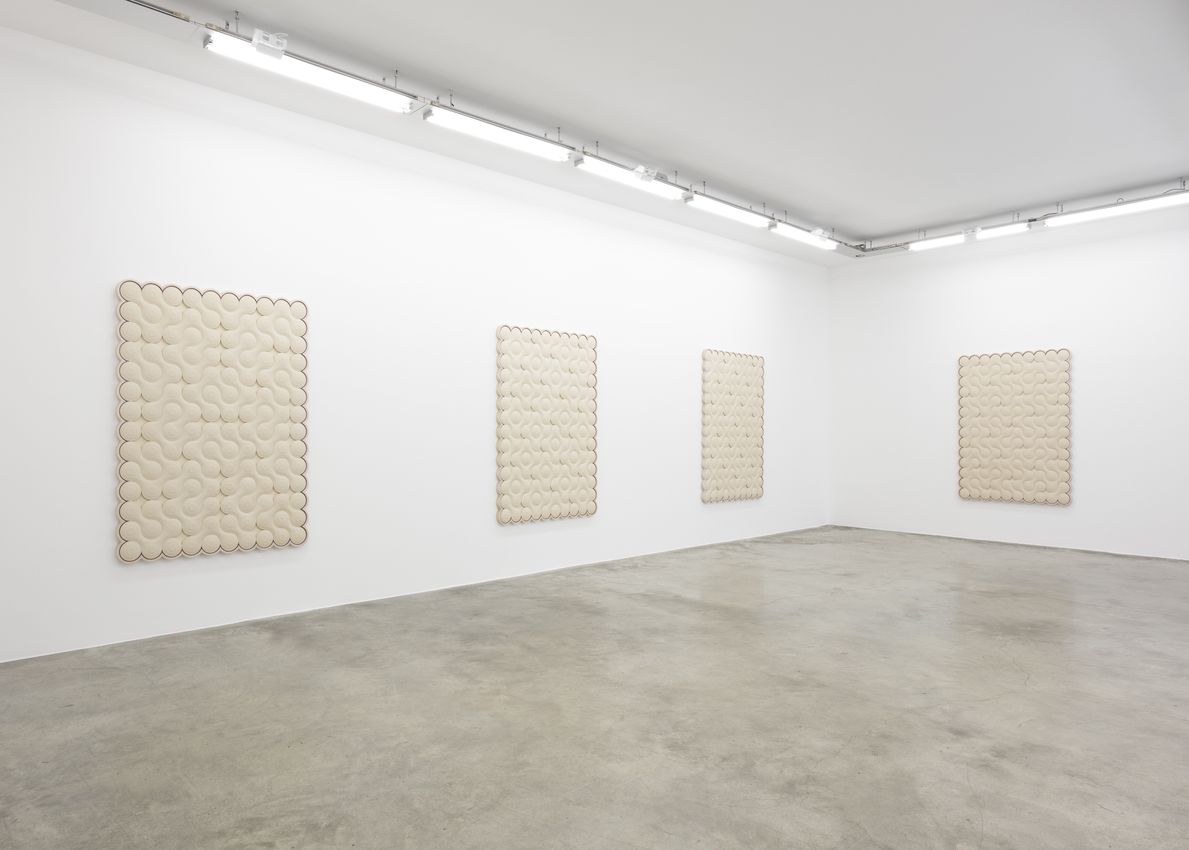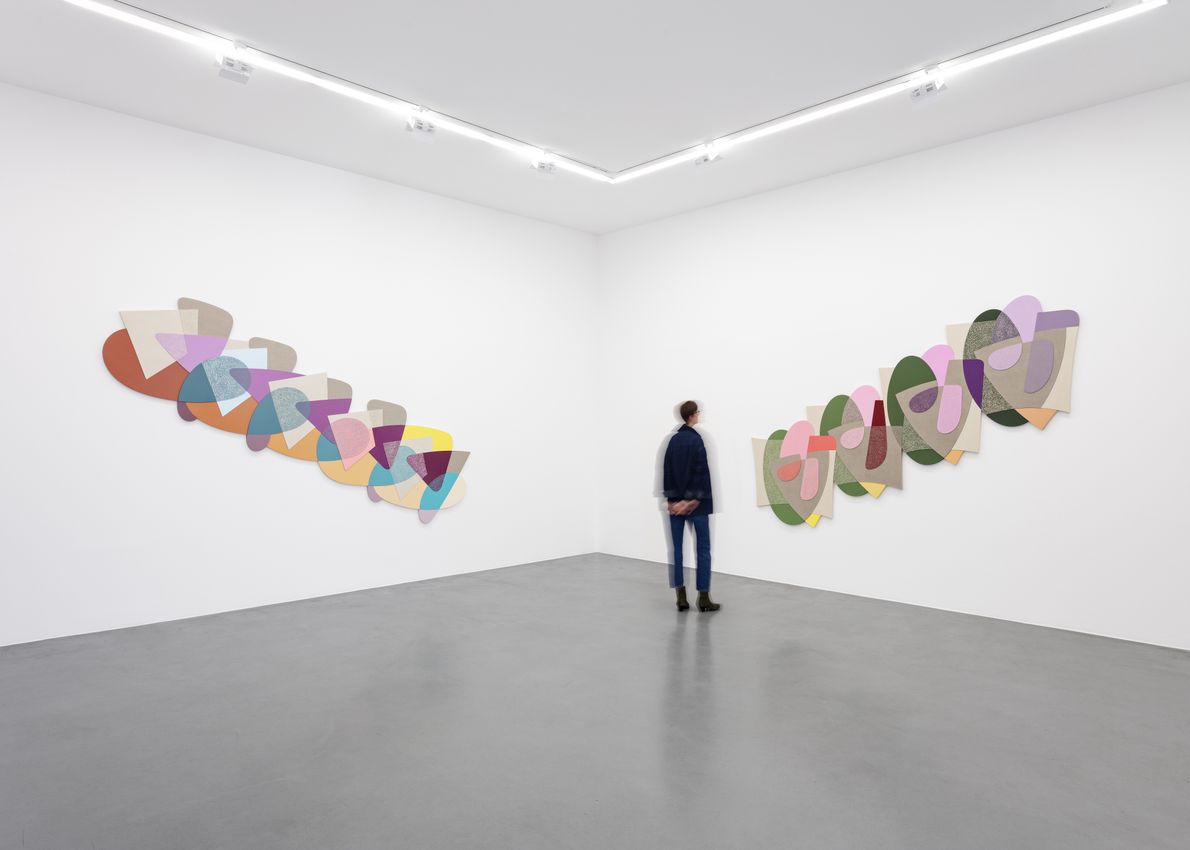
Perrotin is pleased to present Head Over Heels, a solo exhibitionby artist Josh Sperling organised across two exhibition spacesof the Marais’ gallery. For this new exhibition, Sperling present anew series of works based on an elementary compositional unithe has designed resembling a bullseye: a signature motif.
For Josh Sperling, painting is not just a matter of dipping a brush into colour and applying it to a ground. It is an elaborate process involving both theartist’s hand and digital technologies. Drawing on a wide array of influencesthat include the modular compositions of minimalism, the shaped canvasesof Frank Stella, and the Op Art of Victor Vasarely, Sperling not only paintsa painting, he reinvents and reconstructs painting using new tools andmethods, exploiting its edges and overlaps with sculpture, architectureand design.
Sperling’s paintings resemble puzzles, strictly mapped and assembledwith no intermediary spaces. He begins by designing the shapes of hisworks in black and white line drawings, alternating between tablet andpaper. These shapes are defined, mainly, not by what is applied to the frontof the canvas, but by the network of stretchers behind it. Few paintersdevote so much attention to the design and execution of these underlyingstructures. Elaborately constructed armatures made of wooden bars andpanels, they resemble topographic maps: sculptures in and of themselves.And yet he makes great efforts to hide them behind seamlessly stretchedcanvases.
Fabricating these stretchers and getting the canvas tight around their eccentric forms is a demanding skill. Sperling attributes his appreciation for craftsmanship to his background; he was raised in a family of five generations of woodworkers and furniture makers, and the construction of his paintings draws deeply from the repertoire of these trades. Digitally crafted on a computer-controlled cutting machine and assembled by hand, each painting comprises many interlocking elements –over one hundred in certain pieces. He uses these elements to create volume, modulate colour through light and shadow, and play with our perception. The intricate armatures give a three-dimensional, beveled effect to his shapes, and make his canvases float off the wall and project into space. The front and the back of the art–the image and its underlying construction–are contiguous and mutually supporting.
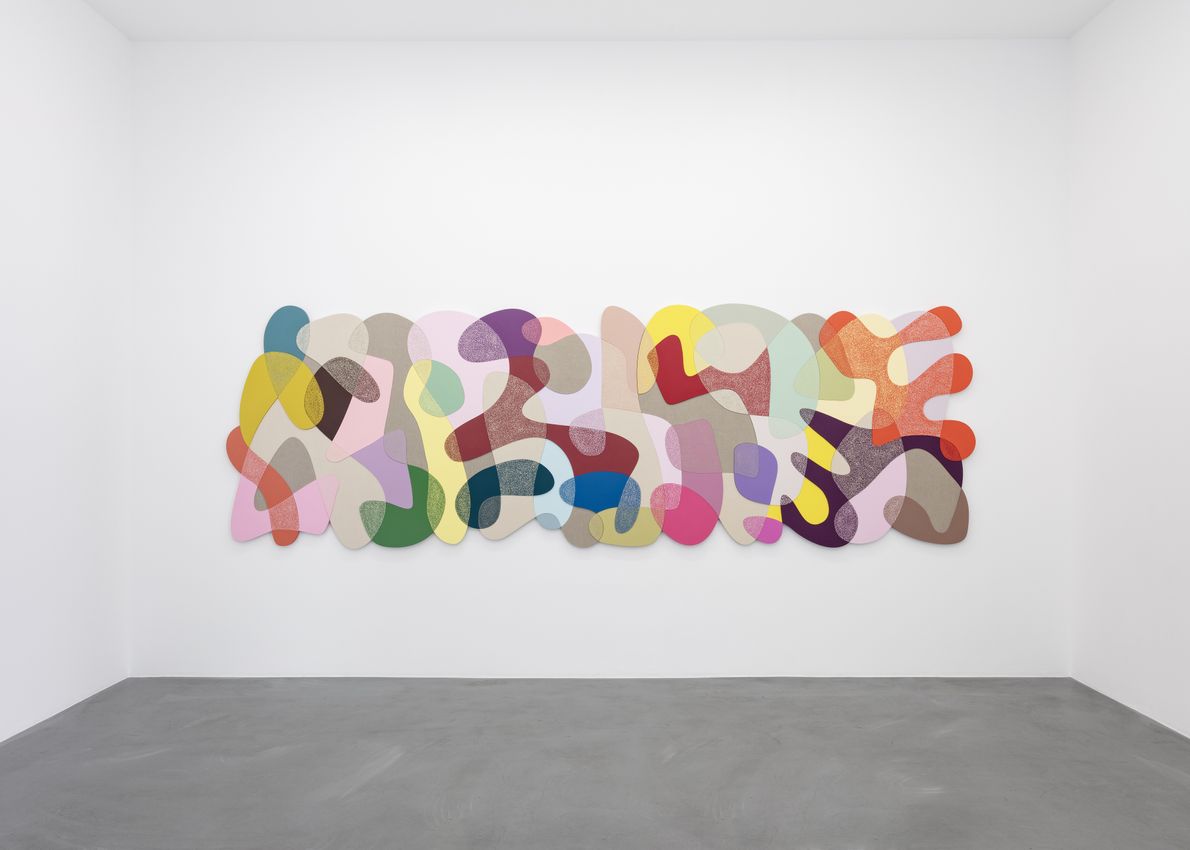
On the gallery’s first floor, the artist presents a new series of works based on an elementary compositional unit he has designed resembling a bull- seye: a signature motif. In earlier paintings, he used only two of these shapes, interconnecting them in a ‘double bubble’ motif. Here, however, they become the building blocks for experimenting with a wide variety of forms. Shapes resembling bicycle chains, zigzags and letters of the alpha- bet are repeated and interlaced into larger squares or rectangles. Like Mozart’s game of musical dice, where measures of music are shuffled to create new variations, Sperling generates with each work a unique configuration. Using a simple shape to create multiple permutations, Sperling playfully combines the pleasure of variety with a pride in ingenuity and mastery.
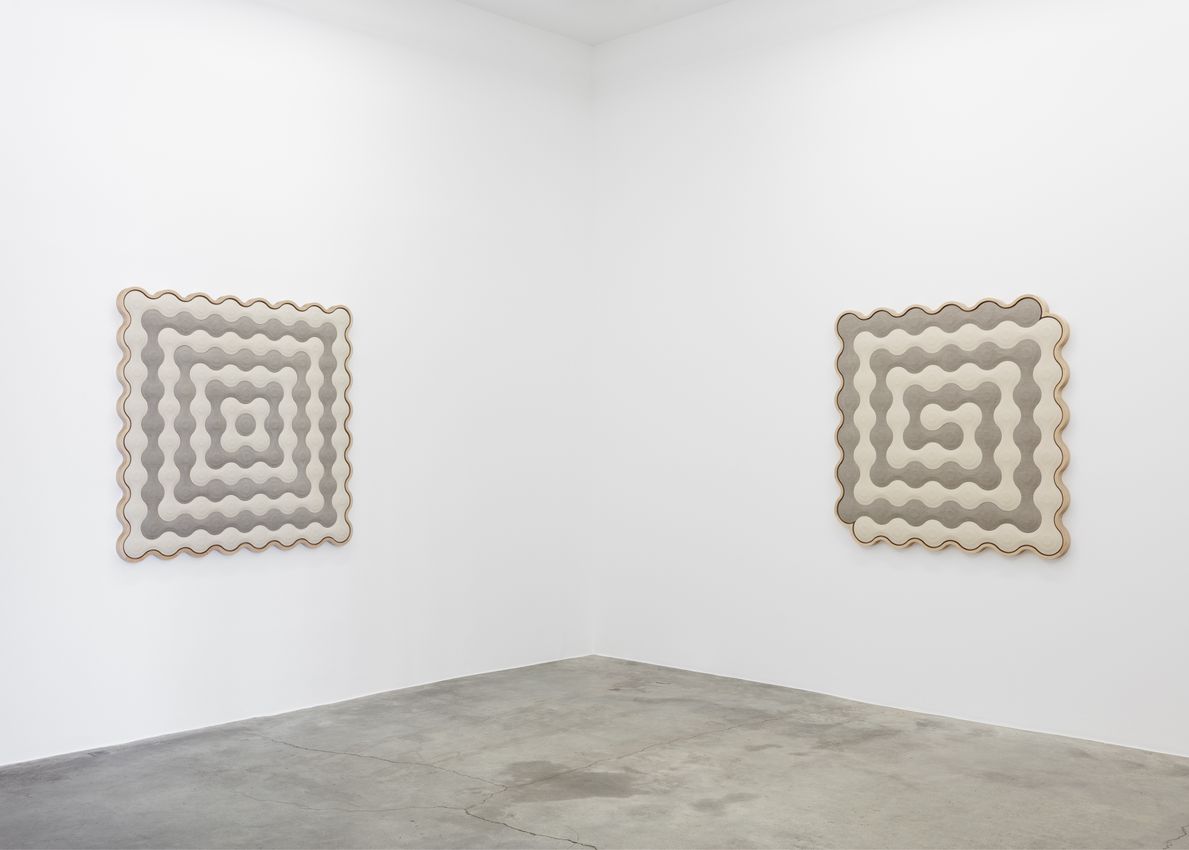
Sperling purposefully leaves these canvases unpainted to successively emphasise and de-emphasise the varied patterning in his work. In the first gallery, he alternates rectilinear chains of bullseyes covered in raw cotton and linen to create two clearly differentiated grey and off-white concentric designs. In the second, he presents a series of six monochrome works using only raw cotton. This lack of contrast and colour variation stills the fluctuations of the patterns, making them difficult to discern.
The regularities and rhythms of these monochromes latch on to the flowof our sensory experience, like a tune that keeps running in our head andasked to be hummed. At the same time, they hold our gaze and keep usscanning for a shift or break in repetition, our attention fluctuating betweenauto-pilot assimilation and heightened awareness. Sperling invites us toslow down and experience the work in its material presence: ‘I want theviewer to think that they are all the same, and then slowly notice the subtle variety of each.’
Our brains are wired to recognise patterns and probe for irregularity. Thisdrives our innate attraction for ornamental design and the geometry ofnature - our pleasure in contemplating things like Islamic tile work or theformation of a crystal. In his study of decorative art, E. H. Gombrichargued that this feeling of aesthetic delight lies ‘somewhere betweenboredom and confusion.’ Sperling, too, is fascinated by symmetries innature and the patterns of ornament. Among the many visual referencesin his studio are books on Art Deco jewellery and plant biology. Sperlingplays with the balance between chaos and order, regularity and irregularity that characterise many structures of the natural world, as well as theornamental patterns we humans consciously produce.
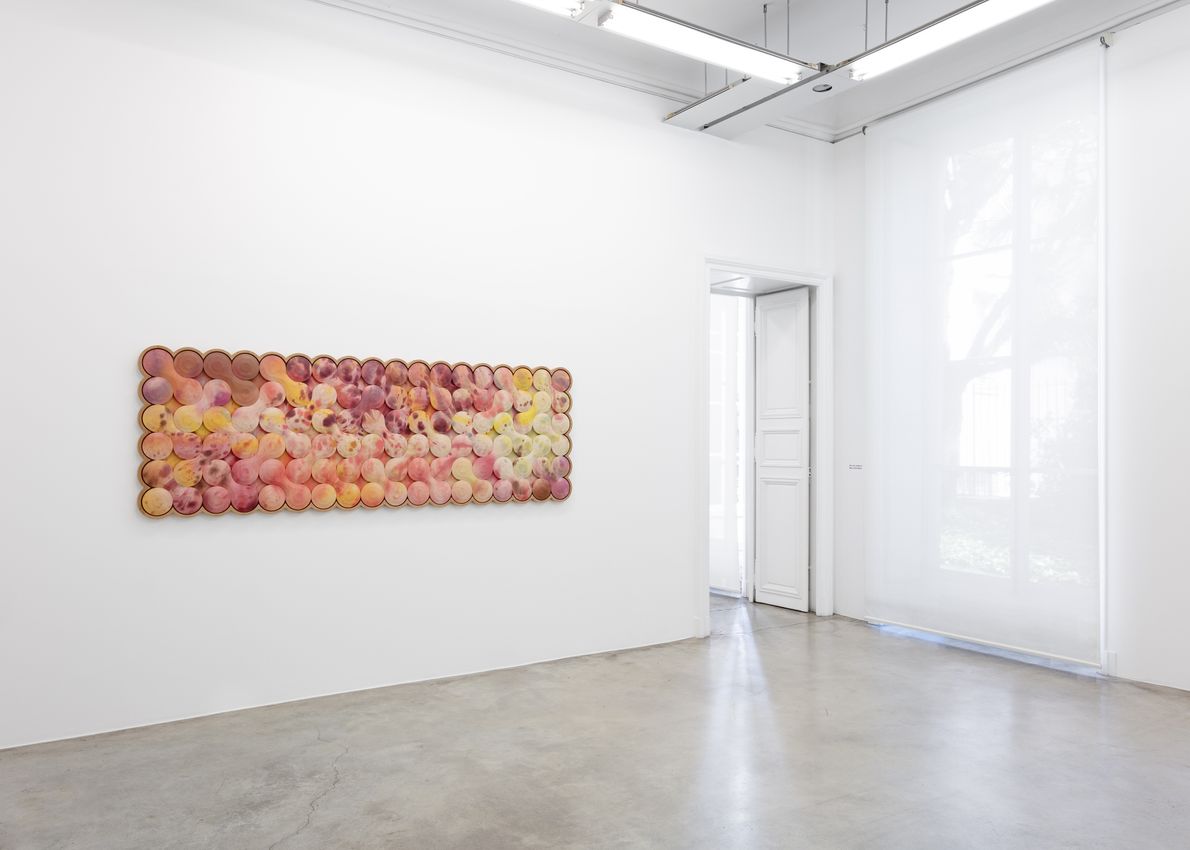
In the third gallery, a sudden visual crescendo awaits us as the exhibitionprogresses from the subtle play of light and shadow of the monochromes to splashes of vibrant colour in his AbEx series. The artist compares this to wine tasting, where ‘you begin with the light bodied wines before moving onto full-bodied flavours.’ Here, cloudy patches of pale peach, pastel pink, emerald green, and ultramarine blue stipple their canvases like a tie-dye, with mottled and marbled blots. To create these painterly effects, Sperling works on the floor dripping and squeezing acrylic paint onto the surface of a wet canvas, using a stencil to delineate his double bubbles before cutting out and assembling the work. Employing abstract expressionist painting techniques, he introduces an element of spontaneity into his rigorous geometric grid, disrupting the legibility of the double bubble pattern by divorcing colour from form.
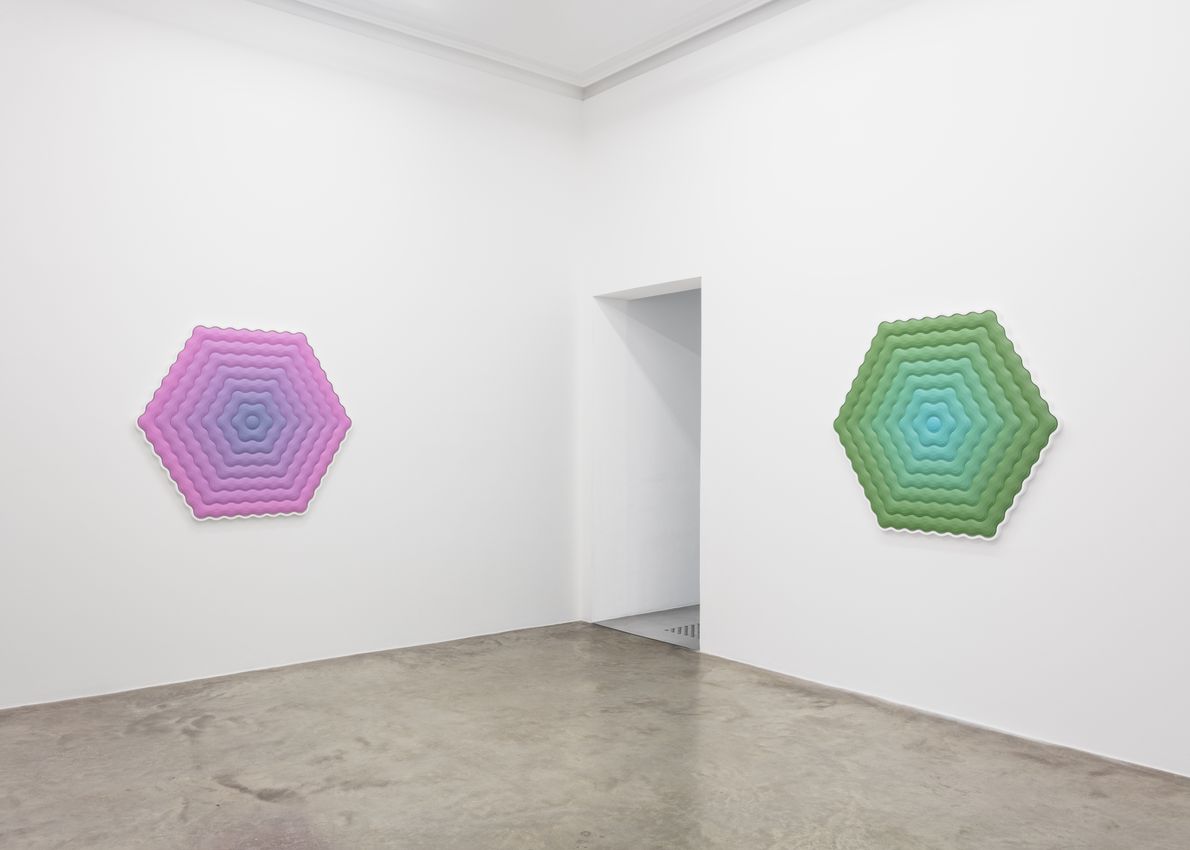
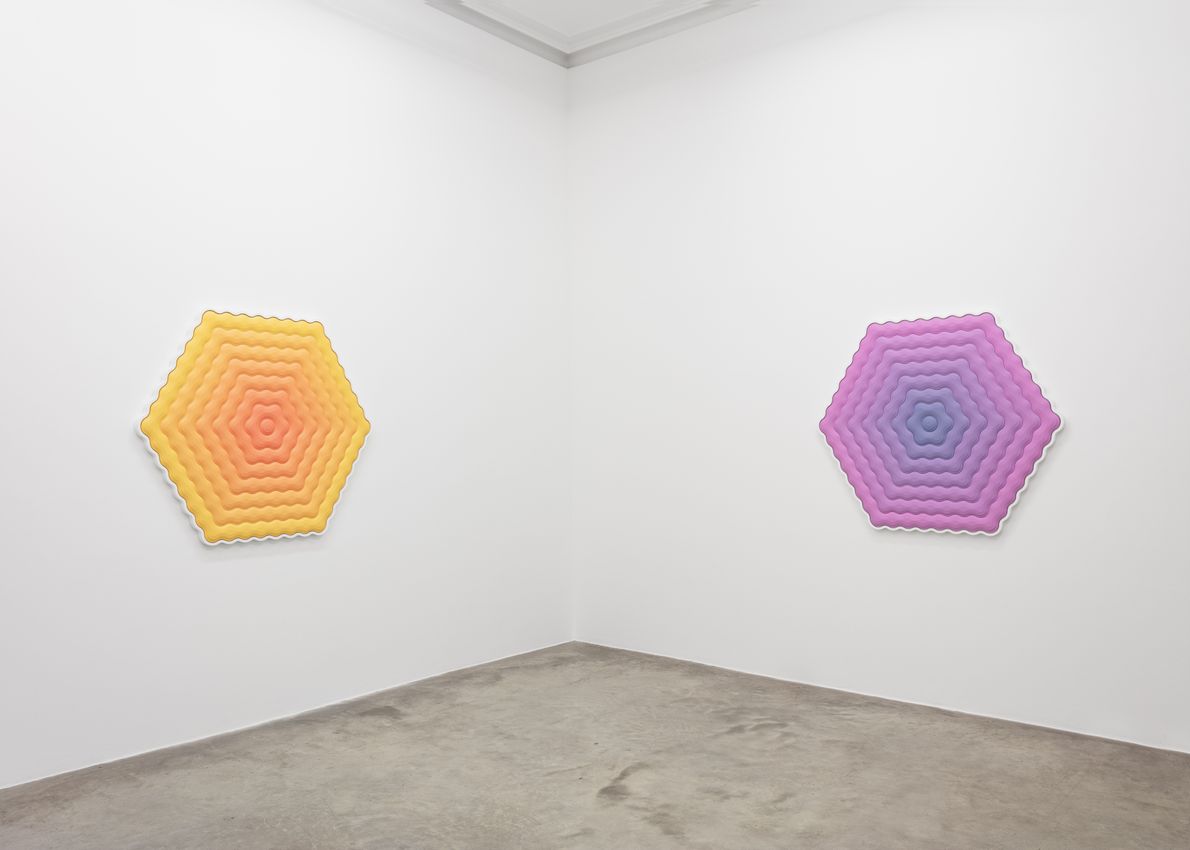
Inspired by the colour theories of the Bauhaus masters Johannes Itten and Josef Albers, Sperling is deeply engaged in the study of colour and its effects on human perception. He hand mixes his pigments, documenting his recipes for colour in meticulously kept notebooks. Sperling’s concentric hexagons evolve out of these studies. Colour gradients of green, yellow, and violet are painted onto chains of bullseyes that are wrapped around one another in a centrifugal pattern. These incremental colour variations make the picture plane seem to advance towards or recede from the viewer, creating a vibration and movement reminiscent of the work of anthoer admirer of Josef Albers, Victor Vasarely.
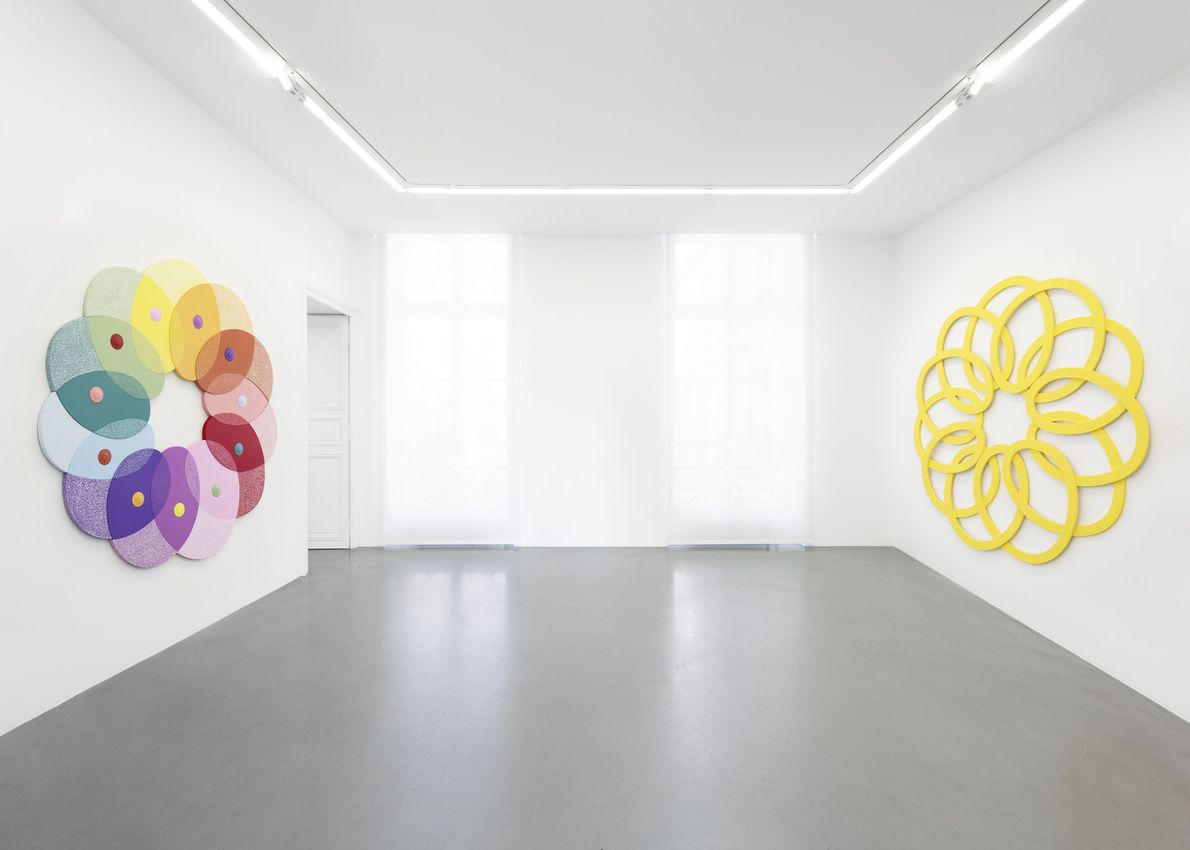
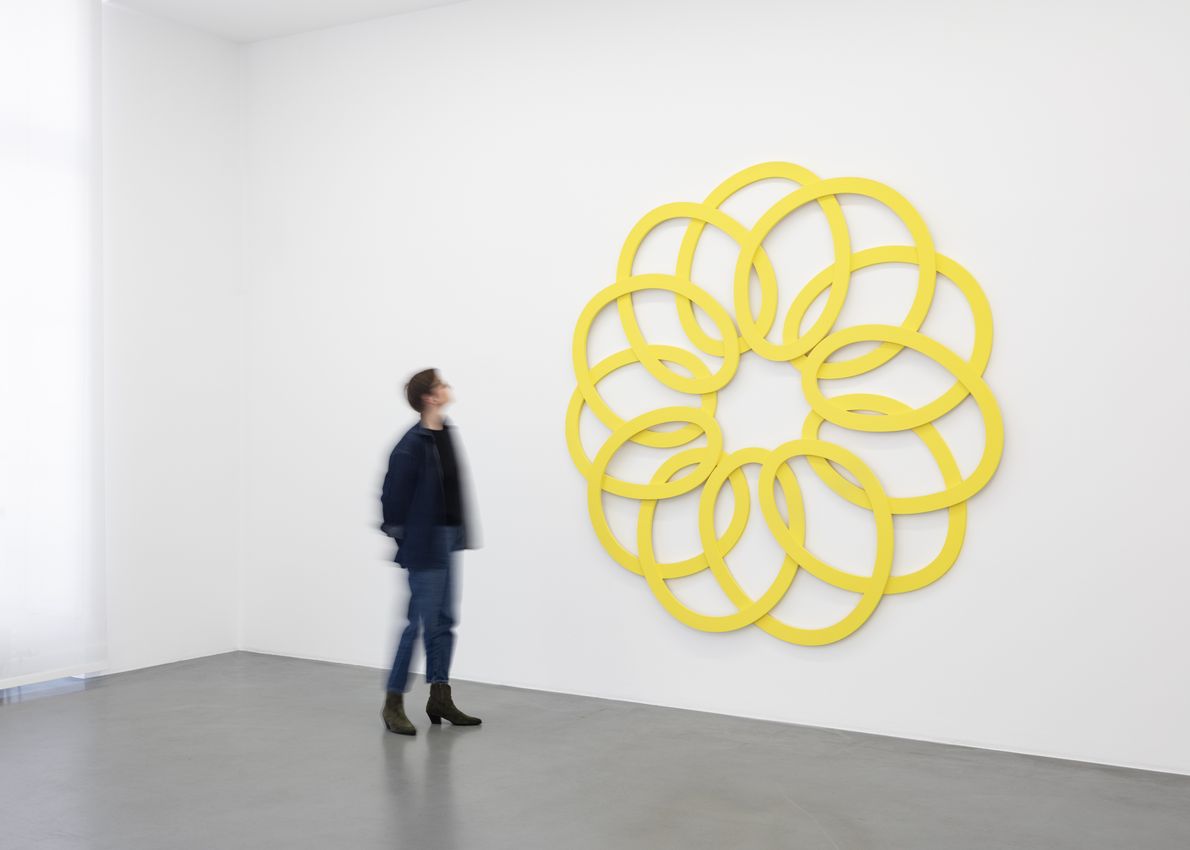
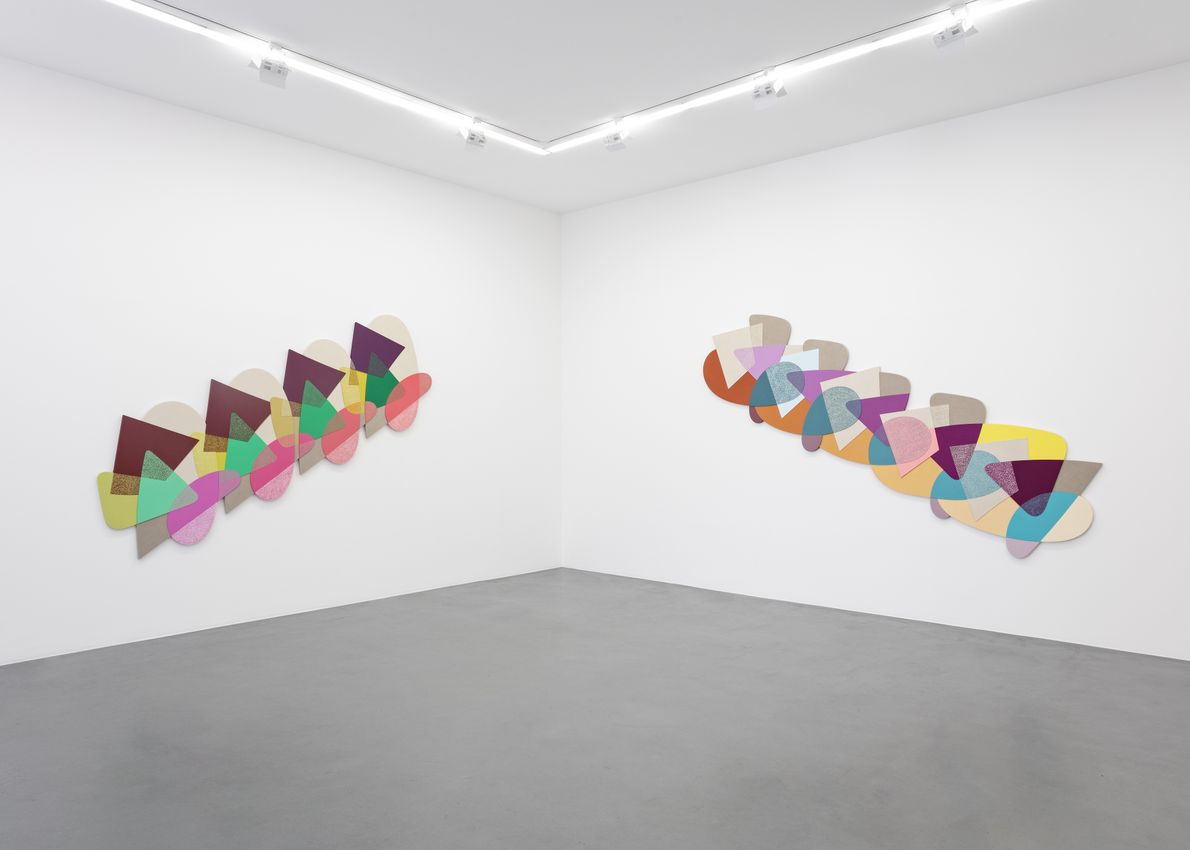
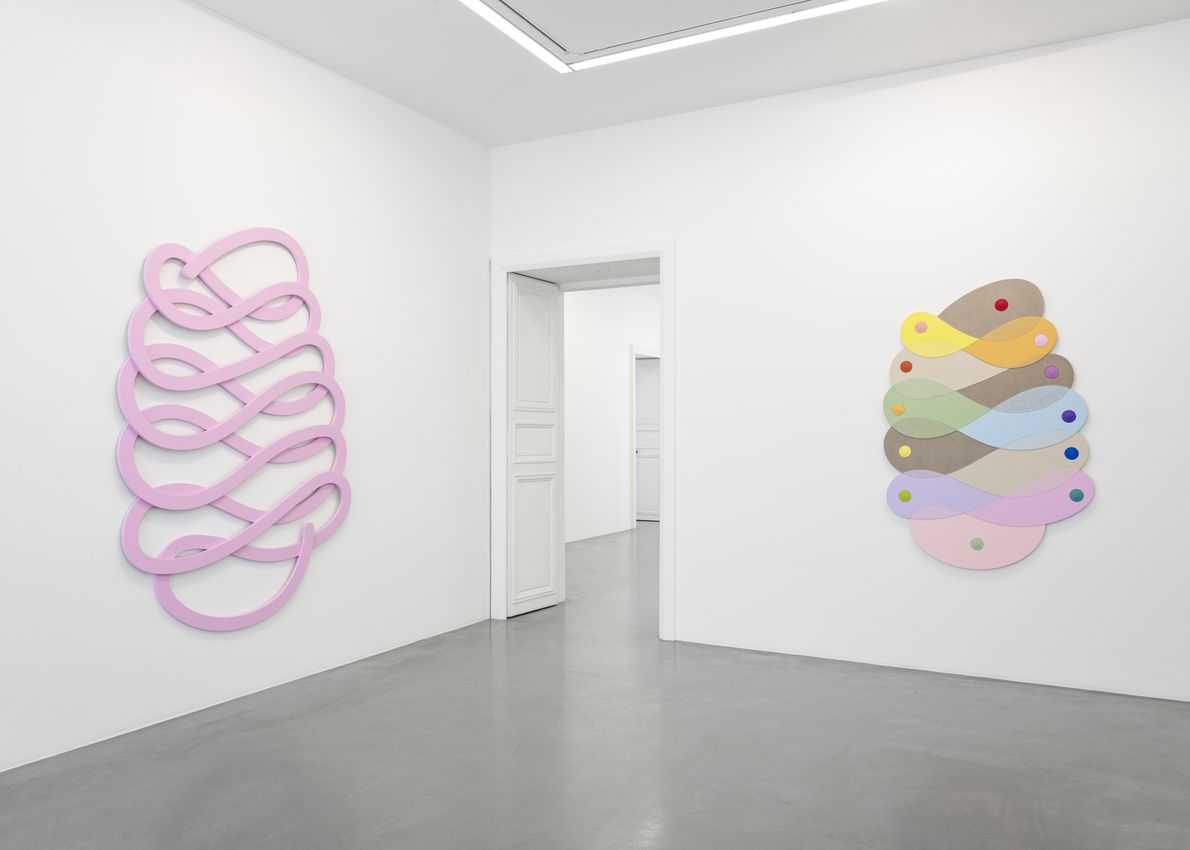
In fact, one of Victor Vasarely’s best-known insights thrums through my mind when viewing these works: ‘Every form is a base for colour. Every colour is an attribute of form.’ On display on the second floor, two more series of paintings that escape the traditional confines of the square or rectangle. Whimsical, brightly coloured linear works of large looping cursives called _Swoops _are presented alongside flat planes of interlocking shapes titled Repeater Composites. All of these works are based onsingle line drawings, but in the Repeater Composites, these drawings areimperfectly duplicated by hand, creating a series of curvilinear canvasesmade of interlocking panels that extend vertically, horizontally and diagonally across the wall.
One work - hung across from large yellow calligraphic flower from theSwoops series- looks like it was designed using a spirograph, with bull-seyes inserted like nipples in the middle of each looping ellipse. In theRepeater Composites, planes seem to pass over other shapes–or aretruncated as still more planes pass over them. Sperling creates an illusionof transparency by alternating flat muted colours with mead-notebook styletextured surfaces, the fanciful juxtaposition of hue and pattern inspired bythe late work of Roy Lichtenstein.
Although Sperling does not want his work to be ‘about craft,’ the kind ofskill, care, and materials-based knowledge he deploys is profoundly artisanal. His stretchers are digitally carved, yet his works are impeccablyhand-finished and painted. This ambiguity–the toggling between thedigital and the analogue–makes his works of art not only conceptuallyrigorous and visually appealing, but also thoroughly original.
Press release courtesy Perrotin. Text: Leanne Sacramone.
Sperling’s work draws on the language of Minimalist painting from the 60s and 70s, with shaped canvases as his main recourse. For these, he crafts intricate plywood supports over which canvas is stretched and painted over in a signature palette of saturated, sometimes clashing colours. In their three-dimensionality, Sperling’s works blur the lines between painting and sculpture, image and object. Mining a wide range of sources, from design to art history, Josh Sperling has crafted a unique visual vocabulary remarkable for its expressive quality and irrepressible energy.
Emmanuel Perrotin founded his first gallery in 1989 at the age of 21. He has opened since then over 17 different spaces, with the aim of continuing to offer increasingly vibrant and creative environments to experience artists work. He has worked closely with his roster of artists, some since more than 25 years, to help fulfil their ambitious dreams and projects.

A respected voice in contemporary art discourse.
Focusing on ambitious storytelling and insightful art-world commentary. Ocula Magazine publishes in-depth interviews, critical essays and timely analysis on the artists, exhibitions and ideas driving the global art world.
Learn more about Ocula Magazine
Showcasing the best of the art world.
Ocula partners with galleries from around the world to highlight their artists, artworks and exhibitions. Gallery membership is by application and invitation, with each member vetted by an independent panel.
Learn more about Ocula Membership

Specialises in the sale of major artworks.
Led by a team with deep ties to the world’s leading auction houses, galleries and collectors. Ocula’s advisory team offers bespoke services to high-net-worth clients from around the world who are looking to acquire the best of contemporary and modern art.
Learn more about our team and services