





Beautiful Seouls
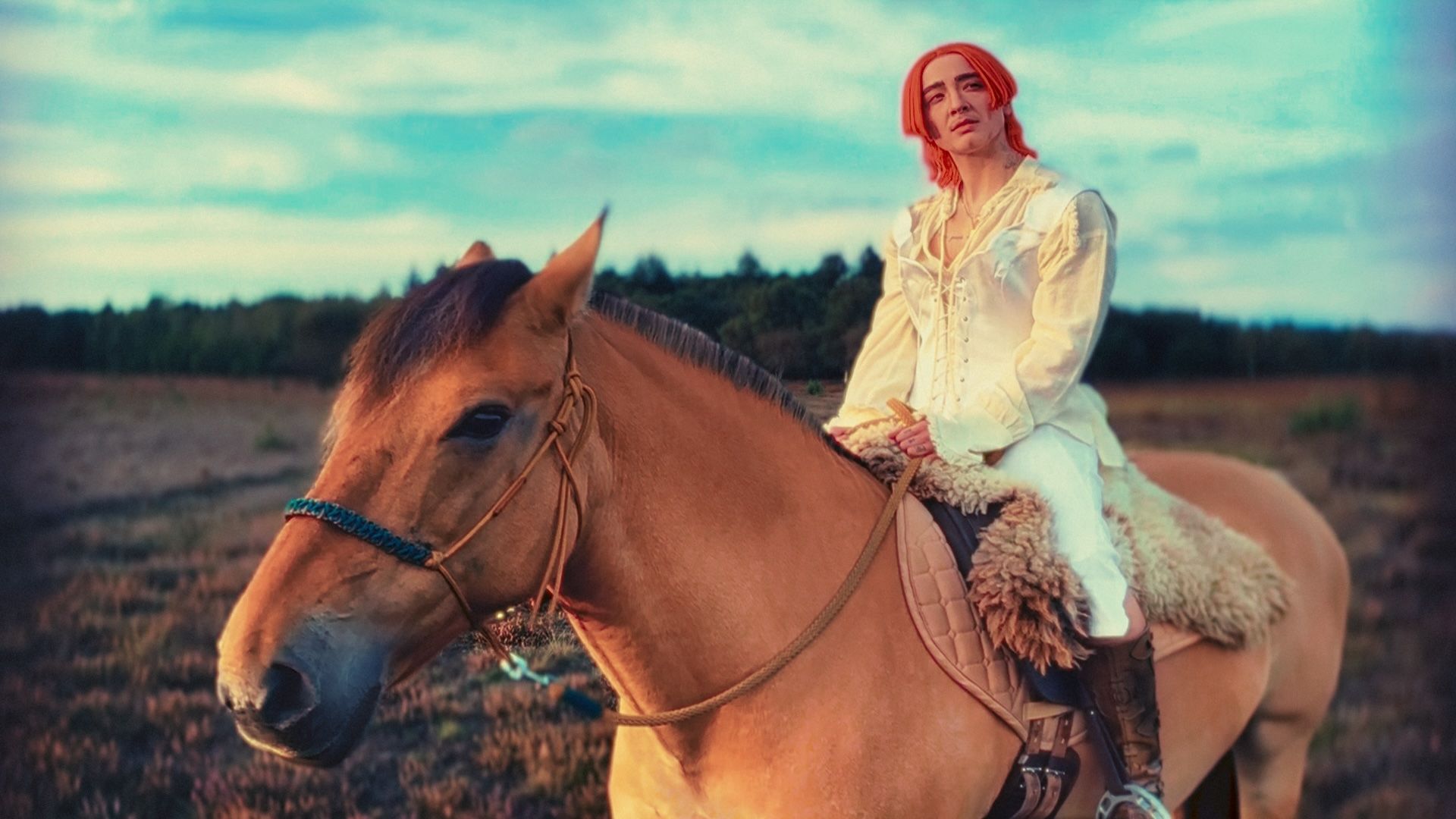
Spectrosynthesis IV, the fourth edition of Sunpride Foundation’s celebration of queer art in Asia, reminds us that LGBTQ+ communities continue to struggle with mainstream acceptance. Save to My Ocula“Your True Self Awaits,” reads a billboard advertising a perfume brand called Essence on the exterior of the Art Sonje Center. In the image, an androgynous figure with long dyed-red hair, dressed in a frothy front-laced shirt, rides through an Arcadian landscape on horseback, promoting a cologne called per l’homme. Inside, visitors encounter a real bottle of the perfume on a pedestal. The perfume, you realise, is scentless. The promise of authenticity begins to feel hollow: an image, aspiration, and performance of masculinity.
The work, by London-based multimedia artist Sin Wai Kin, announces Spectrosynthesis IV (officially titled Spectrosynthesis Seoul), the latest in a series of exhibitions staged by the Hong Kong-based Sunpride Foundation, an organisation dedicated to celebrating queer art practices in Asia. When Sin first presented the project in Los Angeles, they turned the gallery into a functioning retail space where visitors could purchase the fictional fragrance. At Art Sonje Centre, the campaign appears in a more restrained form, dispersed throughout the building: the monumental billboard outside, a looping commercial on the LED screen at the entrance, and finally the bottle inside the exhibition hall. Before entering, viewers encounter queer identity already aestheticised, branded, and made available for circulation.
Just as the word Spectrosynthesis is formed from “synthesis” and “spectrum”, the exhibition is also an assembly, bringing together disparate histories, practices and communities into a broader account of queer art in Asia. The cities in which Spectrosynthesis has been exhibited—Taipei, Bangkok, Seoul, and soon Tokyo—are places where queer communities and social movements have become increasingly visible during recent decades, yet where the pressure to meet expectations around family, heterosexual marriage and social conformity are still considerable.
The first Spectrosynthesis exhibition opened in Taipei in 2017, arriving shortly after Taiwan’s Constitutional Court ruling in favour of same-sex marriage. At the time, the exhibition was celebrated by some as groundbreaking within the region; others criticised the curation for its gender imbalance and for struggling to reconcile its dual role as activist platform and art-historical survey. Its subtitle—LGBTQ+ Issues and Art Now—revealed some of that uncertainty. Almost a decade later, Taiwan remains one of the most progressive places in Asia for LGBTQ+ rights, yet debates around gender and social acceptance continue to evolve alongside formal legal recognition.
“Before entering, viewers encounter queer identity already aestheticised, branded, and made available for circulation”
The Seoul edition, removing explanatory subtitles and addressing the gender imbalance, covers several terrains. Bringing together pieces by 74 artists, the show moves between works drawn from Sunpride Foundation’s collection, Korean artists navigating local histories and communities, and a more experimental section housing work exploring the word “trans” not only as it relates to gender but also to other forms of transformation, communication and embodiment.
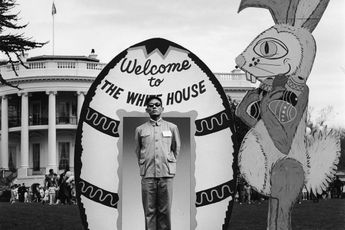
Rather than tracing a regional history, it proposes a shared vocabulary for queer experience. Tseng Kwong Chi’s Expeditionary Self-Portrait series (1979–1989) sees the artist photograph himself in a Mao suit, the style of tailoring associated with the founder of the People’s Republic of China, in front of global landmarks adopting an expressionless pose that oscillates between tourist snapshot and political parody; Martin Wong’s brick phallic monument, set within a flamboyant gilded frame, condenses his downtown New York City world into something both erotic and theatrical; Eikoh Hosoe’s post-war photographs of the body are charged with eroticism.
Private fantasy, inner struggles and personal confession are shown as being central to queer experience. Copies of hotam #5: Hot Asian Men (1996), Ho Tam’s self-published magazine, invited artists and writers to contribute personal stories, Bruce Lee fantasies and bad-boy film posters. Ho’s drawings of hibiscus flowers, which contain both male and female reproductive organs, echo the publication’s fluid treatment of desire and identity. Danh Vo’s Untitled (Self-Portrait as Carrie) (2015) shows the artist as a timid teenager, naming himself after the horror-film protagonist. Posing for a Danish school photograph, Vo draws on his own history as a Vietnamese refugee, staging a moment where he began to construct a new identity in his adopted country.
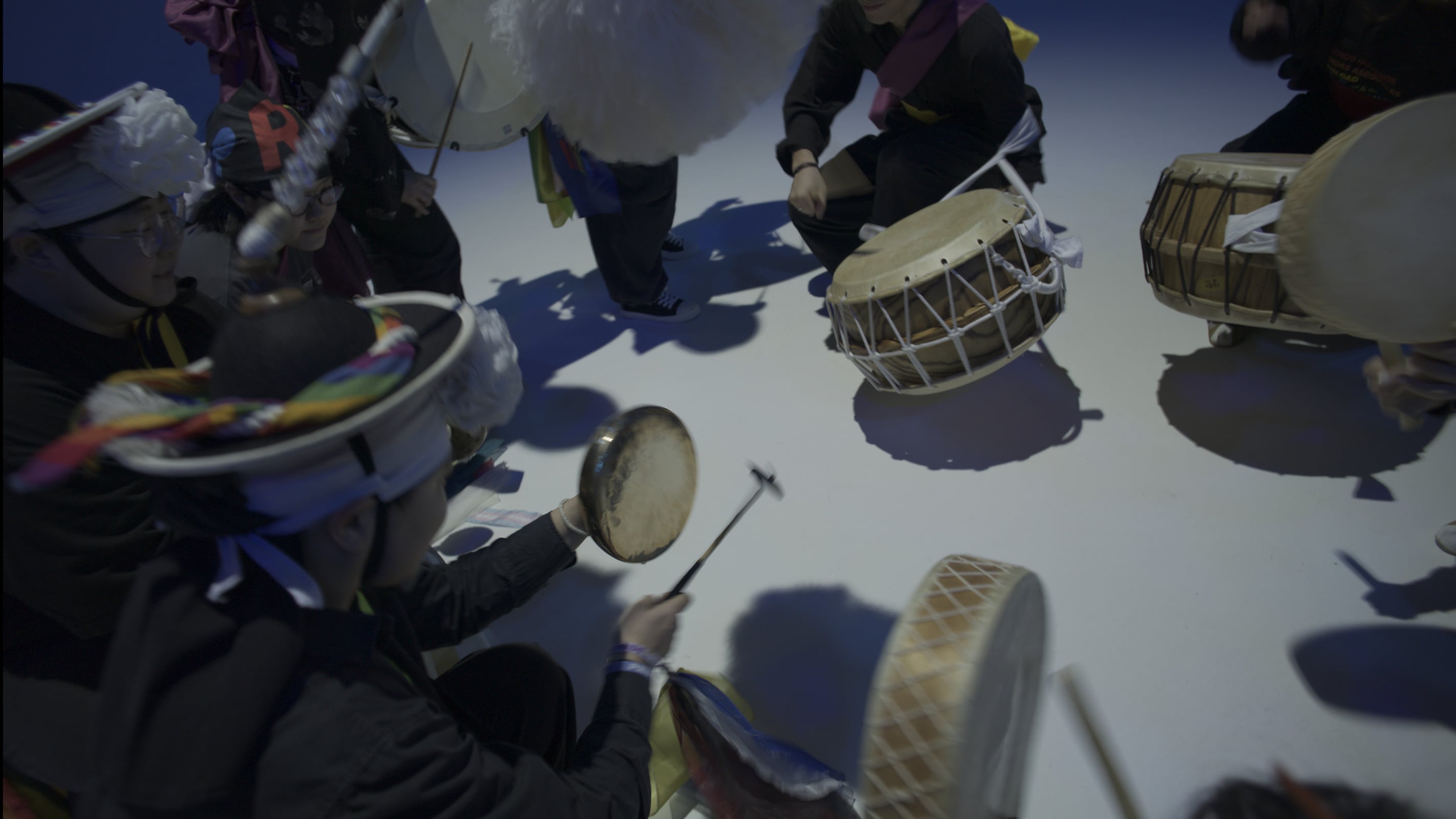
The work grounded most firmly in a local context is siren eun young jung’s newly commissioned video installation, Sick Seoul (2026), which stretches across the gallery as an irregular sculptural screen sprawling through the space like a fractured landscape. The work merges footage of Seoul’s changing cityscape with choreographed traditional dance performed by members of the local lesbian community, alongside scenes of public demonstrations filmed by the artist. Immersive but never harmonious, the installation pulls viewers into a collective emotional atmosphere shaped by exhaustion, protest and survival.
“The installation pulls viewers into a collective emotional atmosphere shaped by exhaustion, protest and survival”
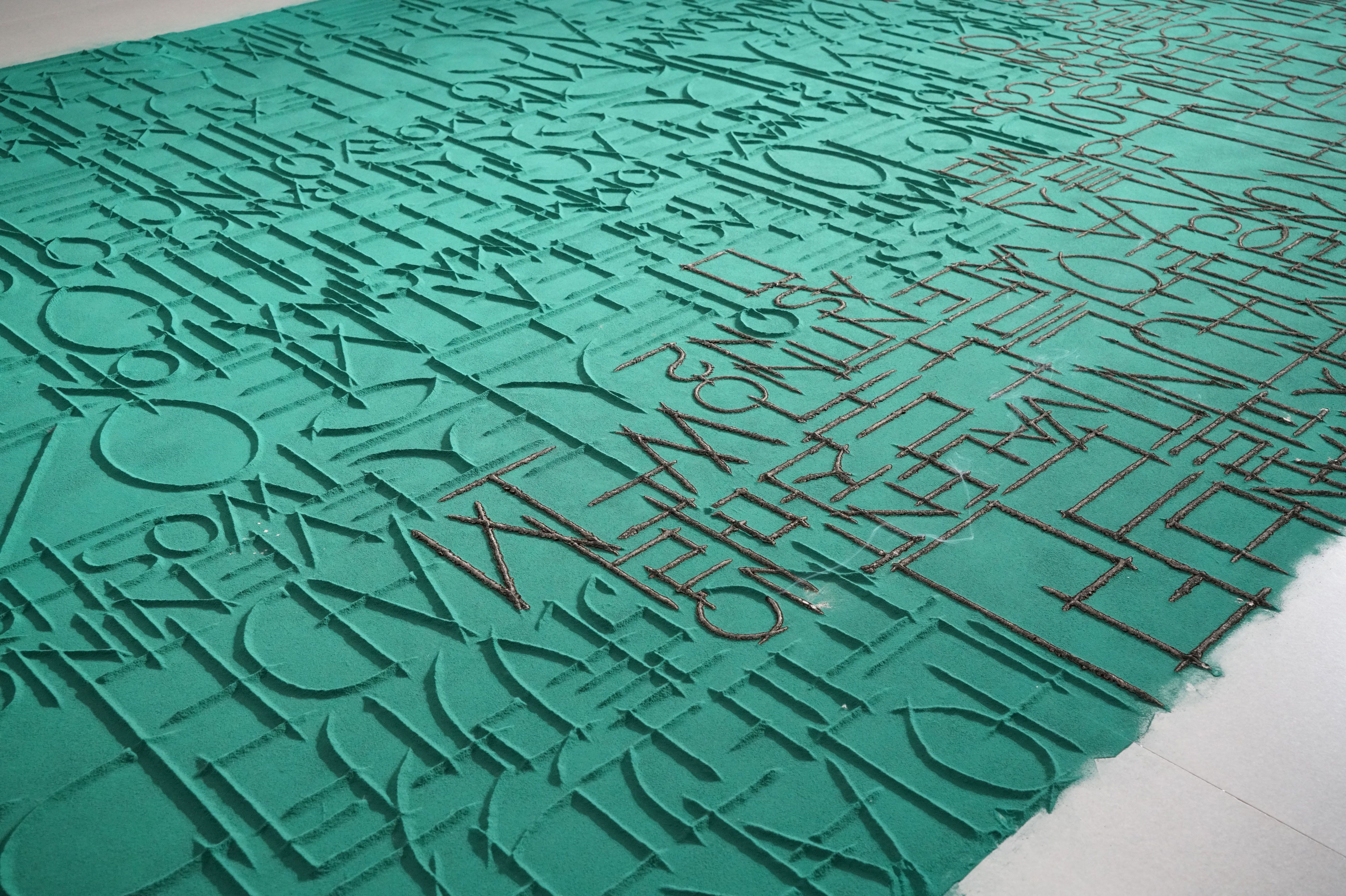
The things Korean LGBTQ+ communities have had to endure across history are the subject of South Korean artist Minki Hong’s Paradise (2023). Here, he assembles an oral history around the ruins of Seoul’s disappearing gay theatres. Animated figures joke casually about their underground homosexual experiences during the 1970s and 1980s while recounting memories of cruising, secrecy and community. The humour never fully conceals the melancholy underneath. Nearby, another work responds to the Covid-19 outbreak as it unfolded in Itaewon’s gay nightlife district, when intensive contact tracing and media reporting of club-linked infections exposed patterns of nightlife attendance, triggering online scrutiny and heightening fears of forced outing across South Korea’s queer community. Stickers stuck on the floor reproduce the distancing markers once used inside gay clubs, transforming a mundane spatial device into a record of vulnerability and surveillance. In Where He Meets in Seoul (2026), Inhwan Oh installs incense powder inscribed with the names of existing gay clubs in Seoul which burns throughout the day, becoming a metaphor for the ephemerality of these venues.
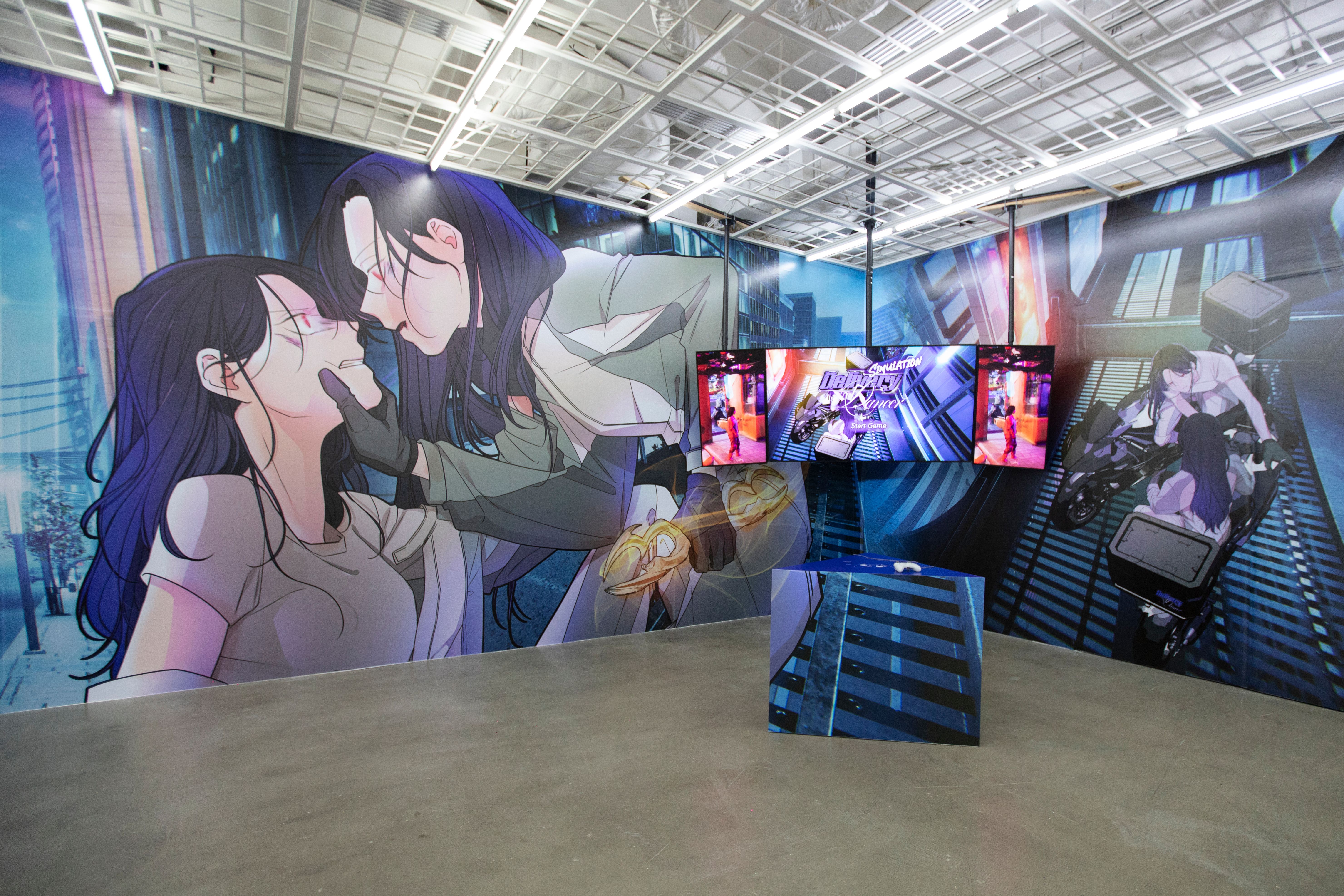
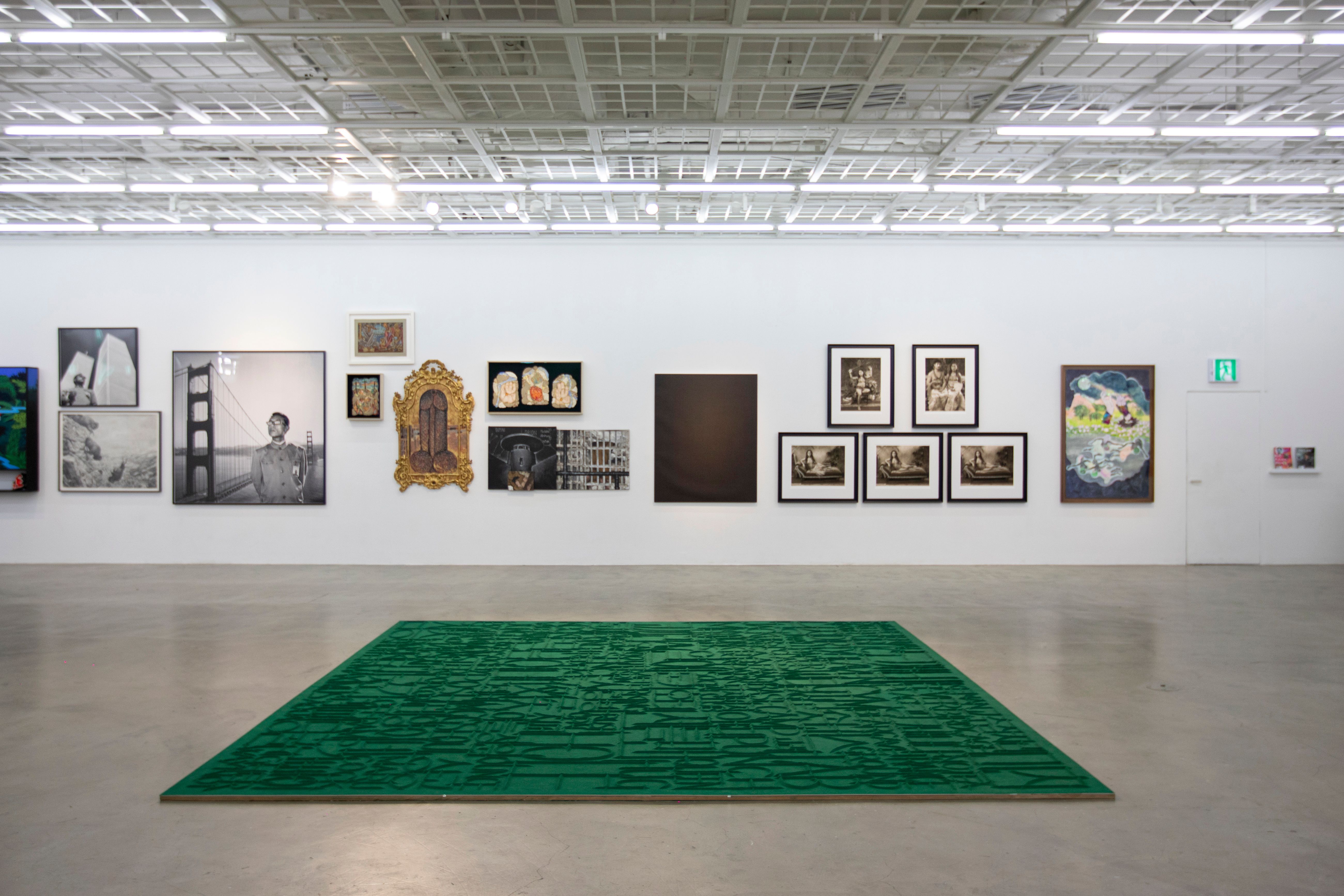
Vienna-based artist Min Yoon and South Korean multidisciplinary artist Kang Seung Lee both explore the relationship between queer histories and local community-making. Lee has exhibited a cactus propagated from a plant once owned by Harvey Milk, the first openly gay man to be elected to public office in California, alongside charcoal drawings that reproduce photographs of the plant, extending the work’s meditation on queer lineage across generations. Lee has also collected and displayed plants from queer gathering sites such as LA’s Elysian Park while incorporating references to the country’s earliest gay rights organisations. Yoon presents collaged children’s books assembled from publications banned in Korea and the US because they reference sexual equality and sexual minorities. The work points toward the forms of knowledge and experience erased during the earliest stages of formal education.
Throughout the building, corridors, bathrooms, storage spaces and the cinema are repurposed as sites for encounter and transformation. Artist Yang Seungwook converts one of the museum’s utility rooms filled with exposed pipes into a purple-lit dance floor. In collaboration with deaf queer artist Jiyang Woo, Yang has created which question normative structures embedded within spoken and signed language. In This Video Is Not a Sign Language Interpretation (2026), Woo, dressed in a drag suit, addresses the viewer in sign language with questions such as “Are you planning on getting surgery?”, showing how systems of communication can also regulate gender and social legibility.
The strongest works in the exhibition remain tied to highly local histories and communities. Near the end of the exhibition, Moon Sanghoon has reinstalled his 2020 project Wish You Were Here as a small private broadcasting room created in collaboration with Unni Network, one of Korea’s most significant lesbian activist communities of the 1990s. Visitors enter one at a time and leave anonymous voice recordings and personal memories behind. Gradually, the room accumulates fragments of lesbian longing, community memory and private reflection, building up the archive of a small piece of Korean history, giving it new life. —[O]
Spectrosynthesis Seoul (until 28 June 2026) at Art Sonje Centre, Seoul.
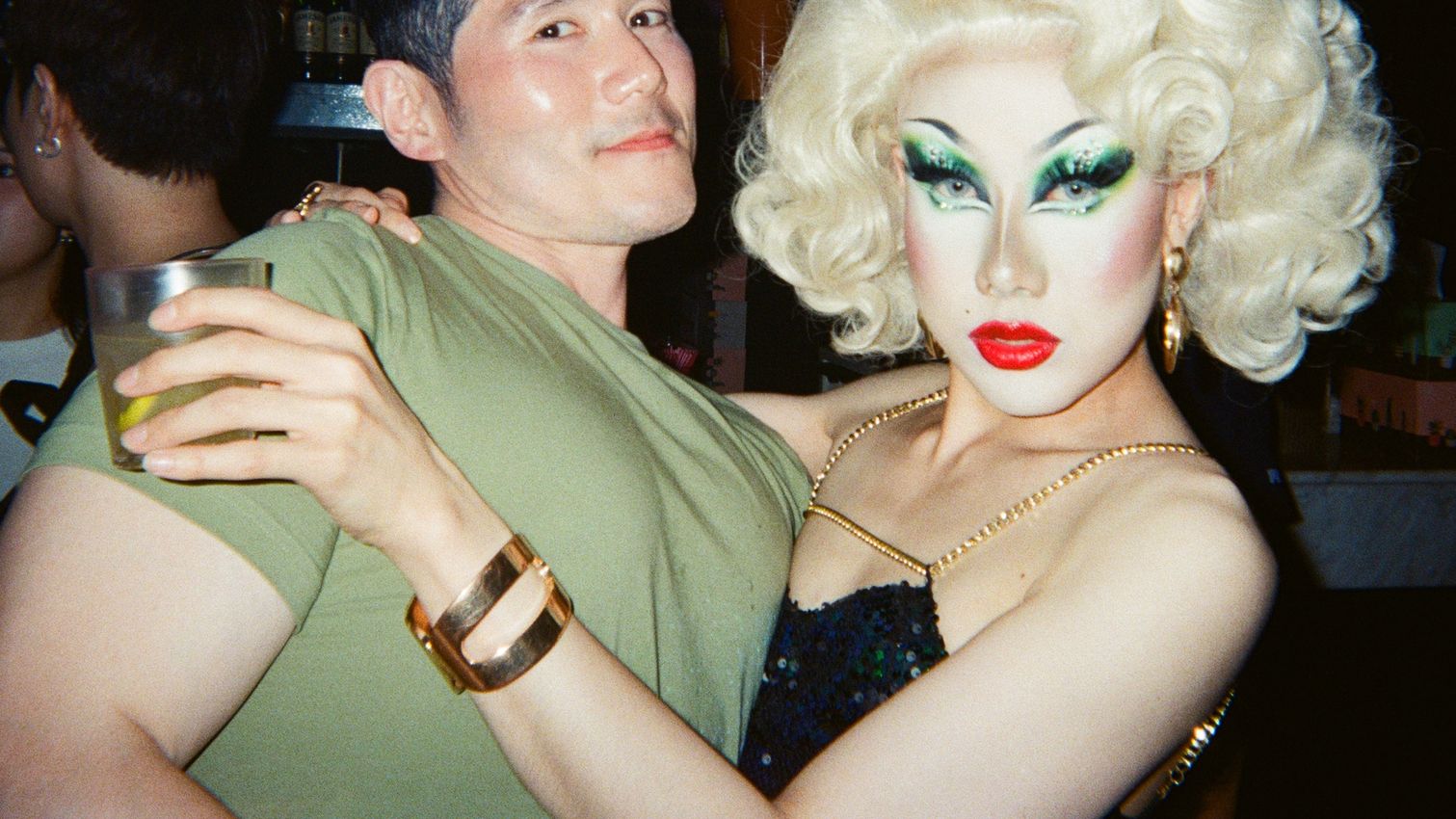
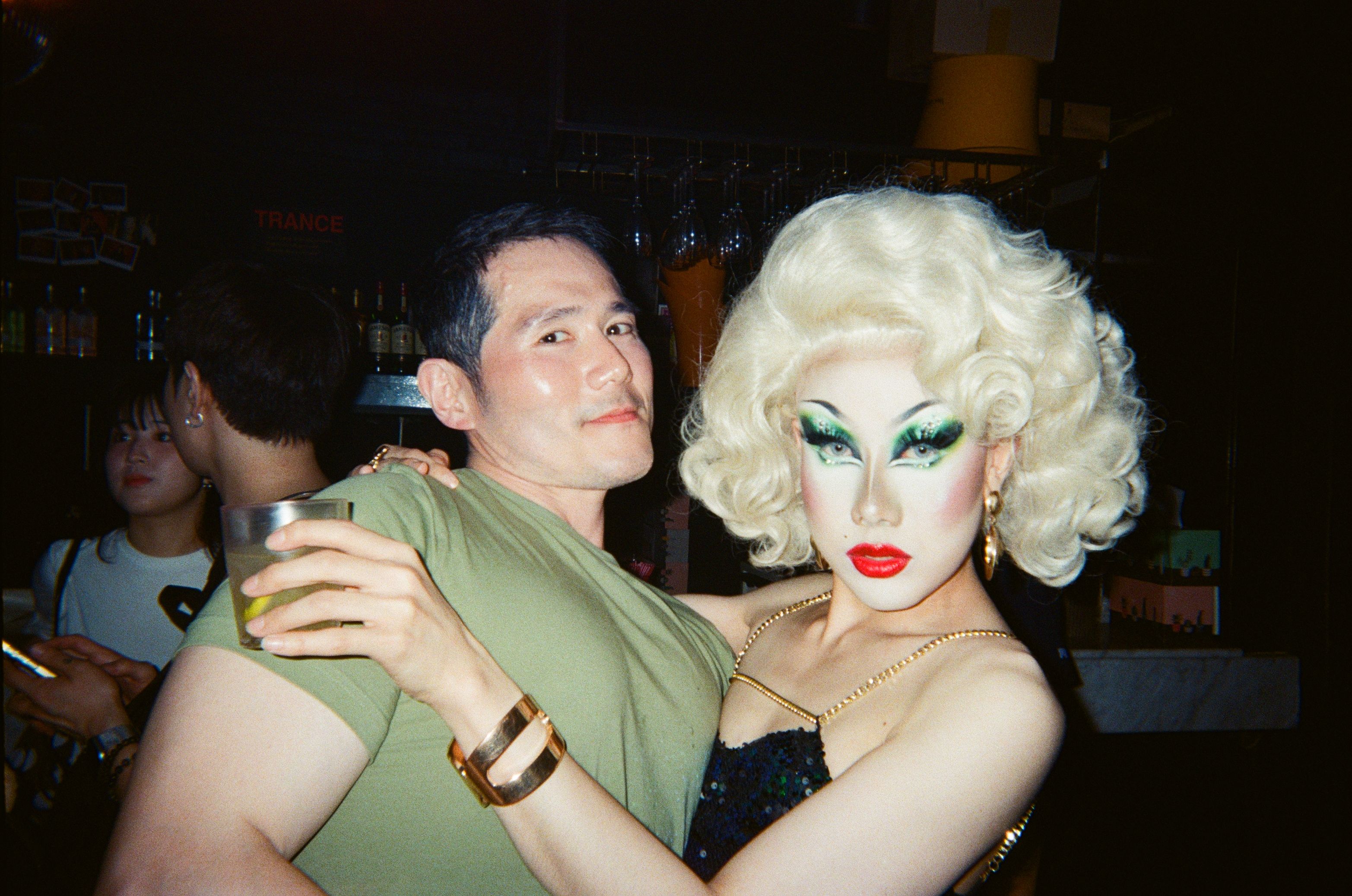
Main image: Sejin Song, Passing Present and Preserving Past (2024). Single channel video, 4K, 7 min 47 sec. Courtesy the Artist.





A respected voice in contemporary art discourse.
Focusing on ambitious storytelling and insightful art-world commentary. Ocula Magazine publishes in-depth interviews, critical essays and timely analysis on the artists, exhibitions and ideas driving the global art world.
Learn more about Ocula Magazine
Showcasing the best of the art world.
Ocula partners with galleries from around the world to highlight their artists, artworks and exhibitions. Gallery membership is by application and invitation, with each member vetted by an independent panel.
Learn more about Ocula Membership
Specialises in the sale of major artworks.
Led by a team with deep ties to the world’s leading auction houses, galleries and collectors. Ocula’s advisory team offers bespoke services to high-net-worth clients from around the world who are looking to acquire the best of contemporary and modern art.
Learn more about our team and services