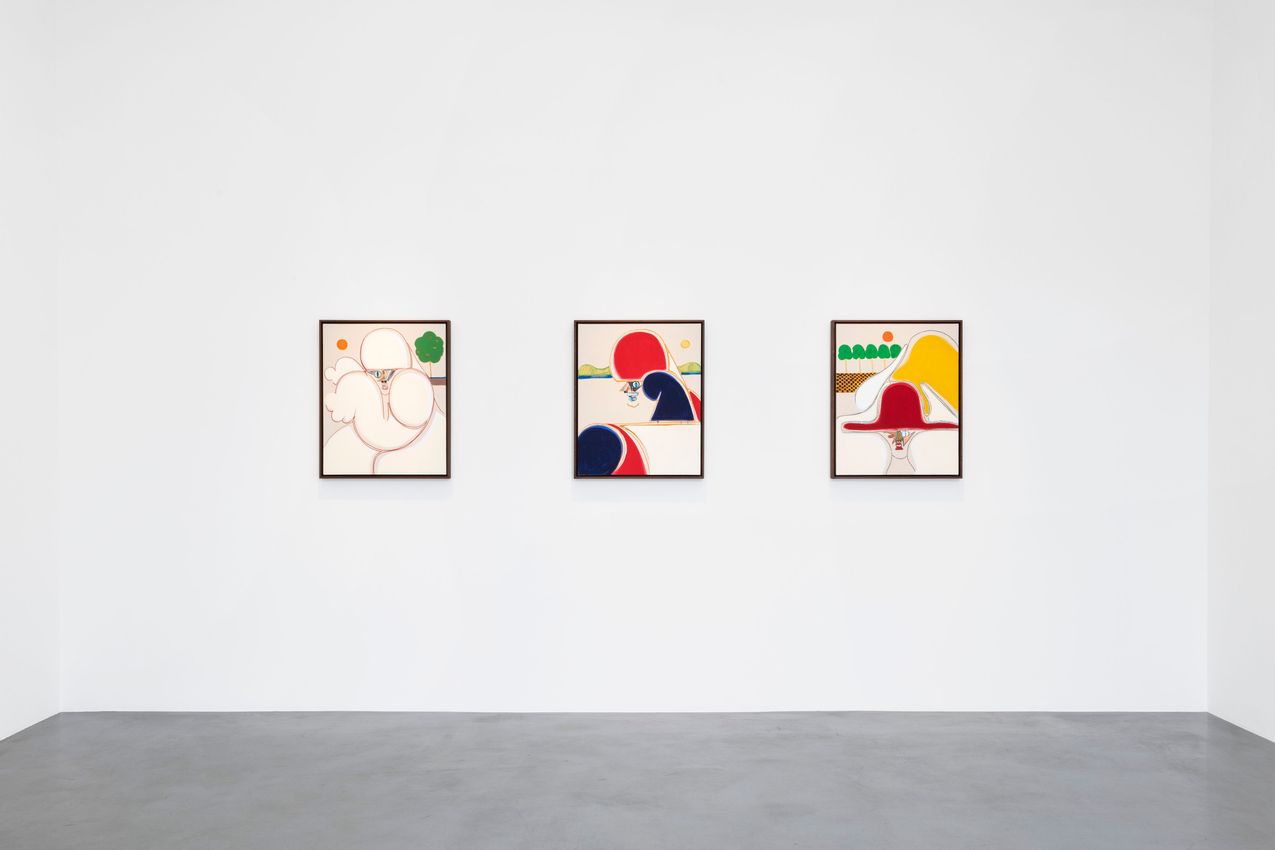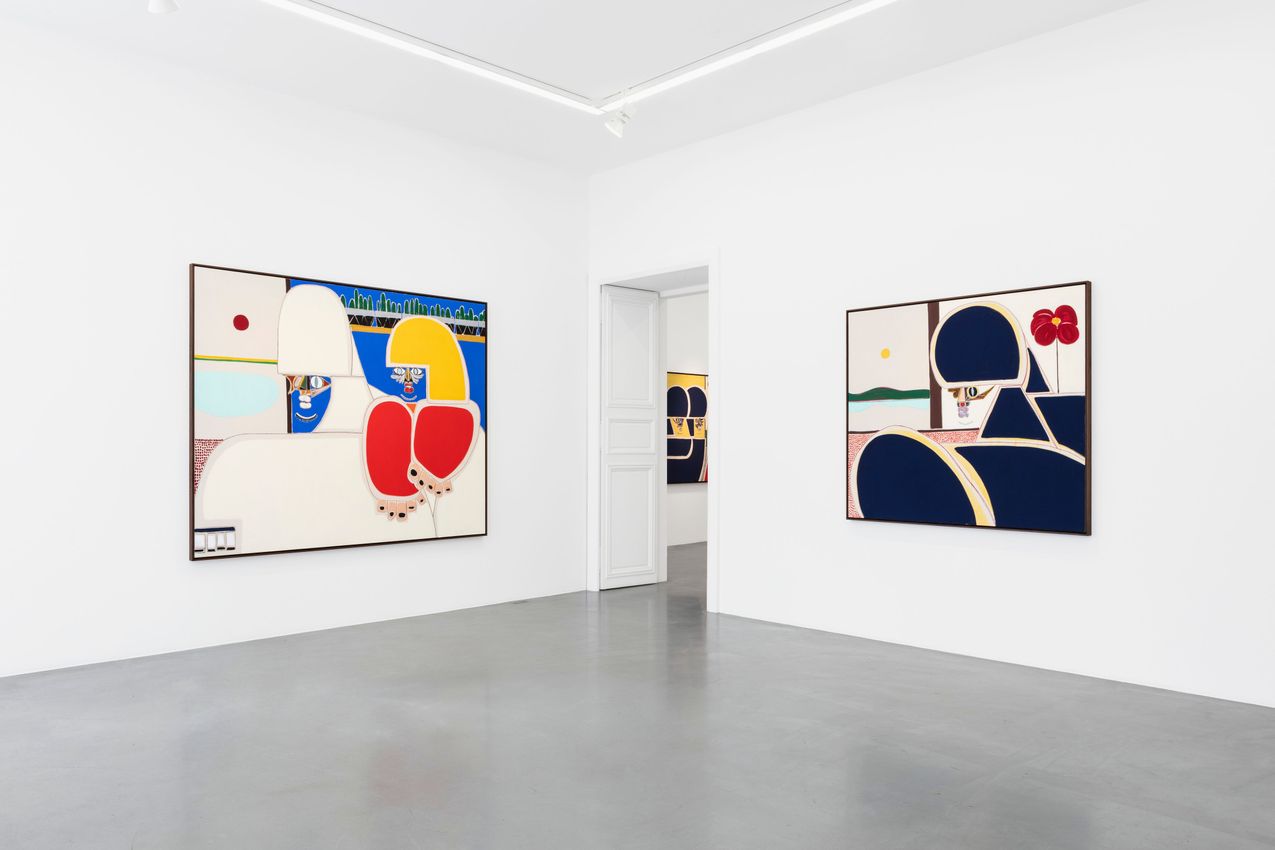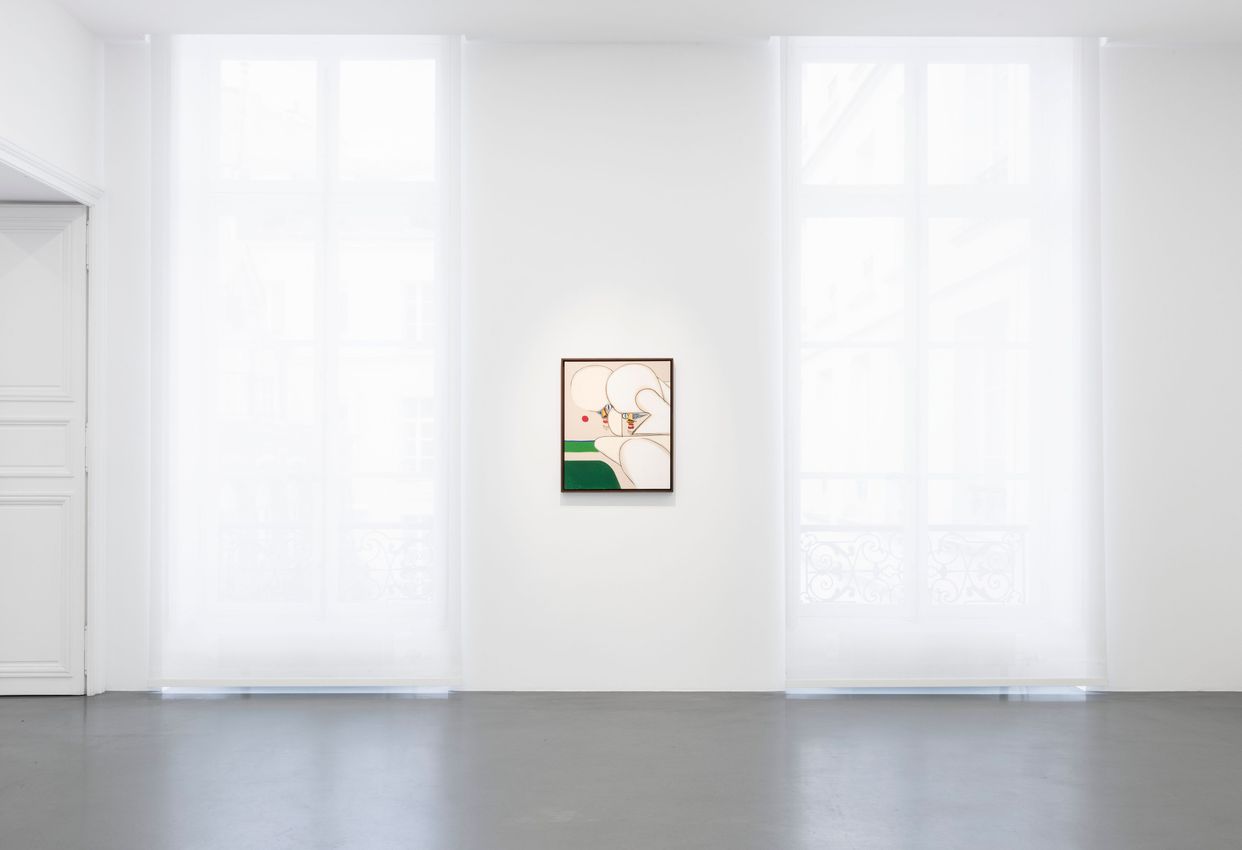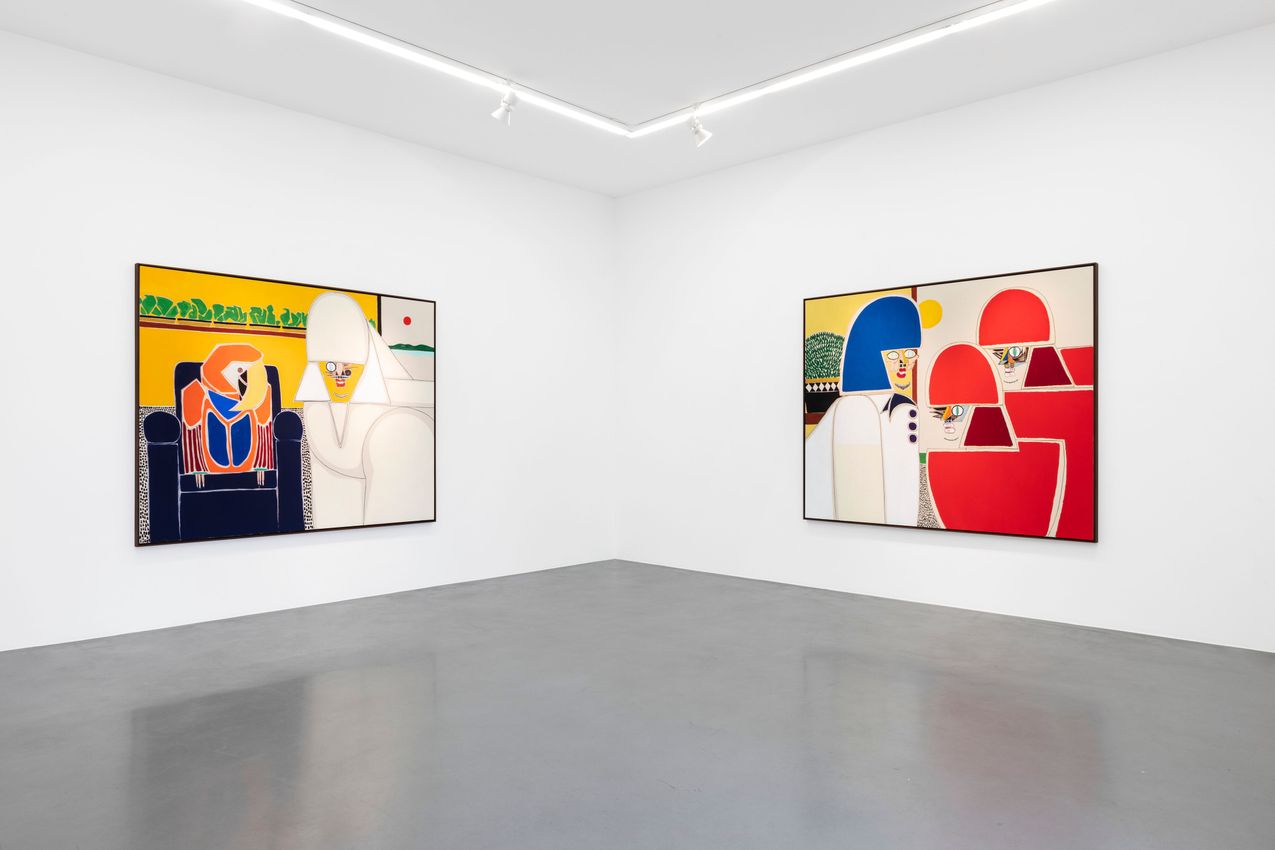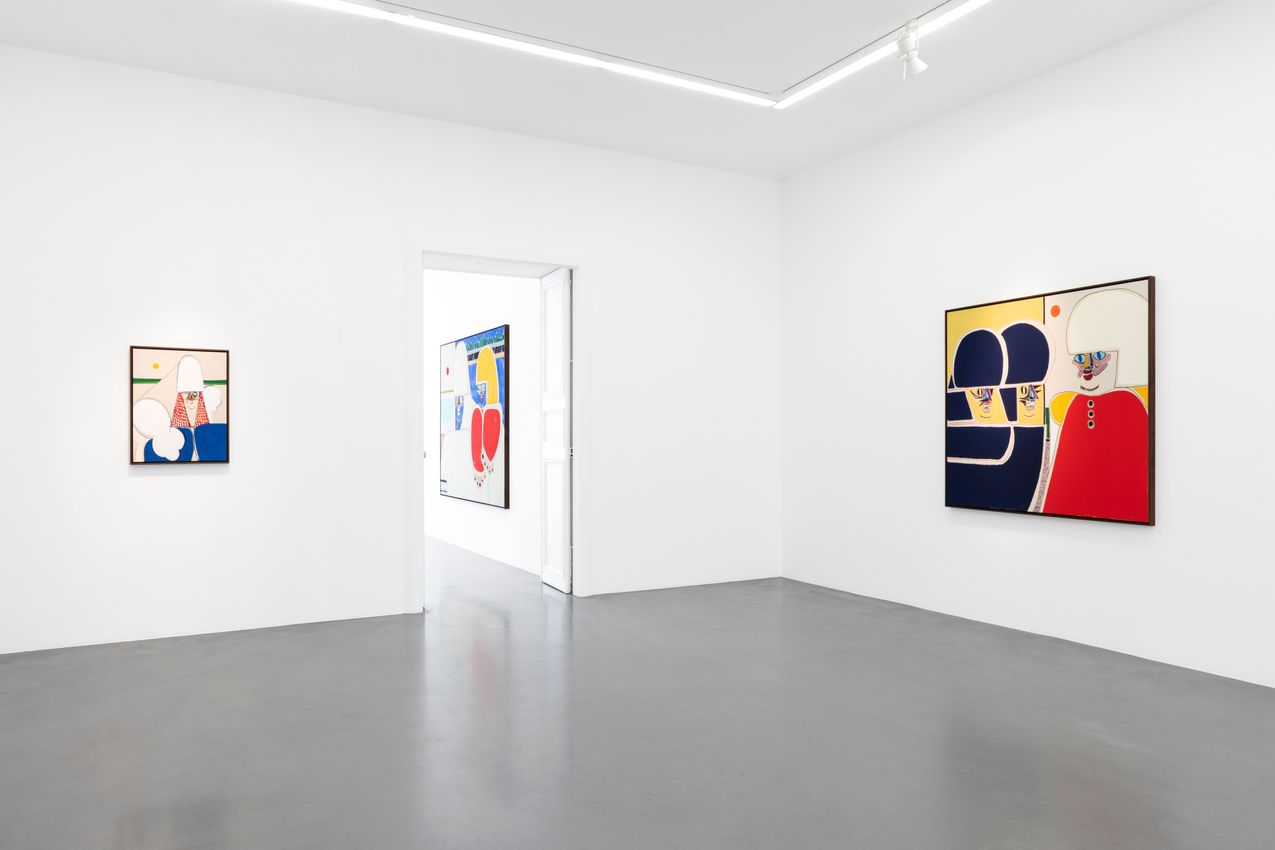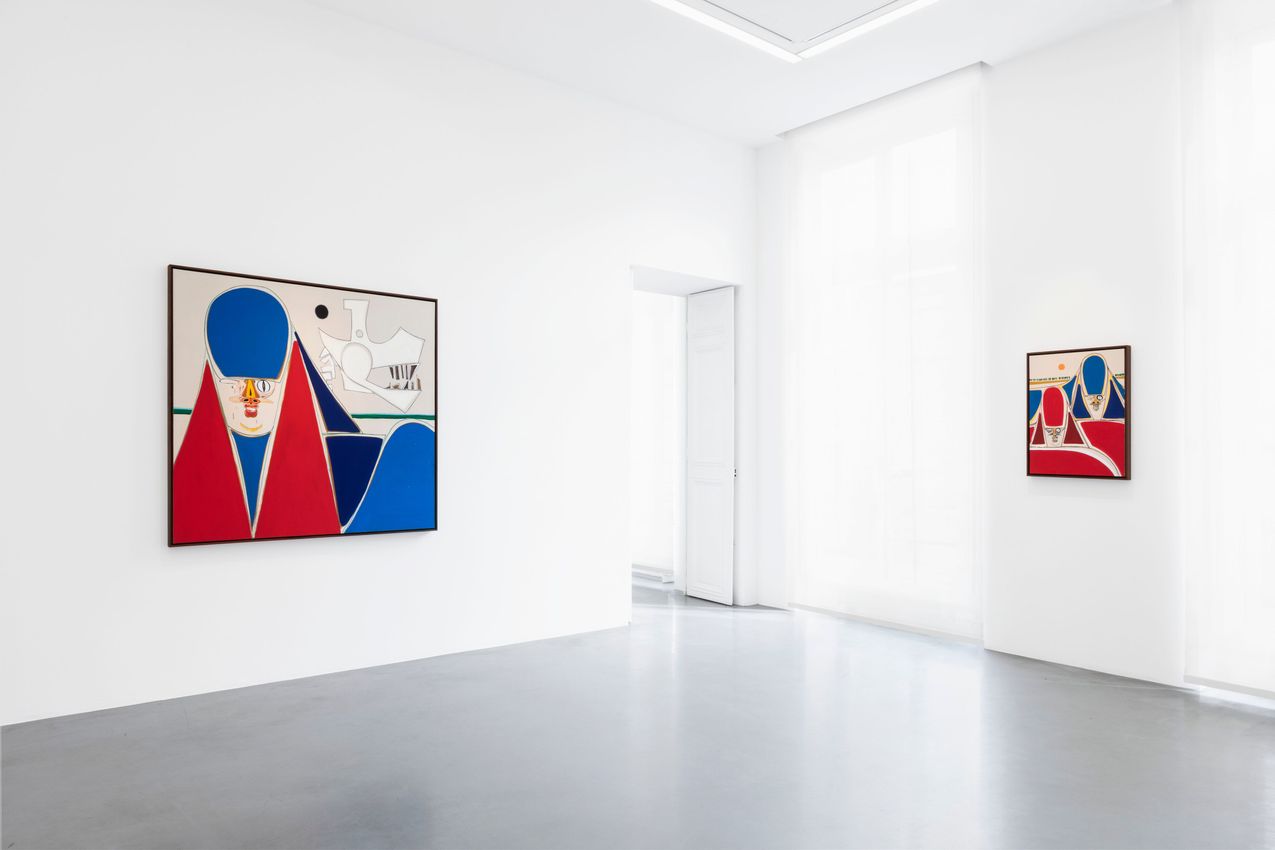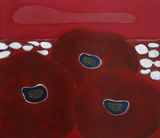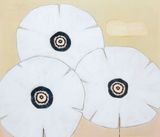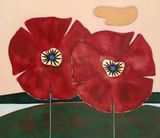
Perrotin is pleased to present the first exhibition of New York-based Japanese artist Susumu Kamijo at its Paris gallery. For theoccasion, the artist will showcase a new series of paintings exploring the psychology of the canine.
The dog (canis lupus familiaris) is an ambiguous creature. In ancientEgypt, it was considered a psychopomp, a soul guide, leading the dead toparadise when it was not guarding the gates of hell. Domesticated, altered, and transformed, it nonetheless remains unpredictable today, its primal needs reminding us of this sick nature that threatens us with pandemicsand climate change. Initially a hunting dog, the poodle gradually became apet and then an accessory, exhibited in portraits as a symbol of luxury andfidelity.
Susumu Kamijo discovered these animals–their world and extravagant codes–in dog competitions. The show dog is a symbol of artifice andeccentricity (from its behaviour to its coat), and the splendour of dog competitions is at times reminiscent of the fashion world: the sophisticatedposes of Kamijo’s models, their caricatural looks and accessories–firmlyplacing the dog on the side of culture in the perennial nature/culturedebate–are reinforced by bold colour palettes that resemble fashionmagazine covers. In these imagined portraits, the dogs are posing,haughty like Ingres’ bourgeois with the prestige of Tamara de Lempicka’selites.
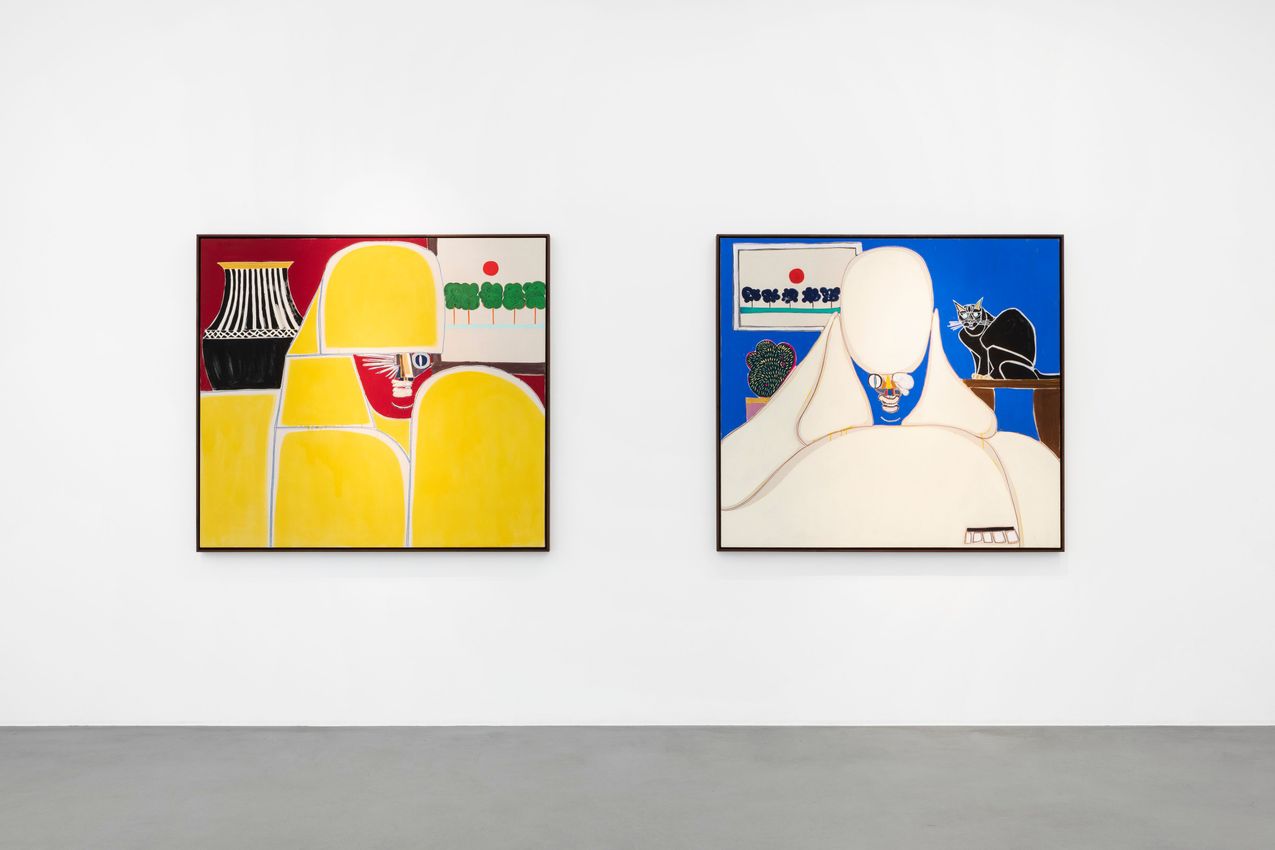
Susumu Kamijo’s poodles are no longer hunting companions–tamedand adapted–nor are they the distinguished accessories in portraits. Inhis work, the poodle becomes a clever device, a motif reminding us thatKamijo’s subject is first and foremost painting itself. It’s a classic method.Starting with a familiar element, he reproduces it tirelessly to the point thatit becomes automatic, a register of forms and sizes requiring intuition todetermine the arrangement of colours and its visual consequences. Toslightly misquote Maurice Denis, ‘remember that a painting, before beinga poodle, is essentially a flat surface covered with colours assembled in acertain order.’ As a painter, Susumu Kamijo revives some of the explorations that led painting to the frontiers of abstraction, such as simultaneouscontrasts of forms and patterns of colour. In the history of abstract painting,a motif was often pushed to its figurative limits, and Kamijo’s poodles seemed until recently to follow in the footsteps of Piet Mondrian’s FloweringApple Tree or Jawlensky’s Mystical Heads. Yet Kamijo’s latest series also moves in another direction, as it does not renounce figuration, striving formore complexity and psychology.
Even though the figures’ faces and mouths remain stoic, one is temptedto see a form of anthropomorphism. Kamijo introduces this psychologicaldimension by experimenting with minimalist but familiar environments withobjects such as a vase or an animal skull, which, for the artist, evokemuseum displays. An open window or a painting within a painting turn thesurroundings into a reassuring motif. Delving into the depths of the image,he divides the composition into regular legible planes in which he placeshis creatures, an in-between, keeping the viewers at a distance while alsoinviting close observation. This comfort of the domestic environment is akey factor in his latest explorations; the living room that humanises hismodels is influenced by Francis Bacon, and, as in some of Henri Matisse’spaintings, the figure merges with the décor to create a harmony of composition and a poetry of the everyday. This intrusion of detail, precise andpowerful, is also a homage to the Japanese filmmaker Yasujiro Ozu, referencing his extraordinary indoor shots with their deliberately low and persistent angles, celebrating everyday life by finding beauty in the banal andphilosophically revealing moments of life punctuated by the frames ofdoors and windows.
Even though he acknowledges the importance of classical painting andits masters, Susumu Kamijo’s practice cannot be limited to these traditions. The paintings have to be taken for what they are, hallucinatory portraits of poodles that deliberately play with the conventions of portraiture,between homage and mischief, because after all, as he claims: ‘Lifedoesn’t make sense. Just live playfully. That’s my way of dealing with life.’
Press release courtesy Perrotin. Text: Matthieu Lelièvre.
Prolific painter of poodles, Brooklyn-based contemporary artist Susumu Kamijo creates colourful, hard-edged compositions of voluminous shapes that form a figurative impression of these popular canine specimens.
Emmanuel Perrotin founded his first gallery in 1989 at the age of 21. He has opened since then over 17 different spaces, with the aim of continuing to offer increasingly vibrant and creative environments to experience artists work. He has worked closely with his roster of artists, some since more than 25 years, to help fulfil their ambitious dreams and projects.

A respected voice in contemporary art discourse.
Focusing on ambitious storytelling and insightful art-world commentary. Ocula Magazine publishes in-depth interviews, critical essays and timely analysis on the artists, exhibitions and ideas driving the global art world.
Learn more about Ocula Magazine
Showcasing the best of the art world.
Ocula partners with galleries from around the world to highlight their artists, artworks and exhibitions. Gallery membership is by application and invitation, with each member vetted by an independent panel.
Learn more about Ocula Membership

Specialises in the sale of major artworks.
Led by a team with deep ties to the world’s leading auction houses, galleries and collectors. Ocula’s advisory team offers bespoke services to high-net-worth clients from around the world who are looking to acquire the best of contemporary and modern art.
Learn more about our team and services