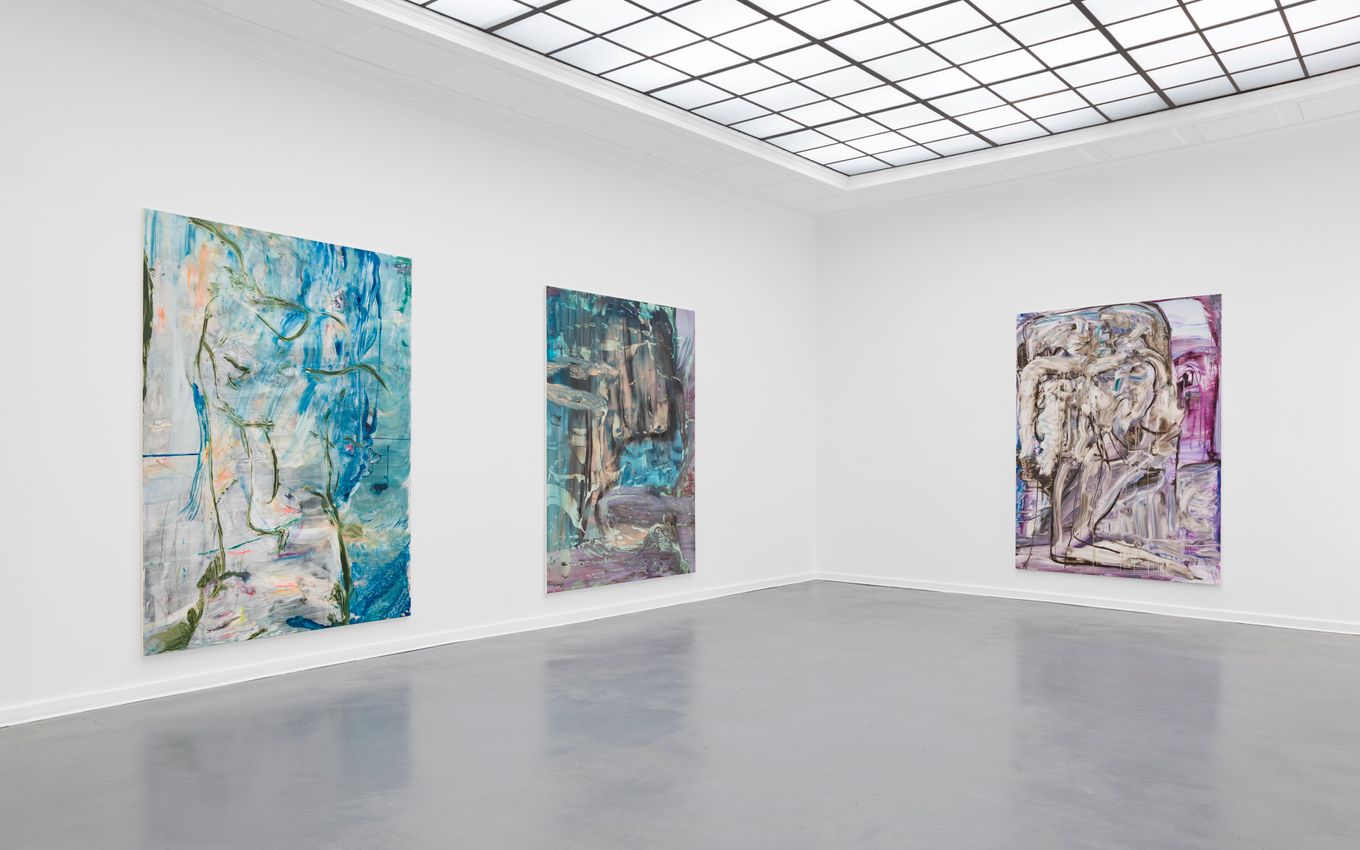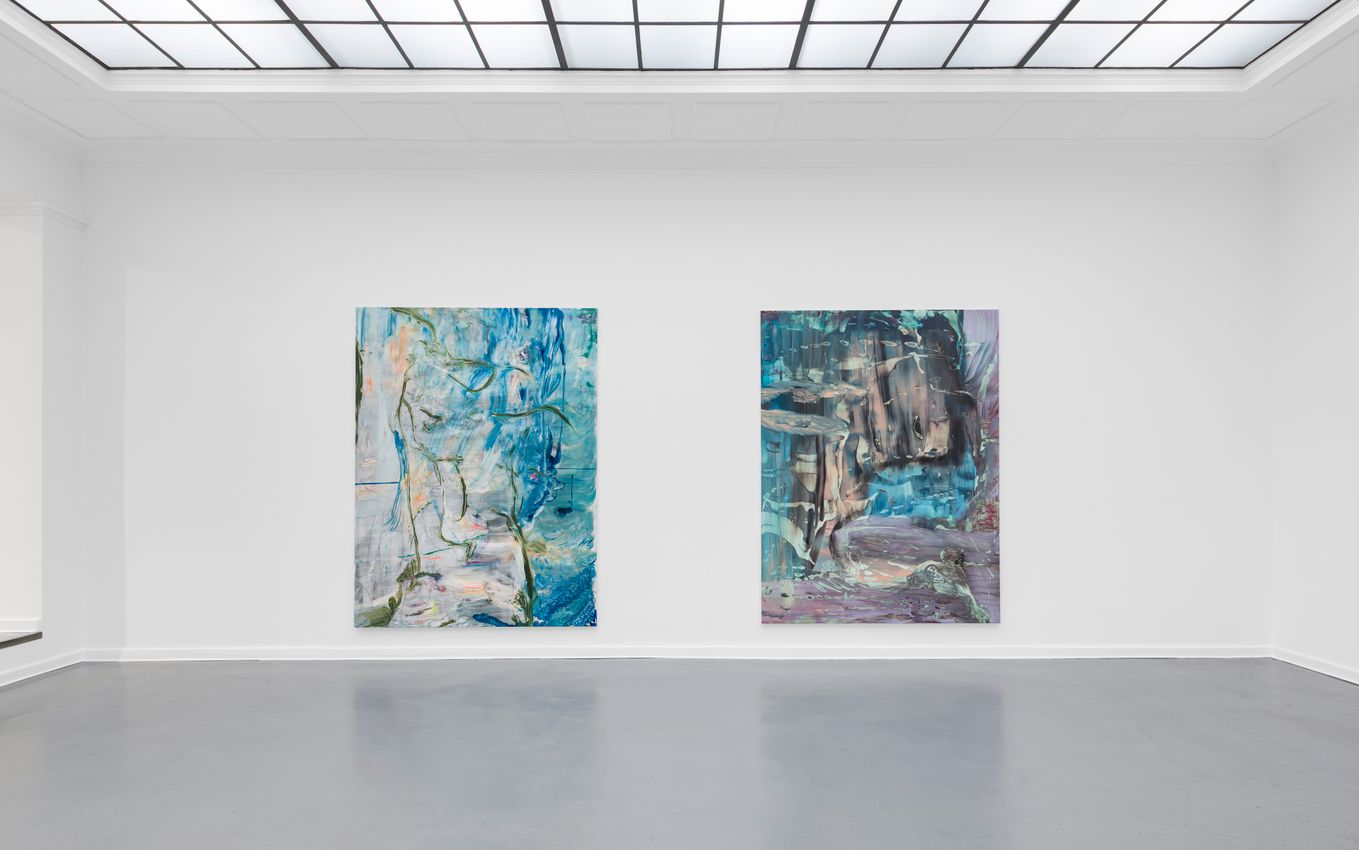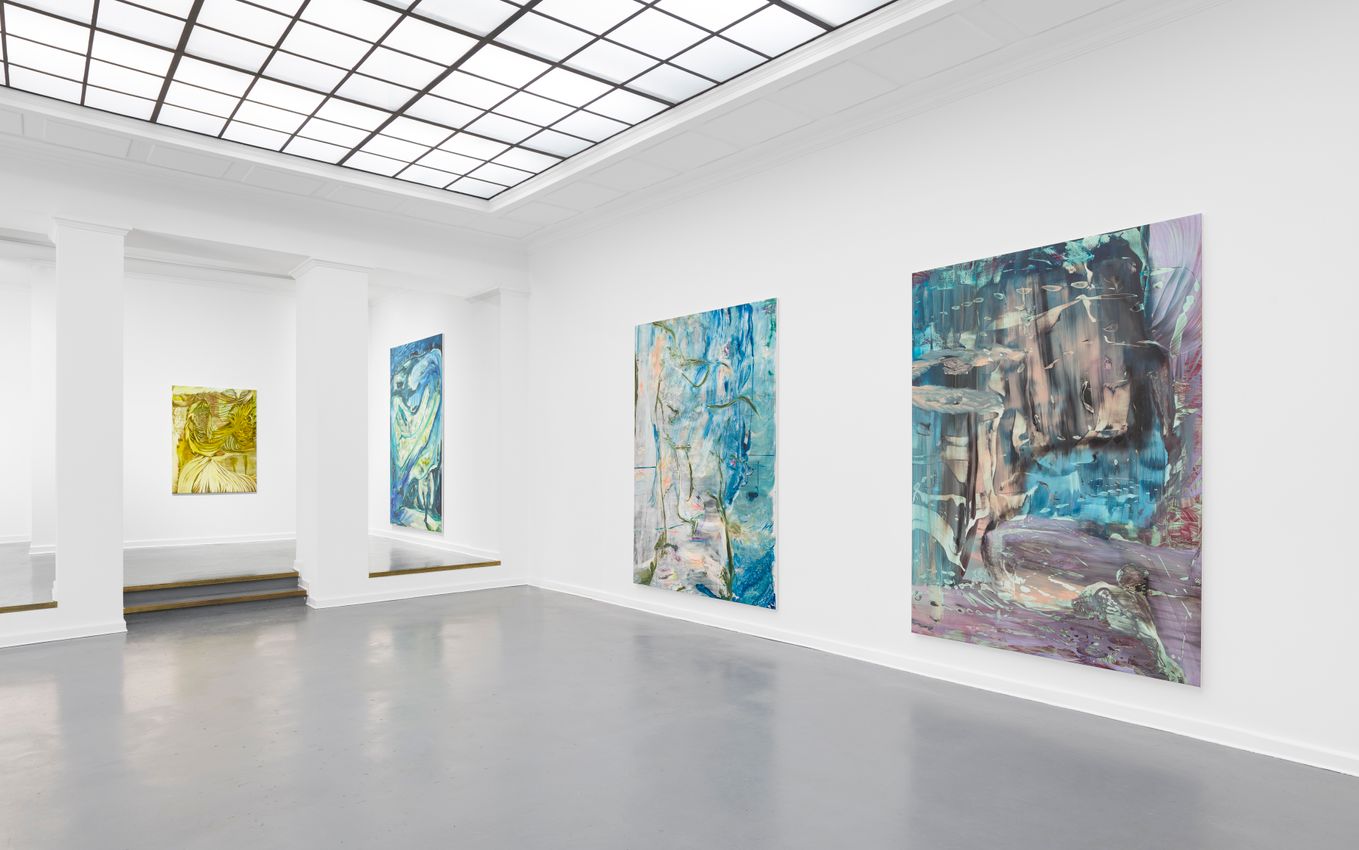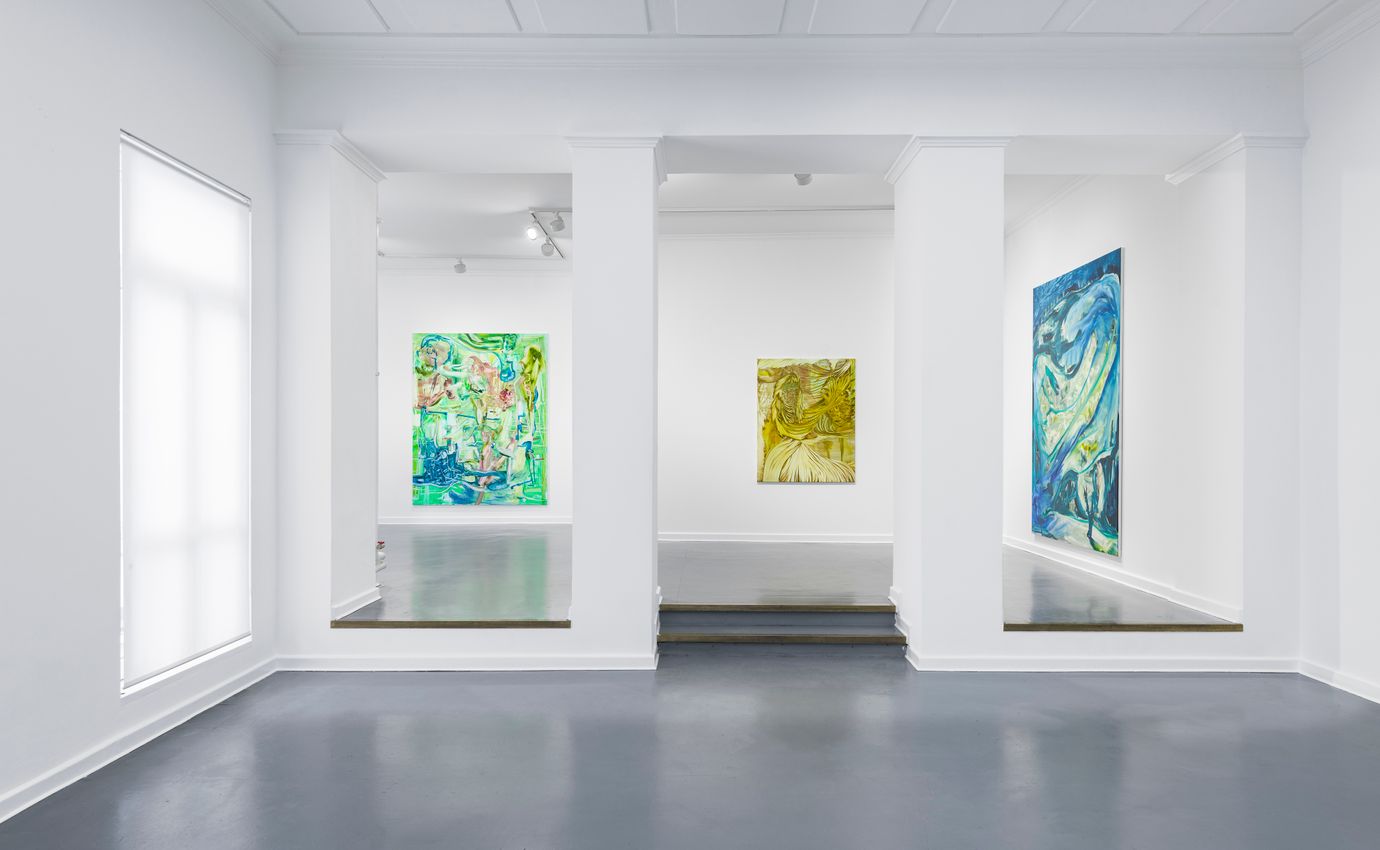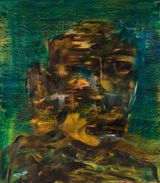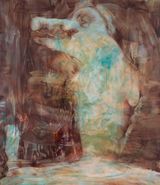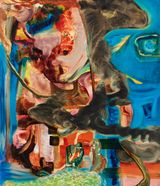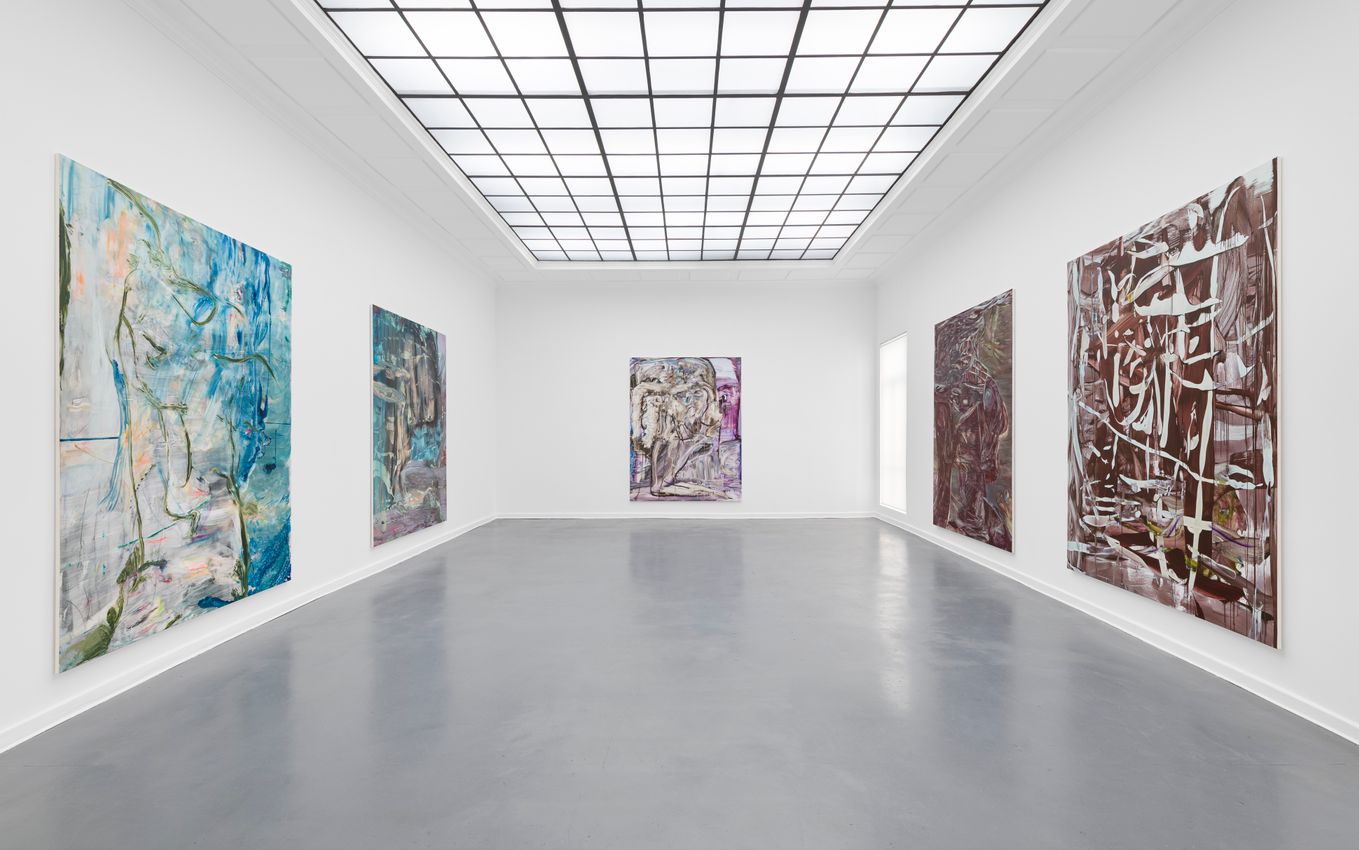
At the start of the pandemic, Gregor Gleiwitz painted large-format canvases. Measuring three by five meters, each was a world unto itself. For the painter, this was perhaps the culmination of ten years of intensive work; in any case, this was followed by a form of collapse and a process of recentering, much in keeping with the cultural atmosphere of those months. In the end, Gleiwitz left the studio—last July to be exact. He began to immerse himself in the contemplation of nature and in plein air painting. As dusk fell, he returned to the studio. An integral part of Gleiwitz’s new paintings is the lived, prolonged contemplation of each day.
When the painter, born in 1977, was still an art student, the big names were Martin Kippenberger and Albert Oehlen. They had something like an overarching narrative for painting; it was understood that you could only paint in an ironic way, as if modernism were saying goodbye with a sad wink before the final drop of the curtain. But the curtain did not fall. It simply became apparent that, going forward, painting should be thought of in the plural, that it was essential to consider what painting meant once the genre was exposed to other media’s pressure to innovate. Perhaps a whole new sense of freedom began to unfold because of it, wherein painters no longer had to pursue the medium’s pertinence or narratives.
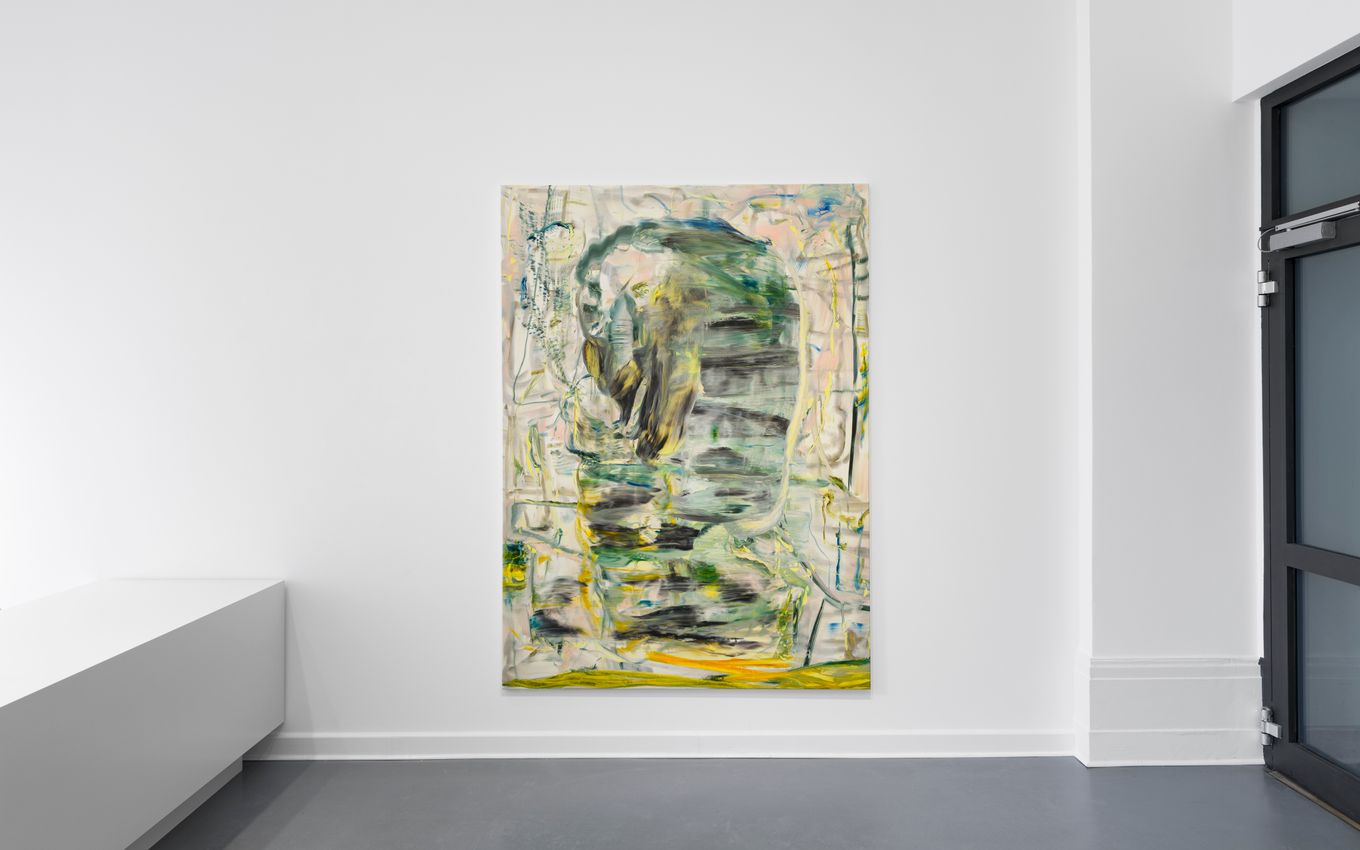
In Gleiwitz’s new paintings, the landscape assumes a very particular role. It is neither picturesque nor heroic; rather, it becomes a laboratory for the exploration of unknown spaces. The tranquil gaze enables the artist to reconsider areas that sometimes appear trivial—and the longer Gleiwitz looks, the more his gaze is transformed. He absorbs different dimensions, as well as the quality of hues, materiality, weight.
In a subsequent stage, the painter unfurls once again the time spent outdoors. The vital processes of transformation take place in the studio. Gleiwitz paints on a canvas that is stapled to the wall; he paints through the wall, as it were, so as to reach another space. Needless to say that an old metaphor from art history comes into play at this point—namely that of painting as a window, painting as a space of illusion. In Gleiwitz’s work, however, the back-and-forth of material plays just as important a role as the application of paint. ‘I feel connected to space,’ he says, ‘but not necessarily to landscape.’
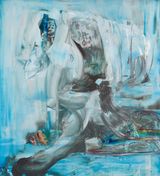
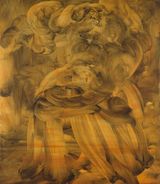
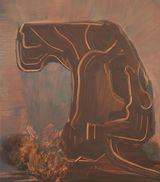
Even if his new paintings have shed the heaviness of many earlier works, they still focus on the experience of perception. Forms linger on the threshold of figuration, as if suspended between object and pure colour. One of his previous solo exhibitions had the subtitle Sitting on the Edge of my Eye. Although it sounded like a surrealist joke, it was actually based on a dream the artist had: half contemplating the outside world, half looking inward. His new paintings are more serene, presenting a radiance that almost evokes stained-glass windows.
Gleiwitz usually paints in a single sitting. That is why his works are assigned dates. But the point is not just to make art like a diary—something that was fairly widespread in the early days of the pandemic. It is also, according to Gleiwitz, about a timeframe where a particular colour atmosphere is created, as well as a specific form that can only emerge in this state. In concrete terms, this means that the painter does not paint from photographs or preparatory sketches; he talks about a very distinctive kind of realism. The painting must have a look, he says, and it needs to exist for itself.
In her study The Love of Painting, Isabelle Graw fittingly writes about the vitalistic fantasies that repeatedly come into play when we talk about painting. There seems to be a close connection between painter and product, and this effect appears on the work’s surface in the form of visible traces. And there is indeed something to it; this fantasy of a living being is not a mere illusion. It does depend on the viewer’s power of projection, but anyone who paints knows about this effect. Gleiwitz stops painting when the canvas says he can go, that it no longer needs him. In a painting, he strives for the primal human reaction of attraction. He needs someone to stand opposite the painting to achieve this, a living being—in other words, everything that was lost during the pandemic.
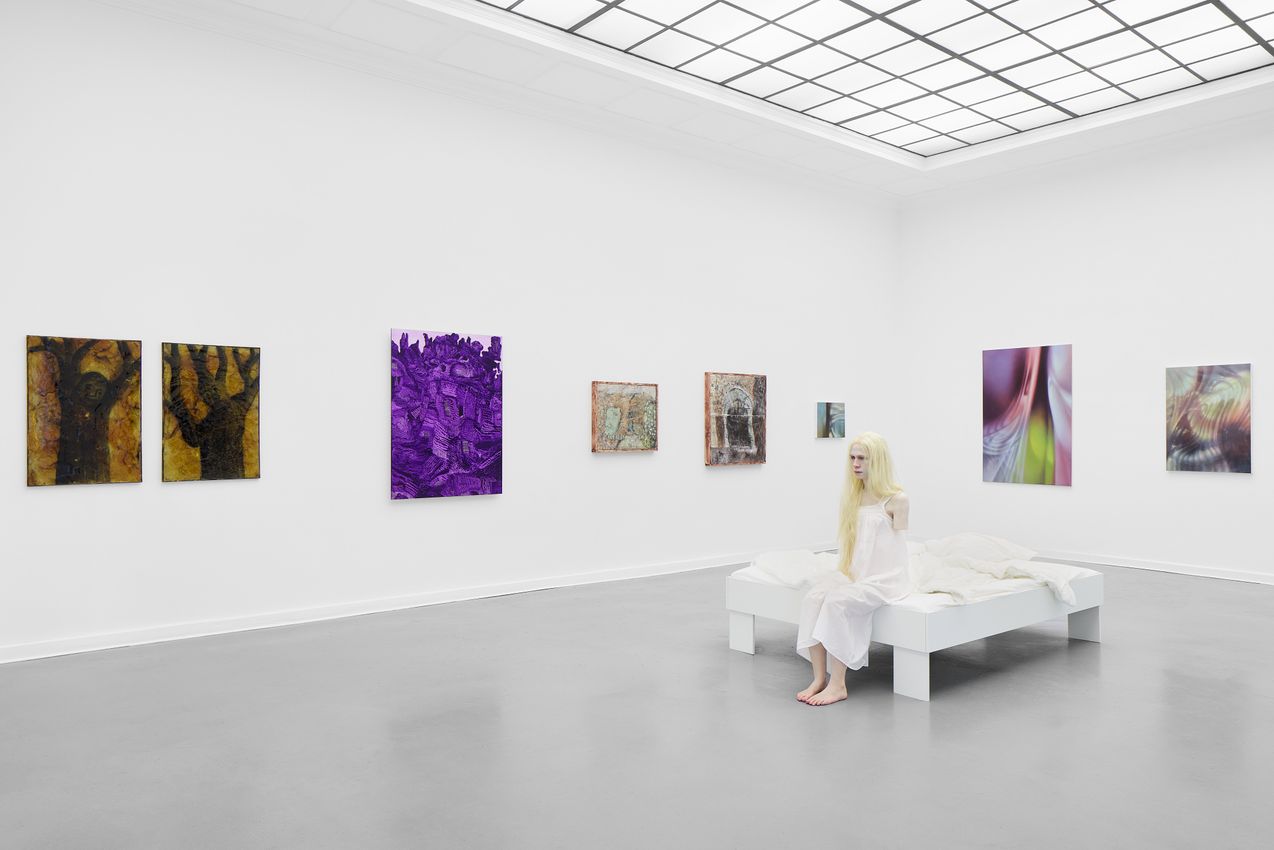
The paintings in the exhibition Xyleten—a made-up word that can, for instance, conjure up images of an extraterrestrial civilisation—have an organic and lively quality. Looking at some of the works, you think you recognise twisted trees against dramatic clouds, dissolving into a human figure—until the material itself, the application of paint, rushes to the fore at last. Other works are full of movement, like a dance in the sun—or is it actually just the wind in a wheat field? In some paintings, the outline of a head can be discerned: Gleiwitz plays with format, given that the paintings’ vertical orientation contradicts the traditional convention of the landscape format. The art historian Meyer Schapiro would see in it a non-mimetic pictorial element, that is, one that has the character of a sign. Experienced viewers know that a vertical format signifies a portrait. Gleiwitz thus brushes the paintings’ symbolic dimension the wrong way.
Painting needs to gauge itself not only against the living, but also language. There are moments when it is possible to approach Gleiwitz’s works through a linguistic rendering. But the paintings’ promise is that they operate outside the world of meaning. When something is about to become recognisable, it is deferred once more. Meaning always turns a corner.
Gregor Gleiwitz’s large-scale paintings and his very precisely elaborated miniatures present an imagery between abstraction and almost figurative levels of meaning. Vibrant colour fields are ruptured by scratched, scraped, and painted surfaces as well as wild serpentine curves. The static effect of the soft, warm aura of the colours, defies the movement and mobility of the contours. The glazes are of varying thicknesses, and in some parts, their thinnest layers remind us of erased information and blurred memories, thus making a chronology visible. The titles of Gleiwitz’s works depend on the date of their completion. Being created in intensive, continuous processes, his paintings reflect experiences of time, capturing a piece of reality.

A respected voice in contemporary art discourse.
Focusing on ambitious storytelling and insightful art-world commentary. Ocula Magazine publishes in-depth interviews, critical essays and timely analysis on the artists, exhibitions and ideas driving the global art world.
Learn more about Ocula Magazine
Showcasing the best of the art world.
Ocula partners with galleries from around the world to highlight their artists, artworks and exhibitions. Gallery membership is by application and invitation, with each member vetted by an independent panel.
Learn more about Ocula Membership

Specialises in the sale of major artworks.
Led by a team with deep ties to the world’s leading auction houses, galleries and collectors. Ocula’s advisory team offers bespoke services to high-net-worth clients from around the world who are looking to acquire the best of contemporary and modern art.
Learn more about our team and services