

WANG GUANGYI
b. 1957, ChinaWang Guangyi’s aesthetic entails sampling a variety of imagery—such as well-known propaganda images and photographs—and fusing them with corporate brand names in order to undermine their original purpose. In combining ideology and advertisement, he criticises the apparent truths’ of both. In short, he brands Socialist Realist iconography and symbols with a different contradictory discursive system. The paintings are meant to highlight the fact that despite no overt relationship, the principal goal of both is to convince the population of the authenticity and singularity of its products. The artistic strategy produces imagery on different levels, both symbolic and real, visualising and actively counteracting key economic paradigms and their social and cultural implications.
Wang Guangyi employs a variety of media including installation art, mixed media imagery and sculpture, but it was his series of oil paintings entitled ‘Great Criticism’ that earned him fame. On a surface level, these pictures resemble the technique and aesthetics of Warhol’s pop icons, but their inherent contents are extremely sophisticated fusions of different belief systems, namely socialism and consumerism. Fusing the two opposing phenomena negates both. Wang Guangyi combines disparate and seemingly disconnected images, attempting to show how inexorably entwined they become when interpreted through a consensual frame that, then, domesticates and homogenises them. From this perspective, the works embody themes of equation and acquisition, a transecting of capital and empire in the commodity.
Wang Guangyi was born in Harbin, Heilongjiang province in 1956. He graduated from Zhejiang Academy of Fine Arts, Oil Painting Department in 1984. He resides and works in Beijing. Selected exhibitions include The Seventh Shenzhen Sculpture Biennale, OCAT, Shen Zhen (2012); The Constructed Dimension, 2010 Chinese Contemporary Art Invitational Exhibition, National Art Musume of China, Beijing(2010); Reshaping History: China Art from 2000-2009, China National Convention Center, Beijing(2010); Cold War Aesthetics, Wang Guangyi, Institute of Louisse Blouin Foundation, London, U.K.(2008); 85 New Wave—The Birth of Chinese Contemporary Art, Ullens Center for Contemporary Art, Beijing(2007); Plato and His Seven Spirits, Century OCT (Beijing, 2006), Mahjong, Kunstmuseum Bern (2005), Chine, le corps partout? Museum of Contemporary Art (Marseilles, 2004), Alors, la Chine?, Centre Pompidou, Paris, France(2003), The First Triennial of Chinese Arts, Guangzhou Art Museum, Guangdong(2002) and 45th Venice Biennale, Italy(1993).
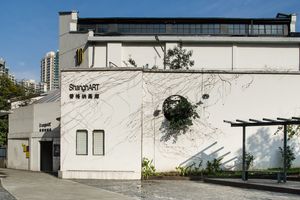
Courtesy ShanghART




Explore and Follow Artists Shaping Contemporary Art
A respected voice in contemporary art discourse.
Focusing on ambitious storytelling and insightful art-world commentary. Ocula Magazine publishes in-depth interviews, critical essays and timely analysis on the artists, exhibitions and ideas driving the global art world.
Learn more about Ocula Magazine
Showcasing the best of the art world.
Ocula partners with galleries from around the world to highlight their artists, artworks and exhibitions. Gallery membership is by application and invitation, with each member vetted by an independent panel.
Learn more about Ocula Membership
Specialises in the sale of major artworks.
Led by a team with deep ties to the world’s leading auction houses, galleries and collectors. Ocula’s advisory team offers bespoke services to high-net-worth clients from around the world who are looking to acquire the best of contemporary and modern art.
Learn more about our team and services