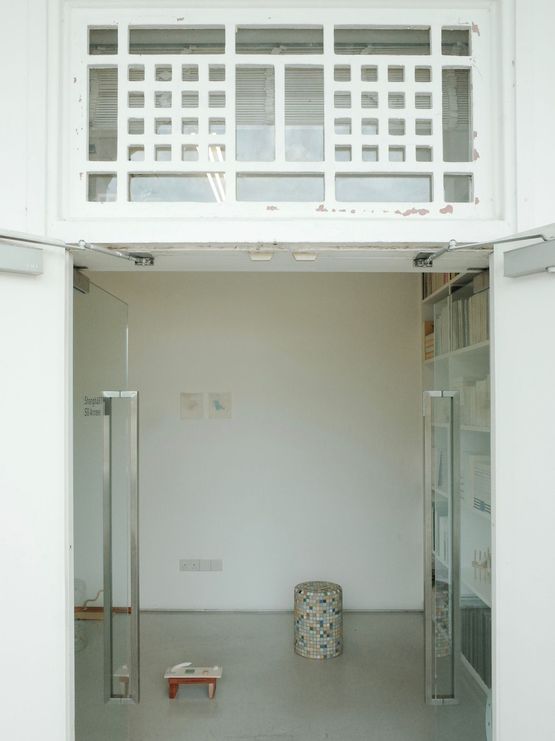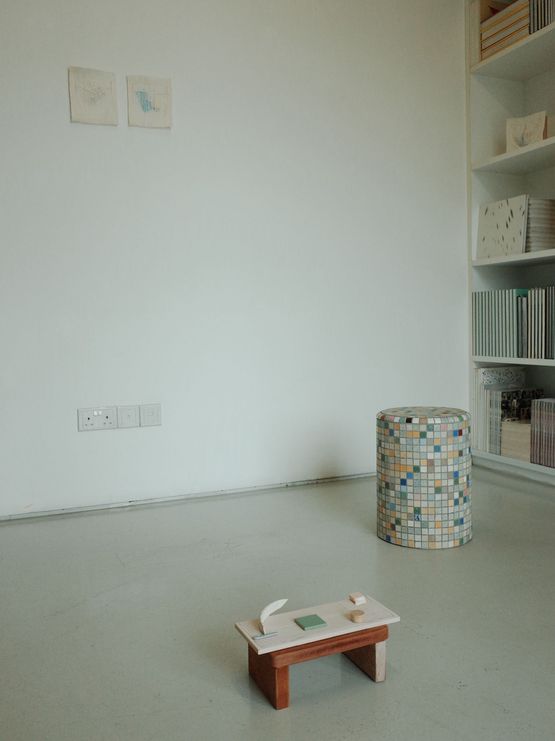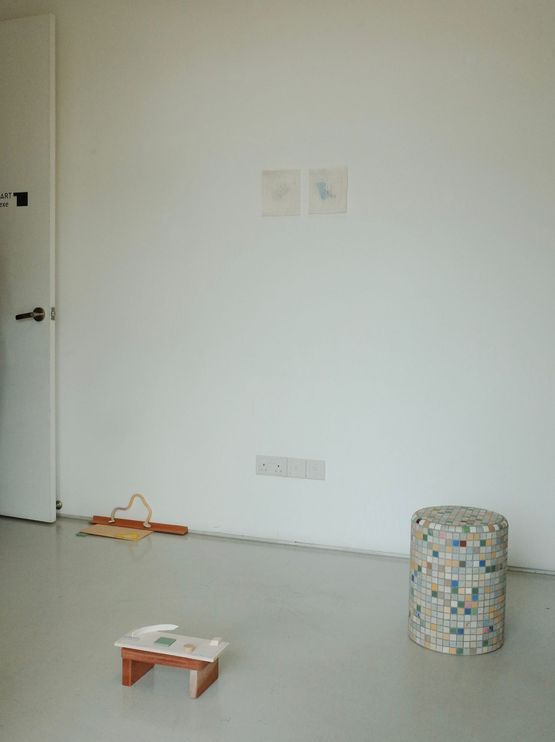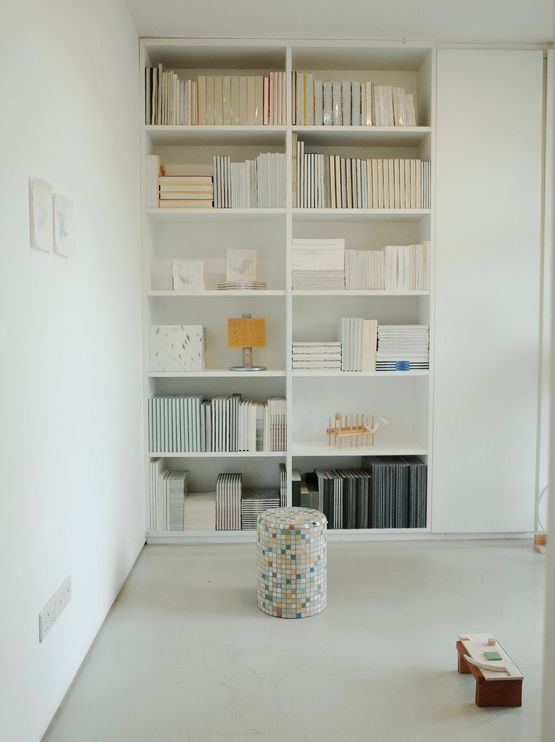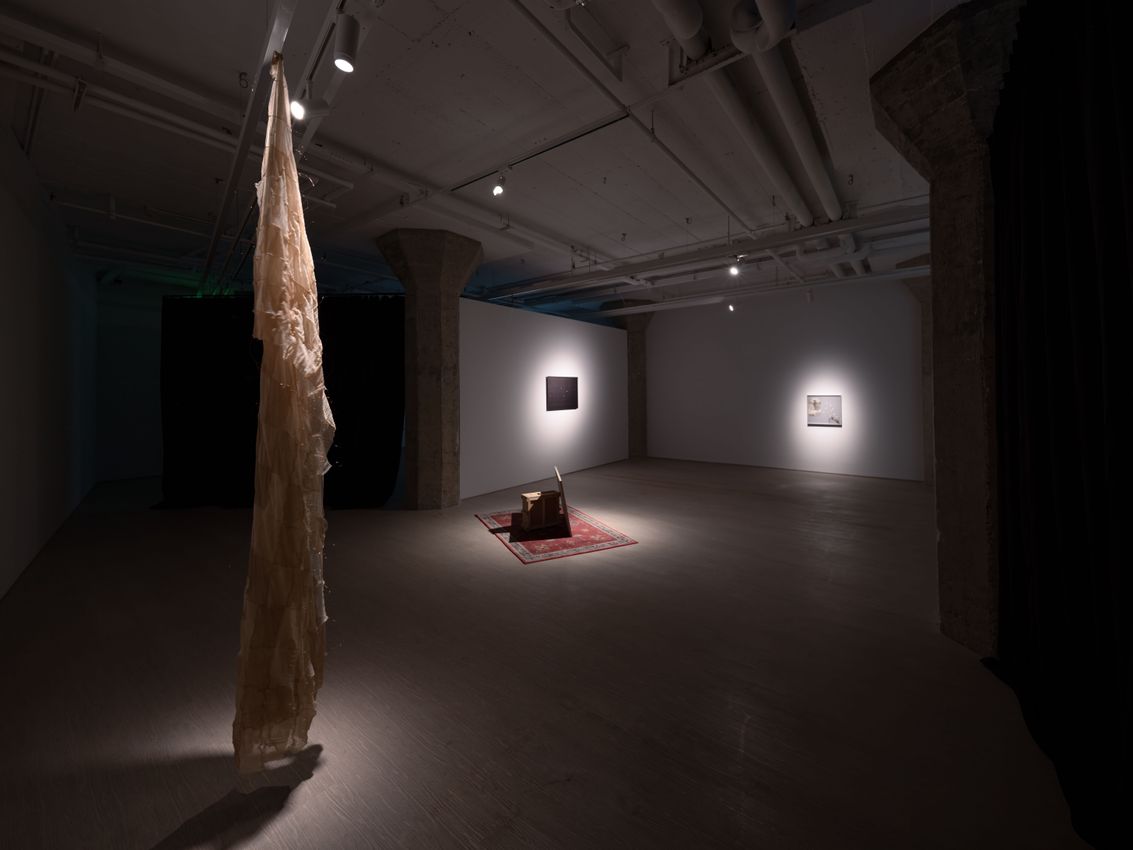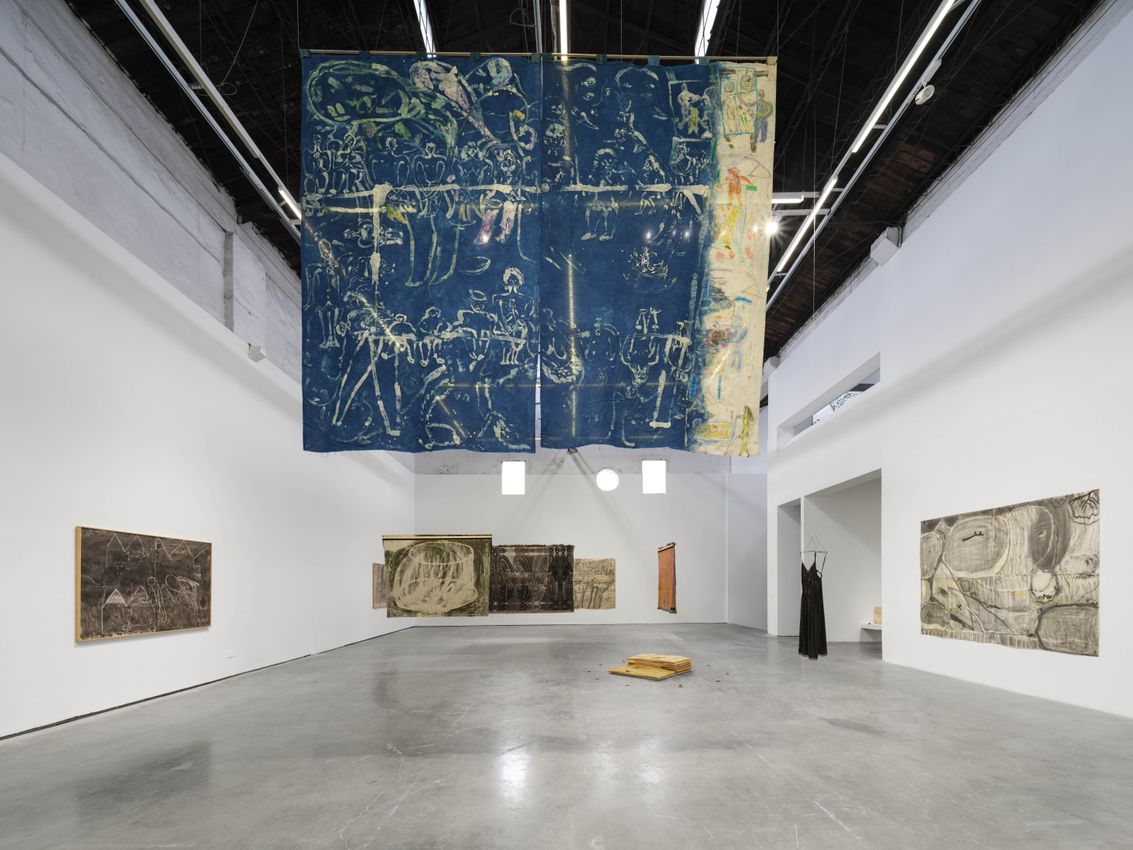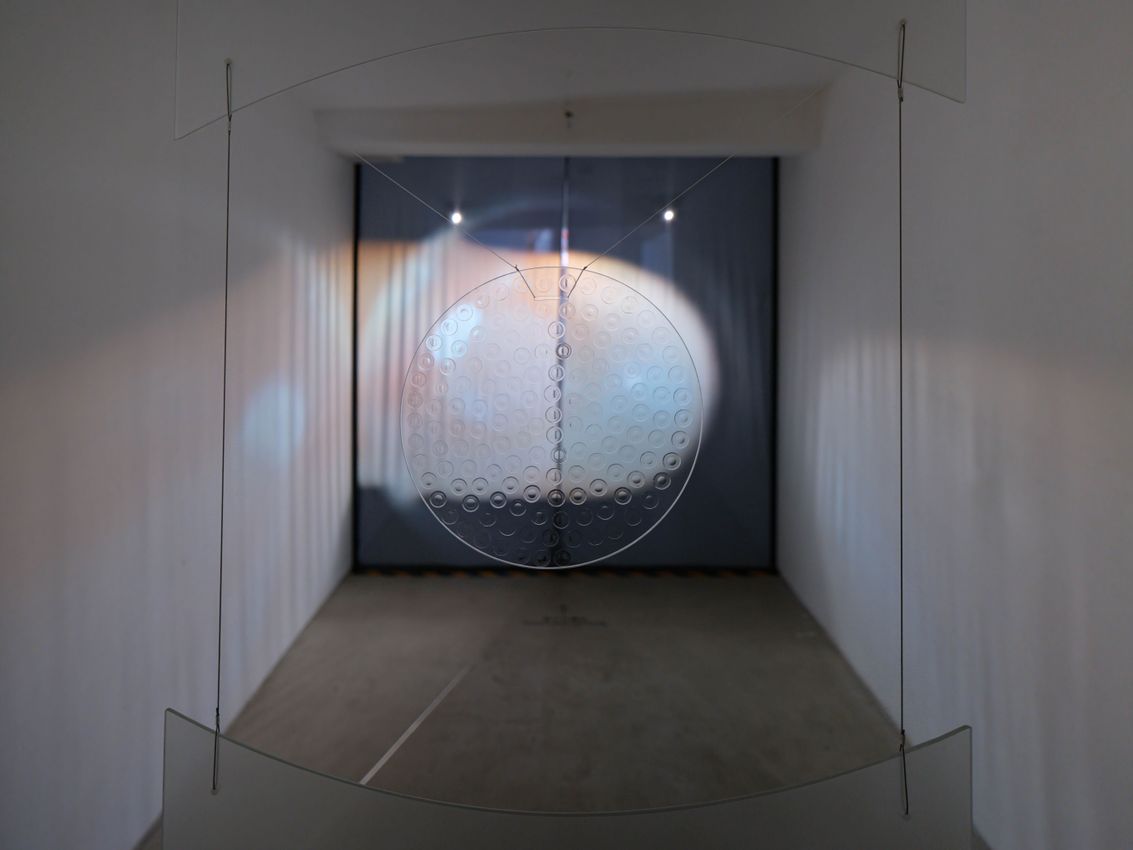
A small shift in orientation, and one thing becomes another. Like the letters p, b, d, q—which become one another through simple rotation—each work in the exhibition carries traces of something that came before, then landing somewhere new. In pbdq, exhibiting artists Catherine Hu, Cally Tan and Genevieve Leong revisit works, materials and obsessions from past experiences, revealing an intimate and sustained relationship with the physical, visual and sensorial in their everyday life.
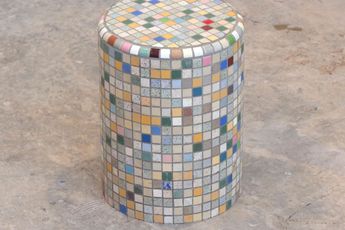
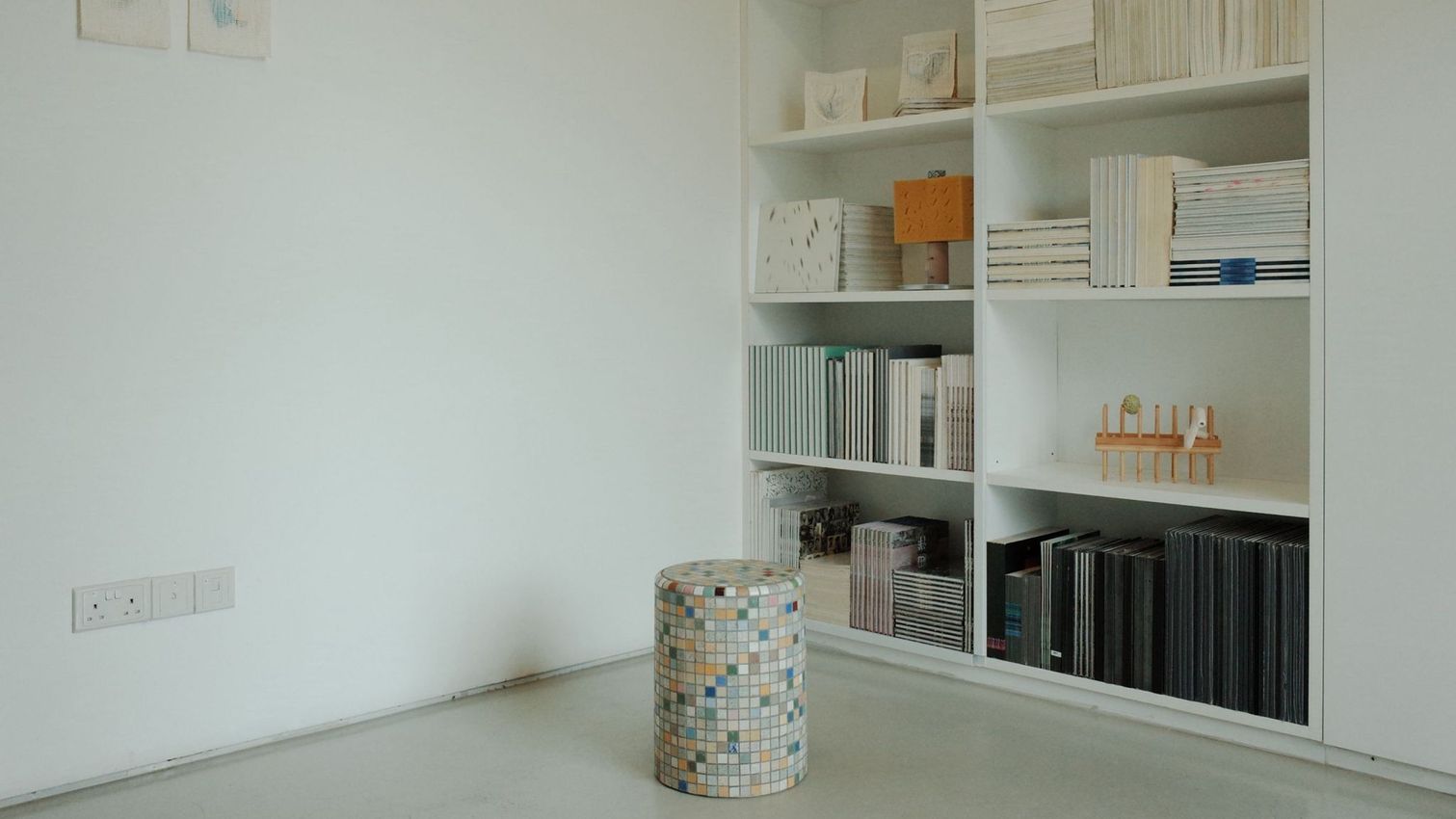
Catherine Hu’s process often involves recreating existing objects to explore the gradient between looking like and being something. One of her exhibited works, Found Tile Stool (2023), is a stool made with stray mosaic tiles, collected over three years from various locations: on the street, in drains, in nature parks, at public playgrounds, washed up on beaches, in carparks, or half-buried in the soil of a stranger’s garden. Perfect squares of colour shed from buildings that might no longer exist, or from walls and floors that might have since been remodelled, are repurposed and given a new lease of life.
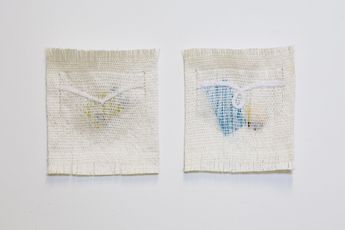
Cally Tan, a textile-forward object-maker whose practice explores the representation of objecthood and potency in non-human matter, presents Milky Way Finds (2025), a series of small items encased in double-woven pockets. Contributed by friends, these items that have been tucked away, accumulated, and often forgotten, represent traces and memories of their owners’ lives: a grocery receipt tucked into a coat pocket bearing witness to a loved one’s cooking, an accumulation of sweet wrappers marking the rhythm of daily habits. Lingering at the edges of daily life, they become akin to drifting debris in the Milky Way – also the name of the woven silk material given by its Nagano manufacturers in Japan.
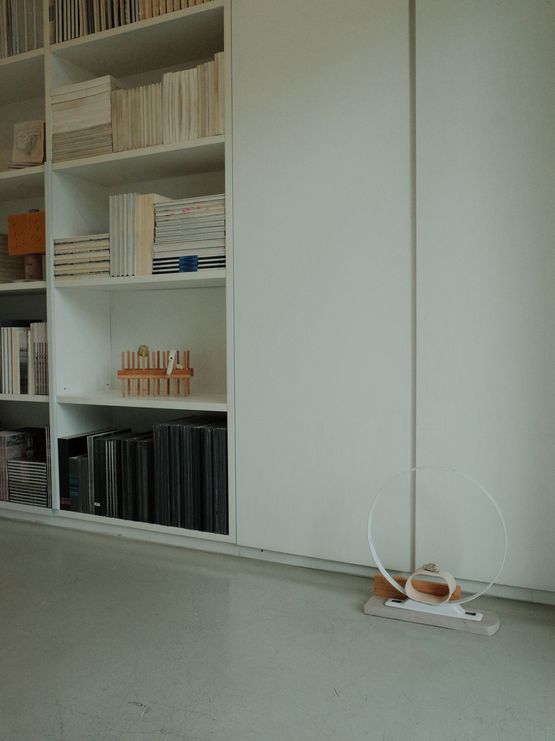
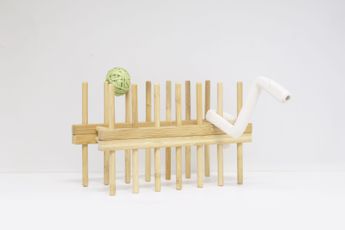
an attempt at solidifying make-believe landscapes (2026) is a series of object assemblages by Genevieve Leong, that draws from the nostalgic vocabulary of children’s imaginative play and ‘masak masak’, or make-believe cooking. It follows an earlier print series “An attempt at exhausting a place from my window” (2020–21) of 26 variations of a landscape, that explores various possibilities of looking at a single vantage point. Continuing this inquiry, an attempt at solidifying make-believe landscapes extrapolates the two-dimensional landscapes into three-dimensional object constellations arranged on the ground.


When ShanghArt Gallery opened its doors in Shanghai in 1996, it was one of the first contemporary art galleries in China. Today, the gallery operates from two spaces in the city (West Bund and Putuo District), with additional locations in Beijing and Singapore.
A respected voice in contemporary art discourse.
Focusing on ambitious storytelling and insightful art-world commentary. Ocula Magazine publishes in-depth interviews, critical essays and timely analysis on the artists, exhibitions and ideas driving the global art world.
Learn more about Ocula Magazine
Showcasing the best of the art world.
Ocula partners with galleries from around the world to highlight their artists, artworks and exhibitions. Gallery membership is by application and invitation, with each member vetted by an independent panel.
Learn more about Ocula Membership

Specialises in the sale of major artworks.
Led by a team with deep ties to the world’s leading auction houses, galleries and collectors. Ocula’s advisory team offers bespoke services to high-net-worth clients from around the world who are looking to acquire the best of contemporary and modern art.
Learn more about our team and services