



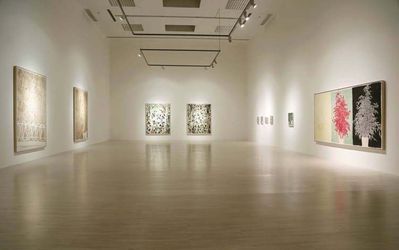
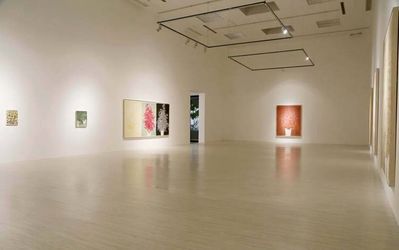
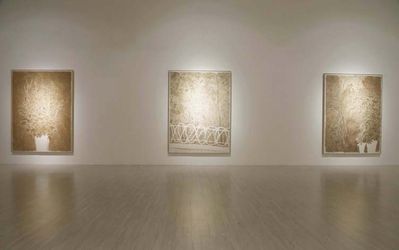
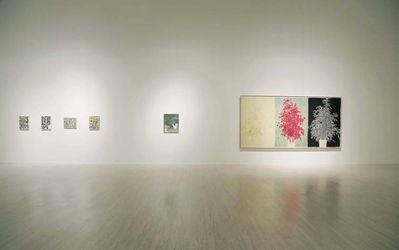
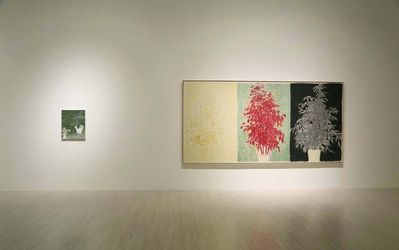
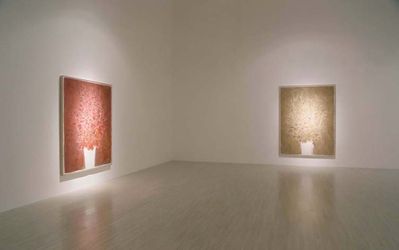
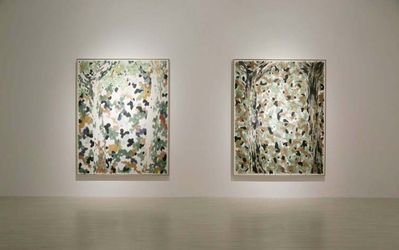
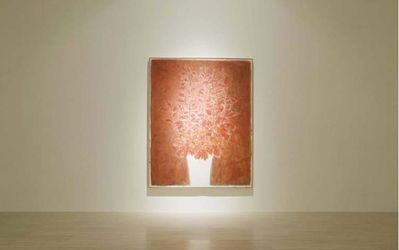
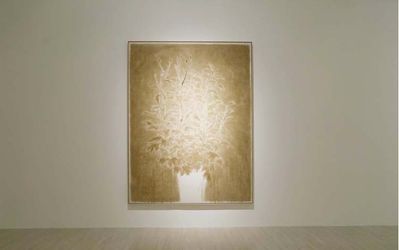
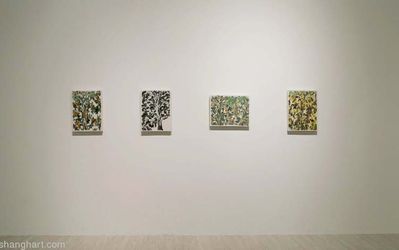
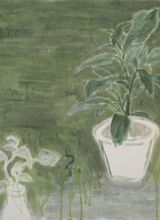
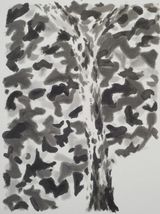
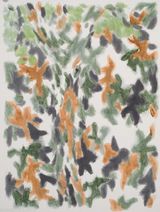
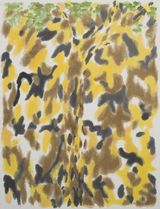
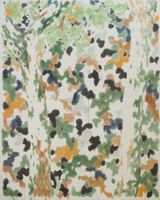
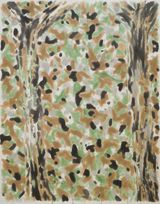
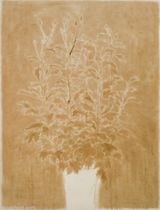
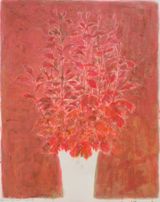
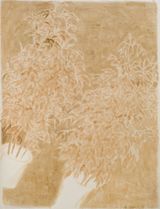
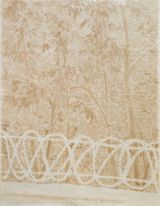
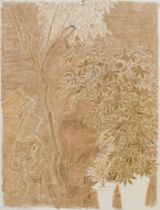
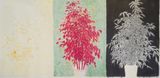
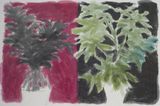


Since the early 1990s, WU Yiming has been ceaselessly focusing on ink painting. Now it comes to light that the artist’s early painting occurred against the background of an era which witnessed the collision of Chinese modern ink painting and Western painting. Ink painting, as a means of artistic expression, was on one hand facing the dilemma of surmounting the bond of tradition, and on the other in need of a resolution by criticism of and learning from realism, abstract art, and expressionism in western art history. WU Yiming and the artists of his generation shouldered from the very beginning the mission to reconcile the conflict between Chinese and Western painting. Moreover, he drifted between the traditional spirit and modernism, which constituted precisely the unique style and quality of his artwork. The characters in the early stage of his work appear very impressive: the figures all lack facial expressions; they seem distorted or stretched, often hovering or dashing. WU’s unrivalled language of expression was formed during this period. Through ink, watercolours, and acrylic applied in a multiplicity of layers, the paintings were rendered with ambiguity and intimacy. The images characterised by obscurity and alienation show the artist’s view towards the furore of contemporary Chinese society and his refinement and interpretation of people’s psychological distance. Furthermore, WU created the images of buddha, the statue of liberty, and Beuys all destitute of facial expressions and presented them in the language of sculpture. Even after materialisation of the ‘blankness’, viewers can still easily identify these ‘faceless classics’. In this way, WU investigated the construction of cultural symbols as well as the spread of cultural authority, giving a hint to the concepts which probably bore the semblance of the purposes and possibilities of art.


ShanghART gallery was initiated in 1996 in Shanghai. It has since grown to become one of China’s most influential art institutions and a vital resource to the development of contemporary art in China with two spaces in 50 Moganshan Road (Main Space and H-Space), a public warehouse space in West of Shanghai (ShanghART Taopu), and a gallery space in Beijing and representing over 40 artists.
Being recognized for its importance ShanghART became the initial gallery from China participating in major international art fairs like Art Basel and Fiac, Paris. ShanghART gallery also enjoys the great respect of being among the 75 most influencial galleries selected in Thames & Hudson’s publication ‘International Art Galleries: Post-war to Post-millennium.’

A respected voice in contemporary art discourse.
Focusing on ambitious storytelling and insightful art-world commentary. Ocula Magazine publishes in-depth interviews, critical essays and timely analysis on the artists, exhibitions and ideas driving the global art world.
Learn more about Ocula Magazine
Showcasing the best of the art world.
Ocula partners with galleries from around the world to highlight their artists, artworks and exhibitions. Gallery membership is by application and invitation, with each member vetted by an independent panel.
Learn more about Ocula Membership

Specialises in the sale of major artworks.
Led by a team with deep ties to the world’s leading auction houses, galleries and collectors. Ocula’s advisory team offers bespoke services to high-net-worth clients from around the world who are looking to acquire the best of contemporary and modern art.
Learn more about our team and services