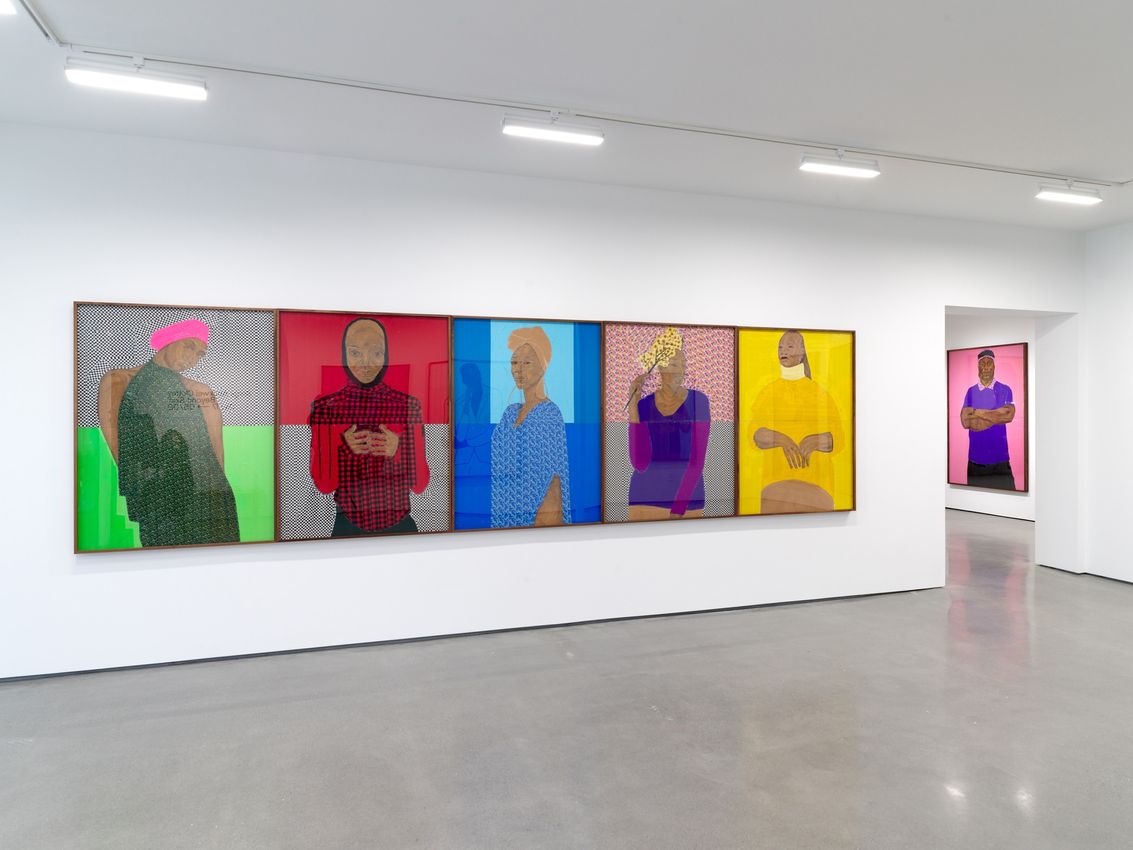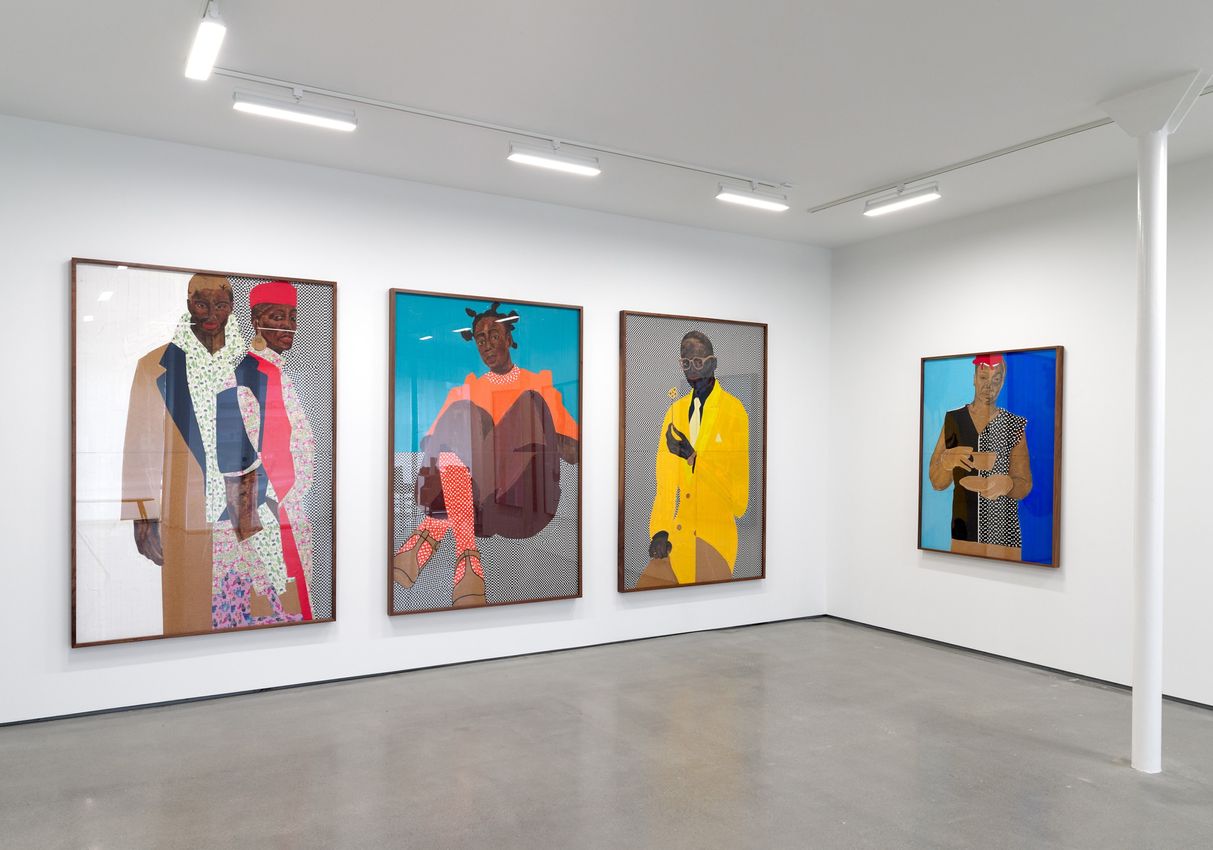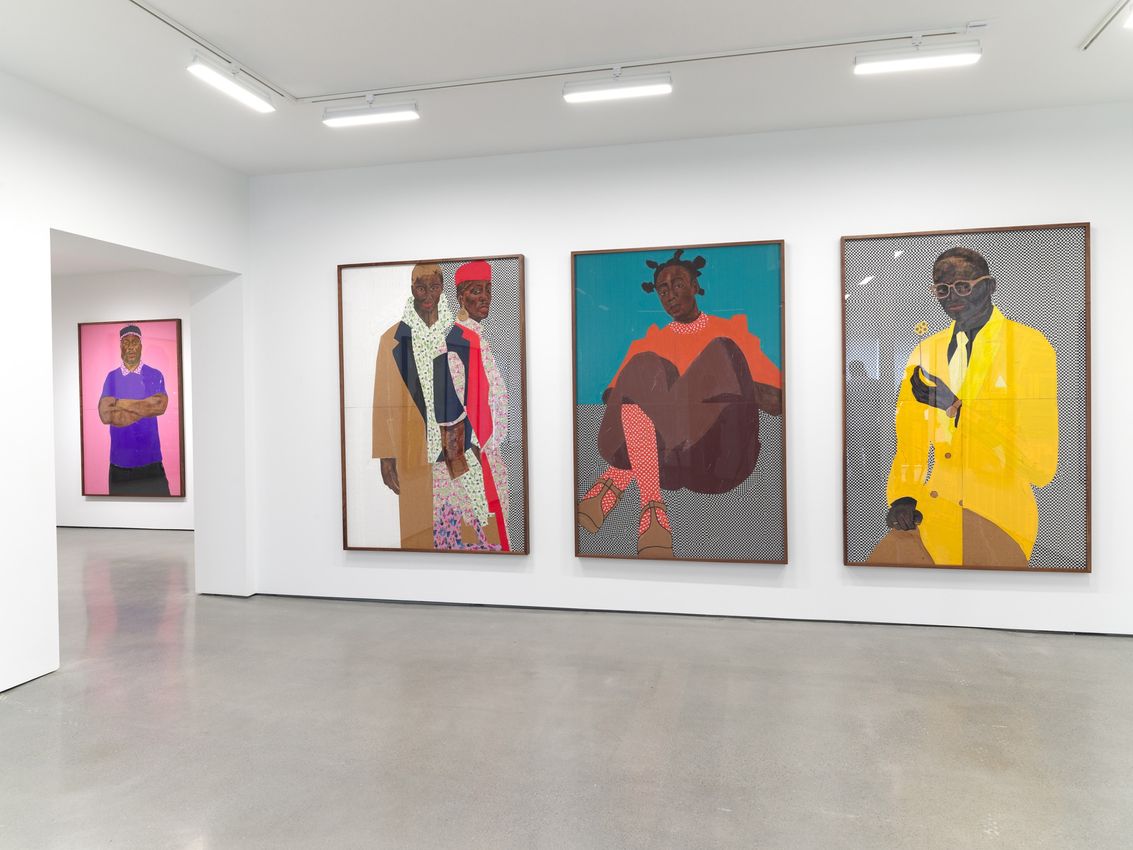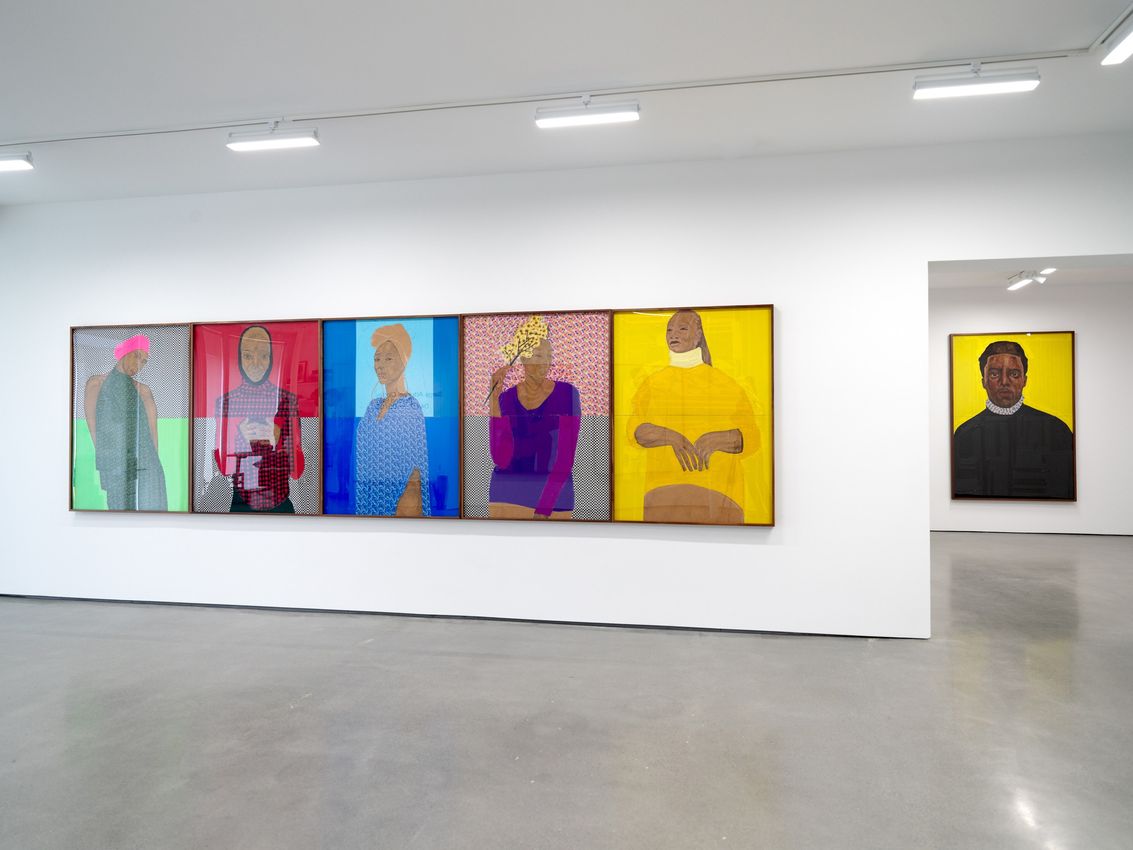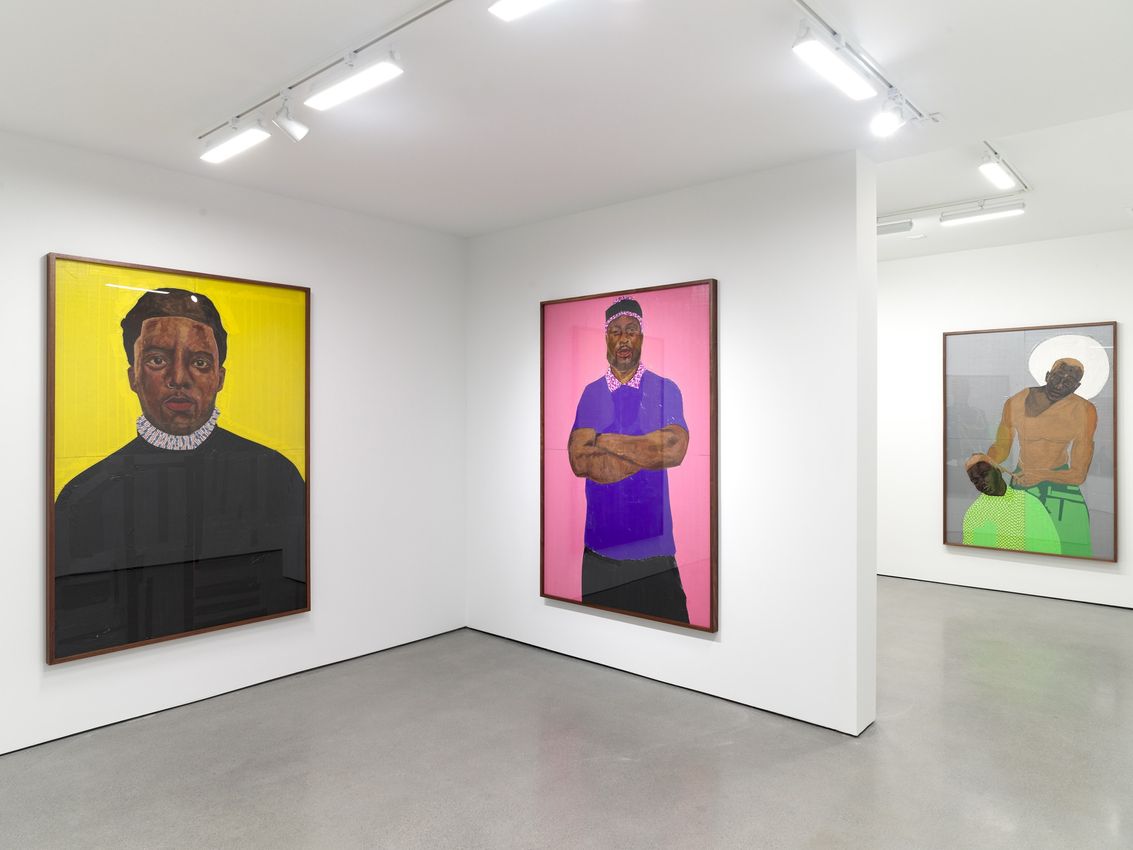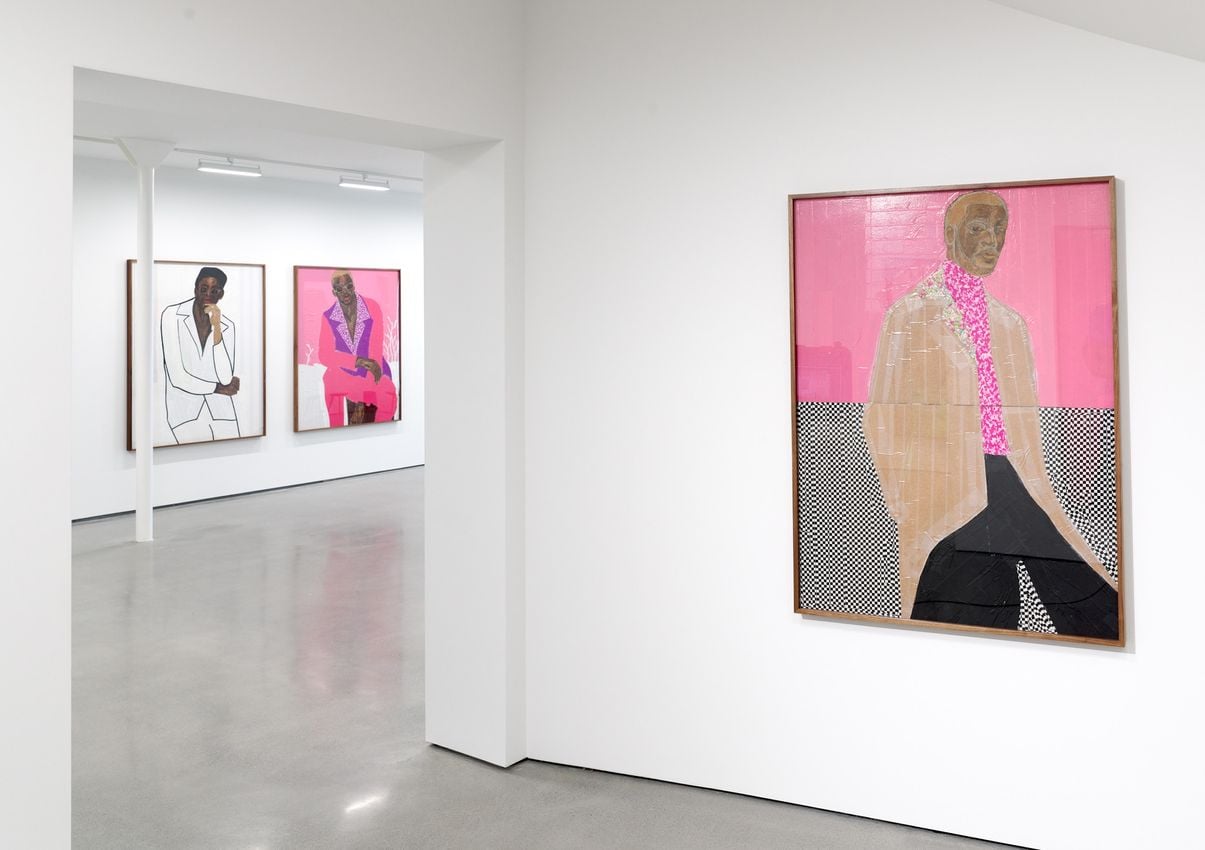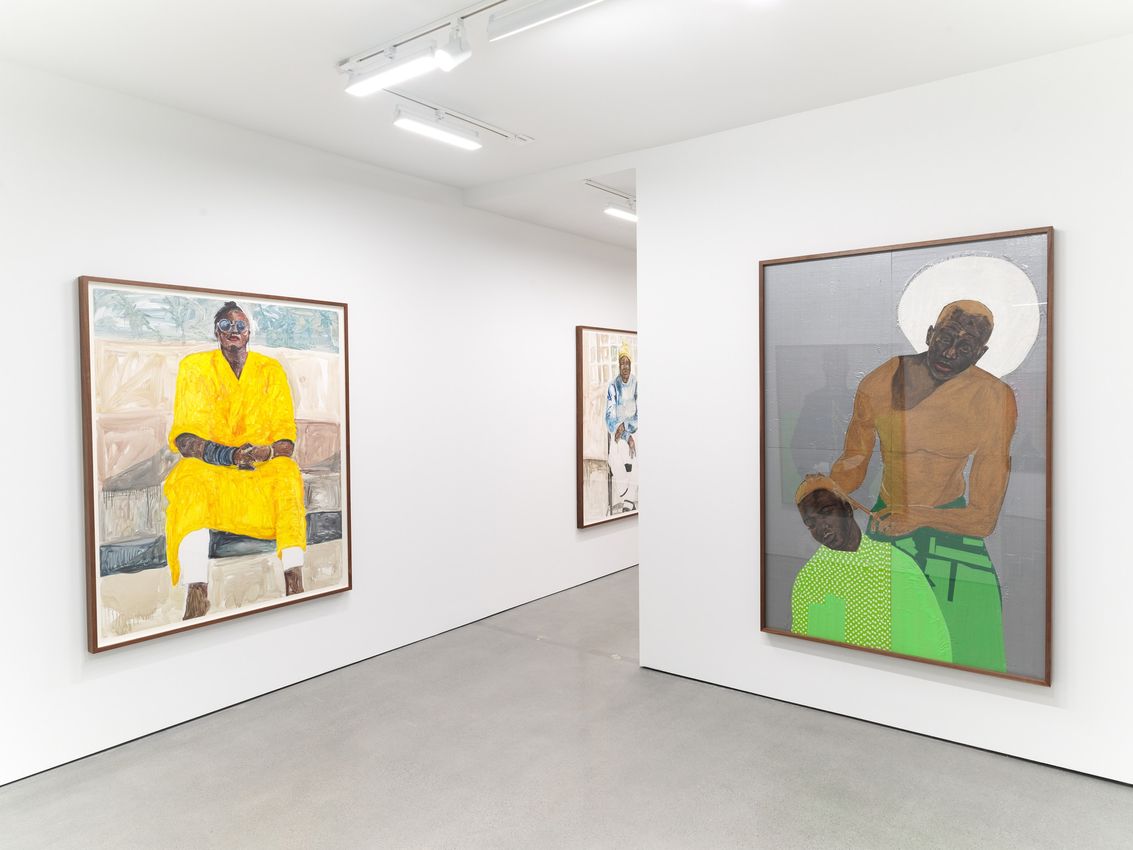
Simchowitz Gallery is pleased to present BEYOND SKIN an exhibition of new work by Serge Attukwei Clottey.
For his first solo exhibition at the gallery, Clottey has made work that centres around ideas of image making and identity construction. Taking a cue from mid-century black and white photography made on the coast of West Africa, Clottey seeks to update the visual language of historical images to fit the contemporary.
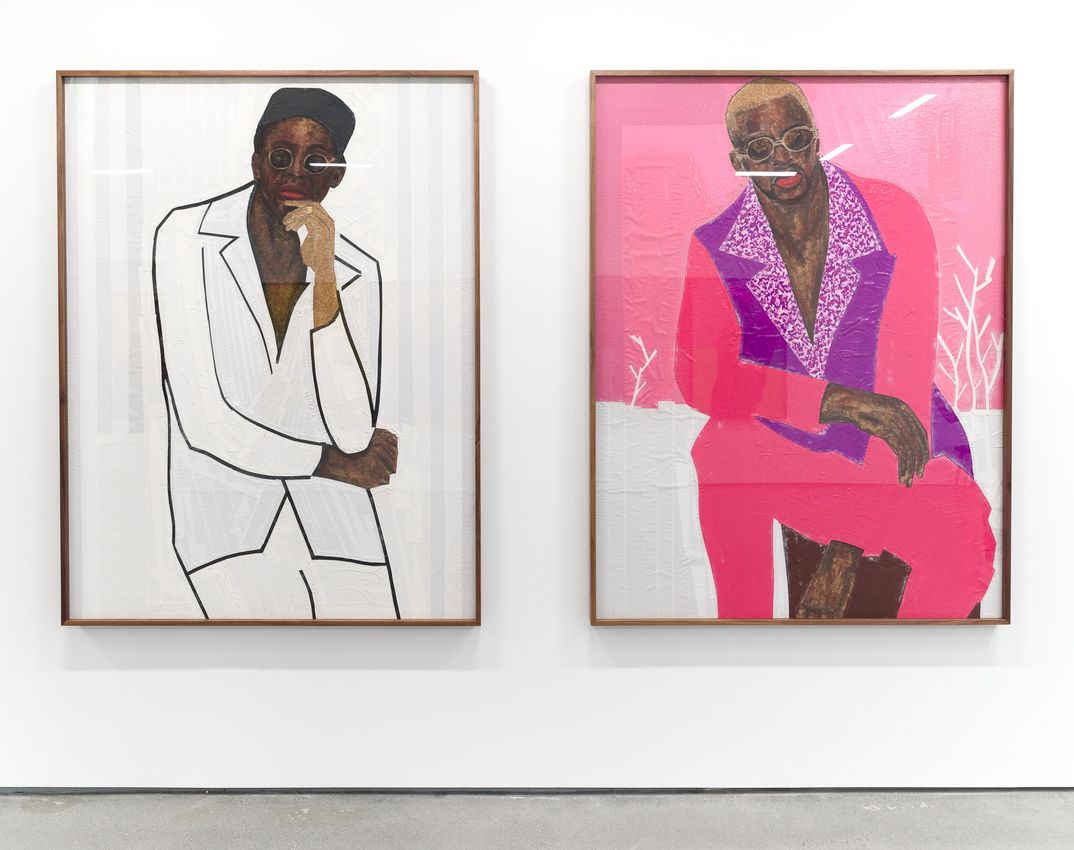
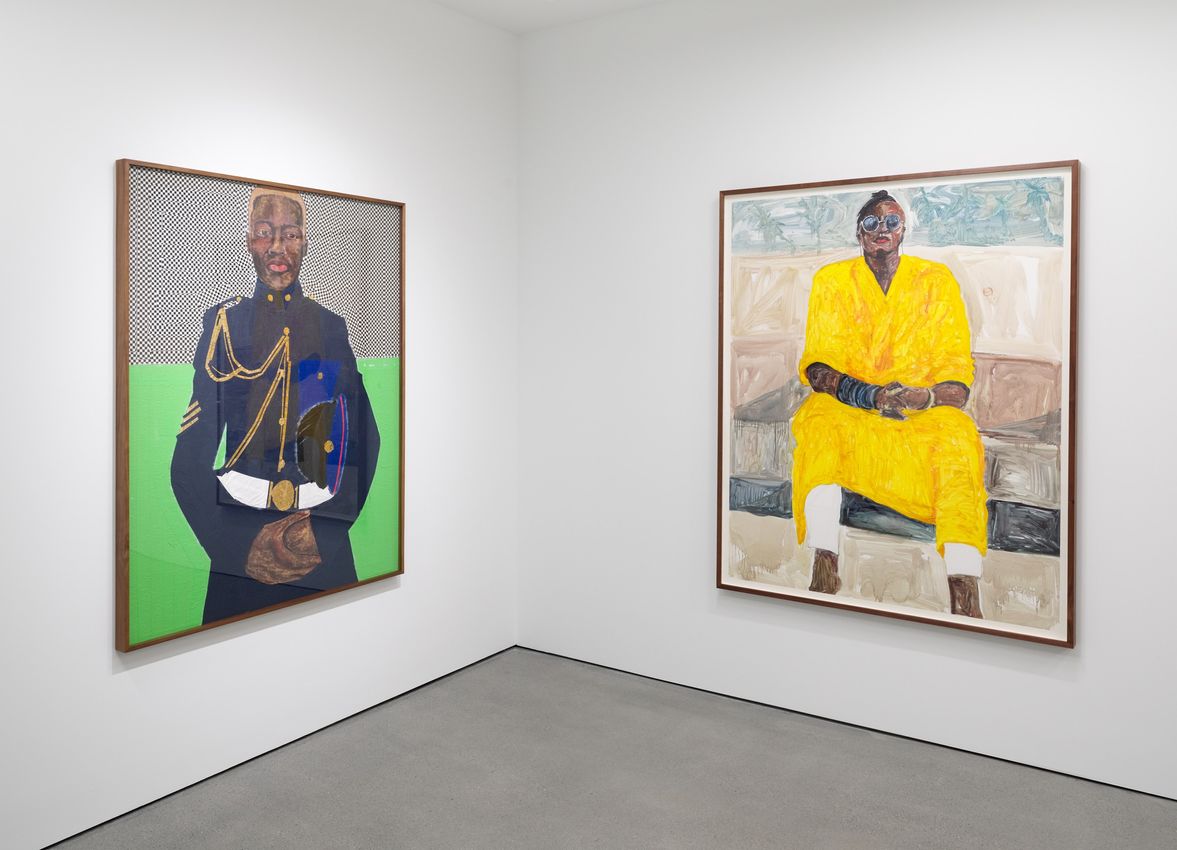
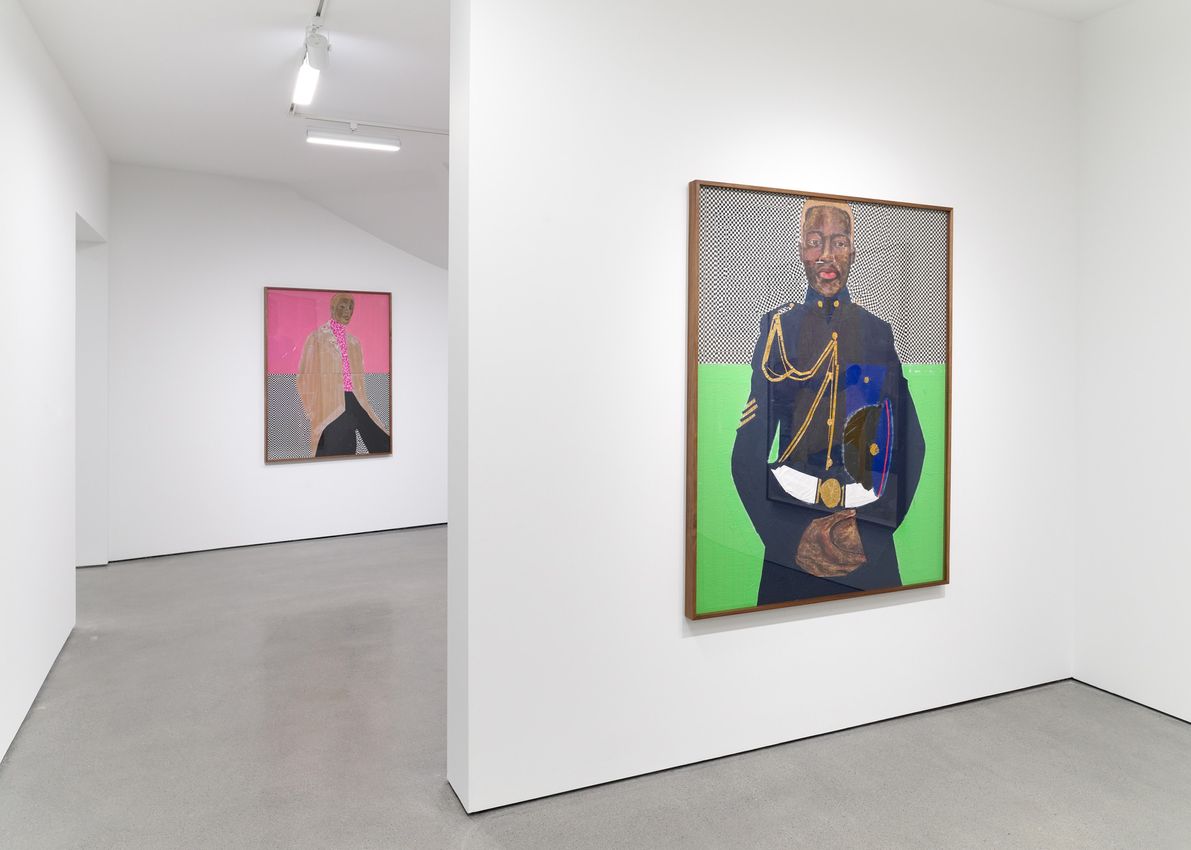
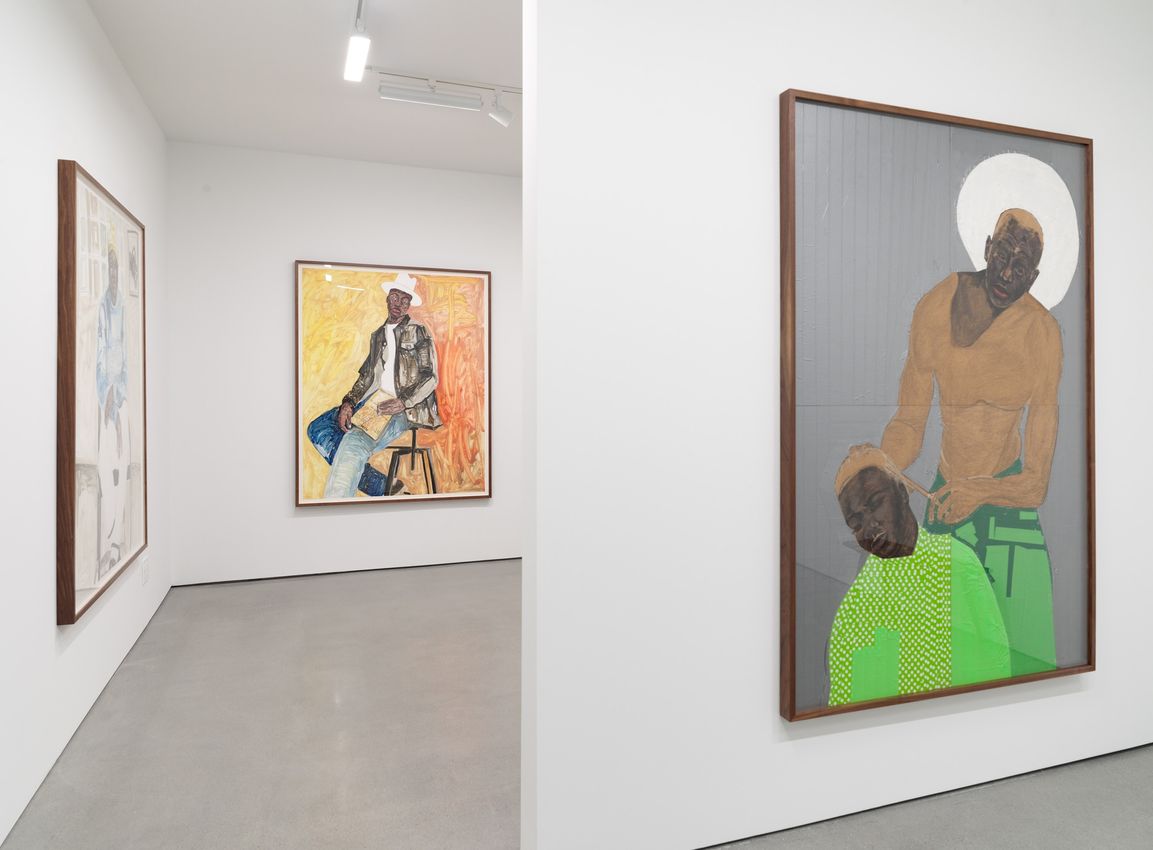
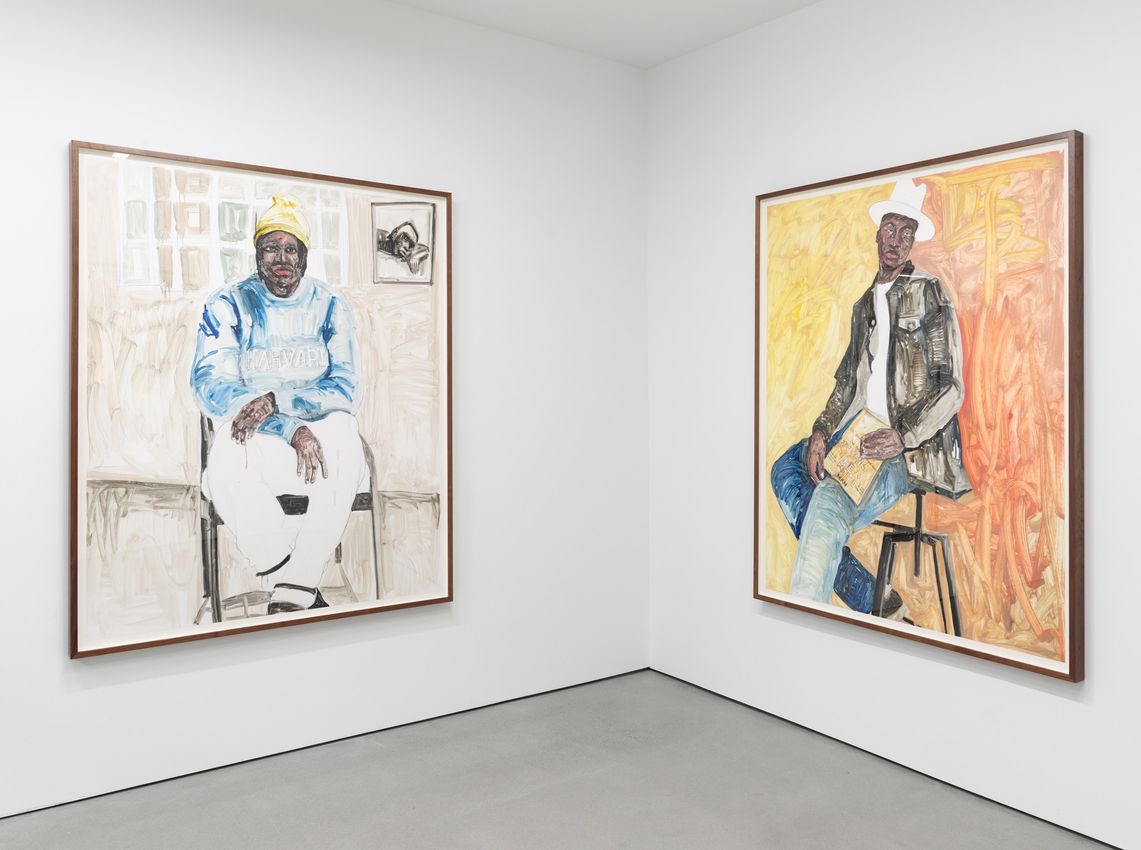
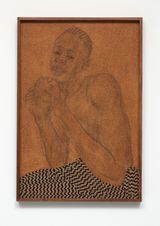
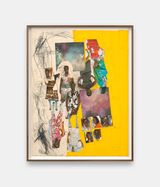
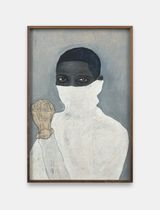
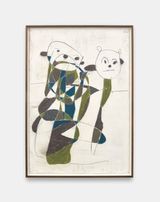
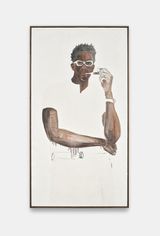
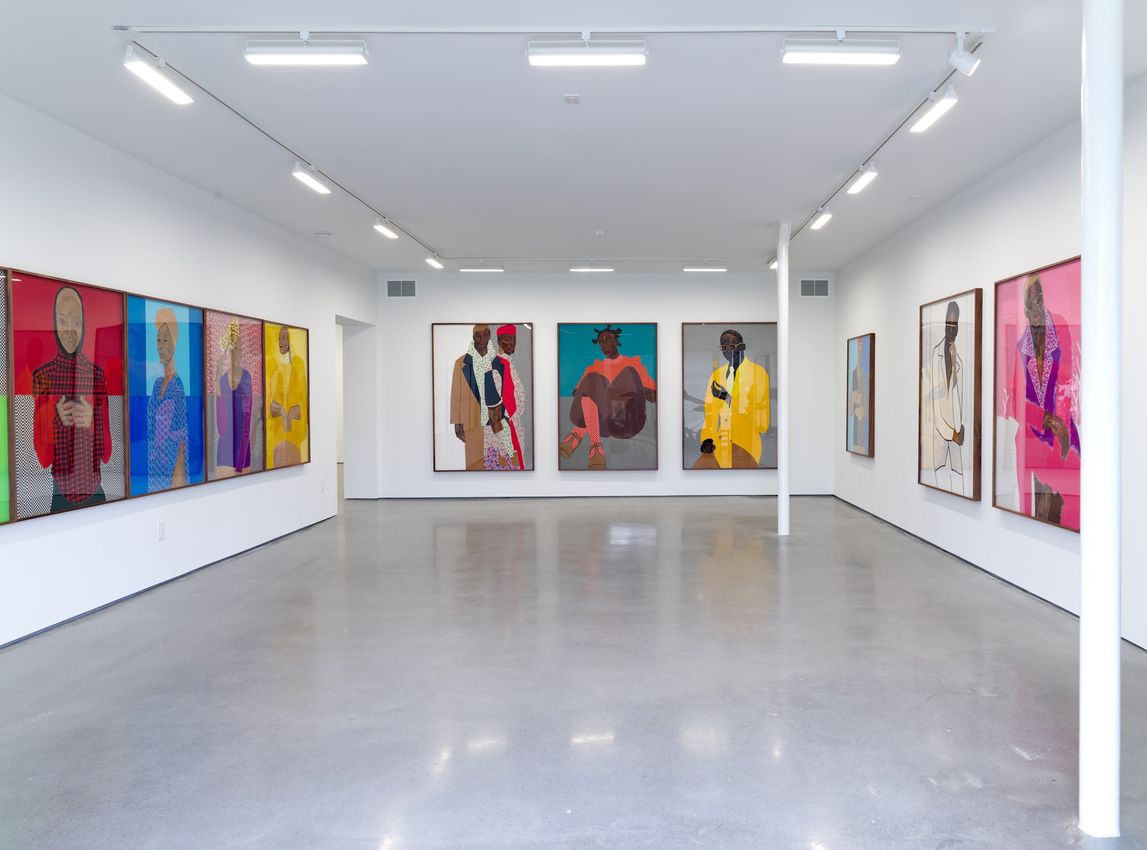
Both the paintings rendered in duct tape and oil on cork and those made on large sheets of yupo paper are based on existing photographs. Clottey chose his subjects for their expressive nature, drawn to the voice behind the individual. Some are recognisable, such as Chadwick Boseman or Michaela Coel, but some are plucked by the artist from the endless scroll of social media.
Clottey plays with fashion as a form of identity construction. Fabrics act as historical records that are passed on as material culture. The juxtaposition of the figures’ intense subjectivity and the vibrant clothing which adorns them challenges colonialist notions of the agency of the sitter. In the artist’s world, black bodies are no longer props; they assert their independence, pushing beyond antiquated notions of personhood.
Through fashion, the artist also playfully engages with culturally ingrained conventions of gender and sexuality. In Colored Man, the figure sits in a relaxed pose. Dressed in a suit of fuchsia and purple with a brightly patterned lapel, he projects a stereotypically masculine energy. Pink, still associated almost exclusively with femininity in the artist’s native Ghanaian culture, is repurposed here, freed from the confines of a heteronormative masculinity.
Choice of material has played a significant role in Clottey’s practice, and here it is no different. The artist recalls the story of Marcus Omofuma, a man who sought asylum in Austria due to persecution in his native Nigeria. In 1999, 25-year-old Omofuma was deported to Bulgaria by Austrian authorities. Bound and gagged with duct tape, he was put on a plane and died en route to Sofia. Clottey seeks to reclaim duct tape–rather than as a tool of violence, he redefines it as a protective layer. In these paintings, as in his past performances, he wraps it around the body and asserts it as a symbol of strength.
The use of cork also plays an important role in Clottey’s paintings. The tone of the material, which can change with exposure to the sun, mimics the look of black skin. It also acts as a physical manifestation of communication and social engagement. In church and around his hometown of Labadi, outside of Accra, information is disseminated on notice boards made of cork. That the paintings in the show are created on a base of the material means that they carry with them innate associations of transmission, communicability, and the desire to engage.
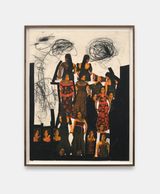
Large tondo charcoal drawings included in the exhibition act as another reference to historical African photography. Inspired by visages of African warriors, Clottey’s black and white portraits examine hairstyle as a means to trace cultural histories that exist outside of archival records. In the tondo drawings, as in the duct tape paintings, the artist engages with historical visual languages and updates them to fit our time.
Serge Attukwei Clottey (b. 1985 in Accra, Ghana; lives and works in Accra) received an Honorary Doctorate of Art from the University of Brighton in 2019. Clottey’s work has recently been presented in solo exhibitions at The Mistake Room, Los Angeles; Ever Gold [Projects], San Francisco; Gallery 1957, Accra; Gnyp, Berlin; Lorenzelli Arte, Milan; Vestfossen Kunstlaboratorium Foundation, Oslo. His works have been included in recent group exhibitions at Desert X, Palm Desert; Christie’s Beverly Hills, Los Angeles; The Moody Center, Rice University, Houston; Iziko South Africa National Gallery, Cape Town; UTA Artist Space, Los Angeles.
Press release courtesy Simchowitz. Text: Katya Gause.
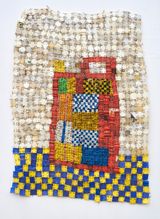
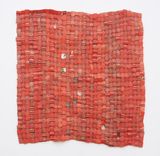
Cutting, drilling, stitching and melting found materials, Clottey’s sculptural installations are bold assemblages that act as a means of inquiry into the languages of form and abstraction. Utilising flattened Kuffuor gallon, jute sacks, discarded car tires and wood pieces, he forms abstract formations onto which he inscribes patterns and text. In doing so, he elevates the material into a powerful symbol of Ghana’s informal economic system of trade and re-use.


A respected voice in contemporary art discourse.
Focusing on ambitious storytelling and insightful art-world commentary. Ocula Magazine publishes in-depth interviews, critical essays and timely analysis on the artists, exhibitions and ideas driving the global art world.
Learn more about Ocula Magazine
Showcasing the best of the art world.
Ocula partners with galleries from around the world to highlight their artists, artworks and exhibitions. Gallery membership is by application and invitation, with each member vetted by an independent panel.
Learn more about Ocula Membership

Specialises in the sale of major artworks.
Led by a team with deep ties to the world’s leading auction houses, galleries and collectors. Ocula’s advisory team offers bespoke services to high-net-worth clients from around the world who are looking to acquire the best of contemporary and modern art.
Learn more about our team and services