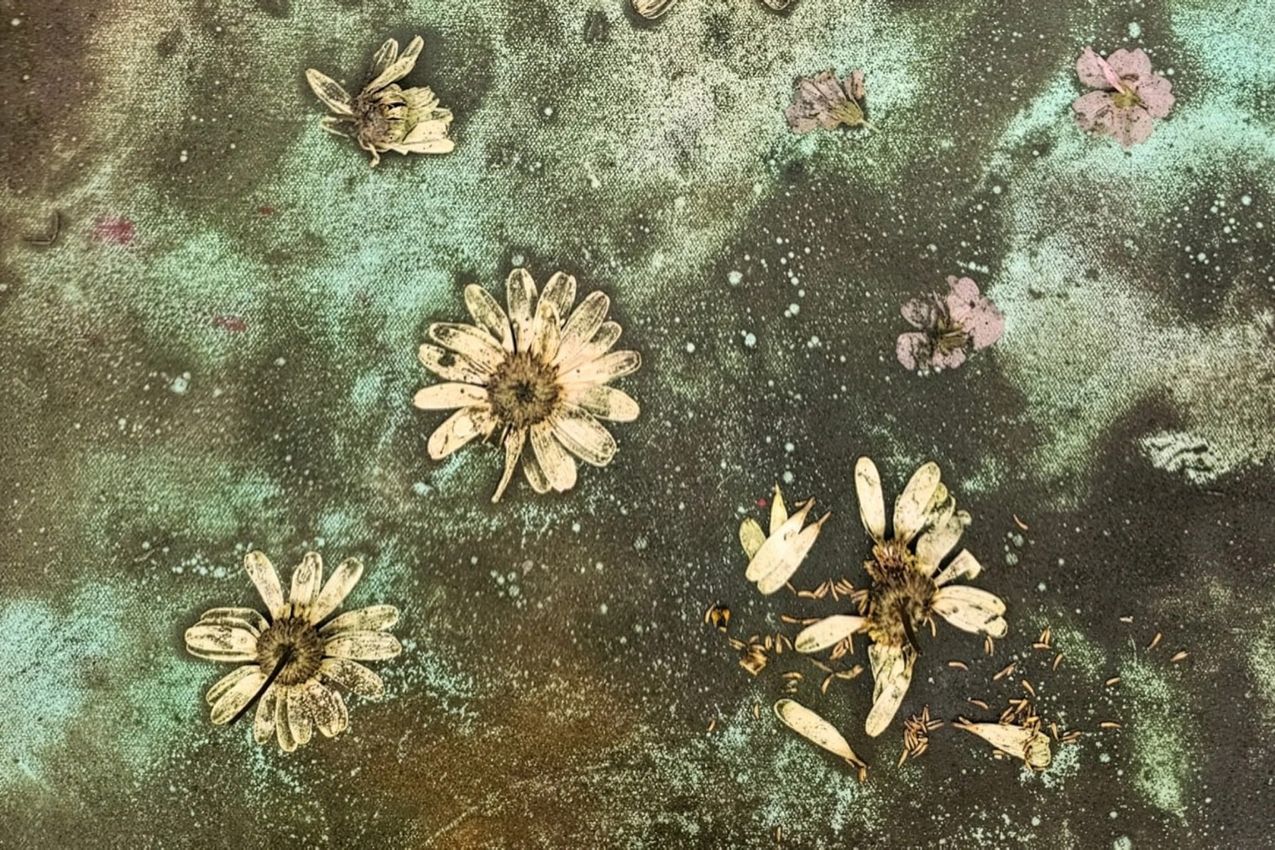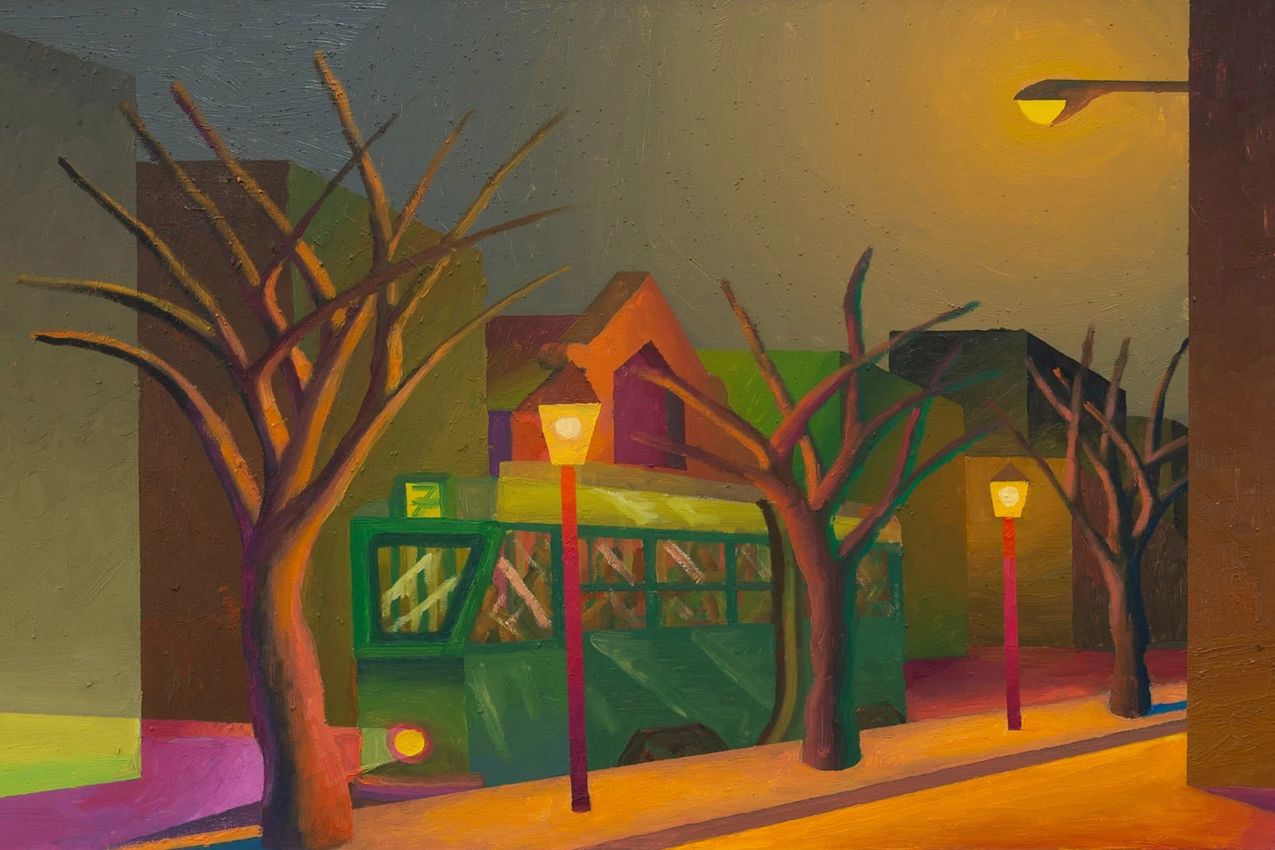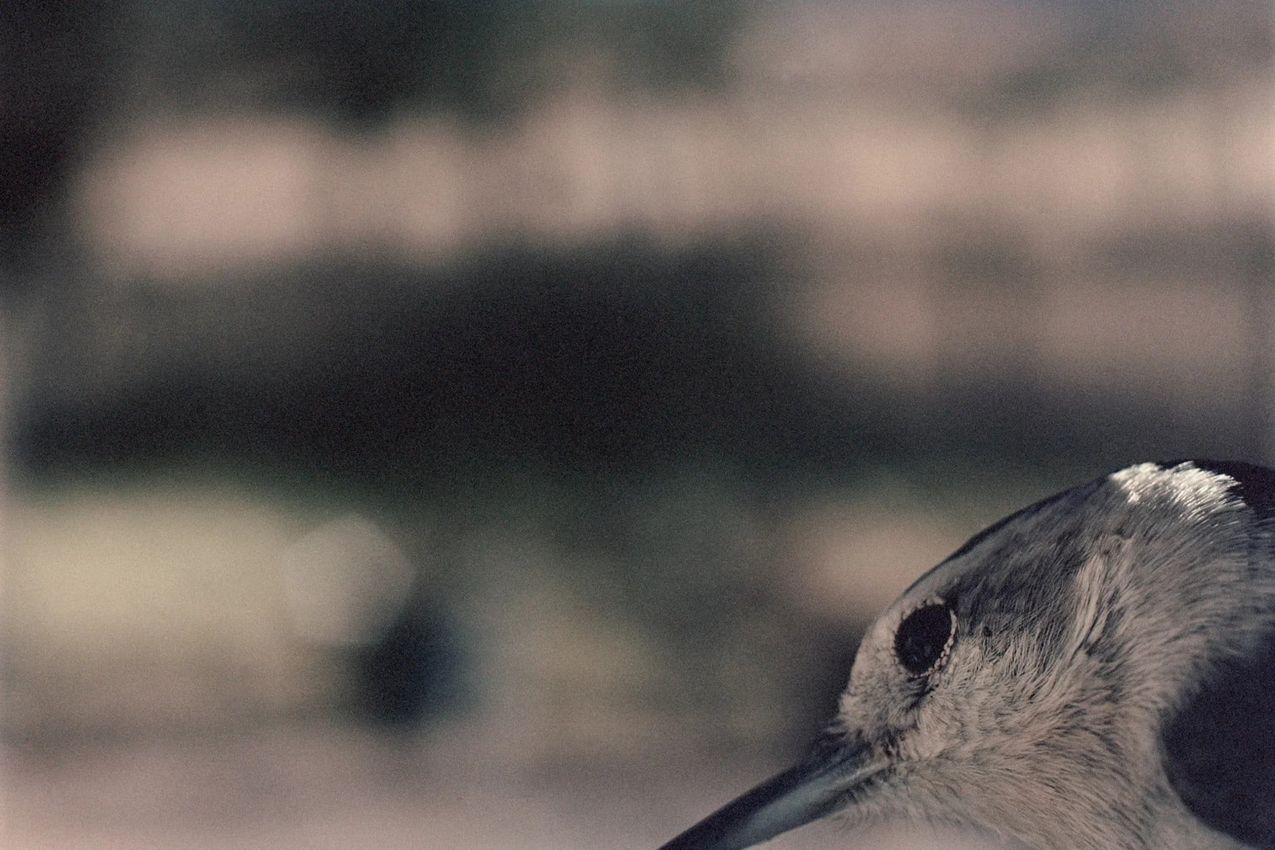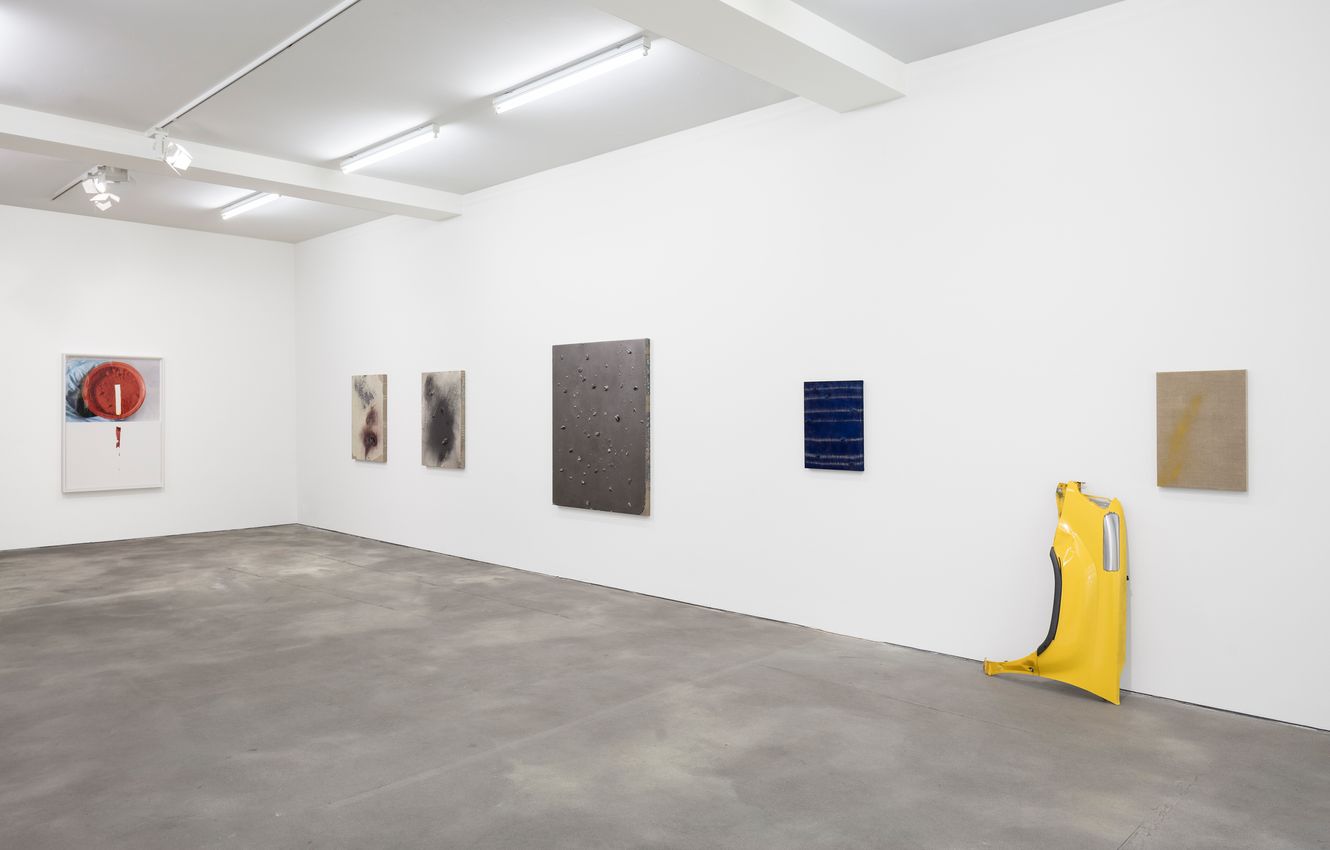
In a practice that looks to understand the very material nature of painting, Analia Saban works across sculpture, printmaking, photography and painting itself to pull apart art historical tradition through investigations into the physical properties of matter. Pigmente, her fifth solo exhibition at the gallery, will run concurrently with Folds and Faults, a solo show at the Los Angeles gallery.
A recent core interest for Saban has been an investigation into the history of paint formulas and how they have shaped art history. She uncovers at an almost microscopic level the entwined histories of artists and their mediums. In these new works the use of pigment makes reference to historical styles and methods of painting, as well as borrowing from modern technologies.
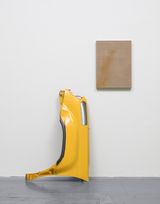
An example of this approach can be witnessed when Saban carefully removes a small section of yellow paint off the quarter panel of an SUV and reapplies it to raw linen, with both parts displayed side by side as one work. Despite the resoundingly modern appearance of the saccharine yellow car part, Saban has looked to the pre-industrial history of paint. The labour of removing the automotive paint and turning it into a pigment is not unlike the work of Medieval and Renaissance artists who constantly searched for the finest minerals to grind for their paints. Saban’s efforts constitute a re- enactment of this very process.
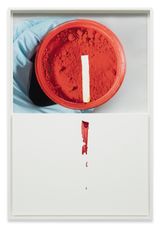
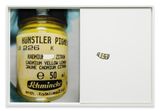
In a more abstract way, this can also be observed in four works from the ’Markings’ series in which Saban delicately peels off and then reapplies the photographic emulsion of the surface of photographs to an adjacent white canvas; the pigment on the photograph is treated as a skin, surgically removed. Just as paint has been excised from a car part to produce a pigment, here an image of pigment is used to produce a mark: a painterly swathe or relocated text from the pigment bottles depicted in the photographs.
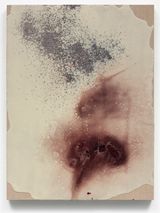
Saban’s methodology takes on alternate forms in other works in the exhibition: for Azurite Weft (in Seven Steps), chunks of deep blue azurite are sewn into a hand-woven textile that is dyed using the rock’s powdered form, and in the Graphite Cluster and Cochenille Cluster series, she re- appropriates the techniques of encaustic painting - one of the oldest methods of affixing pigment to a surface, dating back to Ancient Greece. In Graphite Cluster it is rocks of graphite in their mineral form that protrude from the perfect sheen of the graphite powder/wax formula, and in Cochenille Cluster small plant-lice - and the pigment produced from them when dried and ground - are worked into the encaustic surface. Here, a constellation of the silver insects balances their powdered counterpart, which takes the form of a dried bloodstain. Pigment as both raw and processed is presented simultaneously, physically and metaphorically fusing together into the theme, support, subject and medium of the work.
If a polarity can be established between industrially produced commercial paints, and hand-ground pigment, Saban looks to understand both the making and thinking of art within each of these processes. In her sometimes literal and laborious mining of the past, the pre-industrial approach to materials is decidedly poetic. The artist engages with the complex relationship between pigment, medium and support, employing materials that span the earliest painting technologies to contemporary industrial practices.
Analia Saban (*1980 in Buenos Aires, Argentina) lives and works in Los Angeles. She has exhibited widely in both solo and group shows in American and European museums such as Blaffer Art Museum, Houston (2016), Rubell Family Collection Contemporary Art Foundation, Miami (2015 -2016), LACMA, Los Angeles (2012/ 2014-2016), The National Museum, Oslo (2014-2015), Kiosk, Ghent (2015), Armory Center for the Arts, Pasadena (2014), Palais de Tokyo, Paris (2013), MARCO Museum of Contemporary Art, Vigo (2012), Centre d’art Contemporain de Fribourg, Switzerland (2012/2013).
The Berlin gallery is concurrently presenting exhibitions by Thomas Ruff and Thea Djordjadze, Rosemarie Trockel.


Sprüth Magers has expanded from its roots in Cologne (Germany) to become an international gallery dedicated to exhibiting the very best in groundbreaking modern and contemporary art. With galleries located in Berlin Mitte, London’s Mayfair and the Miracle Mile in Los Angeles–as well as an office in Cologne and an outpost in Hong Kong–Sprüth Magers retains close ties with the studios and communities of the German and American artists who form the core of its roster.

A respected voice in contemporary art discourse.
Focusing on ambitious storytelling and insightful art-world commentary. Ocula Magazine publishes in-depth interviews, critical essays and timely analysis on the artists, exhibitions and ideas driving the global art world.
Learn more about Ocula Magazine
Showcasing the best of the art world.
Ocula partners with galleries from around the world to highlight their artists, artworks and exhibitions. Gallery membership is by application and invitation, with each member vetted by an independent panel.
Learn more about Ocula Membership

Specialises in the sale of major artworks.
Led by a team with deep ties to the world’s leading auction houses, galleries and collectors. Ocula’s advisory team offers bespoke services to high-net-worth clients from around the world who are looking to acquire the best of contemporary and modern art.
Learn more about our team and services