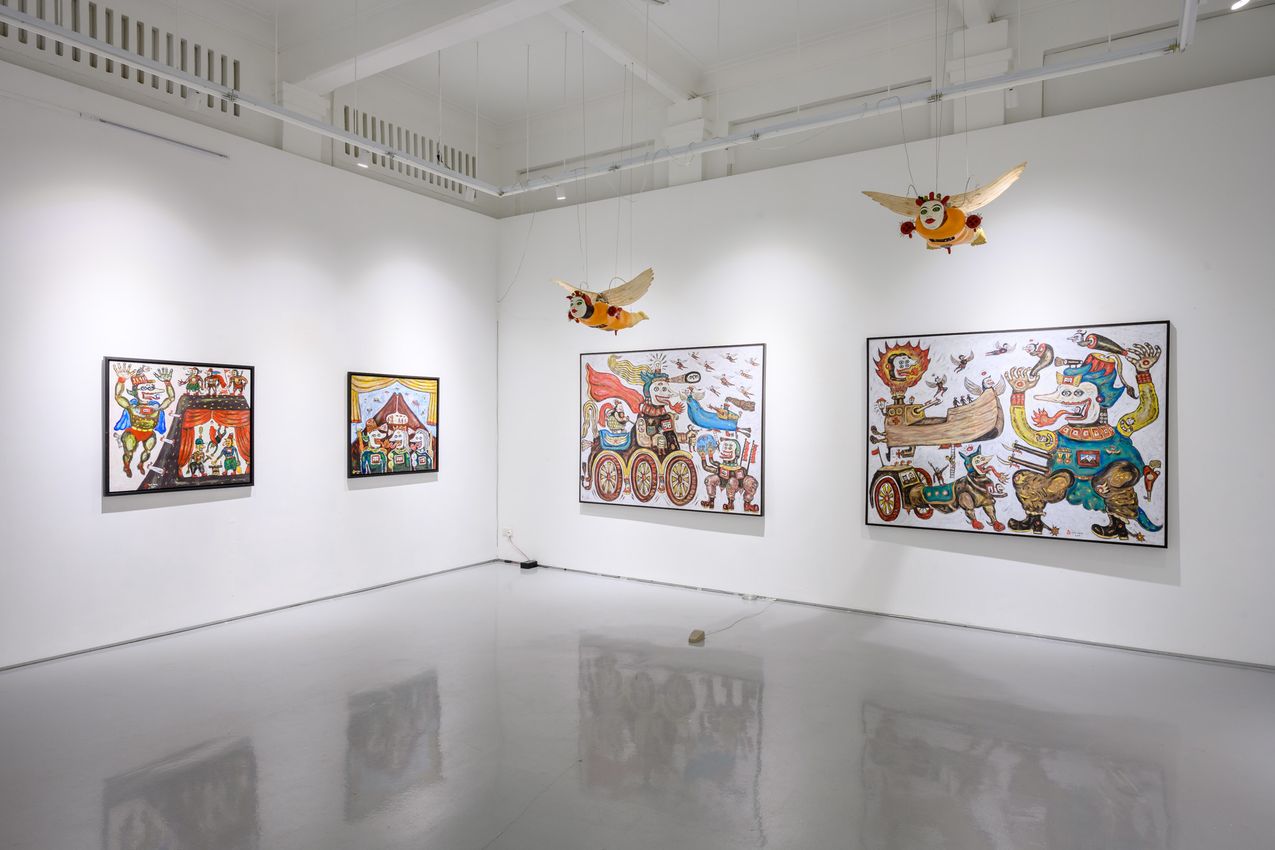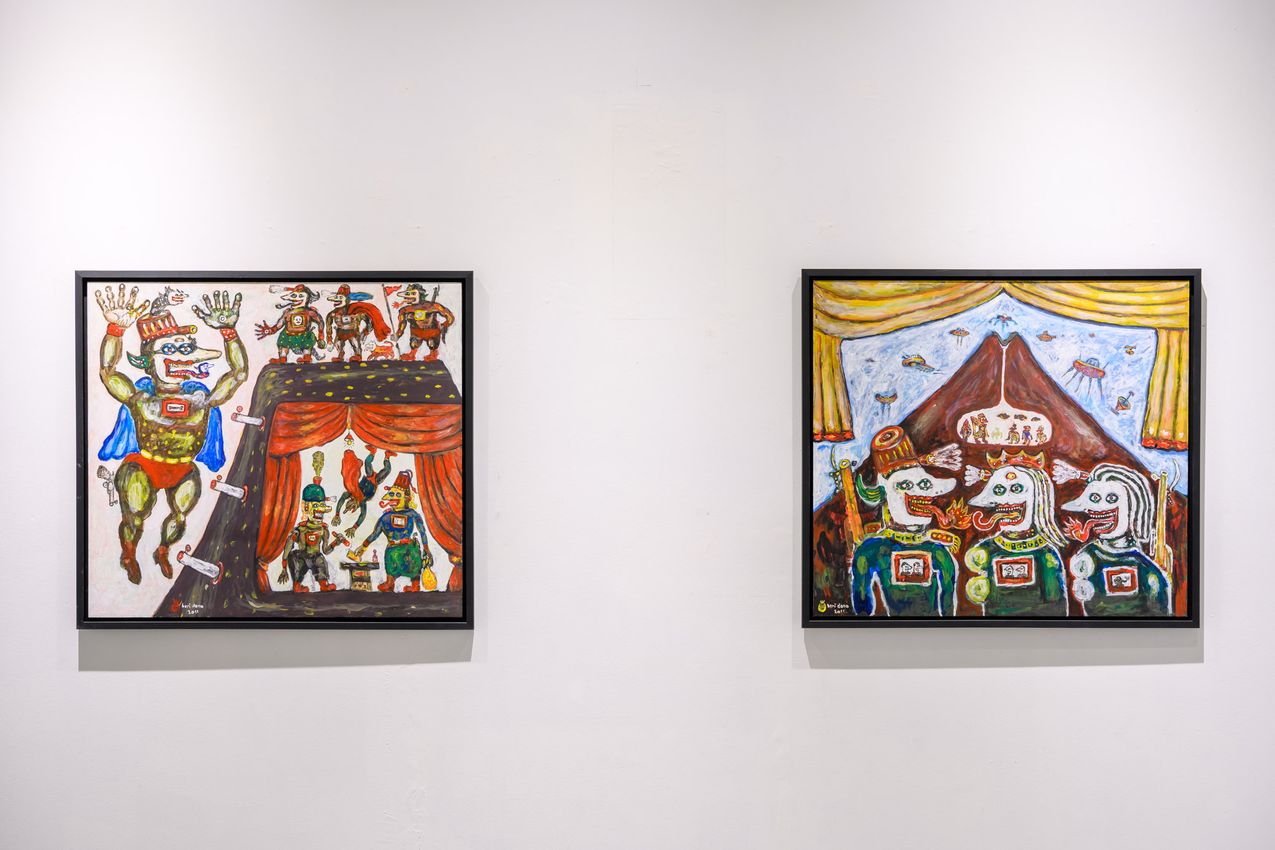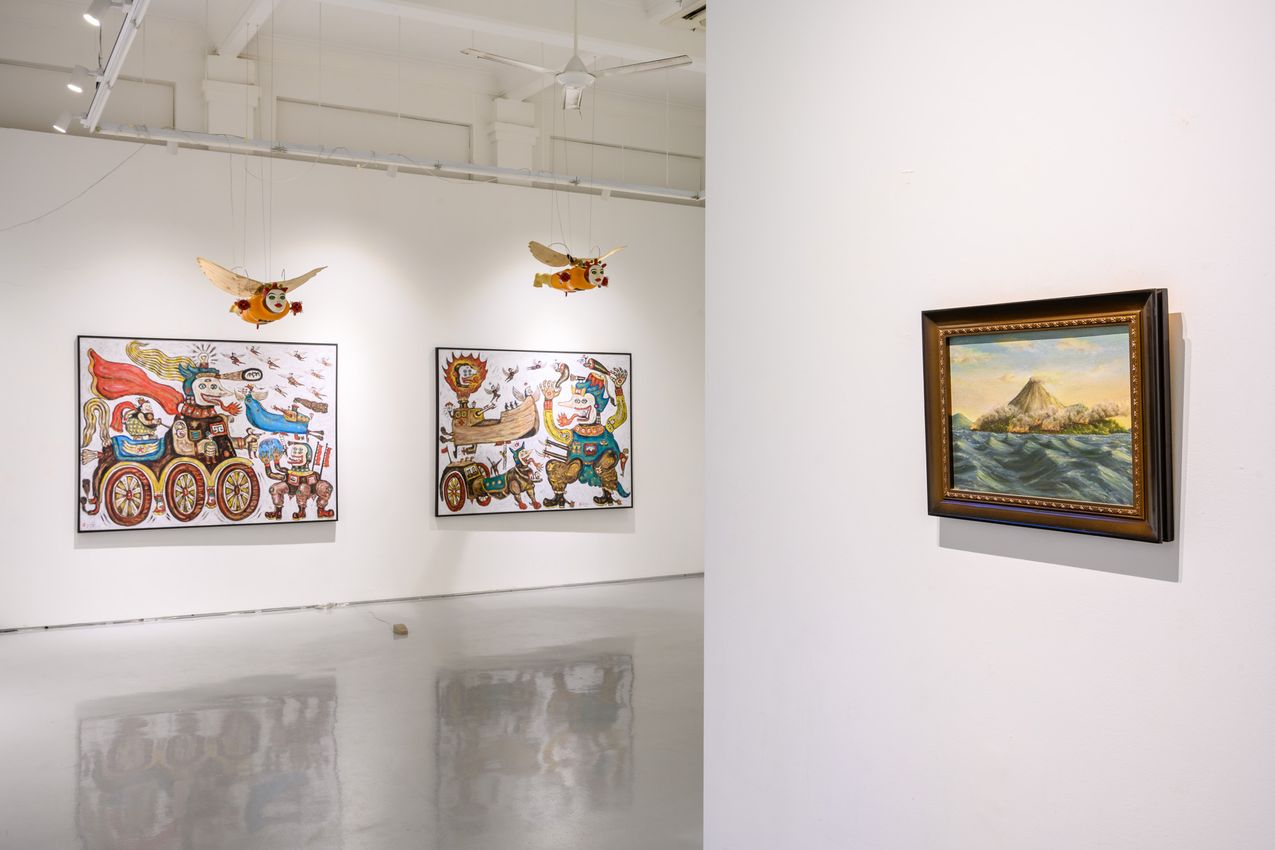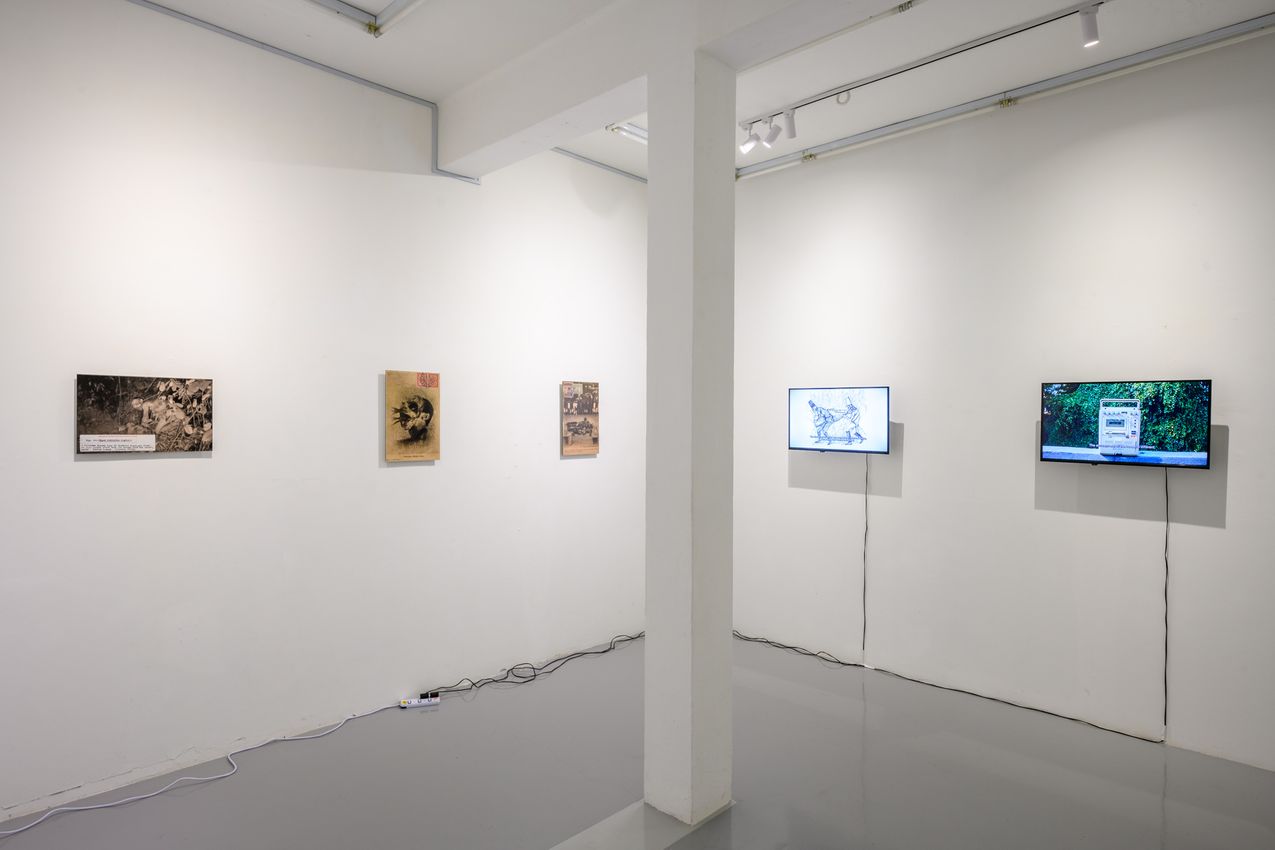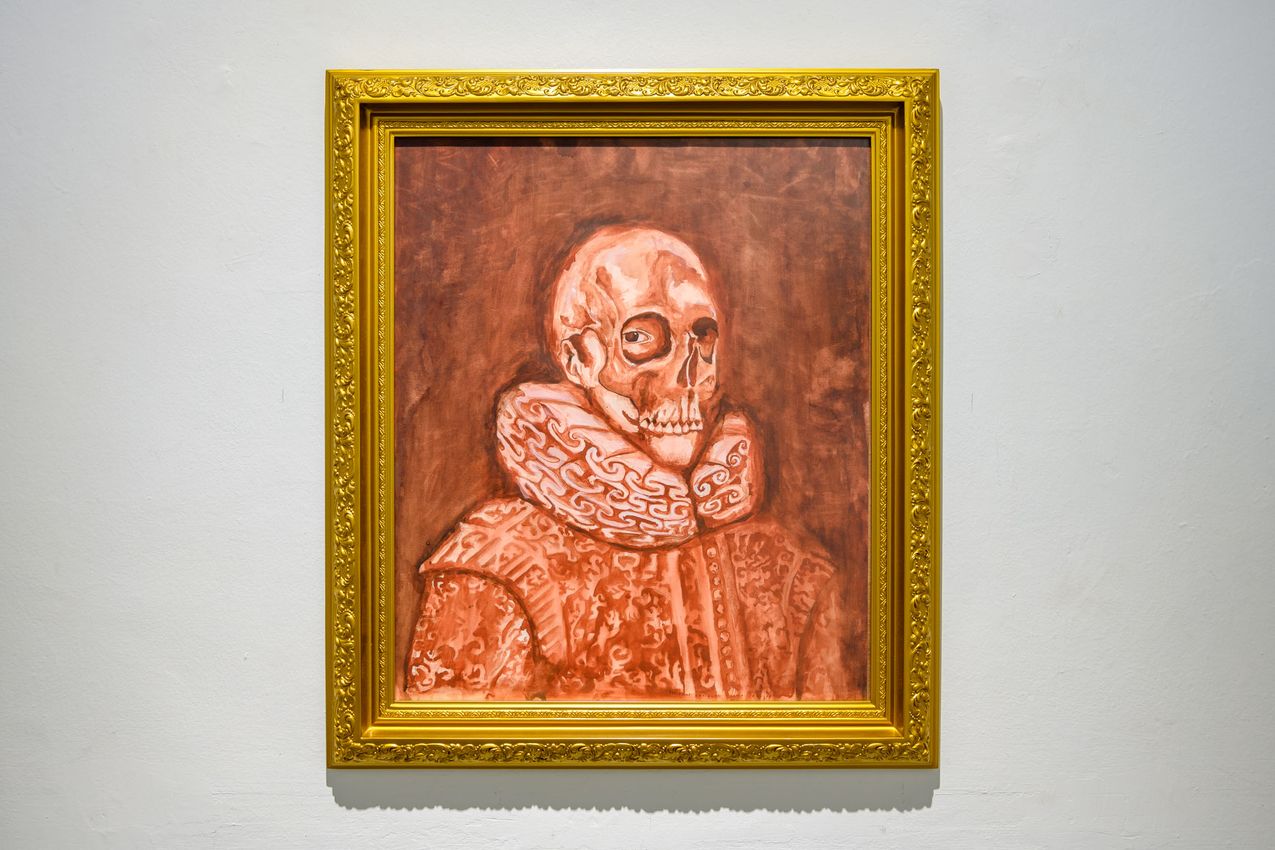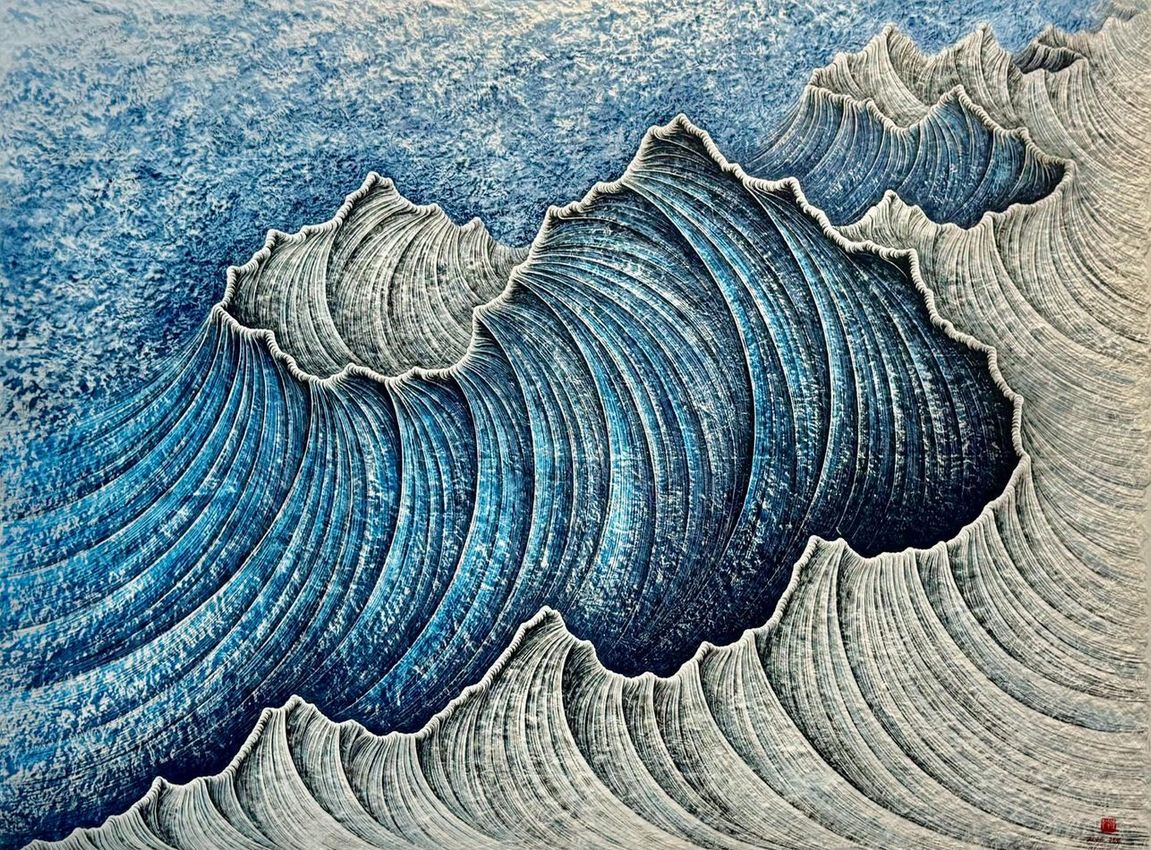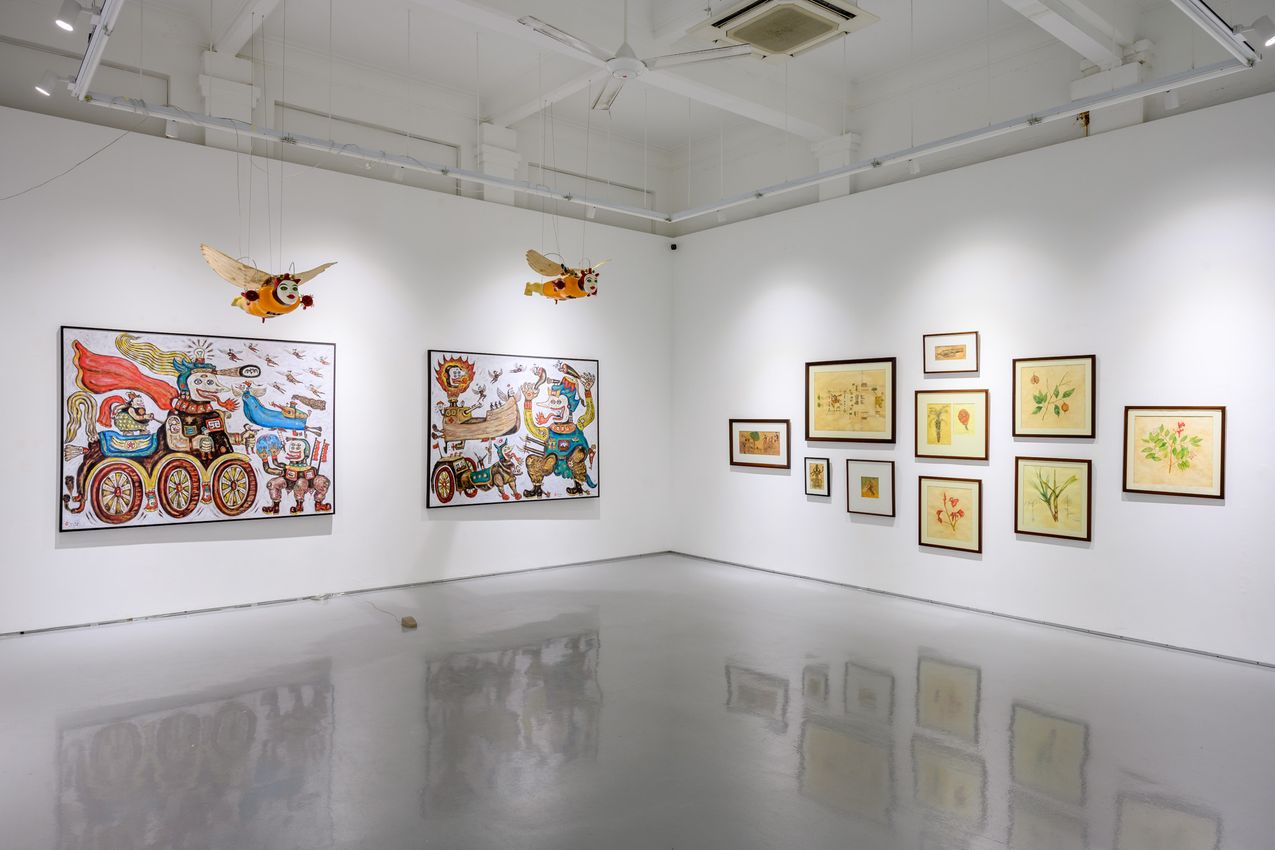
The title of this exhibition, Spectre, is inspired by the artistic practice of the featured artists, Heri Dono and Timoteus Anggawan Kusno. The mythological and fictional nature of both of their works brings a magical and fantastical quality to the works presented in this exhibition. Spectre means ‘a ghost’, something widely feared or a dangerous occurrence. Drawing parallels to the cultural motifs present in Dono’s works and the historical and fictional narratives in Kusno’s works, they present the unseen, the ghost of the past, the present, and the future.
One of the most celebrated and recognized Indonesian contemporary artists in the global art scene, Heri Dono (b.1960) was the first Indonesian artist to dive into the international art scene in the early 1990s and has since earned numerous critical and public acclaims. The principal theme that runs through his body of works are his iconic characters. The colourful hybrids of Indonesian traditional folklore and western concepts of visual art. Dono has simultaneously pursued his idea of peace and playfulness through his unique aesthetical explorations. Since his first exhibition in the 1980s, Dono has exhibited extensively around the world collaborating in over 270 exhibitions and showing in international biennales. Some of which include, The Kochi-Muziris Biennale, Bangkok Art Biennale, Venice Biennale, Guangzhou Triennal, Gwangju Biennale, Sharjah International Biennale, Biennale Internazionale Dell’ Arte Contemporania di Firenze, Taipei Biennale, Asia Pacific Triennial.
The artist’s works are in the collections of the Guggenheim Museum (Abu Dhabi), Deutsche Guggenheim Frankfurt (Germany), Fukuoka Art Museum (Japan), Museum der Kulturen (Switzerland), National Gallery of Australia, (Canberra, Australia), Singapore Art Museum (Singapore), Stedelijk Museum de Lakenhal (The Netherlands), Tropen Museum (The Netherlands), M+ Museum (Hong Kong), National Gallery of Indonesia (Indonesia).
This installation is a series of Angel works, where the meaning of the angel doesn’t have anything to do with any particular religion. Like what Gustave Courbet, one of the pioneers of the realism movement mentioned: “Show me an angel and I will paint one.” For the artist, an angel is an inspiration itself. The smiling angels are symbols of enthusiasm in facing the future. The angels bring chakra, from the gods as the carrier of fire of life (Eros). They also mean the discourse of life, where imagination, fantasy, dream and inspiration keeps building a noble life, culture and civilization for humans and the whole universe.
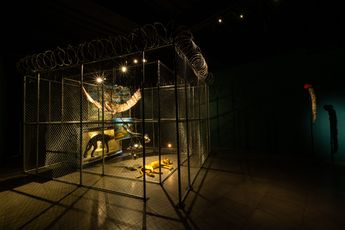
The Death of Tiger by Timoteus Anggawan Kusno is one of the projects of Tanah Runcuk Studies, which is a (fictional) organization established by the artist conducting studies on the imaginary territory of the Dutch East Indies called Rancuk. By bringing together historians, anthropologists, artists, and writers, the Centre for Tanah Runcuk Studies explores how “texts” are used to construct political systems and how fabricated history reflects fictional reality.
Rampok Macan takes place on the special religious occassion in Java. This was since it was arranged by the royal family in 1791. On the day of Rampok Macan, a Javan tiger would be speared by the gathering crowd and pitted against a bull or buffalo. If the tiger wins, it would be killed by the crowd. During the feudal and colonial periods, the King would invite colonial officers to see this bloody ceremony as a demonstration of his ruling position. The killing was supposed to cleanse the souls of the humans and restore order in society. By presenting the supreme power of the ruling authorities, the enthusiasm and anger of the crowd, the helplessness of the sacrificed, and the silent consent of the onlookers, Tanah Runcuk rationalizes the appalling acts by prosecuting the “other” in society through violence. Although this tradition no longer exists and the Javan Tiger is now extinct, the artist wishes to draw attention to the enigma of the reproduction of violence and the colonial matrix of power.

A respected voice in contemporary art discourse.
Focusing on ambitious storytelling and insightful art-world commentary. Ocula Magazine publishes in-depth interviews, critical essays and timely analysis on the artists, exhibitions and ideas driving the global art world.
Learn more about Ocula Magazine
Showcasing the best of the art world.
Ocula partners with galleries from around the world to highlight their artists, artworks and exhibitions. Gallery membership is by application and invitation, with each member vetted by an independent panel.
Learn more about Ocula Membership

Specialises in the sale of major artworks.
Led by a team with deep ties to the world’s leading auction houses, galleries and collectors. Ocula’s advisory team offers bespoke services to high-net-worth clients from around the world who are looking to acquire the best of contemporary and modern art.
Learn more about our team and services