



Press Release

Art is a way of staying engaged and in love with the world.– Jeremy Deller

Jeremy Deller takes on a range of roles in his diverse projects – organiser, collaborator, commentator, filmmaker, curator and so on – to explore British social and cultural histories in the public realm. His work reallocates value and celebrates objects and practices which often go forgotten. As a result, he doesn’t normally utilise traditional fine art forms – instead employing democratic and commonplace mediums like t-shirts, music, posters, banners and gatherings. When tradition is incorporated it is in novel ways that question our national mores, along with markers of cultural identity. And however humorous, his projects and interventions often constitute a form of opposition to the hegemonic logic of the day and reconfigure our understanding of Britain. They become a vehicle for new political communication.

Forms of community and civic life are a key preoccupation and often function in Jeremy’s projects as a location of resistance – against the oppressive and atomising forces of capitalism and class in society. Social spaces and the communal activities of people across the United Kingdom are a source of joy for Jeremy and his interventions elevate them as well as bringing their political import and value to popular attention. Allotments, train stations, nightclubs and schools have all featured in his work.

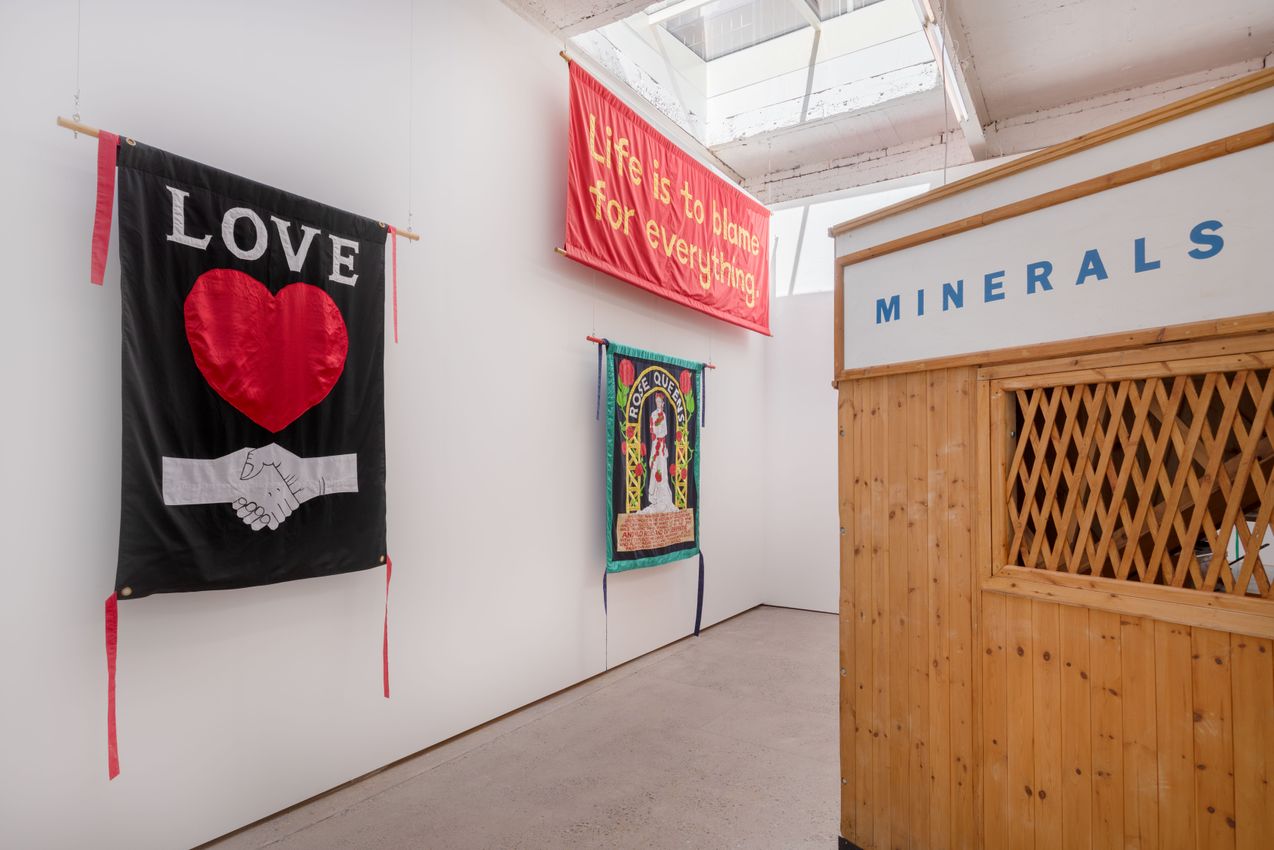
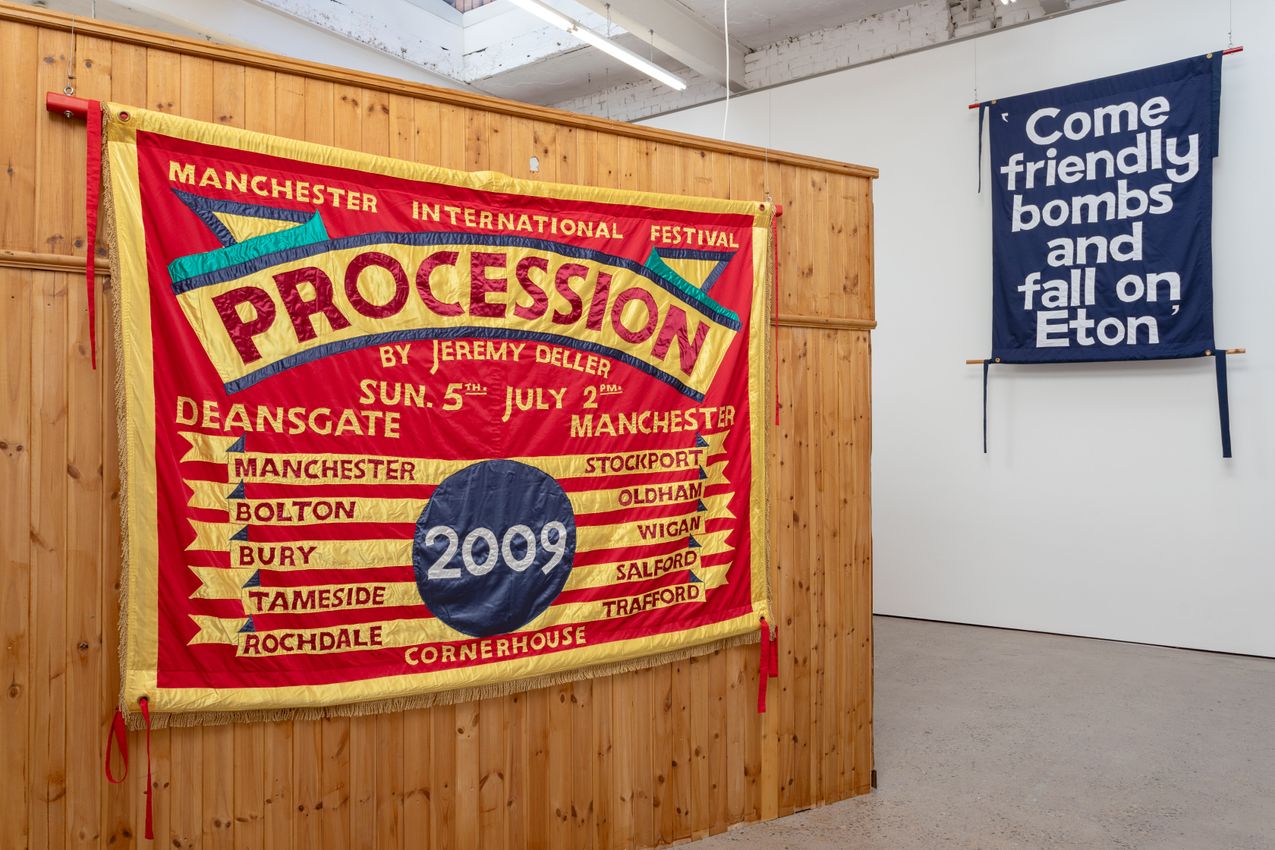
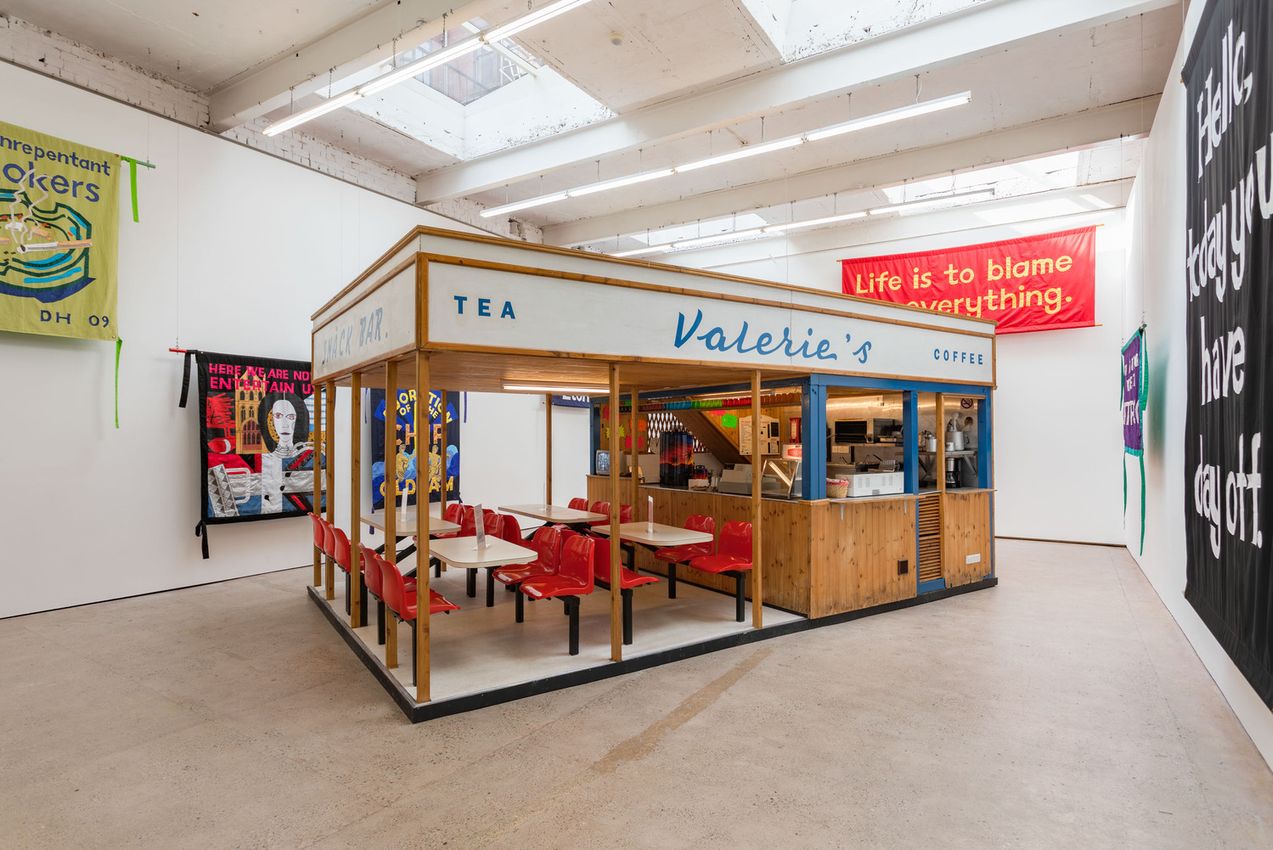
The banners of Ed Hall, Jeremy’s long-time collaborator, have been a mainstay of his practice over the last two decades and tether multiple projects. Ed is a retired architect and banner-maker based in London and has produced banners for a variety of causes and marches, including Stop the War, The Palestine Solidarity Campaign, CND, the Anti-Nazi League, and Unite against Fascism. Many of Jeremy and Ed’s collaborations featured in Procession, 2009, a large-scale parade in Manchester, involving various participants, floats and performances. Each one has their own enigmatic message or series of ideas, playing with a form of written protest: ‘Our Ancestors Were at Peterloo’, ‘The Unrepentant Smokers’ (designed by David Hockney), ‘Love’ and ‘The Adoration of the Chip’.

In Aird’s Lane, the banners are hung around a key float from the parade, Valerie’s Snack Bar. It is a recreation of a café in Bury Market, Manchester, which was an important social hub for the area’s pensioners. A film documenting events plays inside the café and tea and coffee are available for free to visitors. The film is an energetic portrait of the city – featuring a cross section of rock bands, car modifiers from Stockport, Scouts, and The Shree Muktajeevan Pipe Band, amongst others. To put together the parade, Jeremy worked and collaborated with people, clubs and societies in Manchester for over a year. As the artist comments, ‘A procession often holds a mirror up to a town and becomes a self-portrait of a time and a place in all its strange glory.’ In this way, Jeremy rejuvenates this vanishing form of sociality by using the space as a site for conversation between visitors regarding the nature of civic participation itself.

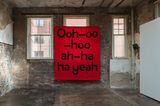
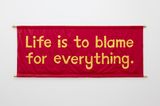
A banner also features in the English Magic installation in the Bricks Space. It quotes the lyrics of the acid house song ‘Voodoo Ray’ by A Guy Called Gerald, released in 1988, which is covered by Melodians Steel Orchestra along with David Bowie’s ‘The Man Who Sold the World’ and Vaughan Williams’ Symphony No. 5 in the film. The film constitutes a psychedelic journey around the country, redeploying folklore, mythological animals and popular figures to mine national mores. It portrays moments of collective joy as well as sinister or uncanny depictions of private ownership, touching on the alleged killing of a rare hen harrier bird by Prince Harry in 2007 and documenting the strange spectacle of the Lord Mayor’s Show in London. It begins and ends at Abbey Road Studios, London, where the orchestra are recording. As in Procession, Jeremy highlights collective activity – an orchestra, a march – as a source of hope in the midst of political uncertainty.

Jeremy Deller (b.1966, London; lives and works in London) studied Art History at the Courtauld Institute and at Sussex University. Jeremy won the Turner Prize in 2004 for his work ‘Memory Bucket’, and represented Britain in the 55th Venice Biennale in 2013. He has been producing projects over the past three decades which have influenced the conventional map of contemporary art. This year Jeremy will embark on ‘The Triumph of Art’ as part of the National Gallery’s Bicentenary celebrations. A nationwide project which will culminate in a major performance outside the National Gallery on Trafalgar Square in the summer of 2025.

Read More

Installation Views

About the Artist

Jeremy Deller (b.1966, London; lives and works in London) studied Art History at the Courtauld Institute and at Sussex University. Deller won the Turner Prize in 2004 for his work ‘Memory Bucket’, and represented Britain in the 55th Venice Biennale in 2013. He has been producing projects over the past three decades which have influenced the conventional map of contemporary art.

View Artist Profile

Also Exhibiting at The Modern Institute

About the Gallery

The Modern Institute was founded in Glasgow in 1997. The gallery works with internationally established and emerging artists including Martin Boyce, Jim Lambie, Richard Wright, Anne Collier, Cathy Wilkes, Simon Starling, Urs Fischer, Luke Fowler and Nicolas Party.

View Gallery Profile
Address
14–20 Osborne Street
Glasgow
United Kingdom
Opening Hours
Mon - Fri, 10am - 6pm
Sat, 12pm - 5pm
(1)
Glasgow 14–20 Osborne Street
The Modern Institute
14–20 Osborne Street, Glasgow, United Kingdom

Opening hours
Mon - Fri, 10am - 6pm
Sat, 12pm - 5pm
The art world in focus