Projections? Maybe.
Fantasies? Possibly.
But, perhaps, something else.
— The Girl Who Sang to the Buffalo, Kent Nerburn
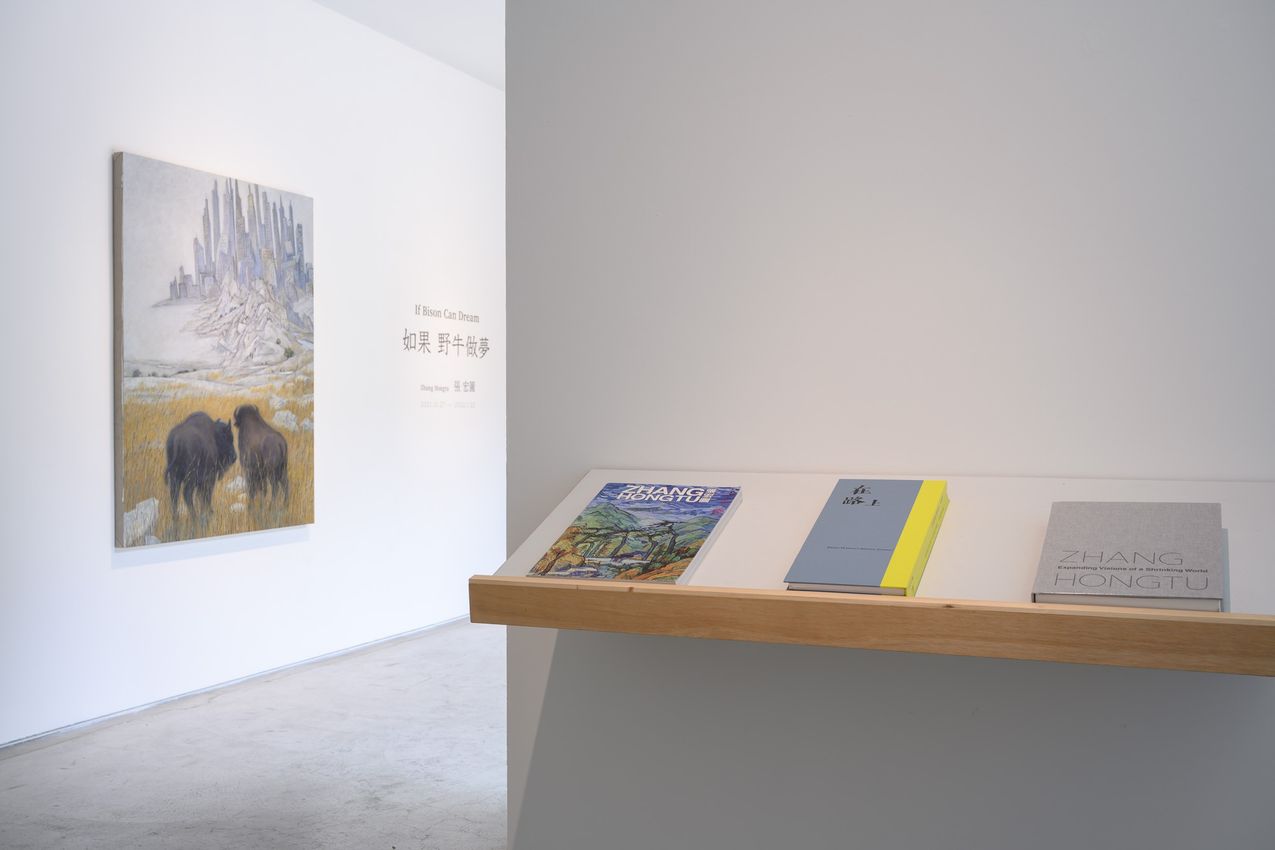
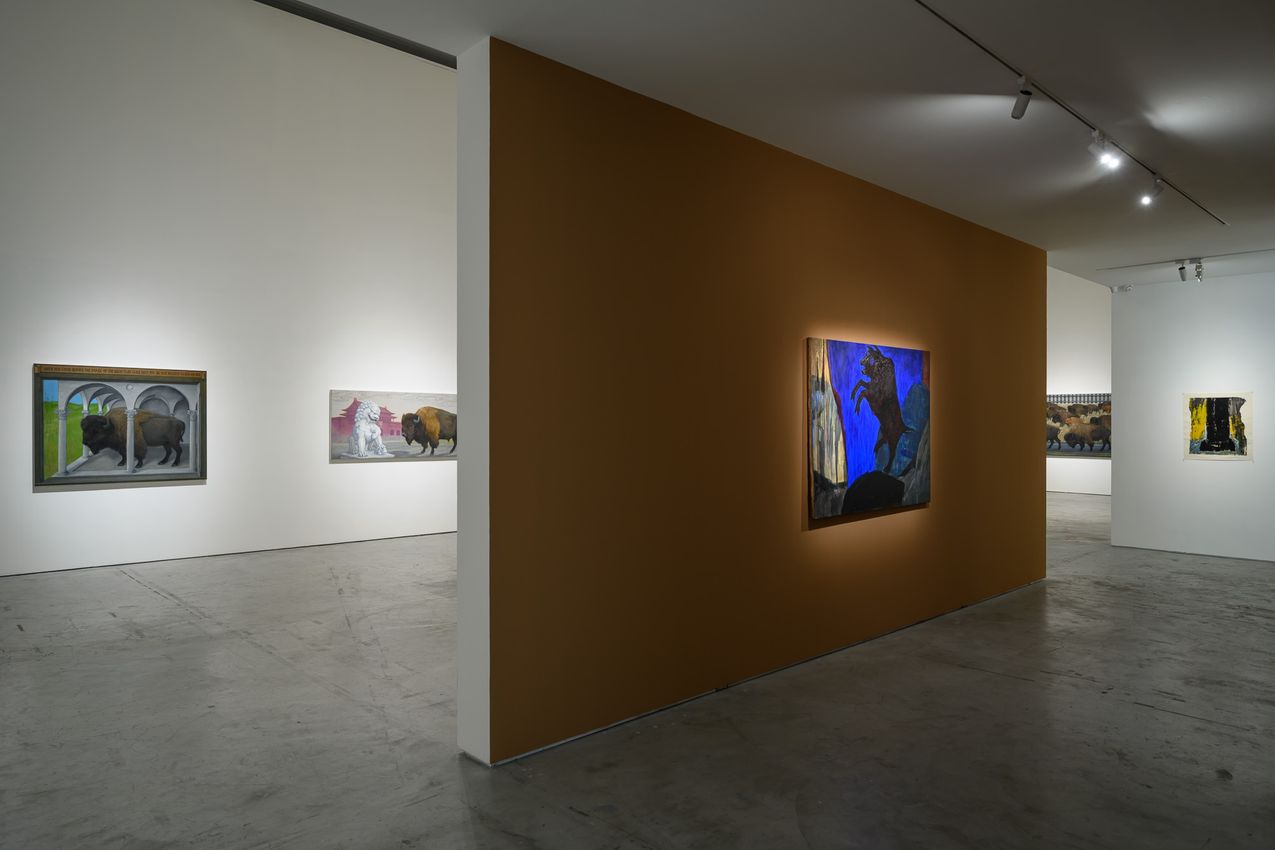
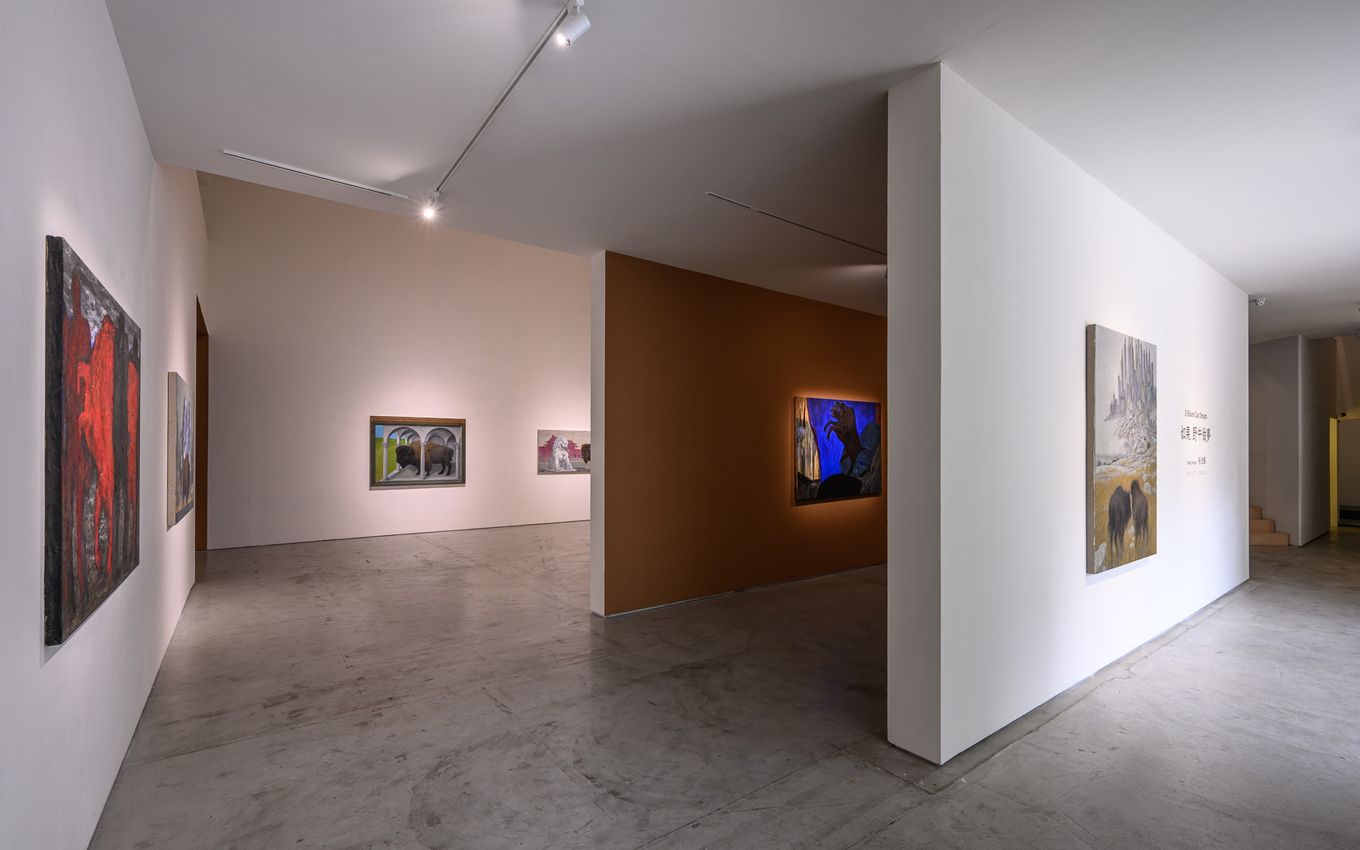
Four years after his previous exhibition Van Gogh/Bodhidharma, Tina Keng Gallery is pleased to present Zhang Hongtu’s latest body of work in his solo exhibition If Bison Can Dream. As the Year of the Ox comes to an end, this exhibition about the ox is not the result of an intentional thematic alignment, or a mere coincidence. Throughout this exhibition, the bison symbolises the significance of chance encounters during Zhang’s journey of migrating and roaming over great distances.
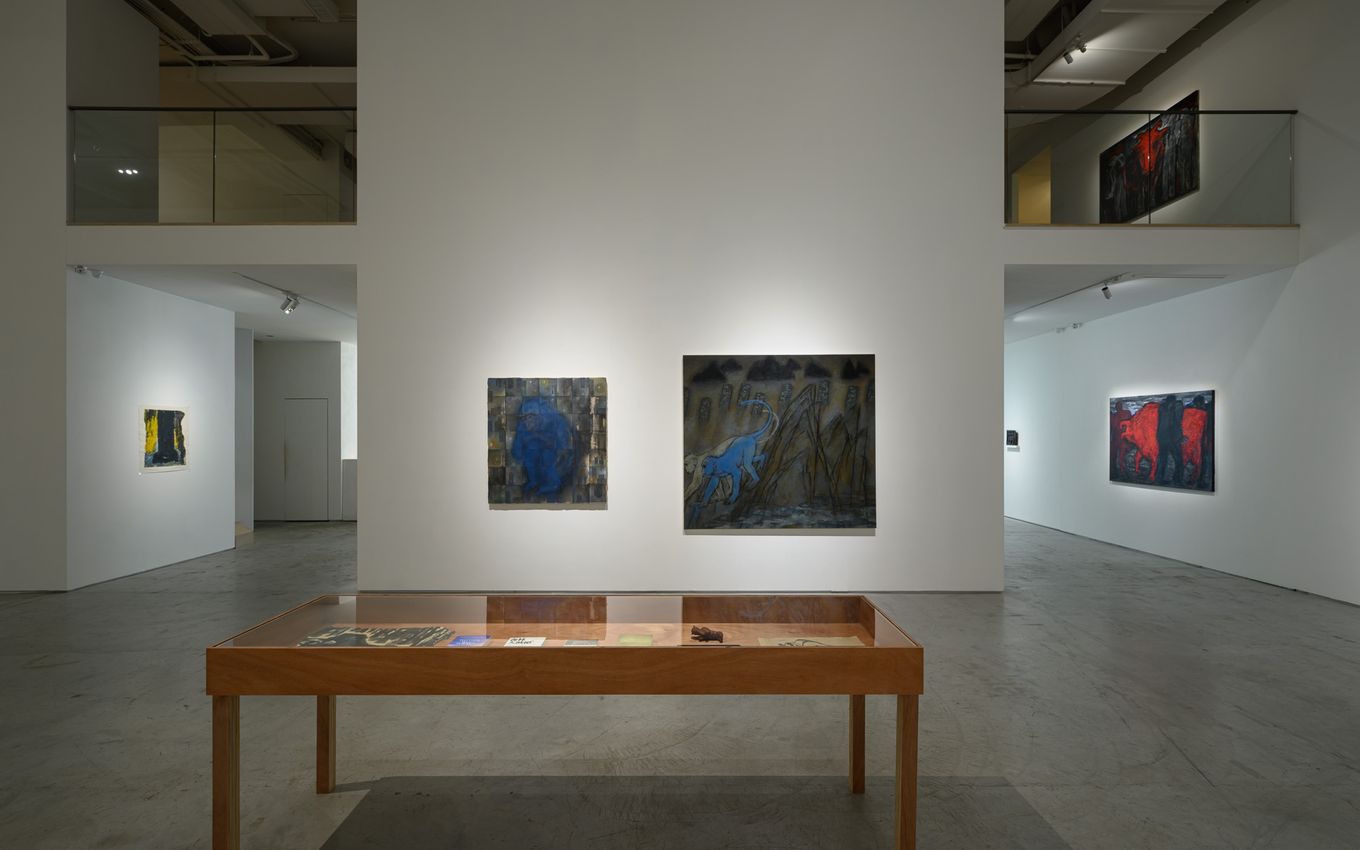
Zhang’s work is rational yet curious, fierce yet harmonious. He expresses a sense of calm defiance with a fearlessness that defines his aesthetic perspective. After living through the Chinese Cultural Revolution and suffering through the turmoil of the era, Zhang left his home country and moved to New York in the 1980s. Over the years, Zhang has explored a deep cultural lineage between the East and West as he migrated between old and new terrains. The artist channels his personal experiences into a unique hybrid style, often deconstructing, reinterpreting, and juxtaposing familiar tropes and icons — such as traditional Chinese landscape paintings and Impressionist/Post-Impressionist styles. As an advocate for continual aesthetic experimentation, Zhang centres his practice on a philosophy of ‘taking good fortune as a teacher’ and ‘embodying the spirit of the landscape.’ By challenging established conventions and conflating elements that are typically kept separate (such as ink and oil paint), Zhang forges a new aesthetic vocabulary that he uses to express his ultimate concerns for humanity and the natural ecosystem. Within this conceptual framework, he painted the monkeys who wander indifferently through desolate landscapes in his ‘Shanshui Today’ series, the wise and compassionate Zen Bodhidharma in his ‘Van Gogh/Bodhidharma’ series, as well as his current ‘Bison Roaming’ series.
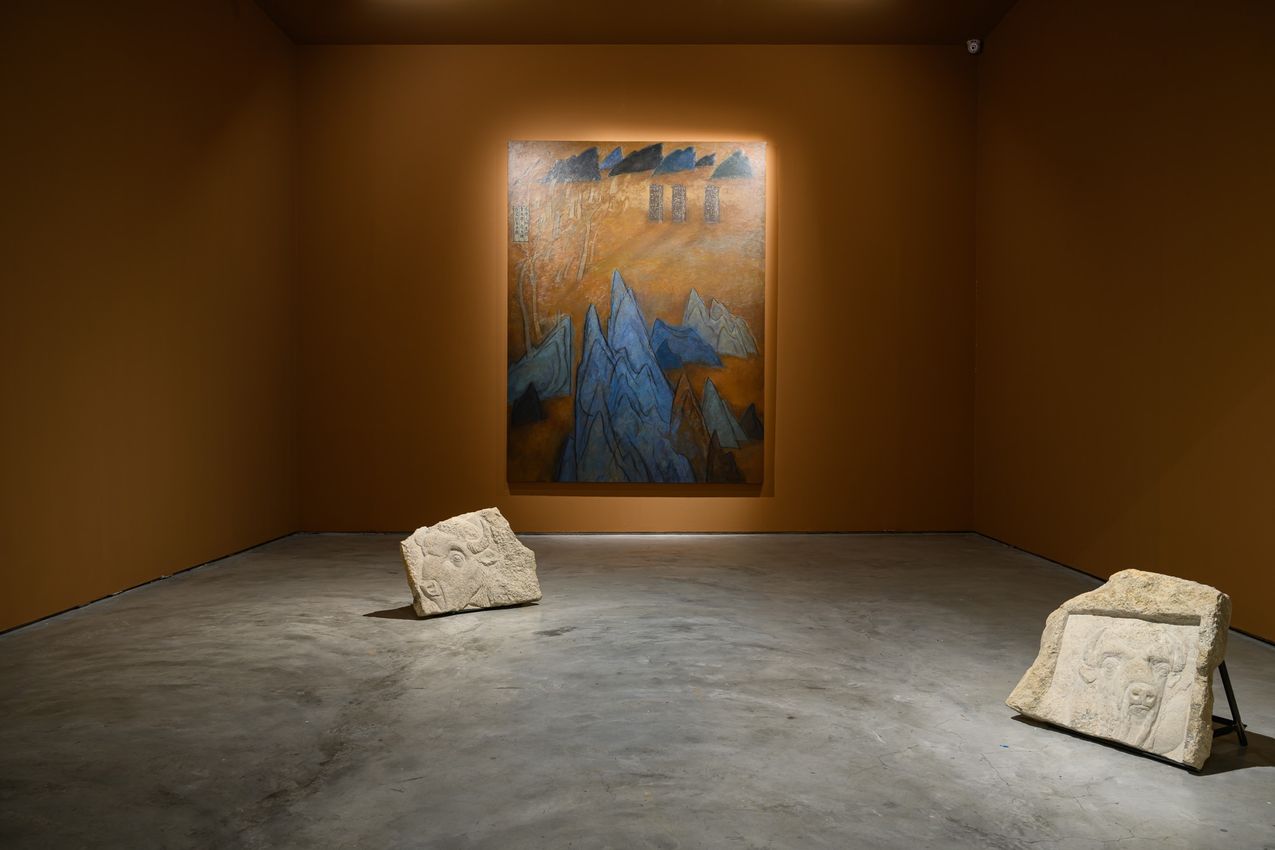
Zhang was sketching animals at the Beijing Zoo in 1962 when he encountered the bison for the first time. He saw two large bison with brown-black coats enclosed in a space not much larger than their bodies, and their confinement in the man-made environment seemed entirely unnatural. As he sketched the animals, he imagined what it would be like to see them living in their natural, wild habitat. In 2018, Zhang’s imagination came to life during his first chance encounter with American bison roaming the tallgrass prairies of Kansas. The idyllic scene induced a flashback to when he first laid eyes upon a bison at the Beijing Zoo, and that chance encounter sparked an instant connection between the two moments in Zhang’s memory, spanning 56 years and thousands of miles. Zhang’s vision of the animal confined in custody was then replaced by the image of the bison roaming under sunny blue skies and endless plains, with the spirits of their ancestors looking over them from beyond the mountains. As he watched the bison slowly marching across the grassland, one bison returned his gaze. The connection he felt while looking into its eyes made Zhang realise that they were both of the same earth and of the same nature, and the powerful silence they shared in that intimate moment produced a resounding echo.
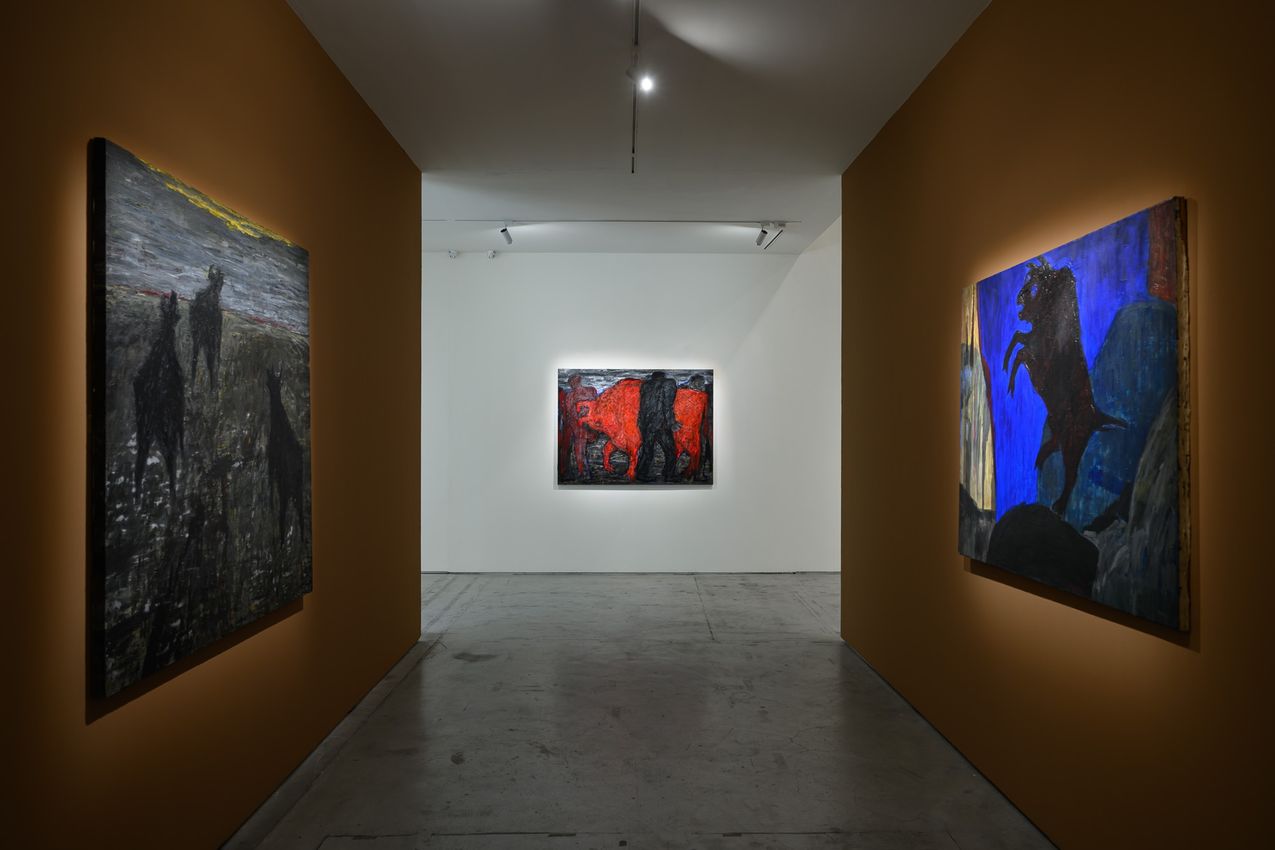
Throughout the history of North America, the Native Americans relied on bison for survival, using their meat for sustenance and their hides to keep warm for tens of thousands of years. When the colonists invaded Native territories as they built the Transcontinental Railroad, their indiscriminate killing of bison robbed indigenous communities of their economic autonomy and their means of survival. The blood and sweat of Chinese immigrant workers in the 19th century are inextricably linked to those railroad tracks, and their fates were also linked to those of the Native Americans and the bison. Seen as such, each wooden railroad tie represents a life lost, human and animal, in the process of early American industrialisation.
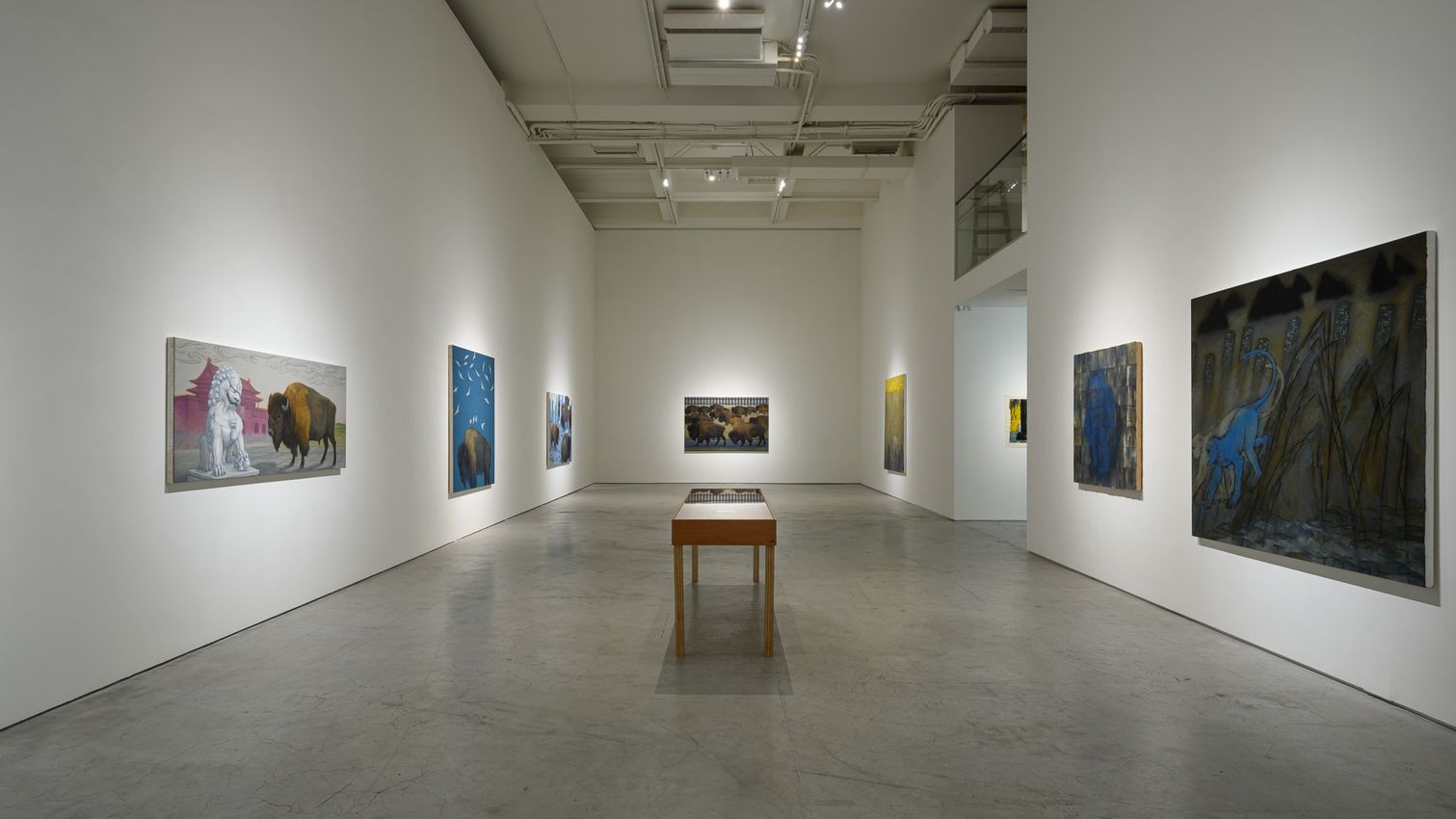
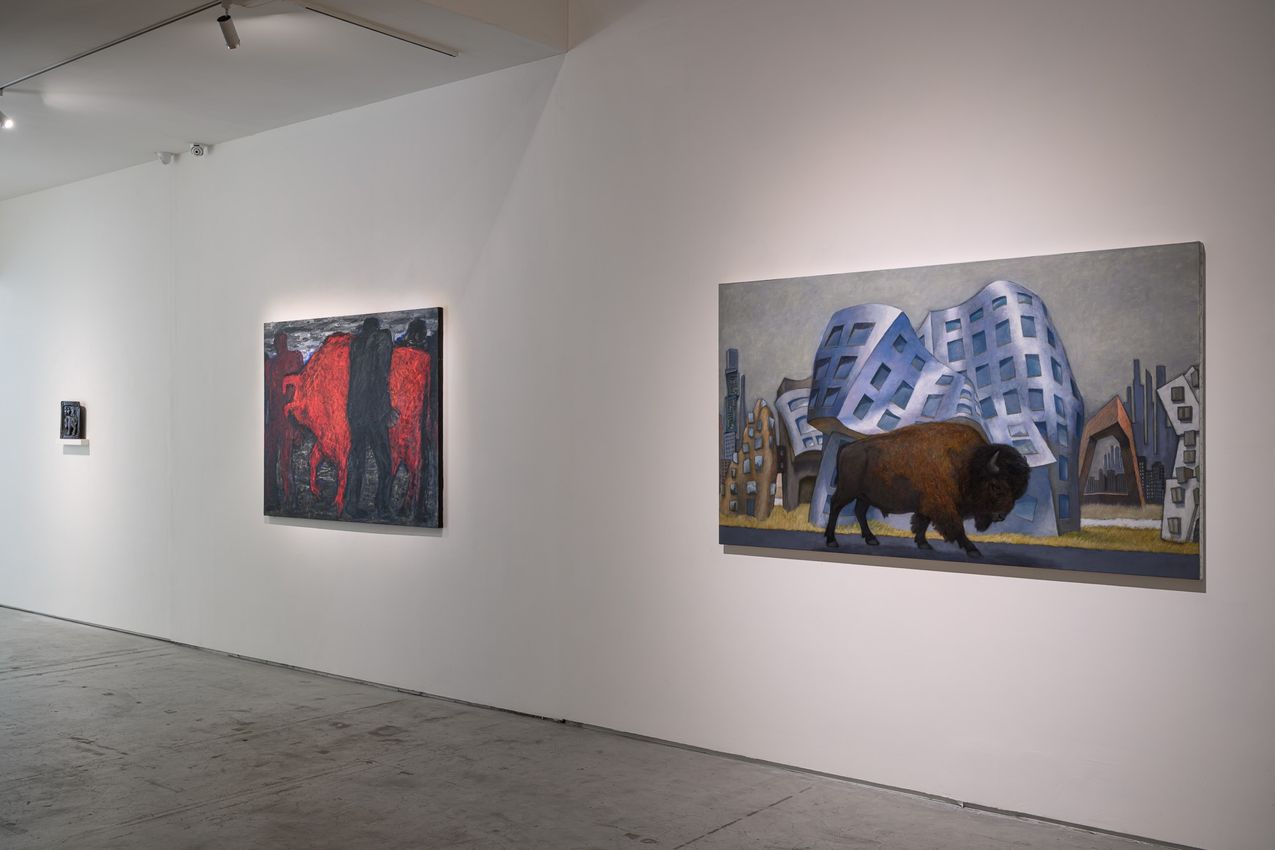
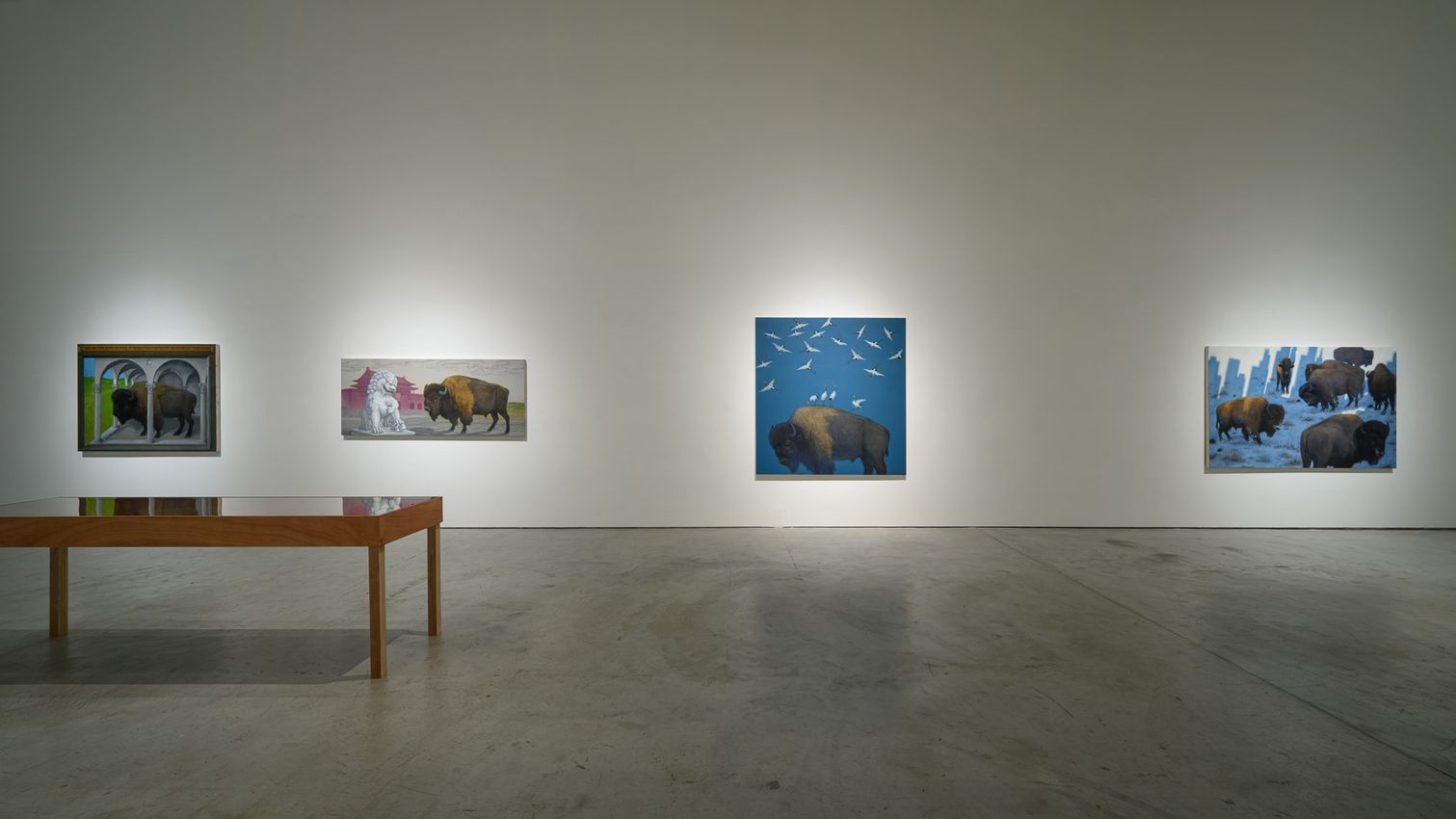
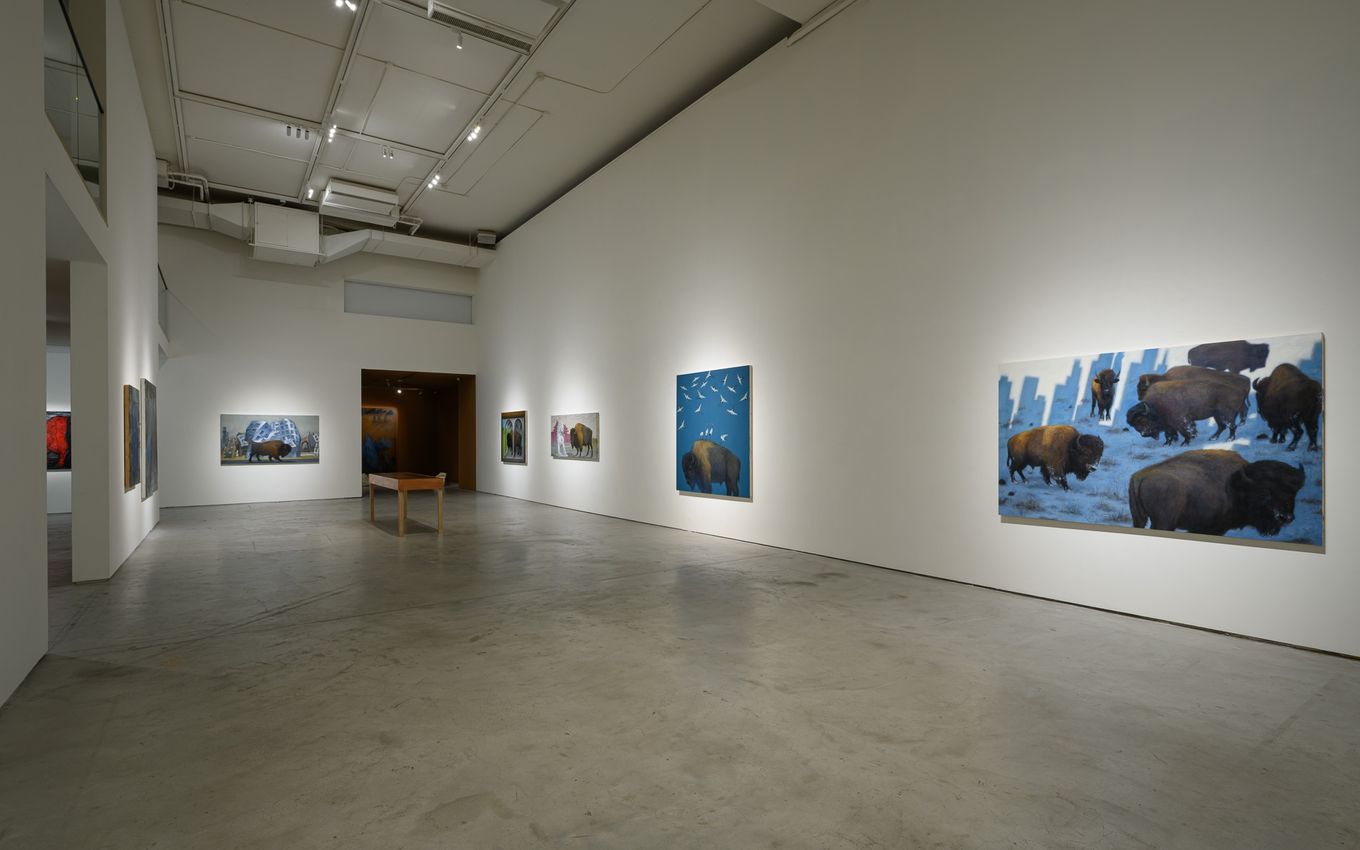
Zhang pays respect to the great beast with a gentle command to the viewer in his work When You Come Before the Image of the Bison Take Care That You Do Not Neglect To Say an Ave. The artist even depicts the bison as the protagonist of an annunciation scene, consecrating the animal with a sense of godhood. Only roughly 300 bison remained at the end of the 19th century, and while there are around 360,000 bison alive today, they are only able to survive under protective captivity in wildlife sanctuaries. Despite being a large and extremely powerful creature, the American bison remains an endangered species. If a bison were to escape its sanctuary, it would certainly suffer the fate of being hunted. In an artist statement, Zhang reflects: ‘If bison can dream, they must dream of the wild plains where their ancestors roamed every day. While working on my art during the Covid-19 epidemic, I was not only isolated from others; like the bison, I found myself isolated from true wilderness and all of its freedom. The only thing I could do was imagine it through my art.’ This series encapsulates both remnants of history and the gradual passage of time. Through this exhibition, Zhang presents his reflections on the reality of slowing down, migrating, remaining stationary, and coexisting with the environment over the years.
Throughout the making of this series, Zhang visited Kansas several times, and took thousands of photos of bison and the tallgrass prairies. He also carved reliefs into stones sourced from a local quarry. On view alongside the paintings and sculptures of his latest ‘Bison Roaming’ series is a compilation of unpublished early works, precious manuscripts, and archival documents from his early ‘Ox’ series. By viewing these works together, the viewer will discover the disruptions and transformations of Zhang’s social, environmental, and psychological journeys through his depictions of bison, nature, and the Anthropocene. In addition to the aforementioned works, the gallery will be screening an exclusive documentary by director Fang Xin presenting Zhang’s monologues from before and after his creation of Bison and Cranes, After the Emperor Huizong of Song 907 Years Later, the first work in the “Bison Roaming” series. In the documentary, Zhang Hongtu shares his views on art history, his journey leaving home, and the cultural foundations of his new series.
Zhang Hongtu was born and raised in a devoted Chinese Muslim family. Zhang entered the Central Academy of Arts and Crafts in Beijing in 1964 and graduated in 1969, but due to unrest during the Cultural Revolution, remained at the school until 1973. In 1980 he went to the Mogao Caves in Dunhuang, Gansu Provine, to study wall paintings, which left a lasting influence on his art practice. He moved to New York in 1982, and received the painting prize from the Pollock-Krasner Foundation in 1991.
The Tina Keng Gallery has its roots in the Lin & Keng Gallery (1992–2009) based in Taipei, Taiwan and Beijing, China. Delving into Chinese art history, Lin & Keng was instrumental in promoting the work of Asian classical masters. The Tina Keng Gallery has continued this tradition by supporting Greater Chinese contemporary art, with a steadfast focus on nurturing Taiwanese art.

A respected voice in contemporary art discourse.
Focusing on ambitious storytelling and insightful art-world commentary. Ocula Magazine publishes in-depth interviews, critical essays and timely analysis on the artists, exhibitions and ideas driving the global art world.
Learn more about Ocula Magazine
Showcasing the best of the art world.
Ocula partners with galleries from around the world to highlight their artists, artworks and exhibitions. Gallery membership is by application and invitation, with each member vetted by an independent panel.
Learn more about Ocula Membership

Specialises in the sale of major artworks.
Led by a team with deep ties to the world’s leading auction houses, galleries and collectors. Ocula’s advisory team offers bespoke services to high-net-worth clients from around the world who are looking to acquire the best of contemporary and modern art.
Learn more about our team and services