Press Release

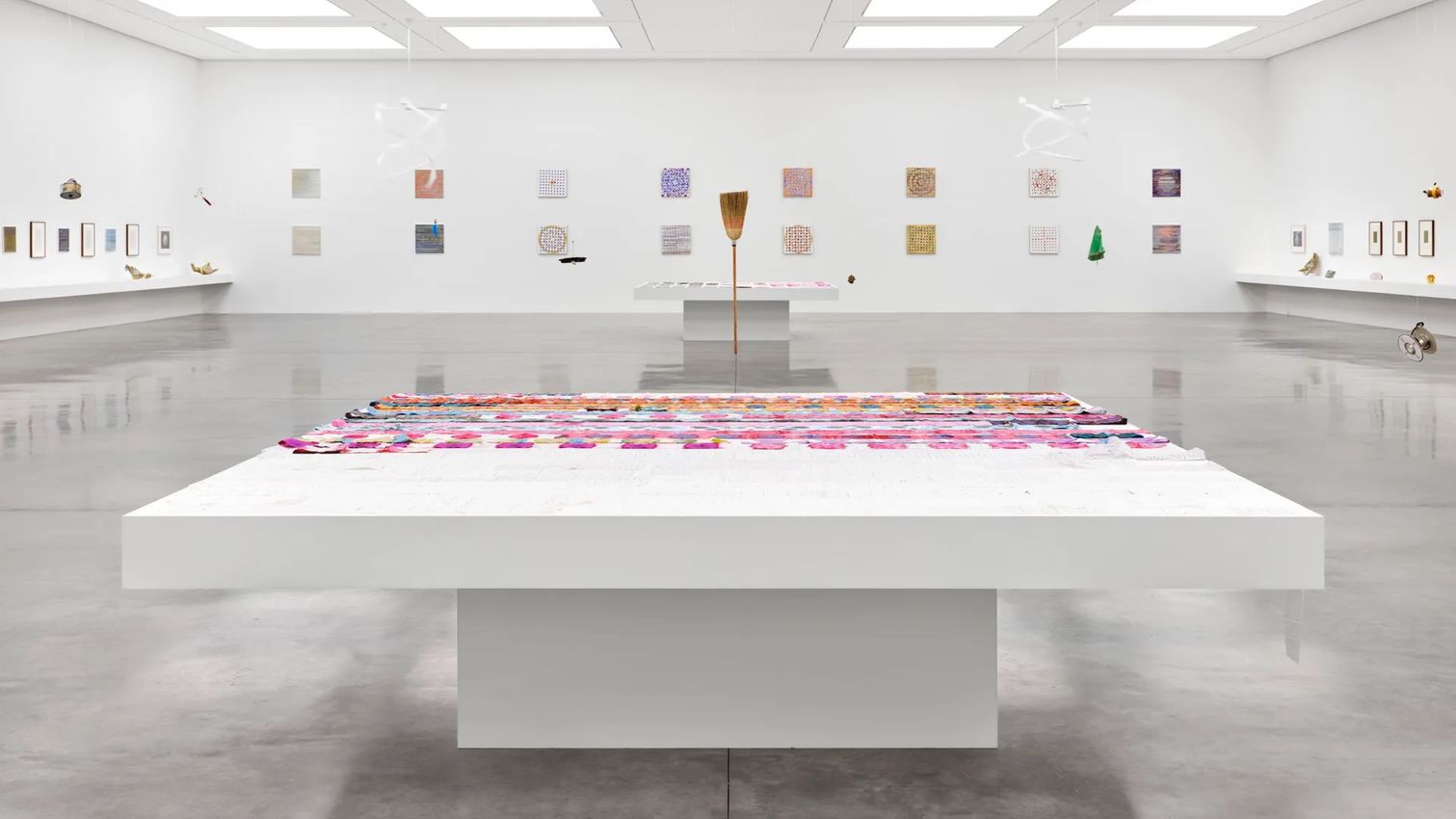
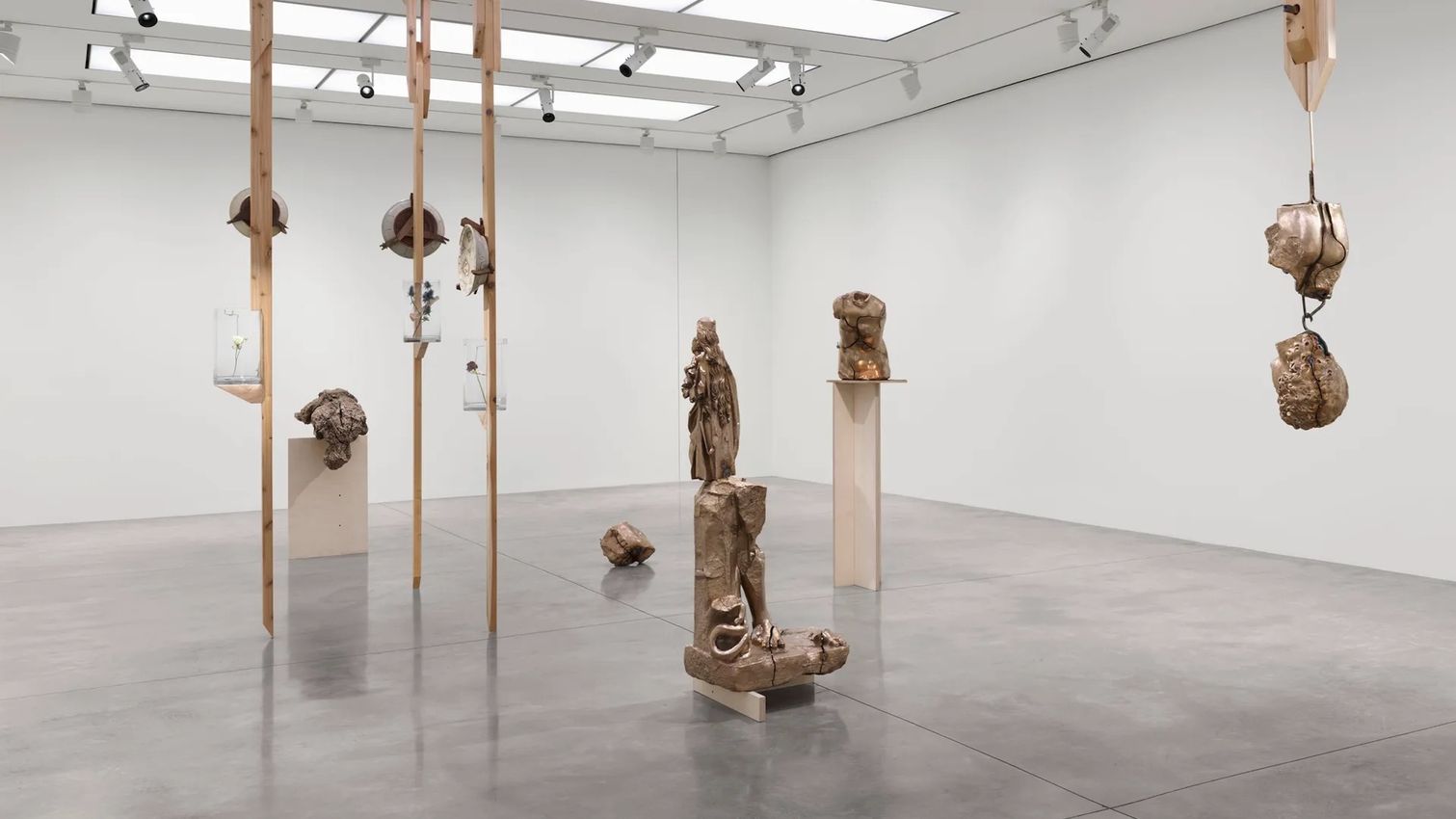
White Cube Bermondsey is pleased to present Lazarus, an exhibition of new works by Ibrahim Mahama, including large-scale installation, sculpture, collage and film. The artist’s third show with the gallery, the works come together to address the passage of time, the notion of obsolescence and the potential for regeneration.

Mahama’s point of departure for the exhibition is Nkrumah Voli-ni’, an abandoned building located in the northern city of Tamale in Ghana where the artist lives and works. Kwame Nkrumah is the name of the first president of Ghana, while Voli-ni, which literally translates as ‘inside the hole’, invokes excavation, teleportation and transformation. In bringing together these two words, the site is not only indebted to history but, at the same time, carries mythical associations. One of many concrete, Brutalist-style silos built to store grain and other food during the post-independence era, it was abandoned in 1966 and became obsolete, flooded and host to an ecosystem of fish, reptiles, birds and a large colony of bats. Driven by an interest in the way time is encapsulated in these architectural structures, Mahama has been photographing and researching silos since 2015, and finally acquired this building with the intention of converting it into a cultural institution. During the exhumation and restoration process, he made the decision to protect its dominant life forms and to keep the bats as co-habitants of the space. In so doing, Mahama is opening up an ecological dimension to the project’s impetus and activity.

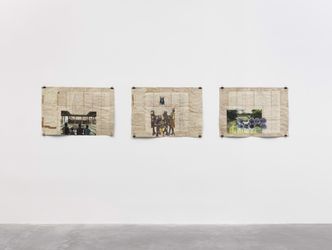
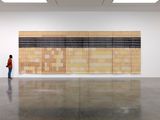
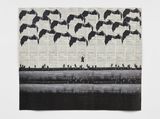
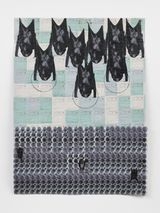
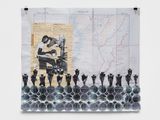
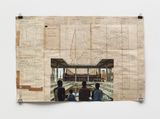
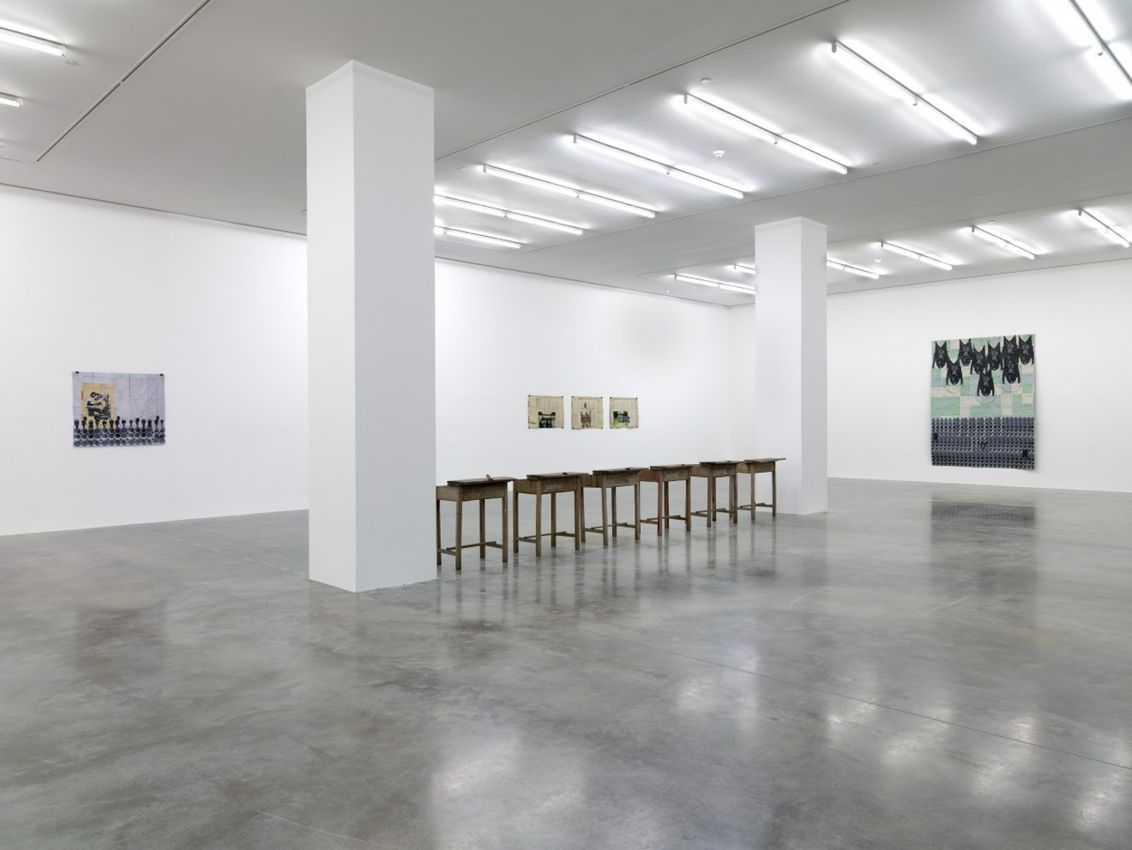
The artist’s new groups of collages, which vary in size from the monumental to the domestic, are mostly named after recent popular music titles, all of which address the climate crisis, reflecting the urgent global paradigm shift. Made up from archival notes, drawings, and photographs, the collages combine repeated images of silos and bats with colonial-era maps, bank notebooks, orders and ledgers from the 1960s and 70s; all now defunct paper residue. Echoing the formations of bats, which hang in rhythmic rows from the ceiling of the silos, the collages are informed by a lyrical, topographical patterning. When considered in relation to historical colonial domination—and its effects of blotting out, spoiling and appropriating—the collage technique embodies the many troubled aspects of Ghana’s multi-layered past.

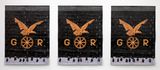
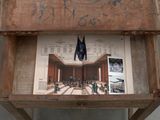
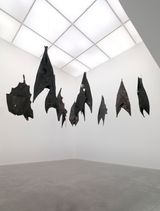
The title for the show is taken from the installation Lazarus (2021) presented in 9 × 9 × 9. Referencing the resurrection of Lazarus, Mahama uses this biblical story to reflect upon the ‘mobilisation of life within death’. This work comprises a group of suspended sculptures formed from armatures made of metal rebar and draped with tarpaulin, which together render the adumbration of cloaked figures or large bats. Dark and oil-drenched, the tarpaulin was originally used for covering cargo such as food, cars and engines, as well as for shelter, and was obtained by the artist from Agbogbloshie, a scrapyard that has yielded much of the raw material for previous bodies of work.

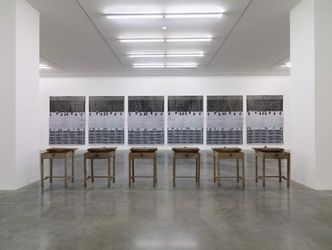
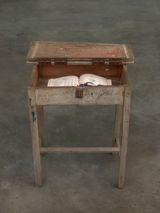
A major installation in South Gallery continues Mahama’s investigation into circular economies. In Capital Corpses (2019−21), blackboards flank the walls, between which one hundred rusted metal sewing machines affixed to colonial-era wooden school desks are sectioned and activated in turn by a timer, creating a syncopated cacophony of noise. Once a ubiquitous tool in Ghana, used by labourers quickly needing to adopt a new trade, the now decommissioned sewing machines were collected by the artist with the intention of ‘resurrecting the ghosts that are in the machines’. Mahama likens the role of the desks and blackboards to the jute sacks with which he frequently works. They too behave as palimpsests; upon these objects notes, names and directions are inscribed, which efface their surfaces while creating new layers—a haunting record of time enmeshed with its material history.

The split screen film Yesterday (2018−21), presented in the gallery auditorium, further elucidates the main preoccupation of the show: ‘the “Lazarus effect”, the return of the living dead’. Playing concurrently are three-minute films documenting the excavation of the silo, the silhouetted presence of the bats, and a local repair-man working with the sewing machines. By drawing this imagery together to remark upon the ecological necessity of collaboration and co-existence, Mahama again returns to the ‘relationship between the old and the new, the formal and informal, the global and local’.

Read More

Installation Views

Selected Works

Loading...
About the Artist

Ibrahim Mahama uses the transformation of materials to explore themes of commodity, migration, globalisation and economic exchange. Often made in collaboration with others, his large-scale installations employ materials gathered from urban environments, such as remnants of wood, or jute sacks which are stitched together and draped over architectural structures. Mahama’s interest in material, process and audience first led him to focus on jute sacks that are synonymous with the trade markets of Ghana where he lives and works. Fabricated in South East Asia, the sacks are imported by the Ghana Cocoa Boards to transport cocoa beans and eventually end up as multi-functional objects, used for the transportation of food, charcoal and other commodities. ‘You find different points of aesthetics within the surface of the sacks’ fabric’, Mahama has said. ‘I am interested in how crisis and failure are absorbed into this material with a strong reference to global transaction and how capitalist structures work.’

View Artist Profile

Also Exhibiting at White Cube

About the Gallery

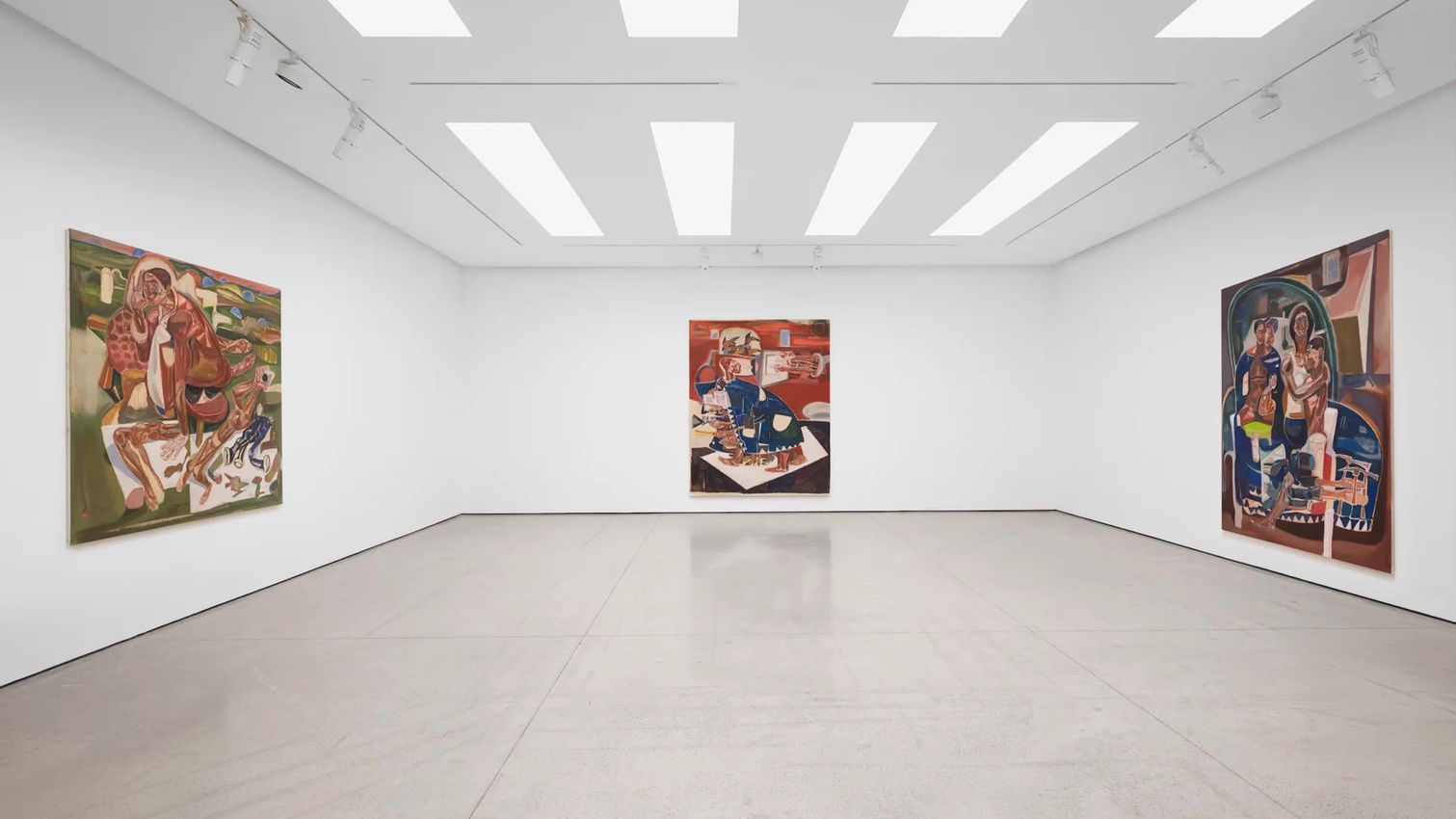
An international art powerhouse, White Cube was established in 1993 in London by art dealer Jay Jopling. In its space on Duke Street, it served as the early exhibition venue for many now internationally acclaimed British artists, including Tracey Emin, Gilbert & George, Rachel Kneebone and Antony Gormley, who still show with the gallery today.
View Gallery Profile
Address
144–152 Bermondsey Street
London
United Kingdom
Opening Hours
Tuesday - Saturday
10am – 6pm

Sunday
12pm – 6pm
(1)
London 144–152 Bermondsey Street
White Cube
144–152 Bermondsey Street, London, United Kingdom
+44 207 930 5373
http://whitecube.com

Opening hours
Tuesday - Saturday
10am – 6pm

Sunday
12pm – 6pm
The art world in focus