Press Release

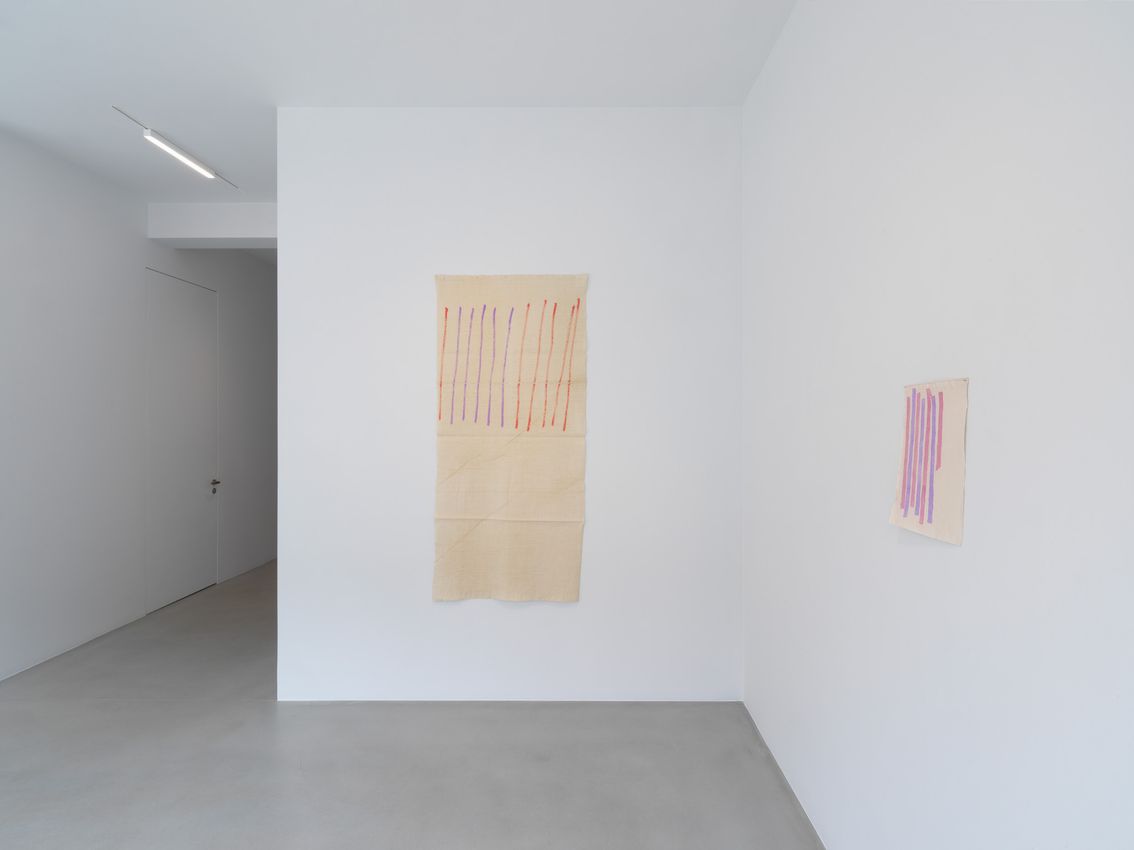
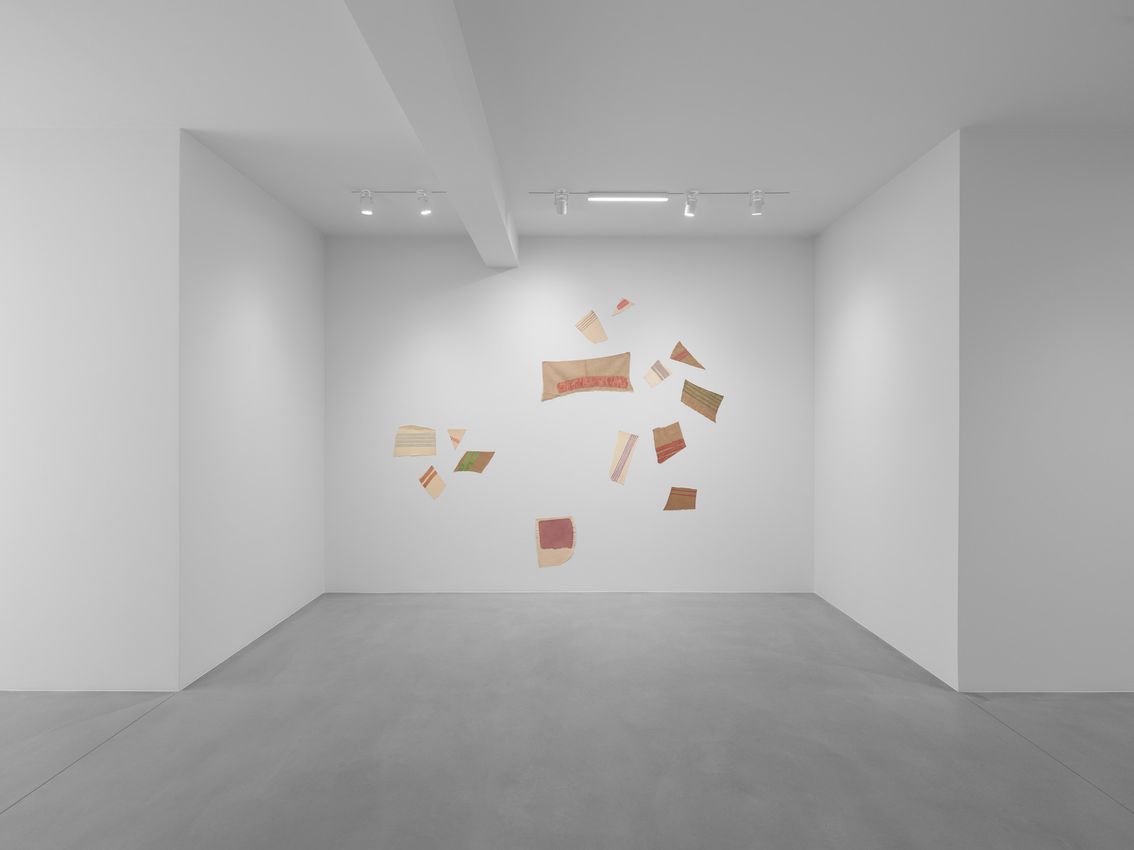
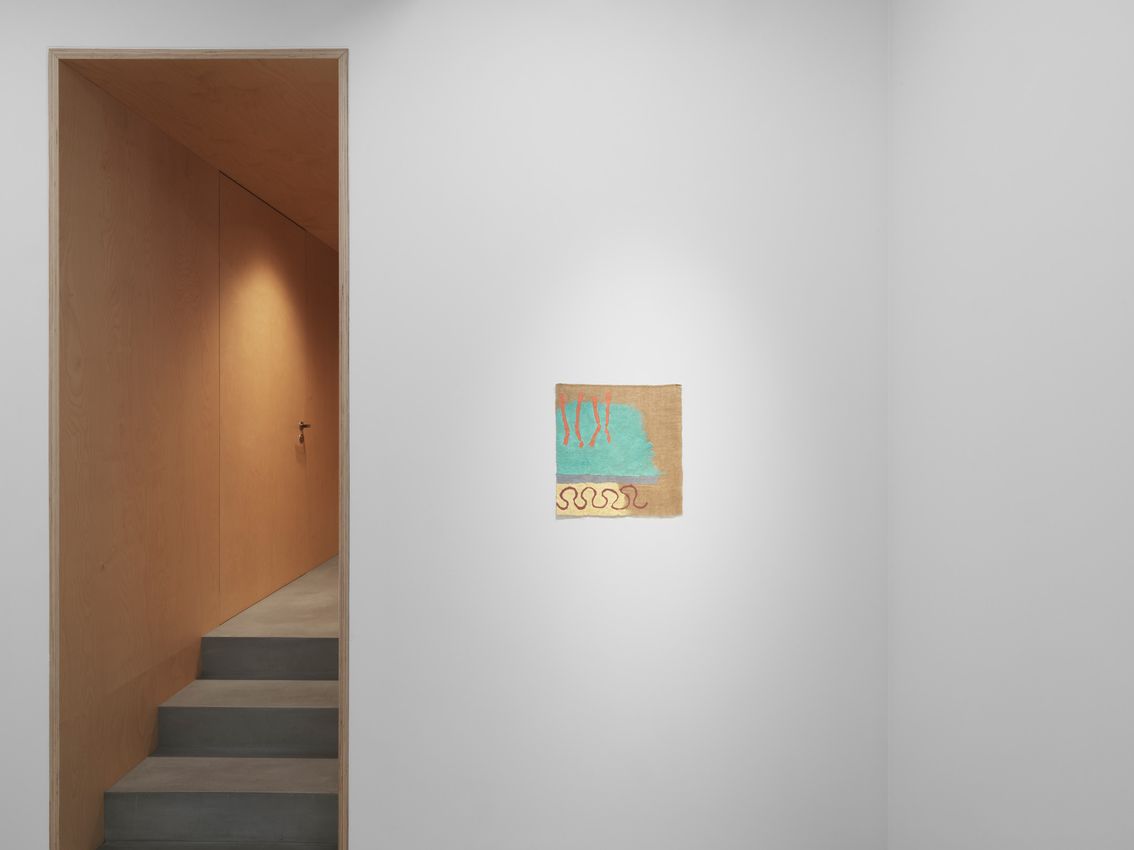
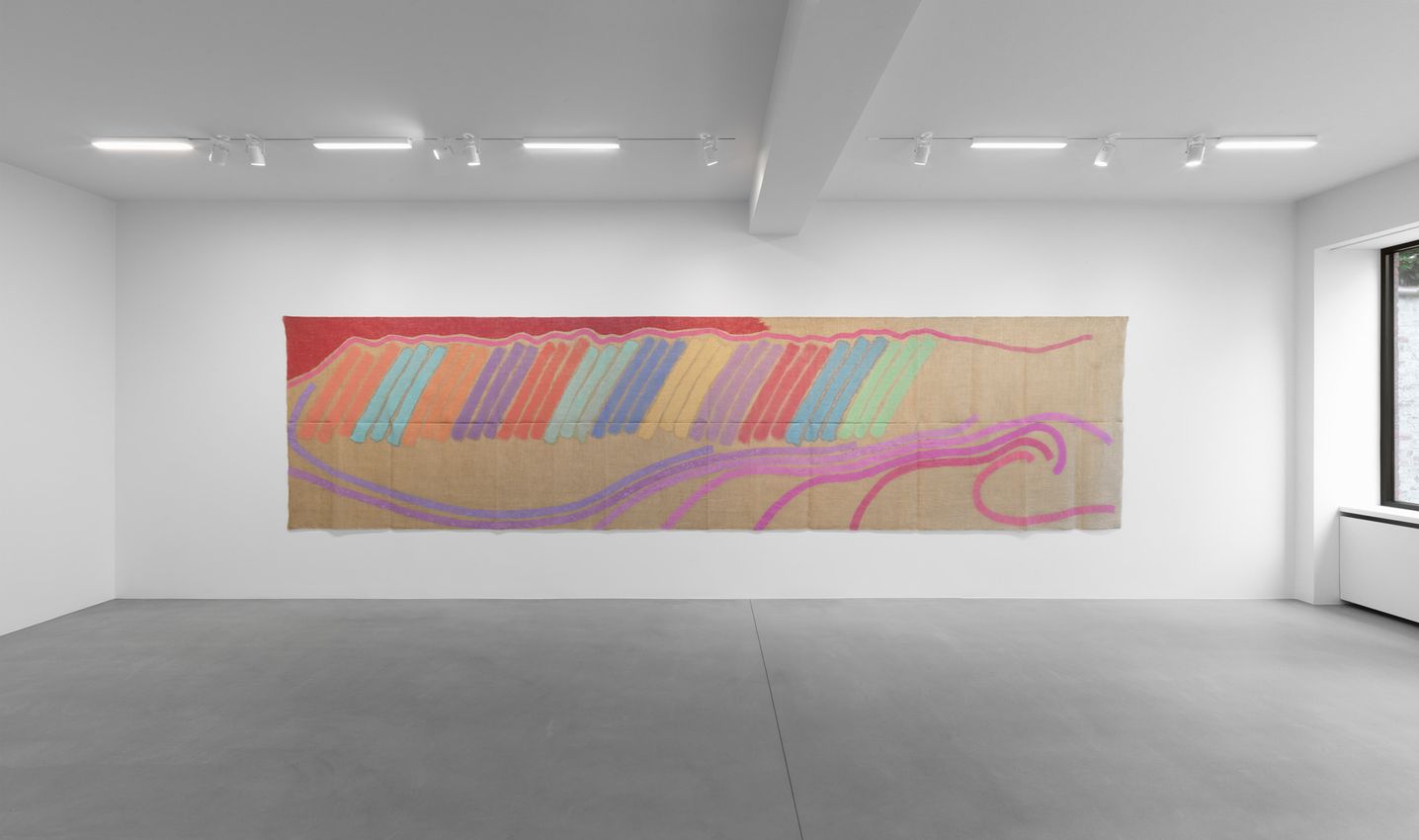
Xavier Hufkens is delighted to announce Luce buio, the gallery’s inaugural exhibition dedicated to the work of Italian abstract artist Giorgio Griffa (b. 1936, Turin). From his early linear paintings of the mid-1960s to recent works from 2022, this presentation showcases all five decades of the artist’s career and highlights both the evolutions and constancies within an oeuvre that is as eclectic as it is poetic.

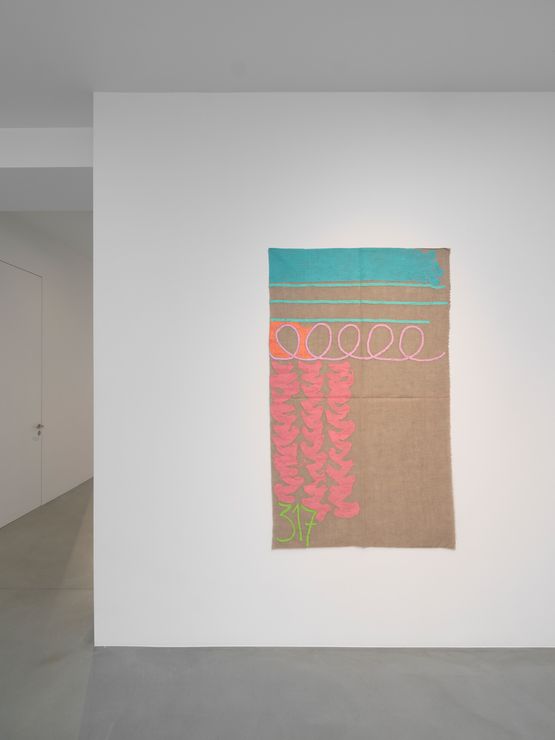
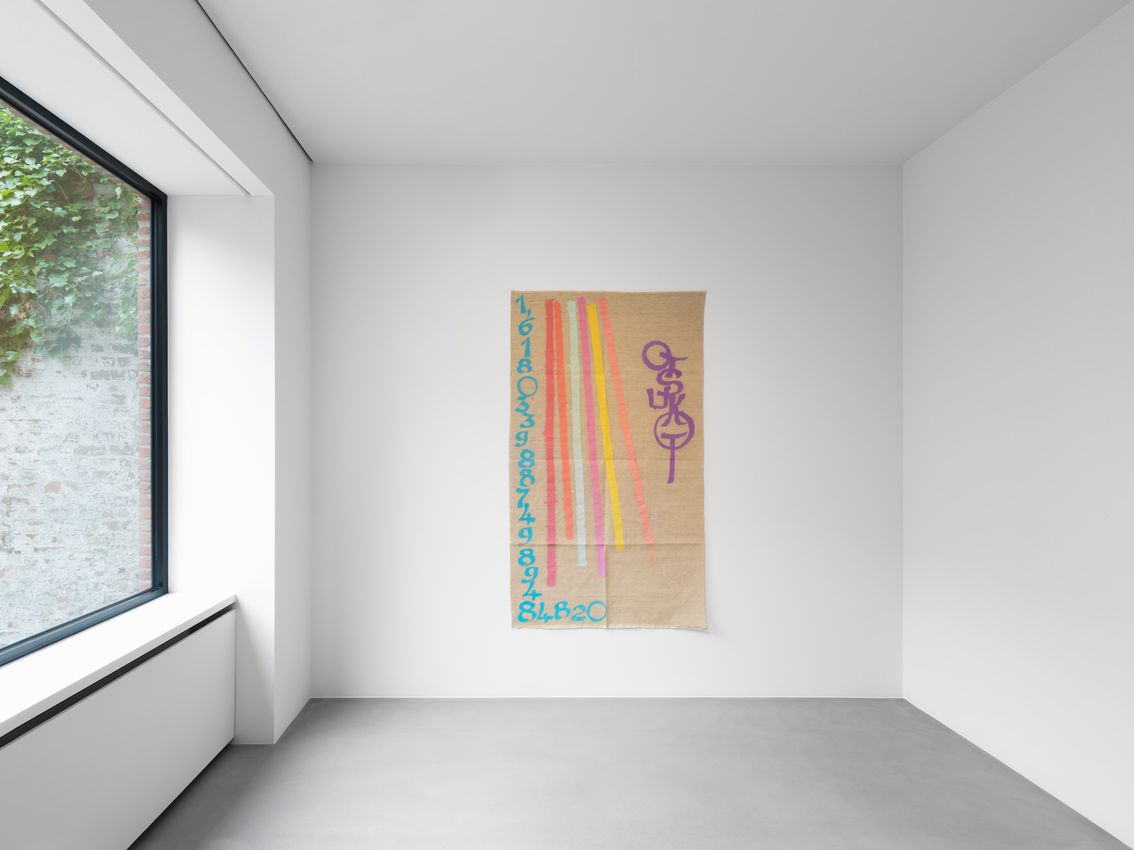
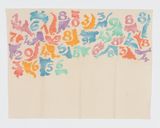
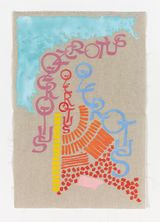
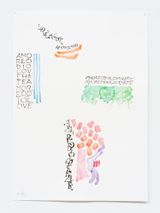
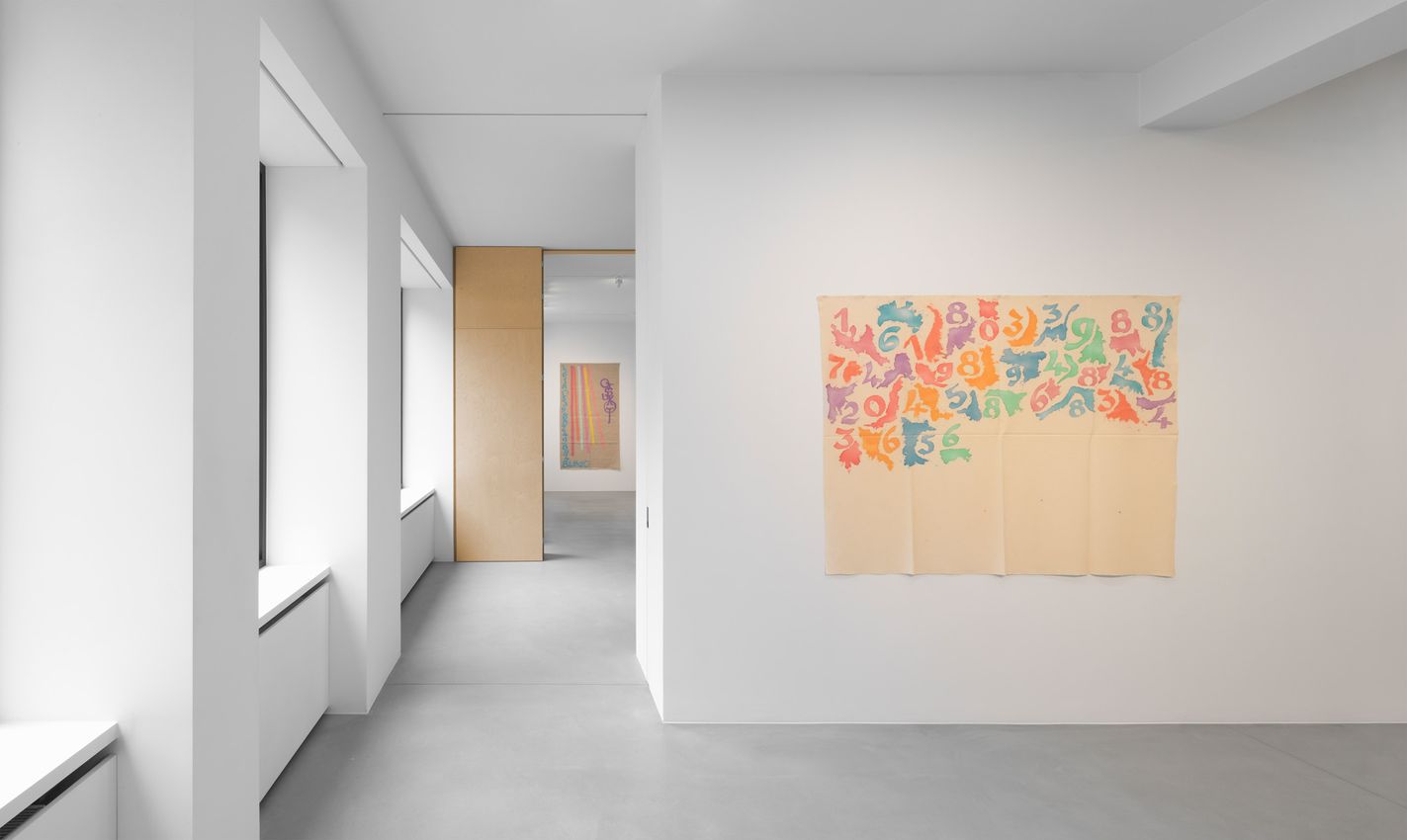
Giorgio Griffa is primarily known for his painted canvases that are nailed directly to the wall–unprimed, unframed and unstretched–the majority of which are executed in a luminous palette of desaturated colours. The canvases are folded when not exhibited, which creates visible creases that become a vital part of the work. At first glance, it is hard to differentiate the paintings of fifty years ago with those made recently. A closer study of the oeuvre, however, reveals the existence of eleven major cycles, ranging from the Segni primari [primary marks] series of 1967 to the latest ‘Dilemma’ paintings. Each corpus has a start date, but not an end. Furthermore, certain works belong to more than one cycle, as different creative trajectories intersect and merge into each other. As the artist himself asserts, the cycles co-exist side by side, being neither stages of progress nor regression, but simply continuous variations of ‘becoming’. This latter word is crucial to understanding the oeuvre, for Griffa’s sequences of lines, patterns, letters and numbers are not just universal but also open-ended. Each work contains an element that could, in principle, be continued indefinitely. Once the pattern is set, so to speak, we visually and mentally expect it to continue. When it doesn’t — and there is always a point at which a line, phrase or pattern seems to arbitrarily stop — we anticipate its prolongation, almost completing the sequence in our mind’s eye. Linguistically, it is analogous to stopping mid-sentence, leaving the interlocuter (in this case the viewer) to pick up the train of thought. This makes the empty spaces in the works as important as the graphic elements themselves. What we see in Griffa’s canvases are analogous to small excerpts from potentially infinite patterns, just as the here and now is but one juncture in a far greater continuum.

Giorgio Griffa is both a painter and a lawyer. Until he retired from his legal practice, he devoted himself to his twin professions, a combination which takes us back to the renaissance ideal of ‘universal knowledge’. Related to this are the so-called seven liberal arts, which are divided into those of the word (grammar, logic and rhetoric; the trivium) and those of numbers (arithmetic, music, astronomy and geometry; the quadrivium). As profoundly interconnected mechanisms for understanding nature and humanity, and as media for change and renewal, these disciplines were regarded as the components of a single encompassing ‘art’: the foundation of all learning. This once indivisible link between the realm of words and that of numbers runs like a leitmotif through the various cycles in Griffa’s oeuvre, as seen in the distinct bodies of work depicting letters, phrases and quotes, and those departing from numerical principles, the Fibonacci sequence or the golden ratio, also known as the ‘irrational number’. Key to translating the ideas that spring from these inspiration sources, and countless other musical, historical and philosophical starting points both ancient and modern, is Griffa’s characteristically simple visual language involving archetypal signs: letters, numbers and lines. Nothing more, nothing less. Griffa does not paint what he sees, therefore, but what he thinks or, more specifically, what he knows. As he himself once said, ‘I do not represent anything, I paint.’ This act of painting–using the lightest of all touches and ultra-fluid acrylic pigments–is thus a means of transmission, a way of articulating a deeply humanistic worldview that it is connected to every other field of knowledge. By conflating two passages from Four Quartets by T. S. Eliot, whom Griffa has long admired, we get close to the ideas embodied in the work: ‘For the pattern is new in every moment / And every moment is a new and shocking / Valuation of all we have been [...] And so each venture / Is a new beginning.’

Giorgio Griffa (b. 1936, Turin; lives and works in Turin) initially completed a law degree in 1958 and became a practising lawyer. From 1960 to 1963, he learned how to paint by assisting the Italian painter Filippo Scroppo (1910–1993). Despite early associations with movements such as Arte Povera, pittura analitica [fundamental painting] and Minimalism, his work has always stood outside the mainstream currents in contemporary art. Giorgio Griffa participated in important international exhibitions such as Prospekt, Düsseldorf (1969 and 1974) and the Venice Biennale (1978, 1980 and in 2017) as well as Processes of Visualized Thought: Young Italian Avant-garde, Kunstmuseum Luzern (1970) and A Painting Exhibition of Painters who Place Painting in Question, curated by Michel Claura, Stadtische Museum, Monchengladbach (1973). Recent solo presentations of Giorgio Griffa’s works include Uno and Due, Galleria Civica d’Art Moderna e Contemporanea, Turin (2002), Neuer Kunstverein, Aschaffenburg (2005), MACRO, Museo d’Arte Contemporanea, Rome (2011), Golden Ratio, Mies van der Rohe Haus, Berlin (2013); A Continuous Becoming, Camden Art Centre, London (2018); Tutti i pensieri di tutti, Palazzo Collicola, Spoleto (2020-21); Marvels of the Unknown, LaM - Lille Métropole Musée d’art moderne, Villeneuve-d’Ascq (2021); La Recherche, Centre Pompidou (2022).

Read More

Installation Views

About the Artist

Giorgio Griffa (b. 1936, Turin; lives and works in Turin) initially completed a law degree in 1958 and became a practising lawyer. From 1960 to 1963, he learned how to paint by assisting the Italian painter Filippo Scroppo (1910–1993). Despite early associations with movements such as Arte Povera, pittura analitica [fundamental painting] and Minimalism, his work has always stood outside the mainstream currents in contemporary art. Giorgio Griffa participated in important international exhibitions such as Prospekt, Düsseldorf (1969 and 1974) and the Venice Biennale (1978, 1980 and in 2017) as well as Processes of Visualised Thought: Young Italian Avant-garde, Kunstmuseum Luzern (1970) and A Painting Exhibition of Painters who Place Painting in Question, curated by Michel Claura, Stadtische Museum, Monchengladbach (1973). Recent solo presentations of Giorgio Griffa’s works include Uno and Due, Galleria Civica d’Art Moderna e Contemporanea, Turin (2002), Neuer Kunstverein, Aschaffenburg (2005), MACRO, Museo d’Arte Contemporanea, Rome (2011), Golden Ratio, Mies van der Rohe Haus, Berlin (2013); A Continuous Becoming, Camden Art Centre, London (2018); Tutti i pensieri di tutti, Palazzo Collicola, Spoleto (2020-21); Marvels of the Unknown, LaM - Lille Métropole Musée d’art moderne, Villeneuve-d’Ascq (2021); La Recherche, Centre Pompidou (2022).

View Artist Profile

Also Exhibiting at Xavier Hufkens

About the Gallery
Xavier Hufkens is one of Europe’s leading galleries for contemporary art. Located in Brussels, the gallery maintains a diverse exhibition programme with solo exhibitions of the gallery artists as well as group exhibitions and special projects. The gallery deals in a distinctive combination of painting, drawing, sculpture, photography, video and installation-based work.

The origins of the gallery date back to 1987, when Xavier Hufkens opened a gallery space in an un-refurbished warehouse in the neighbourhood of the South Station (Midi) in Brussels. During the early years, the focus of the gallery was upon mid-career and emerging artists and the gallery is known for having introduced some of the most influential contemporary artists to Brussels at a time when they were still relatively unknown. British sculptor Antony Gormley, who is still affiliated with the gallery, Felix Gonzalez-Torres and Rosemarie Trockel all showed in Belgium for the first time with Xavier Hufkens (Gormley in 1987; Gonzalez-Torres in 1991 and Trockel in 1993).

In 1992, the gallery moved to a 19th-century townhouse at 6 rue Saint-Georges, close to the Avenue Louise. Completely renovated by Belgian architects Paul Robbrecht, Hilde Daem and Marie-José Van Hee, the house quickly gained a reputation for being not just one of the most beautiful contemporary art spaces in the Belgian capital, but also one of the most interesting. The expanded exhibition programme coincided with the additional representation of a number of established artists from Belgium and abroad, including Richard Artschwager, Thierry De Cordier and Jan Vercruysse. In 1997, Hufkens expanded the gallery further by annexing the adjacent building and a number of new artists joined the gallery, including Louise Bourgeois, Roni Horn and Thomas Houseago.

A second space in the same street, at 107 rue Saint-Georges, opened in spring 2013. Located in the Galerie Rivoli, a mixed-use commercial development from the 1970s, the new gallery space was designed by Swiss architect Harry Gugger, who was previously in partnership with Herzog and De Meuron. Slegten & Toegemann, Brussels, managed the project.

An eclectic but very clear vision underpins all of the gallery’s activities: ‘The definition of the gallery was established from the start. The common thread, then and now, is quality over and above everything else, which I find more intellectually challenging than a forced definition. From the early days I juxtaposed established artists such as Michelangelo Pistoletto with someone like Felix Gonzalez-Torres when he was totally unknown. Today I still mix my work: I have no problem showing Malcolm Morley … alongside Robert Ryman, or Willem de Kooning.’ [Xavier Hufkens in The Art Newspaper, Issue 220, January 2011, published online: 20 January 2011]

Xavier Hufkens represents some thirty artists from different generations. He was part of the six-member selection committee for Art Basel during seven years and also participates in up to five international Arts Fairs annually. The gallery has partnerships with the estates of Louise Bourgeois, Willem de Kooning, Robert Mapplethorpe and Alice Neel.
View Gallery Profile
Address
44 rue Van Eyck
Van Eyckstraat
Brussels
Belgium
Opening Hours
Tuesday – Saturday
11am – 6pm
(1)
Brussels 44 rue Van Eyck, Van Eyckstraat
Xavier Hufkens
44 rue Van Eyck, Van Eyckstraat, Brussels, Belgium

Opening hours
Tuesday – Saturday
11am – 6pm
The art world in focus