Press Release

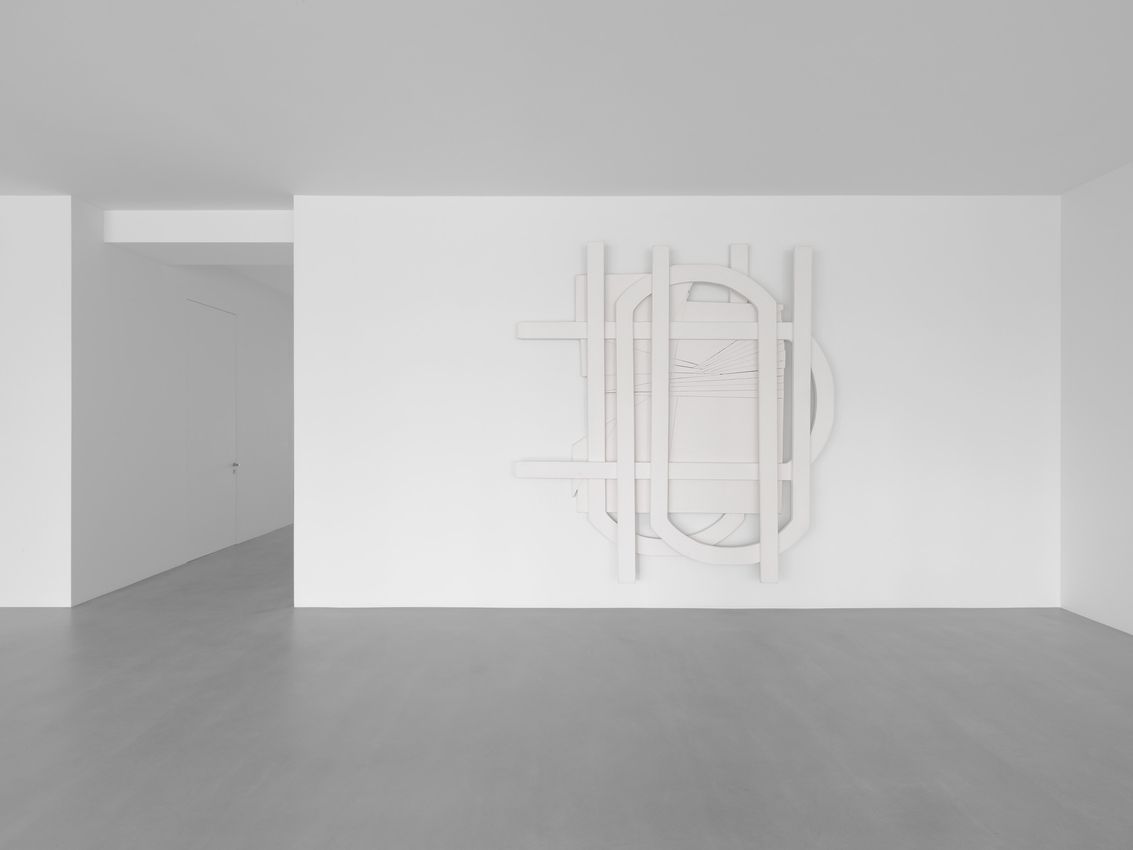
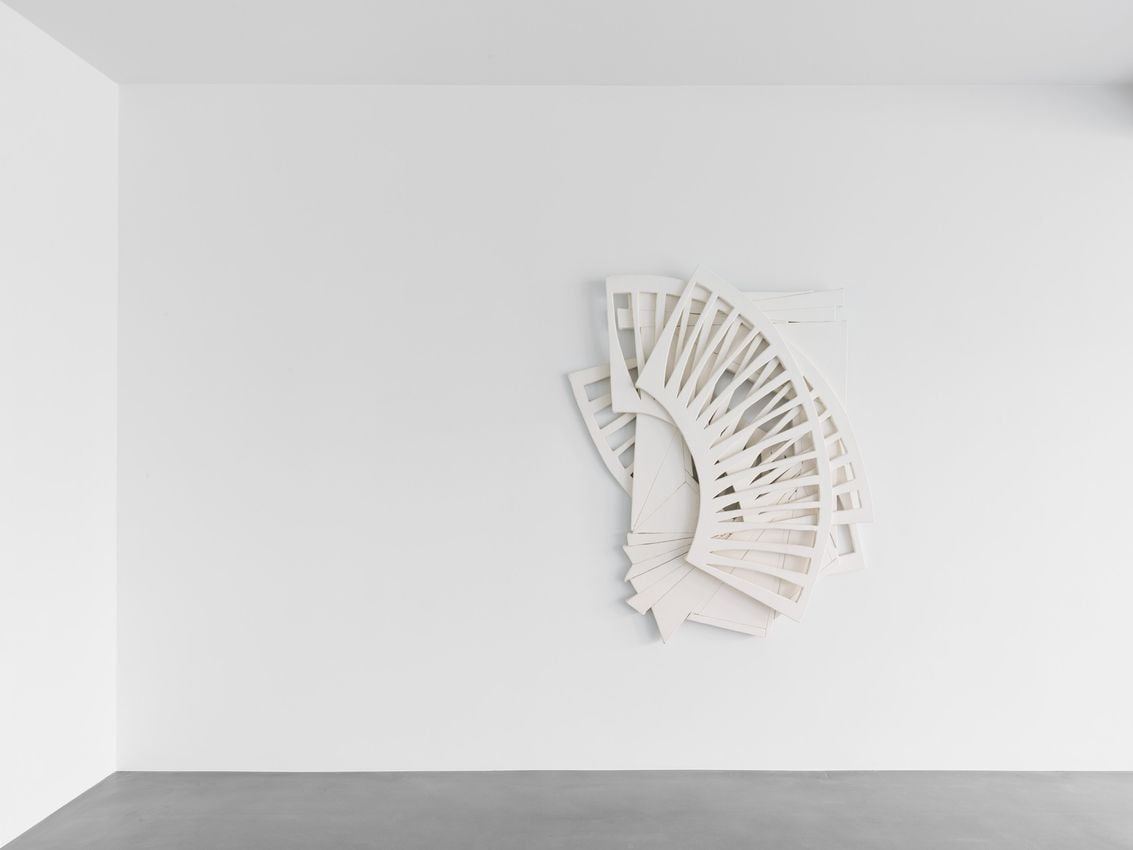
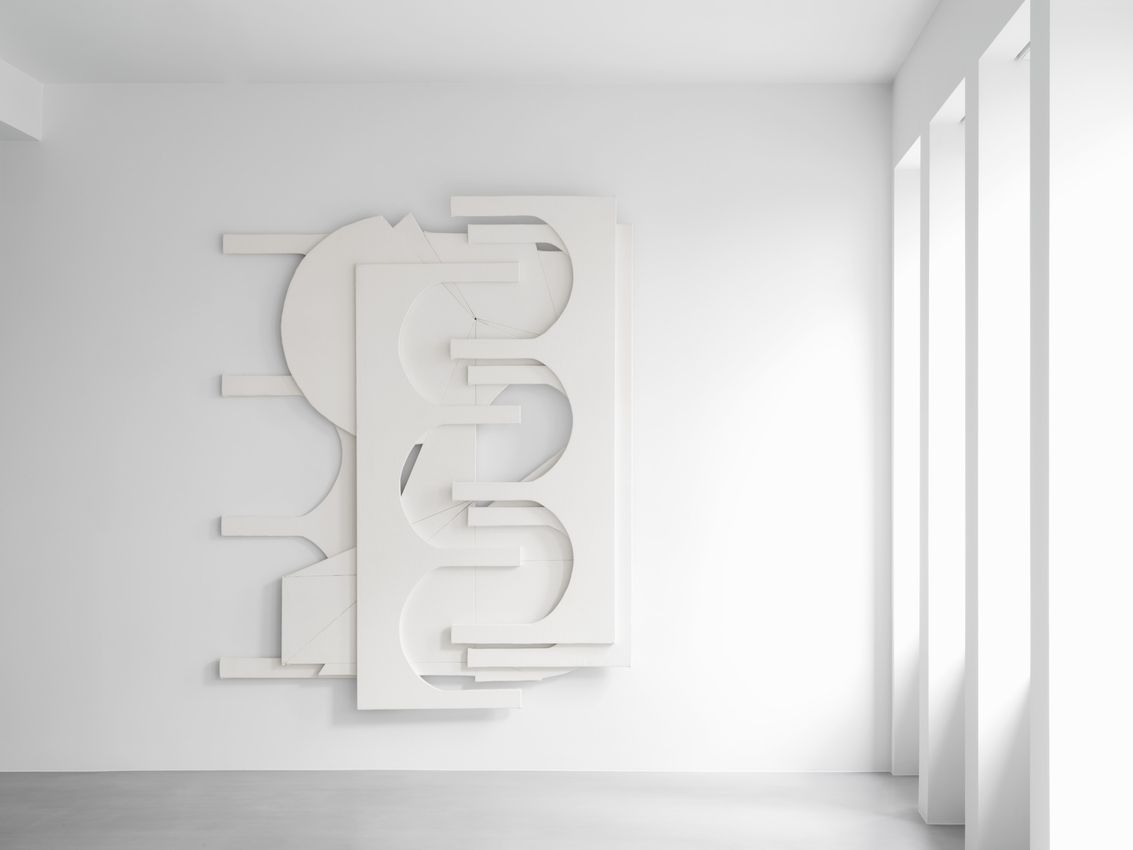
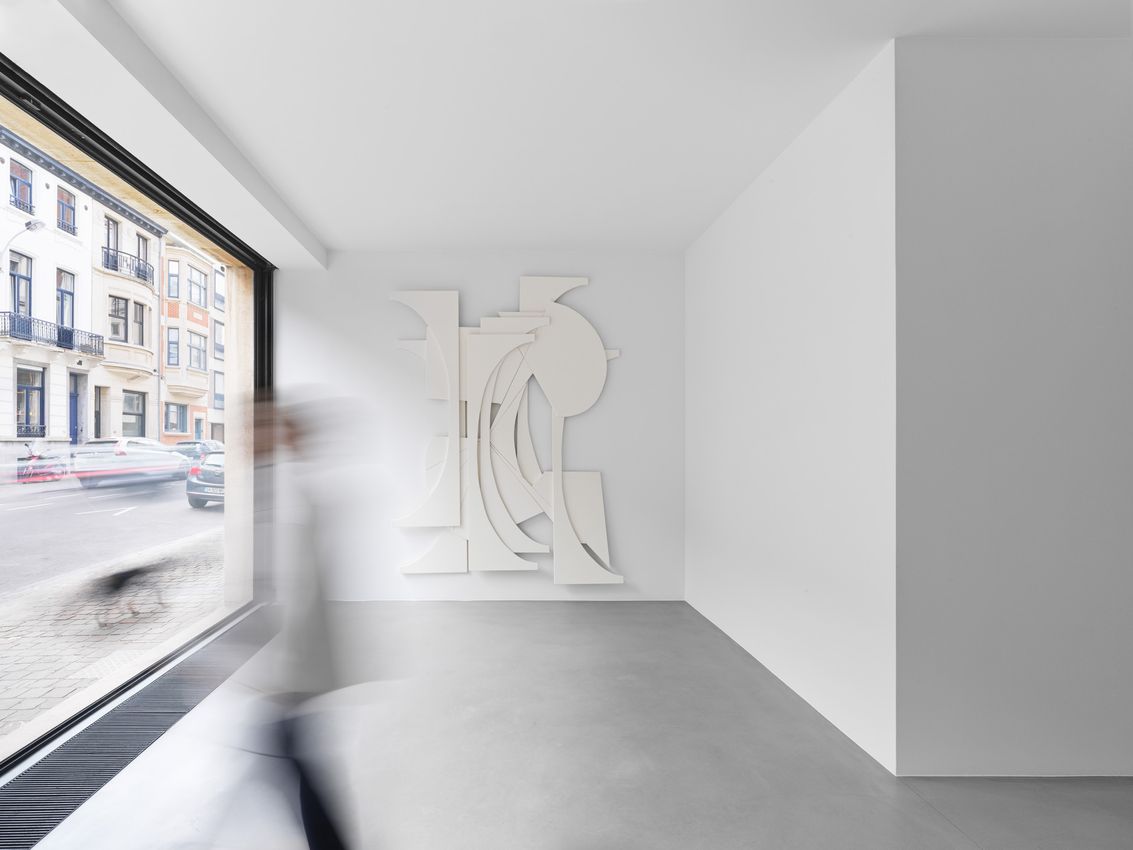
In his most layered work to date, American artist Wyatt Kahn brings his spatial investigation of painting into ever sharper focus. Working mainly inwood, lead and canvas, he creates complex, three-dimensional compositionsin which typically sculptural concerns–positive and negative space, depth andshallowness, shadow and light–play a determining role. Comprising large-format reliefs and related graphic works, his new exhibition explores the ideasof fragmentation and cohesion.

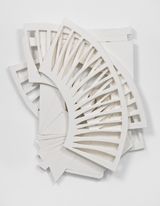
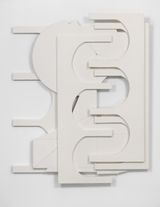
By focusing solely on painting’s underlying support, Kahn directs attentionfrom the pictorial surface to the edges of the canvases and the divisionalspaces. These crevices and openings are the spatial equivalents of lines andplanes, while the wall becomes an integral part of the composition. Likewise,the idea of a canvas as a single and uninterrupted surface is challenged: theseworks are splintered, yet coherent. Juxtapositions of organic and geometricshapes, a number of which recur throughout the artist’s oeuvre, are theenduring carriers of meaning. Whilst notionally abstract, the origins ofthese forms can often be traced back to Kahn’s engagement with art history,especially early modernism, as well as to daily life and varied emotional states.The work Harlequin, for example, speaks to Picasso’s works on the samesubject, while the forms in New Houston Street, Spring 2021 are derived fromthe arches of a new building in the said location.

Although colour featured heavily in Kahn’s previous exhibition at the gallery,it is absent in this recent body of work. What we see, instead, is a return tothe raw, untreated linen or the milled lead. The unprimed canvas and milledlead have their own natural hues and textures. Another key development is themulti-layered construction of the works. Three distinct strata are discernible:an intricate configuration of canvases between two sets of open, repeating andtransposed forms. The layers evoke the conventional organisation of a paintinginto foreground, middle ground and background. In Kahn’s compositions,however, they are as distinct as they are indivisible, weaving in and out of eachother to form a single composite image. This tripartite structure also opensitself up to a temporal reading, calling to mind the idea of a merging of past,present and future. One could also interpret the empty canvas as a tabularasa, an allusion to the absence of preconceived ideas. ‘On the one hand, theyare fully completed objects. On the other, they have a canvas in a state thatwould typically be considered incomplete or in progress–it would normallybe gessoed and painted,’ Kahn explains. ‘I felt this captured the nature ofthe moment. I think we are in a moment of change yet much of it is veryunfinished. There is both great anxiety and also incredible hope and beauty.I wanted these works to embody all this.’

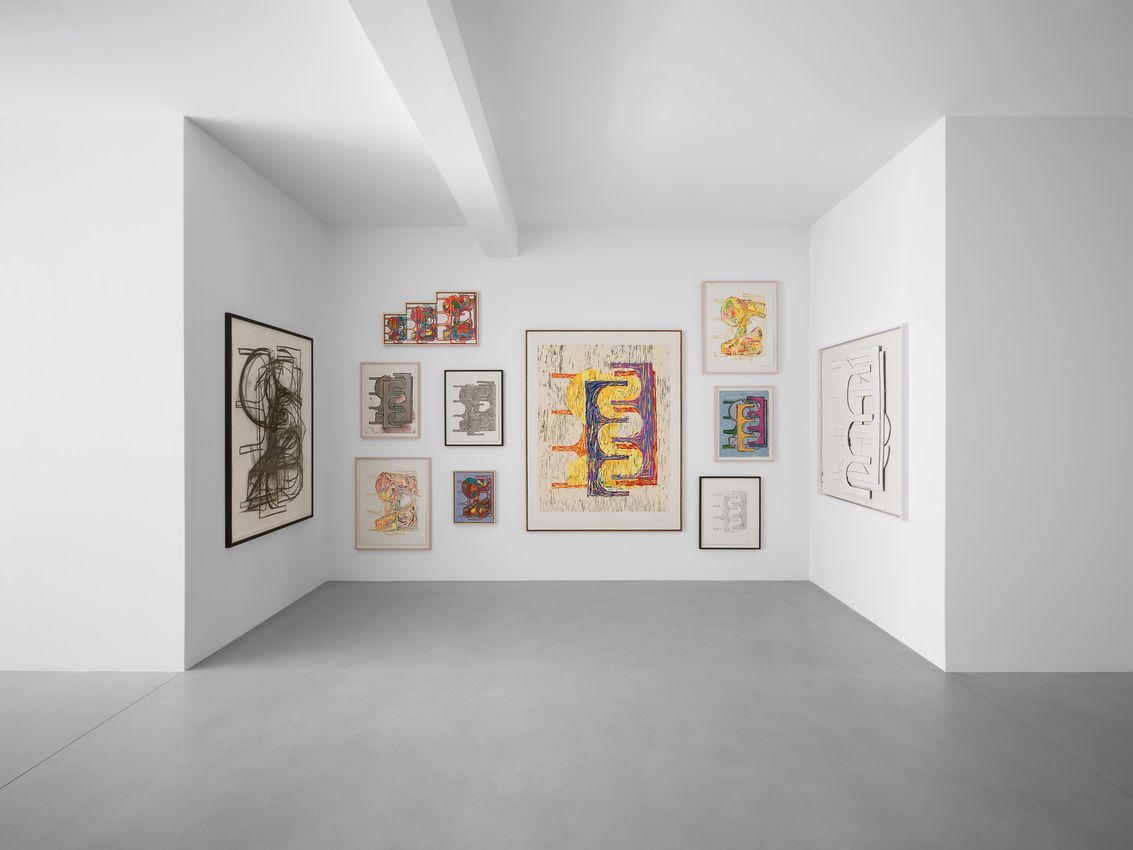
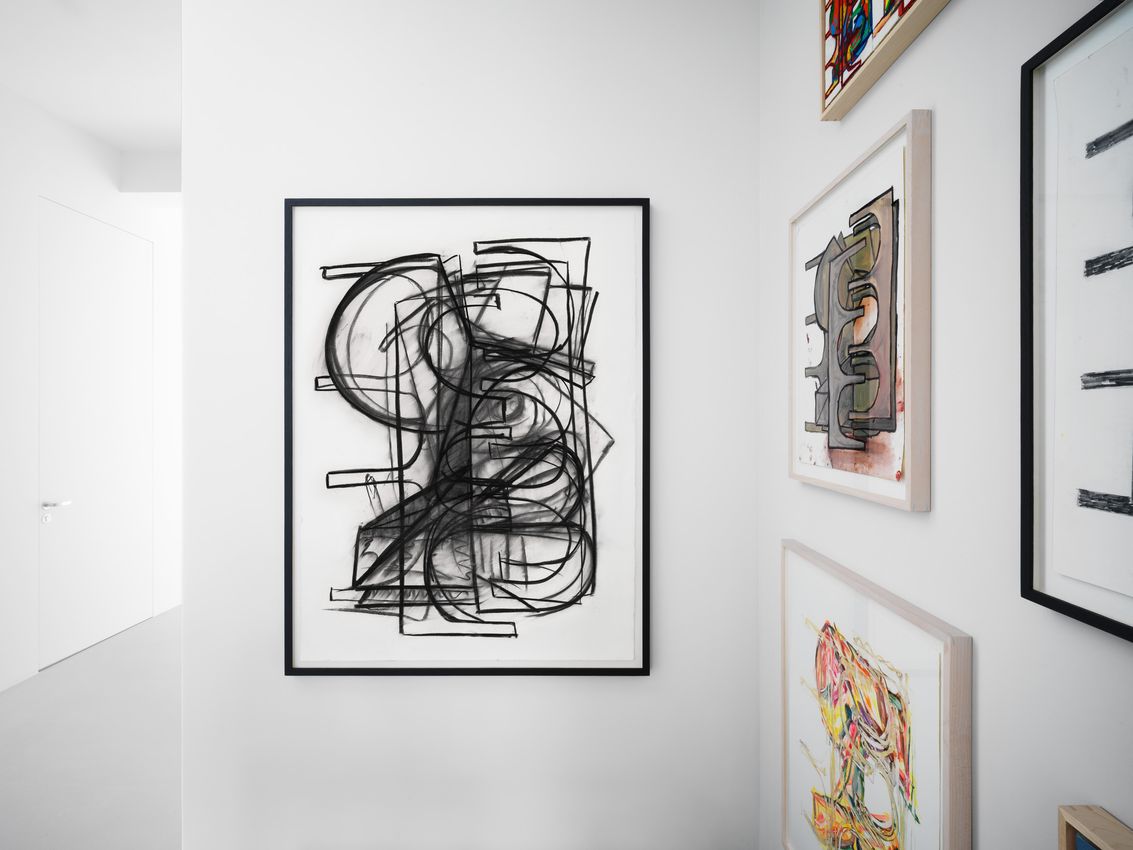
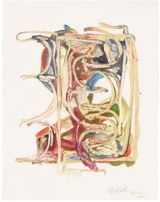
In addition to the canvas reliefs, Wyatt Kahn presents a group of studies forNew Houston Street, Spring 2021. Created before, during and after the makingof this work, they testify to the importance of drawing and printmaking within his practice. Sketches, tracings, collages and charcoal sketches, as well as a selection of vibrant monotypes, provide a unique insight into the artist’sworking methods, while also revealing Kahn to be a rigorous draughtsman.

Wyatt Kahn (b. 1983) lives and works in New York. Later this year, he willpresent seven monumental sculptures for his first public installation, in anexhibition organised by Public Art Fund. His work is included in the collectionsof the Whitney Museum of American Art, NY; Centre Georges Pompidou,Paris; MOCA, Los Angeles; Dallas Museum of Art; MCA, Chicago; andAlbright-Knox Art Gallery, Buffalo.

Read More

Installation Views

About the Artist

Wyatt Kahn is primarily known for his investigations into the visual and spatial relationship between painting and sculpture. Using unprimed canvases stretched over wooden frames, Kahn assembles complex wall-mounted works in which the gaps between the individual canvases give rise to abstractor pictorial compositions. Rather than tracing the lines and shapes directly onto the canvas itself, he turns them into physical components of the artwork. Referencing the tradition of minimalist abstraction, Wyatt Kahn’s monochrome multi-panel ‘paintings’ are informed by a desire to explore non-illusory forms of representation. In essence, their subject becomes the interplay between two and three dimensions, as experienced via shifts in surface, structure and depth. In Kahn’s work, the wall upon which the work is hung becomes an integral part of the composition. Interested in a painting’s potential to function as the very embodiment of the object it depicts, Kahn has also developed works in which the shaped stretchers combine to create the form of an actual object, while a synthesis of hand-drawn motifs and words epitomize its essential qualities.

View Artist Profile

Also Exhibiting at Xavier Hufkens

About the Gallery
Xavier Hufkens is one of Europe’s leading galleries for contemporary art. Located in Brussels, the gallery maintains a diverse exhibition programme with solo exhibitions of the gallery artists as well as group exhibitions and special projects. The gallery deals in a distinctive combination of painting, drawing, sculpture, photography, video and installation-based work.

The origins of the gallery date back to 1987, when Xavier Hufkens opened a gallery space in an un-refurbished warehouse in the neighbourhood of the South Station (Midi) in Brussels. During the early years, the focus of the gallery was upon mid-career and emerging artists and the gallery is known for having introduced some of the most influential contemporary artists to Brussels at a time when they were still relatively unknown. British sculptor Antony Gormley, who is still affiliated with the gallery, Felix Gonzalez-Torres and Rosemarie Trockel all showed in Belgium for the first time with Xavier Hufkens (Gormley in 1987; Gonzalez-Torres in 1991 and Trockel in 1993).

In 1992, the gallery moved to a 19th-century townhouse at 6 rue Saint-Georges, close to the Avenue Louise. Completely renovated by Belgian architects Paul Robbrecht, Hilde Daem and Marie-José Van Hee, the house quickly gained a reputation for being not just one of the most beautiful contemporary art spaces in the Belgian capital, but also one of the most interesting. The expanded exhibition programme coincided with the additional representation of a number of established artists from Belgium and abroad, including Richard Artschwager, Thierry De Cordier and Jan Vercruysse. In 1997, Hufkens expanded the gallery further by annexing the adjacent building and a number of new artists joined the gallery, including Louise Bourgeois, Roni Horn and Thomas Houseago.

A second space in the same street, at 107 rue Saint-Georges, opened in spring 2013. Located in the Galerie Rivoli, a mixed-use commercial development from the 1970s, the new gallery space was designed by Swiss architect Harry Gugger, who was previously in partnership with Herzog and De Meuron. Slegten & Toegemann, Brussels, managed the project.

An eclectic but very clear vision underpins all of the gallery’s activities: ‘The definition of the gallery was established from the start. The common thread, then and now, is quality over and above everything else, which I find more intellectually challenging than a forced definition. From the early days I juxtaposed established artists such as Michelangelo Pistoletto with someone like Felix Gonzalez-Torres when he was totally unknown. Today I still mix my work: I have no problem showing Malcolm Morley … alongside Robert Ryman, or Willem de Kooning.’ [Xavier Hufkens in The Art Newspaper, Issue 220, January 2011, published online: 20 January 2011]

Xavier Hufkens represents some thirty artists from different generations. He was part of the six-member selection committee for Art Basel during seven years and also participates in up to five international Arts Fairs annually. The gallery has partnerships with the estates of Louise Bourgeois, Willem de Kooning, Robert Mapplethorpe and Alice Neel.
View Gallery Profile
Address
44 rue Van Eyck
Van Eyckstraat
Brussels
Belgium
Opening Hours
Tuesday – Saturday
11am – 6pm
(1)
Brussels 44 rue Van Eyck, Van Eyckstraat
Xavier Hufkens
44 rue Van Eyck, Van Eyckstraat, Brussels, Belgium

Opening hours
Tuesday – Saturday
11am – 6pm
The art world in focus