





CHRISTOPHER ROTH
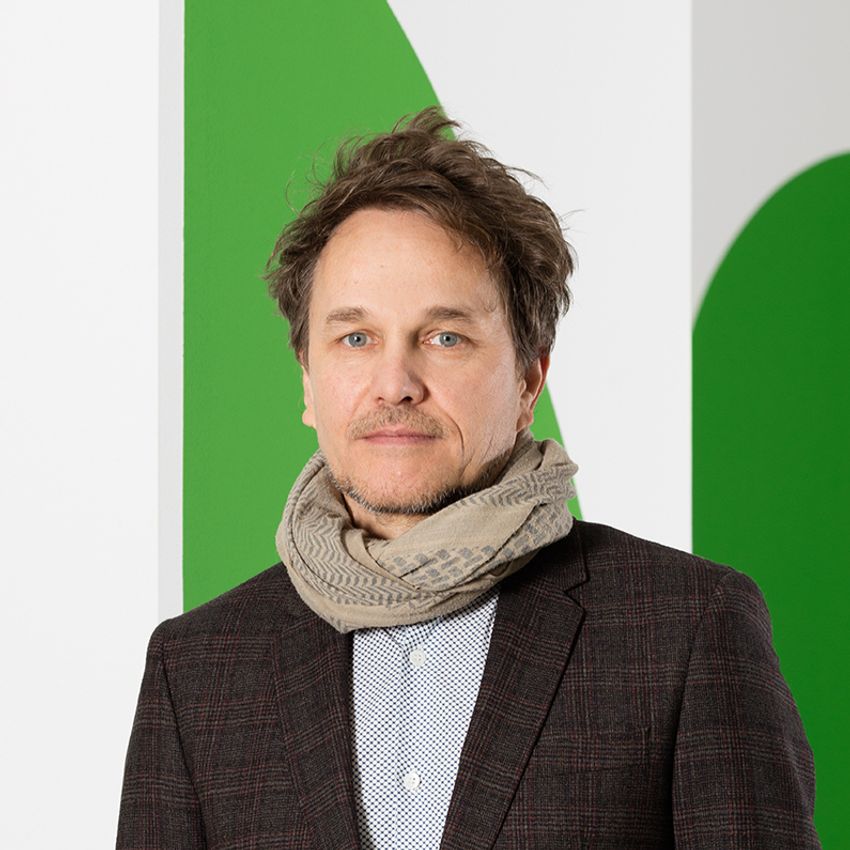
GermanyChristopher Roth’s practice may be best understood as a kind of proactive intellectual scholarship that combines the factual and fictitious, with both analytic and poetic qualities.
Roth’s work seeks to understand how information, words, pictures and ideas are received, travel and are mediated at a constantly accelerating pace. Since the 1990s, Roth has focused on the ‘emptiness’ of single images and certain generic imagery that surround us. These images only accrue meaning in context—a function easily manipulated by the mass media. This knowledge–acquired and practiced as an accomplished film editor and director of feature films, and given theoretical underpinnings by his engagement with cultural history and philosophy—informs his entire practice.
His major research project 80*81 with Georg Diez, for example, sought to reconstruct events in the period from January 1980 to December 1981 as evidence of important paradigmatic cultural and historical shifts. These were chronicled in eleven books assembled from contemporary images and texts, and interviews the authors undertook with contemporary witnesses, filmmakers and philosophers (among others). In addition, the project was presented at elaborately staged congresses and theater performances.In an additional volume, 2081, the authors constructed a future that, in turn, looked back to their 80*81 project as paradigmatic.
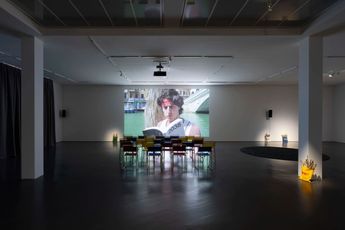
Roth’s films also excel at channeling a characteristically voracious intake of images and ideas, giving them a visual equivalent without imposing an order, which he considers arbitrary by definition. Instead, his work relies on an active, engaged audience to draw its own inferences.
Since the early aughts, projects increasingly experiment with the dissolution of linear time, posing an entirely fluid concept of past, present and future: fictionalizing the past (Baader, 2002), re-creating the future (Mozartbique, 2007–2013, with Franz Stauffenberg), looking back from the year 2081 (2081 and 80*81, 2010–2013, with Georg Diez), or reconstructing in 2026 the formation of a philosophical discourse that has since radically altered the world (Hyperstition, 2016, with Armen Avanessian).
Text courtesy Esther Schipper.




Explore and Follow Artists Shaping Contemporary Art
A respected voice in contemporary art discourse.
Focusing on ambitious storytelling and insightful art-world commentary. Ocula Magazine publishes in-depth interviews, critical essays and timely analysis on the artists, exhibitions and ideas driving the global art world.
Learn more about Ocula Magazine
Showcasing the best of the art world.
Ocula partners with galleries from around the world to highlight their artists, artworks and exhibitions. Gallery membership is by application and invitation, with each member vetted by an independent panel.
Learn more about Ocula Membership
Specialises in the sale of major artworks.
Led by a team with deep ties to the world’s leading auction houses, galleries and collectors. Ocula’s advisory team offers bespoke services to high-net-worth clients from around the world who are looking to acquire the best of contemporary and modern art.
Learn more about our team and services