


CORITA KENT
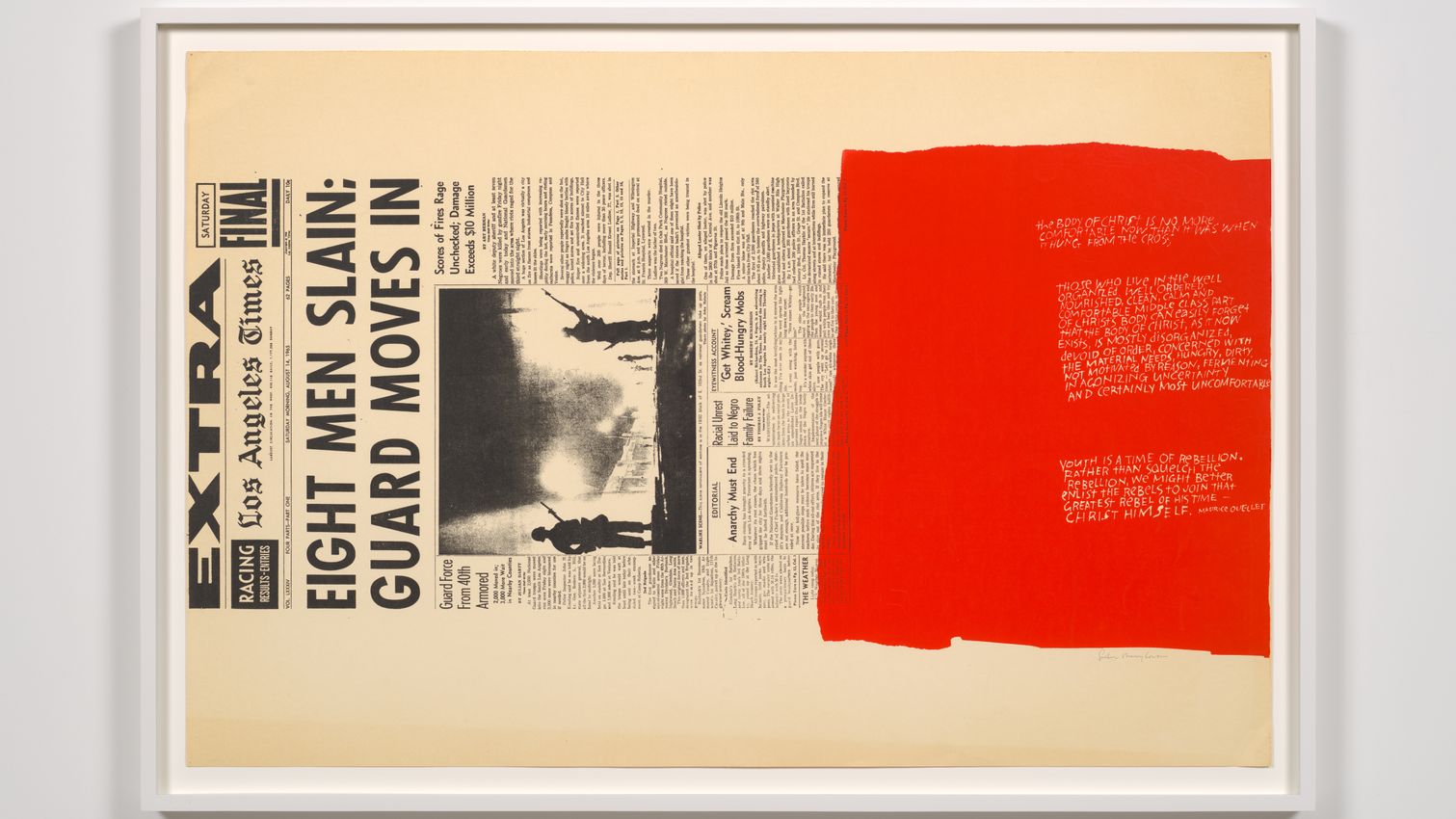
1918-1986, United StatesCorita Kent, “the Pop Art Nun”, was an artist, teacher and social justice advocate who created around 800 serigraphs and thousands of watercolours during her career. Using art as a tool to promote change, her bold prints challenged injustice, drawing attention to poverty, war and racism.
Early Years
Frances Elizabeth Kent was born in Fort Dodge, Iowa in 1918. Her family moved to Los Angeles when she was still very young, and she attended the city’s Catholic girls’ high school before entering the Order of the Immaculate Heart of Mary in 1936, choosing the name Sister Mary Corita. She gained her BA in 1941 and spent three years teaching in British Columbia, before returning to Immaculate Heart to teach art and complete her Master’s at the University of Southern California. She taught herself silkscreen printing because she wanted her art to be widely available and also so she could teach serigraphy to her students—her print The Lord is With Thee won first prize in both the California State Fair and the Los Angeles County Print Competition in 1952.
Corita Kent: Artworks
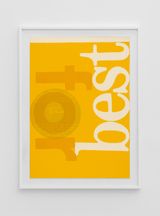
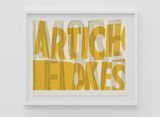
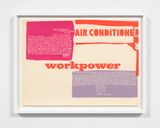
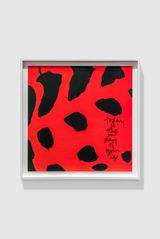
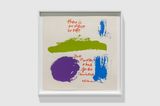
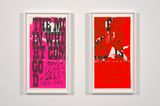
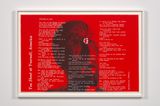
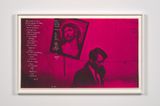
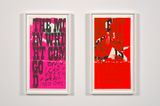
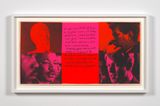
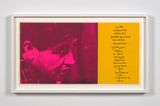
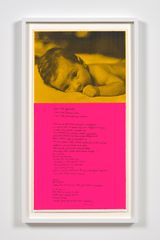
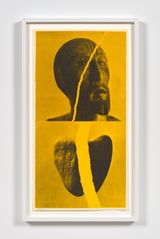
Corita Kent’s early artworks were figurative, influenced by the bible, religious themes and medieval art. However, after seeing an Andy Warhol exhibition in 1962, Kent drew inspiration from the Pop Art movement—and her work became more political. Unlike Pop Art’s criticism of materialism, Kent’s prints celebrated consumer society, with bold type reminiscent of adverts, and advertising slogans themselves. She used song lyrics, biblical phrases and quotes from literature in her vibrant silkscreen prints, but also included sections in smaller handwriting, as if to pull in viewers closer to the artwork’s messaging.
- Stop the Bombing (1967) is Kent’s red, white and blue protest against the Vietnam War. The central message—the title of the artwork—weaves boldly through the middle of the print, while handwriting around it includes the phrases “I am in Vietnam—who will console me?” and “There is a bullet in my brain, behind my eyes, so that all I see is pain”.
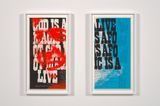
- Love was a familiar theme in Corita Kent’s works during the late 1960s, from the 1967 print containing simply a red heart and the word “Love” to with love to the everyday miracle (1967) and of love (1967).
- In 1968, Corita Kent produced The Circus Alphabet, 26 prints centring an individual letter with imagery and written words overlaid. Characterised by neon pinks and bright yellows, the series contains images of everything from runners to the words “Somebody up here likes you”.
Corita Kent: Select Public Commissions
- Banner, Vatican Pavilion, 1964 World’s Fair (1964)
- Rainbow Swash, Dorchester gas tank, Boston (1971)
- Love stamp, United States Postal Service (1985)
- We can create life without war billboard, Physicians for Social Responsibility (1985)
Corita Kent: Select Awards
- Los Angeles Times Woman of the Year (1966)
- Cover of Newsweek (1967)
- American Institute of Graphic Arts Medal (2016)
Corita Kent: Select Posthumous Exhibitions
Select Solo Exhibitions
- Heroes and Sheroes, Endicott College, Beverly (2026)
- Corita Kent: The Sorcery of Images, Marciano Art Foundation, Los Angeles (2025)
- Love and a Butterfly, Andrew Kreps, New York City (2025)
- We Care: Works by Corita Kent, Silber Art Gallery, Baltimore (2022)
- Someday is now, Danh Vo presents Sister Corita, Nifaagaards Malerisamling, Nivå (2022)
- Works from the 1960s, Andrew Kreps, New York City (2019)
- We have no art, we do everything as well as we can, Gateway Centre for Contemporary Art, Brest (2018)
- Corita Kent and the Language of Pop, Harvard Art Museums, Cambridge (2015)
- Someday is Now: The Art of Corita Kent, Tang Museum, Saratoga Springs (2013)
Select Group Exhibitions
- Flower Power, New York Botanical Garden (2026)
- Live the Moment Light: Solée Darrell, Terri Friedman, Corita Kent, Angelica Trimble-Yanu, Palo Alto Arts Centre (2026)
- Five Centuries of Works on Paper: The Grunwald Centre at 70, Hammer Museum, Los Angeles (2025)
- The 13th Seoul Mediacity Biennale, Seoul Museum of Art (2025)
- She-Bam Pow POP Wizz! The Amazons of Pop, Museum of Modern and Contemporary Art, Nice (2020)
Further Reading
- Corita Kent’s official website
- American Institute of Graphic Arts medal biography
- 2018 profile in The Guardian
- Artist profile page at Andrew Kreps Gallery
Corita Kent FAQs
What were the Ten Rules?
When Corita Kent was teaching art at Immaculate Heart College, she asked her students to discuss, collectively, what a learning environment could be, and they created the Ten Rules
Rule one: Find a place you trust, and then try trusting it for a while. Rule two: General duties of a student: pull everything out of your teacher; pull everything out of your fellow students. Rule three: General duties of a teacher: pull everything out of your students. Rule four: Consider everything an experiment. Rule five: Be self-disciplined: this means finding someone wise or smart and choosing to follow them. To be disciplined is to follow in a good way. To be self-disciplined is to follow in a better way. Rule six: Nothing is a mistake. There’s no win and no fail, there’s only make. Rule seven: The only rule is work. If you work it will lead to something. It’s the people who do all of the work all of the time who eventually catch on to things. Rule eight: Don’t try to create and analyse at the same time. They’re different processes. Rule nine: Be happy whenever you can manage it. Enjoy yourself. It’s lighter than you think. Rule ten: We’re breaking all the rules. Even our own rules. And how do we do that? By leaving plenty of room for X quantities. Hints: Always be around. Come or go to everything. Always go to classes. Read anything you can get your hands on. Look at movies carefully, often. Save everything—it might come in handy later. There should be new rules next week.
Why did Corita Kent leave the Order of the Immaculate Heart of Mary?
Corita Kent’s artwork endowed her with a level of celebrity and gave her the opportunity to undertake speaking tours. Alongside her exhibition and teaching schedule, she found the pressure too great and intended to take a year-long sabbatical from the Order of the Immaculate Heart of Mary. However, during her time off, she decided not to return and sought an official release from her vows. She left the order on good terms and moved to Boston.
How did Corita Kent die?
Corita Kent was first diagnosed with cancer in 1974, and for a second time in 1977. By 1986, it had spread to her liver and she died on 18 September that year.
Ocula

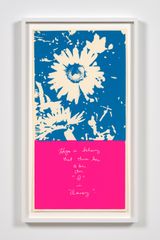
View Corita Kent's Artworks




















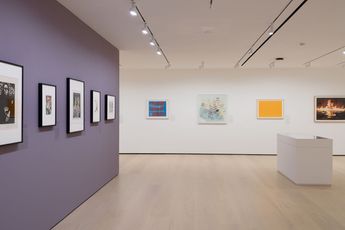
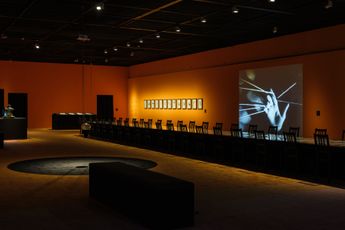
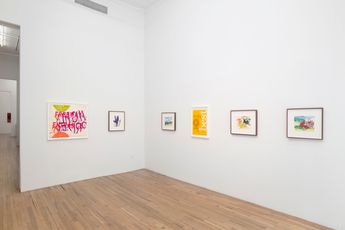
Explore Corita Kent's Exhibitions





Explore and Follow Artists Shaping Contemporary Art
A respected voice in contemporary art discourse.
Focusing on ambitious storytelling and insightful art-world commentary. Ocula Magazine publishes in-depth interviews, critical essays and timely analysis on the artists, exhibitions and ideas driving the global art world.
Learn more about Ocula Magazine
Showcasing the best of the art world.
Ocula partners with galleries from around the world to highlight their artists, artworks and exhibitions. Gallery membership is by application and invitation, with each member vetted by an independent panel.
Learn more about Ocula Membership
Specialises in the sale of major artworks.
Led by a team with deep ties to the world’s leading auction houses, galleries and collectors. Ocula’s advisory team offers bespoke services to high-net-worth clients from around the world who are looking to acquire the best of contemporary and modern art.
Learn more about our team and services