The art world in focus
Subscribe to our newsletter for news and insights on artists, galleries and exhibitions.
The word “barbarian”, so the story goes, stems from the Ancient Greek barbarós, a mockingly onomatopoeic term for all those people whose languages, to Greek ears, sounded like unintelligible babbling. What began as a phonetic jibe soon carried political consequences for these “uncivilised” peoples, characterised as threatening invaders.
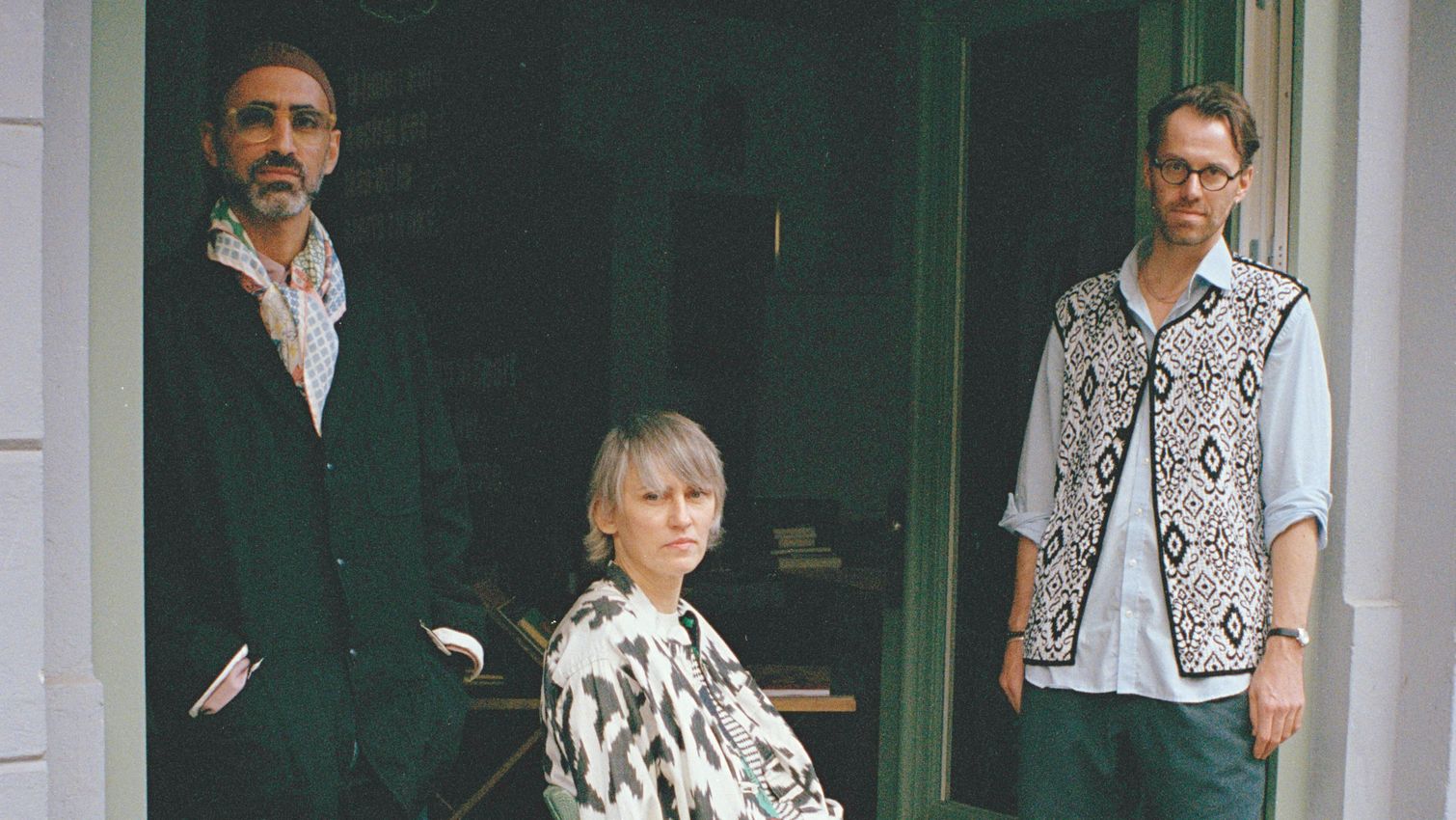
Berlin-based artists Payam Sharifi, Kasia Korczak and designer Stan de Natris, working together as the art collective Slavs and Tatars, don’t shy away from the “barbarian” label. On the contrary, Slavs and Tatars—a deliberate pairing of Slavic and Turkic-speaking peoples—focuses on a region whose borders they themselves have delineated as “stretching from the former Berlin Wall to the Great Wall of China”: a vast expanse containing various cultural and linguistic traditions that, since antiquity, have been othered and disregarded. As Sharifi jokes over coffee, the collective’s name is “our best work so far”.
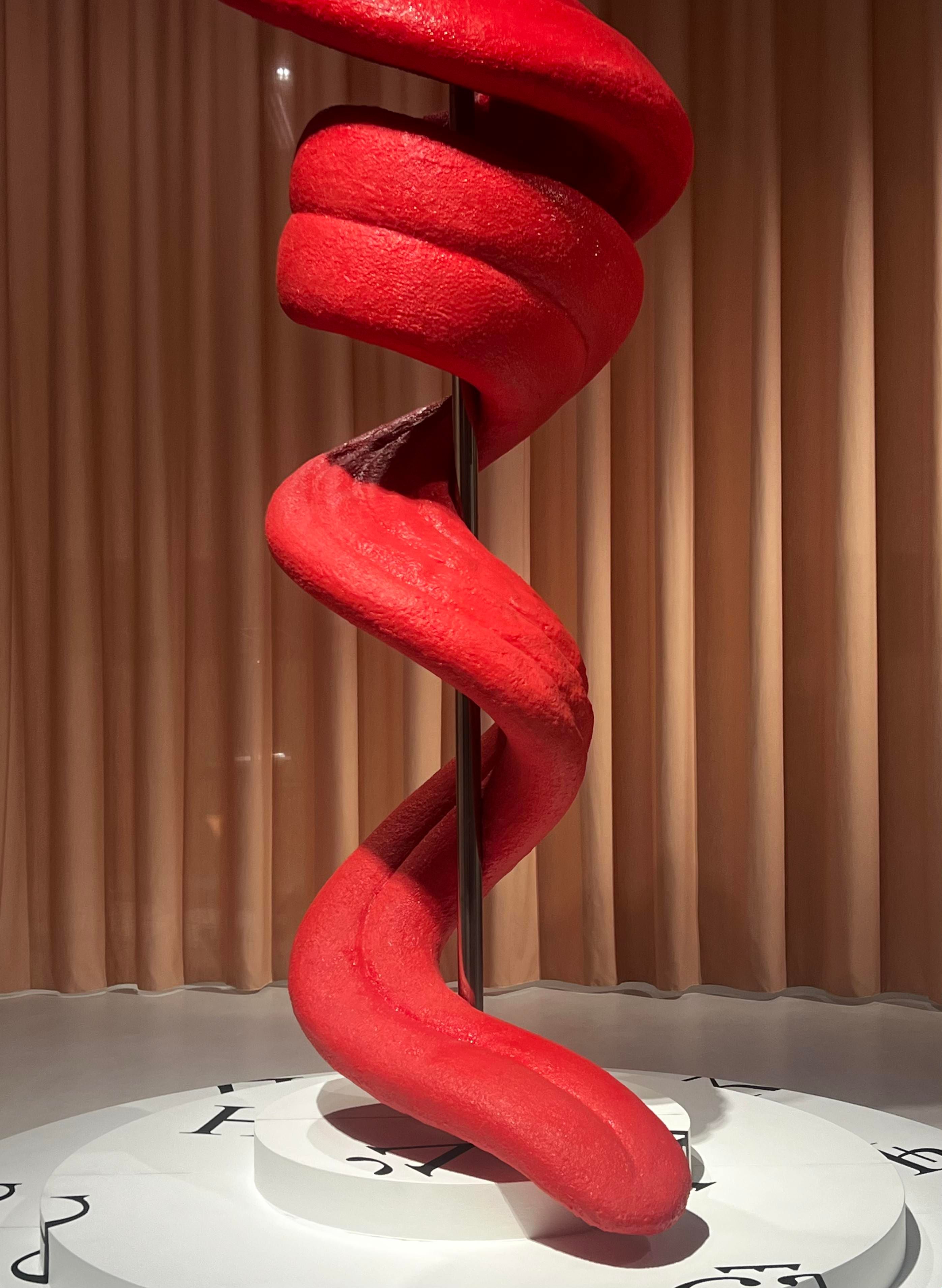
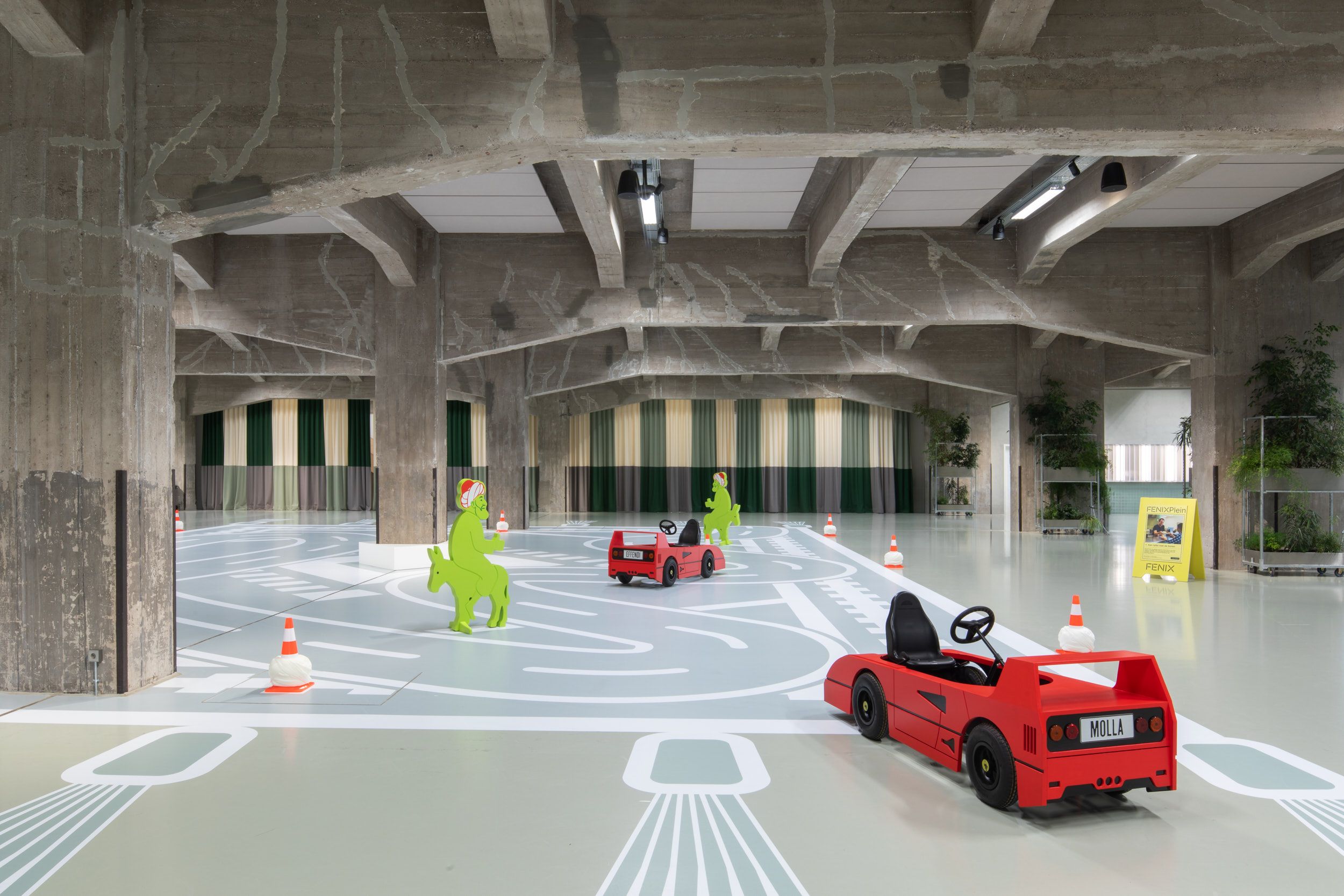
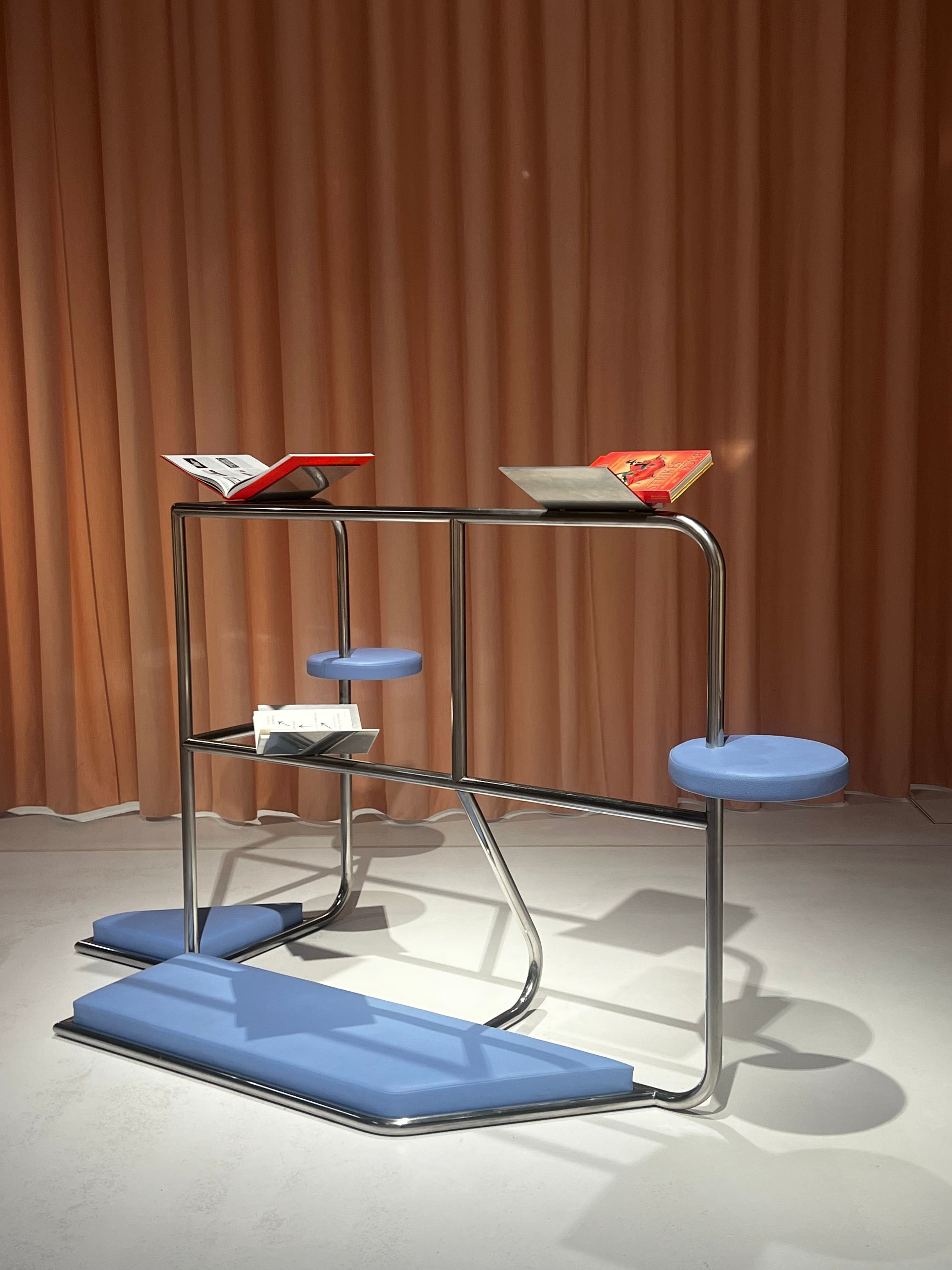
Slavs and Tatars’ first solo exhibition in the Netherlands, Mouthfool, has just opened at Rotterdam’s Fenix museum. The show explores the migration of language. In the first room, I encountered a monumental surrealist tongue writhing around a three-metre-high metal dance pole (Tongue Twist Her, 2013). Next to it, a tapestry depicting an anatomical diagram of a mouth showed where Arabic, Persian, Hebrew and Cyrillic letters are pronounced in different parts of the mouth (Mother Tongues and Father Throats, 2012). In Plein, the museum’s own indoor city square, I was invited to climb into a bright red miniature car that jolted me backwards around a racing track. Molla’s Reverse Ride (2026) takes its cue from a folkloric trickster of the same name, a wise, bearded man who appears in tales stretching from the Balkans to Morocco. Riding backwards on a donkey, he faces the past while trotting into the future.
Recovering from the dizzying ride, I sat down with Sharifi to talk about humour, reading groups and the collective’s plans to “decentre”.
Payam Sharifi: Art, like you see in Fenix, is actually only half of what we do. We also publish books, give lectures, conduct research and even opened Pickle Bar, an aperitivo bar and performance space in Berlin. We also have a residency programme where we welcome 40 young professionals from our region. As we’ve grown as a collective, we’ve become more and more interested in this question of redistribution: How can we continue to do what we’re doing, without it being contingent on us doing it?
We’re not a blue-chip household name, but we’re established artists. While we’re getting more requests for commissions for larger and larger budgets, cultural funding is continually decreasing, which means that there’s less opportunities for younger people. Our challenge over the next decade is to continue our practice, while decentring ourselves, almost like becoming scenographers. We curate about one show a year. We just opened a show at Haus Esters in Krefeld, Germany and we’re developing an educational platform for people from our region.
PS: You’re right. A reading group has no leader; it’s not a classroom. In choosing the [sprawling] region we focus on, we deliberately made it impossible for us to be experts—you can’t be of a region that covers one-sixth of the landmass of the world. I think that is fundamentally why there’s a sense of accessibility or conviviality in our exhibitions, because you never feel like you’re being spoken at. We’re discovering these topics and histories alongside the viewer, which is sort of the same spirit of reading communally.
“As we’ve grown as a collective, we’ve become more interested in the question of redistribution”
PS: Humour also plays a role. At a time when the art world is increasingly polarised between serious political work and silly Yayoi Kusama fun, there’s fewer opportunities for people to be edified; to find meaty, serious subject matter but in a way which is celebratory. It’s really easy to be political and sombre and it’s also very easy to be light and fun. What’s hard is to do both. How can we commemorate and elevate something, and stab it in the back at the same time?
PS: There’s a great book called The Graves of Tarim (2006) by the Malaysian anthropologist Engseng Ho—one of the very rare scholars who also writes beautifully. It’s a fascinating book about the Hadhrami diaspora [an Arab ethnographic group indigenous to the Hadhramaut region] emigrating from Yemen, but he manages to extrapolate it to larger questions about migration. On the first page he writes: “In a society of migrants, what is important is not where you were born, but where you die.”


A respected voice in contemporary art discourse.
Focusing on ambitious storytelling and insightful art-world commentary. Ocula Magazine publishes in-depth interviews, critical essays and timely analysis on the artists, exhibitions and ideas driving the global art world.
Learn more about Ocula Magazine
Showcasing the best of the art world.
Ocula partners with galleries from around the world to highlight their artists, artworks and exhibitions. Gallery membership is by application and invitation, with each member vetted by an independent panel.
Learn more about Ocula Membership
Specialises in the sale of major artworks.
Led by a team with deep ties to the world’s leading auction houses, galleries and collectors. Ocula’s advisory team offers bespoke services to high-net-worth clients from around the world who are looking to acquire the best of contemporary and modern art.
Learn more about our team and services