The art world in focus
Subscribe to our newsletter for news and insights on artists, galleries and exhibitions.
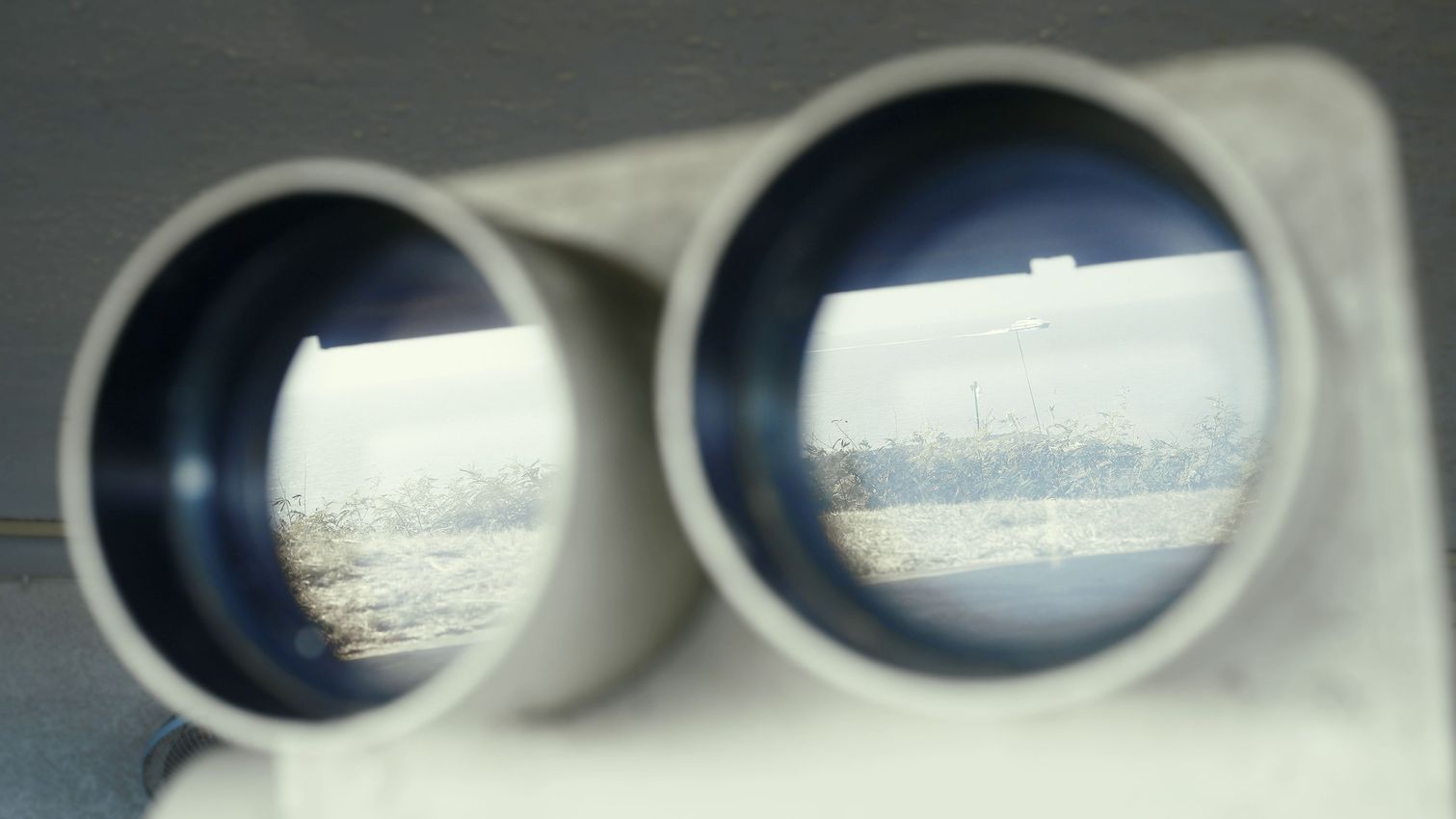
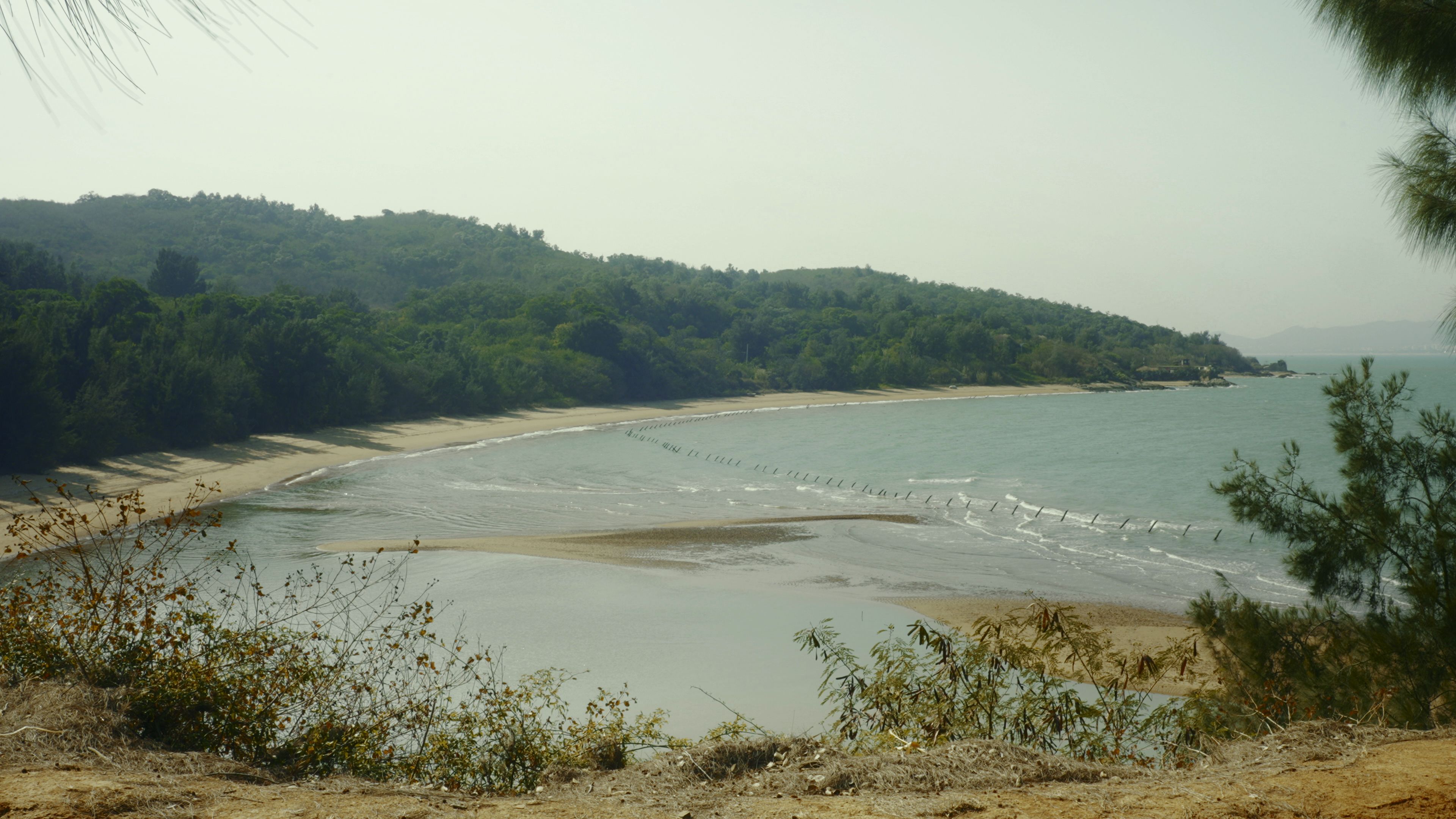
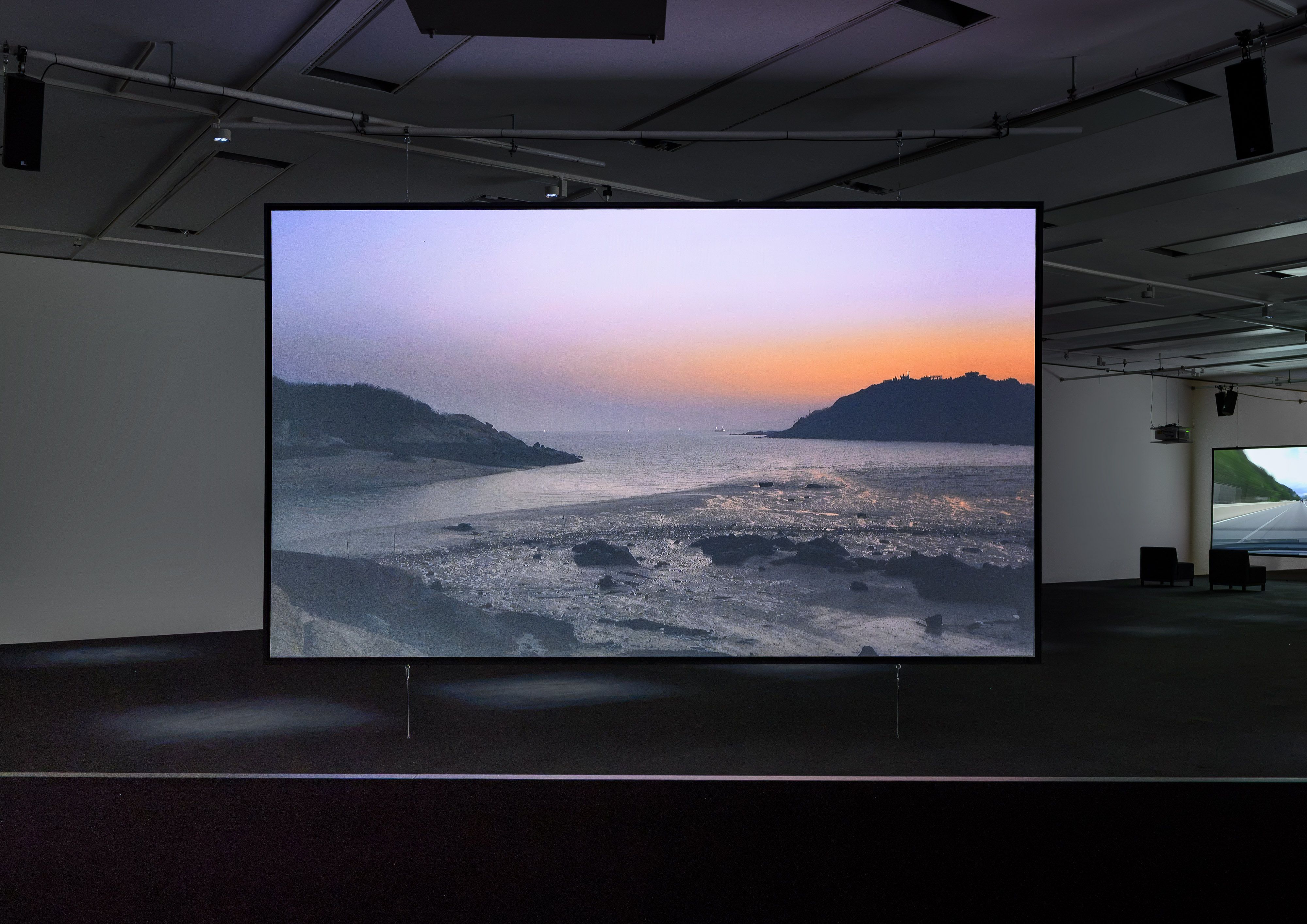
Early in New York-based artist Tiffany Sia’s film Overt Listening (2026), the camera pans across a still bay, pale like washed-out ink, on Kinmen, a Taiwanese archipelago just off mainland China and once a front line in the Chinese Civil War. As in silent movies, intertitles interrupt the long views, making Kinmen’s dense history accessible by presenting it as a series of short stories. For much of the film, a car-mounted camera circles the island, which remains a flashpoint for political tensions. Starting with the Battle of Guningtou in 1949, Sia’s film follows hushed, overlooked conversations at the Bandung Conference and diplomatic exchanges under Eisenhower about Kinmen. During a thaw in relations between Taiwan and China during the early 2010s, tourists flocked to Kinmen’s bunkers and tunnels, but in Overt Listening those crowds are gone. As the stories accumulate, a return to the quiet coast, its waters studded with anti-landing spikes, brings the old front line of Guningtou into sharper focus.
Overt Listening is the title of both Sia’s debut feature film and her exhibition at Kunsthalle Wien, where new works, some drawn from the film’s footage and others shot in Austria, play on loops of different lengths through dimmed galleries. The film had its European premiere at the Austrian Film Museum soon after the exhibition opened. At the Kunsthalle, two of the exhibition’s shorter works directly rework the feature: Carsick (2026) and Nothing Really Happens (2026), each giving the footage a rhythm of its own.
Carsick collates moments when the car circled roundabouts, sending the same statues swinging back into view. The circling of Carsick finds a counterpoint in Permanent Vanishing Point (An Austrian Road Movie) (2026), which explores Austrian neutrality as its point of focus. On a double-sided screen, a car drives endlessly towards the Austrian Italian border without reaching it, against a soundtrack derived from open-air recordings in Vienna, from two parks where flak towers (Second World War anti-aircraft gun towers) still stand. For Sia, the project of Overt Listening is one of subverting tropes of Cold War storytelling.
I sat down to ask Sia about what she made of the bunkers and flak towers she encountered in Kinmen and Vienna, as well as how the question of how Austria’s permanent neutrality relates to its past.
Zian Chen: There’s so much history in Overt Listening. Where did you begin?
Tiffany Sia: Everything begins as a story because history is too massive to tell. When I was living on Hong Kong’s Lamma Island, my mother told me stories about people swimming there from mainland China. She’d say, “We didn’t dare to live there then.” There were rumours that tied-up bodies would wash up on shore. The sea is a violent site of loss and erasure, but it’s also beautiful. I feel something of that, too, when I look at the sea around Kinmen.
Among books that were important for me was literary scholar Nan Z Da’s The Chinese Tragedy of King Lear (2025). She reads modern China through King Lear, and King Lear through modern China. It made me think about how hard it is to tell a story like King Lear off the top of your head. You can tell the story of a king who divides his kingdom among his daughters, and that gives you somewhere to begin. But it only becomes a tragedy through a chain of events, each one compounding the last, in the order they follow. That really got me thinking about the narrative composition of tragedy as a form.
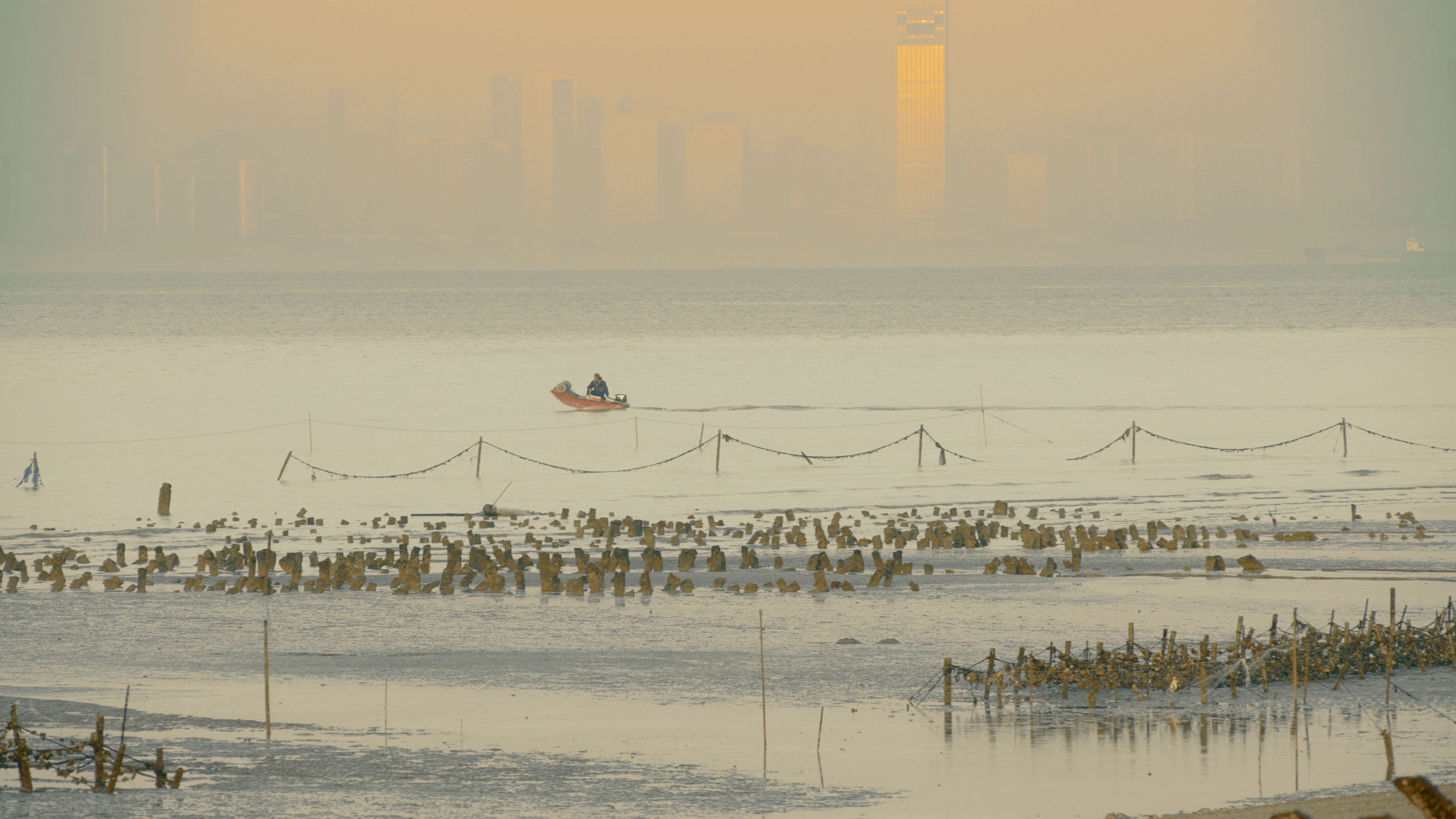
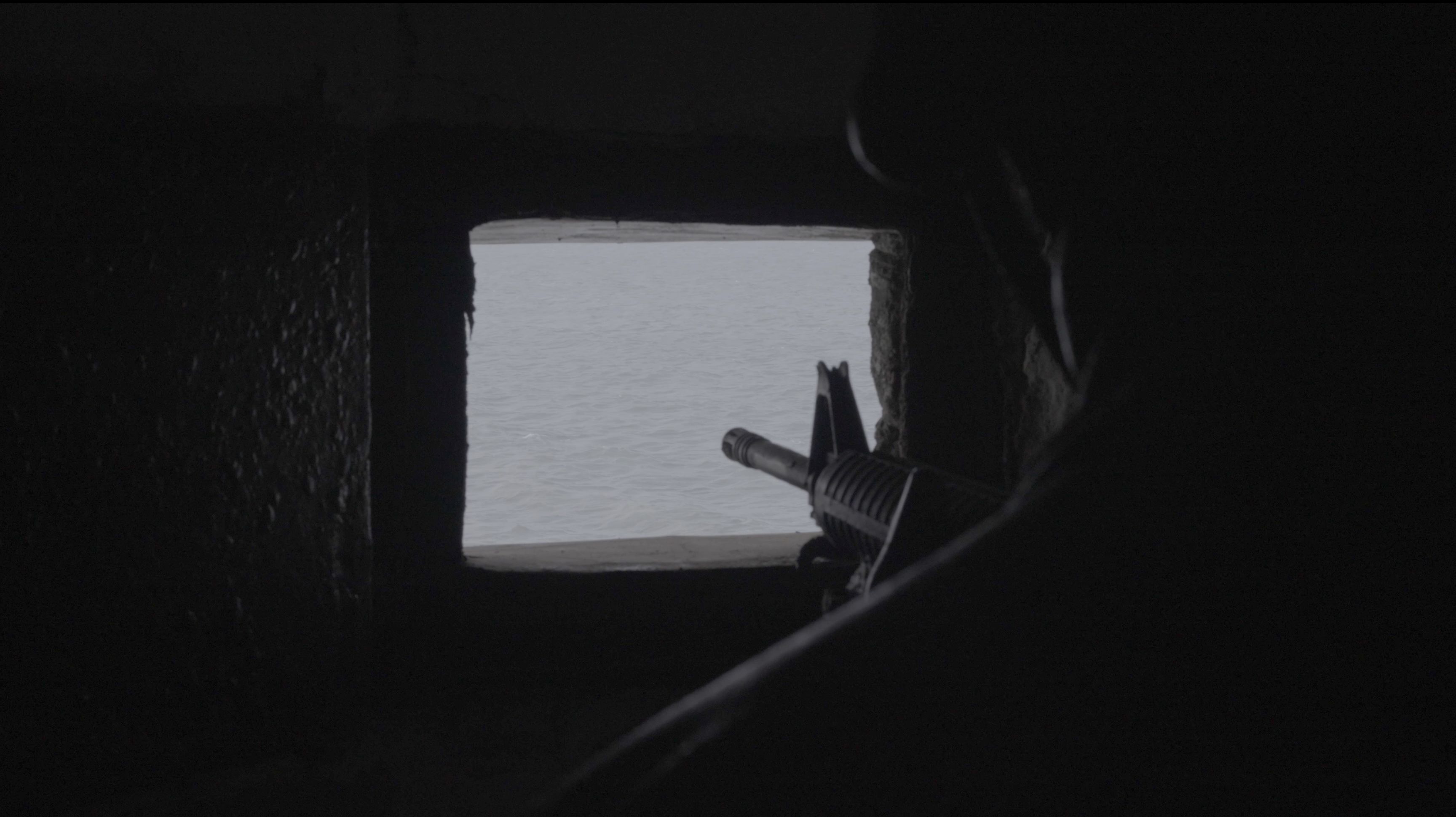
ZC: In Nothing Really Happens, the long takes of Kinmen’s coast made me sense the presence of someone behind the camera, almost like a soldier on watch. How did you decide when to hold a shot and when to cut?
TS: The intertitles in Overt Listening are rhythmically edited, but there’s a chance you’d miss some of them. I think the deluge of information is composed in the way state power overwhelms: one thing after another, until there’s no room to respond. And then there’s that slow pan across the bay at Guningtou. You hear the birds – there’s something so peaceful about that. Then you see the spikes coming out of the shoreline.
“Everything begins as a story because history is too massive to tell”
ZC: How did you approach Cold War storytelling through the idea of “overt listening”?
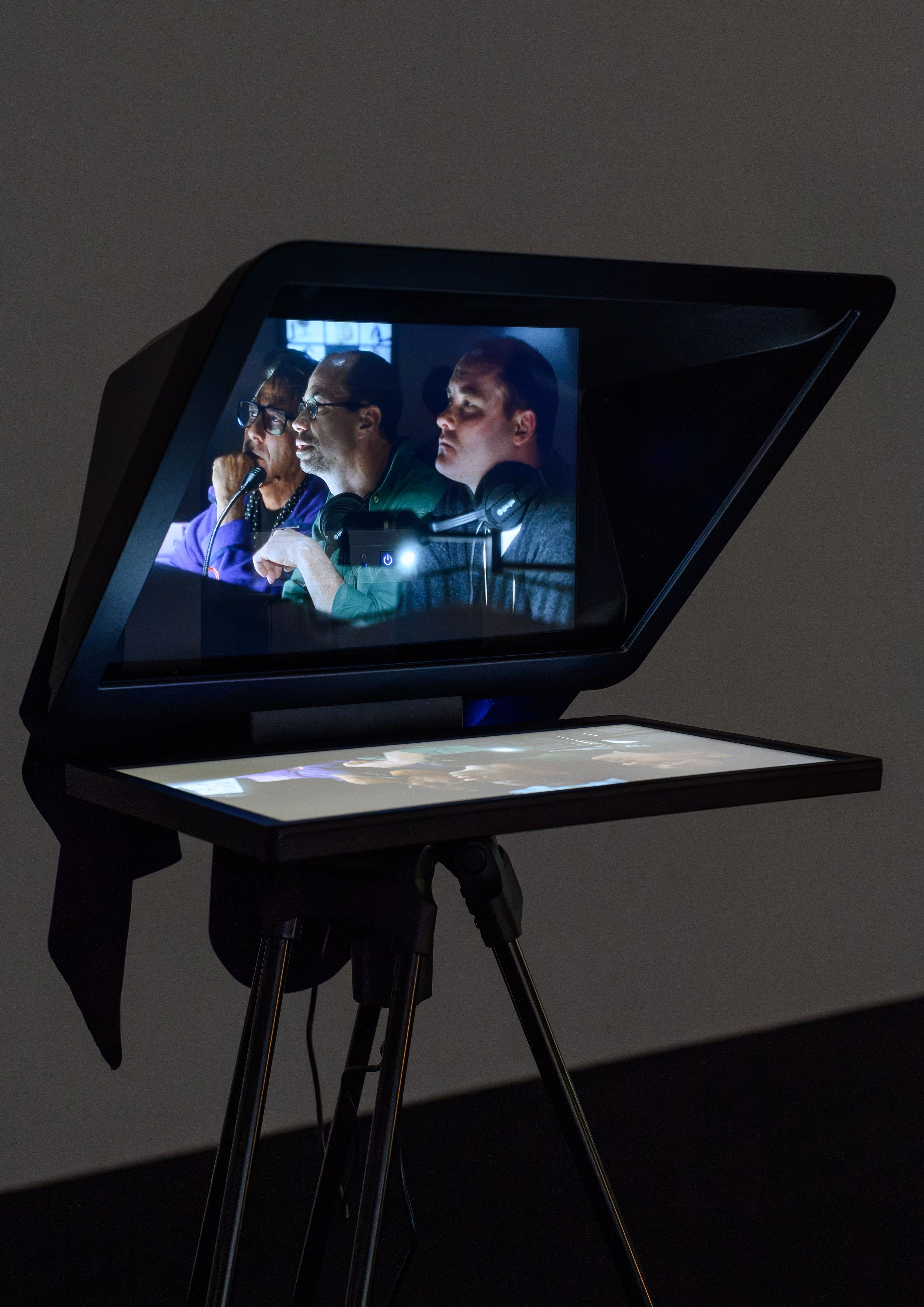
TS: I spent a lot of time with films like The Third Man (1949) [written by Graham Greene], which has screened every week here at the Burg Kino since 1980. Cold War stories often turn on a secret coming to light. Covert listening is a recurring trope of the Cold War genre, but what if you inverted that and took seriously what was already there to see and hear?
Take Vienna’s flak towers. Like the military structures in Kinmen, they’ve outlasted their original purpose but remain, so life goes on around them. That’s where overt listening became a method: taking seriously what was never hidden.
ZC: Your film and exhibition share a title. What changed when you brought the film’s material into the space of Kunsthalle Wien?
TS: Film is, after all, a linear medium, like a novel. You have to begin with a story and earn what comes later through accumulation. For me, a museum is maybe more akin to theatre. People are physically present and become part of the staging of the work.
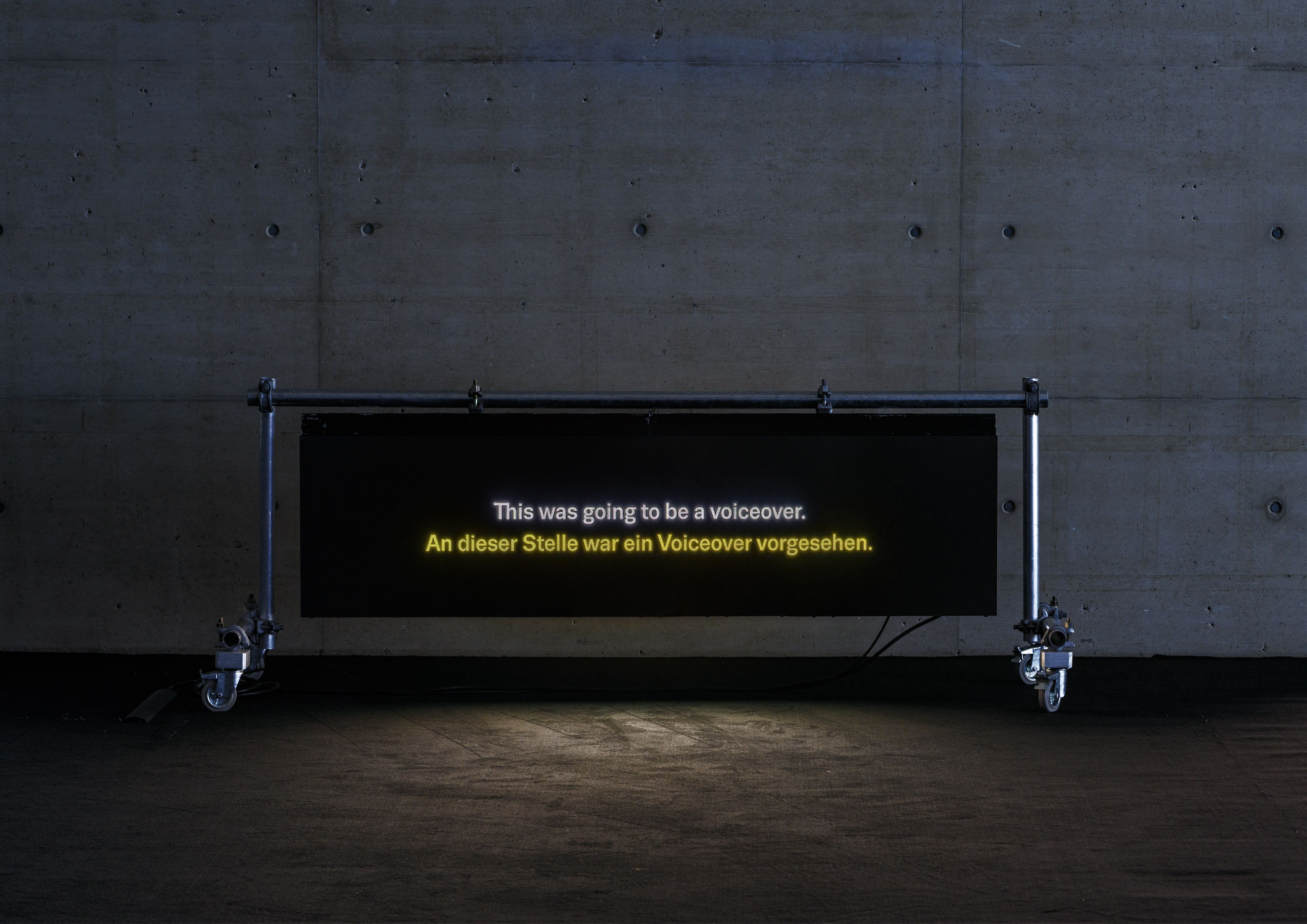
ZC: In Playback (2026), you use a surtitle screen, which displays translated text above stage, for a voiceover. What drew you to that device?
TS: The surtitle screen is a voiceover without a voice. It basically says: “This was meant to be a voiceover, but a female voiceover is a cliché.” It’s a wink at the essay-film tradition I was steeped in, especially the work of [Jean-Luc] Godard and Chris Marker and their fascination with Asia. In Playback, the reader supplies the voice.
Tiffany Sia, Overt Listening (until 24 January 2027) at Kunsthalle Wien, Vienna





A respected voice in contemporary art discourse.
Focusing on ambitious storytelling and insightful art-world commentary. Ocula Magazine publishes in-depth interviews, critical essays and timely analysis on the artists, exhibitions and ideas driving the global art world.
Learn more about Ocula Magazine
Showcasing the best of the art world.
Ocula partners with galleries from around the world to highlight their artists, artworks and exhibitions. Gallery membership is by application and invitation, with each member vetted by an independent panel.
Learn more about Ocula Membership
Specialises in the sale of major artworks.
Led by a team with deep ties to the world’s leading auction houses, galleries and collectors. Ocula’s advisory team offers bespoke services to high-net-worth clients from around the world who are looking to acquire the best of contemporary and modern art.
Learn more about our team and services