The art world in focus
Subscribe to our newsletter for news and insights on artists, galleries and exhibitions.
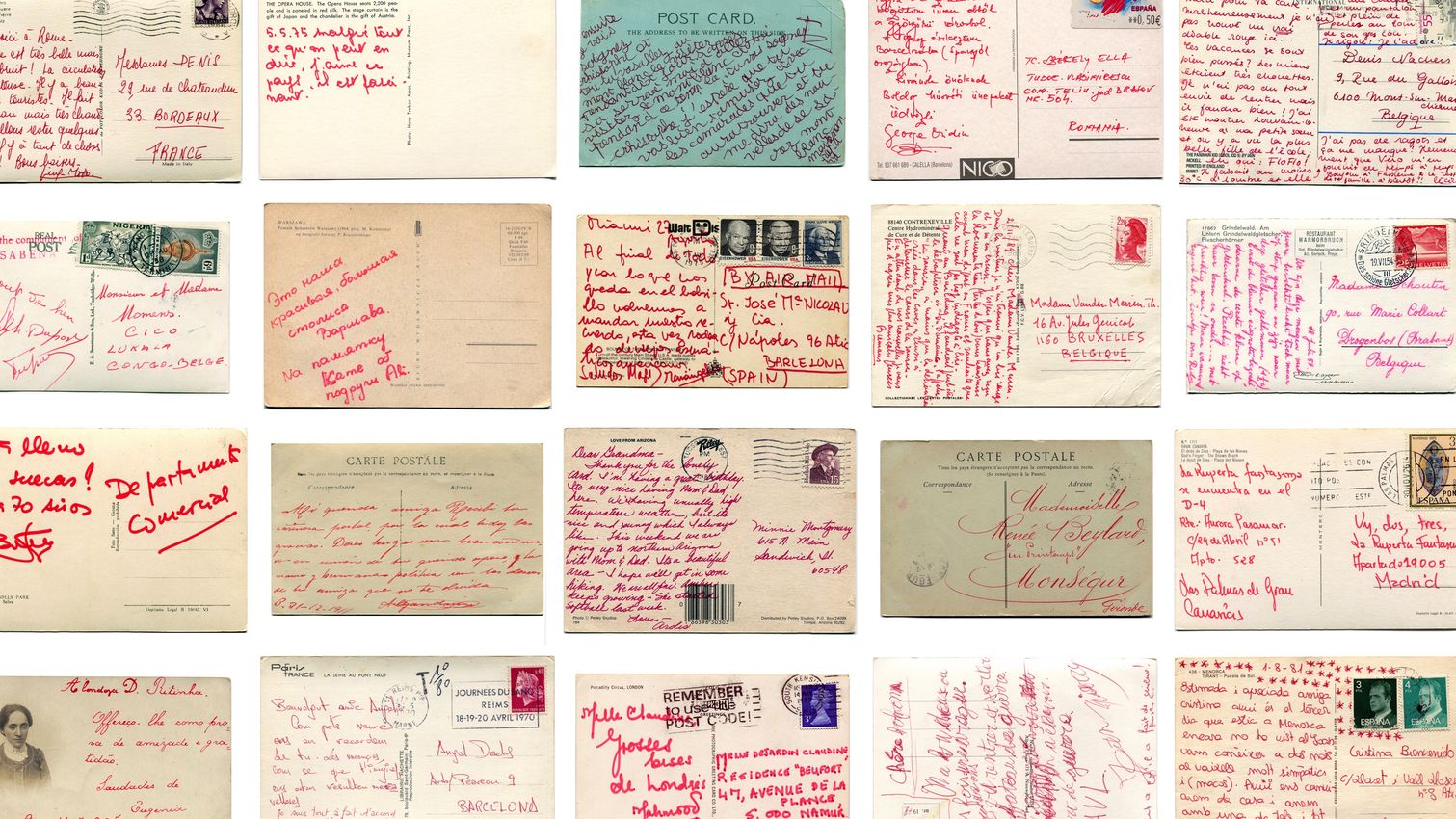
On Rome’s via della Conciliazione, within breathtaking view of St Peter’s Basilica, at any time of day, passers-by might peer in through a vitrine window at a constellation of handwritten postcards. Oriol Vilanova’s mosaic-like grids of hundreds of carefully orchestrated postcards, collected from flea markets, contain a moving cacophony of ordinary human activity: walking to a shop, choosing the right card, buying a stamp, picking up a pen, taking the time to think and write, finding a post box, hearing the satisfying swoosh of the postcard falling inside. Then the postcard itself, journeying across borders (no visa required), being taken up by—and possibly read by—the postwoman or postman who carries it to its destination, then to us, finally, reading those words.
I was born in the 1980s and postcards were an integral part of my youth: a mandatory component of any trip, anywhere. I would send them diligently to family and friends, and in turn, would treasure the ones I received, their styles of handwriting as familiar to me as my own. Back then, postcards were of the invariably garish Kodachrome tourist variety, but my friends and I would behold them as portals into other cities, other worlds. Receiving cards from exotic or sophisticated locations turned them into a point of pride to be lovingly displayed on our carefully curated cork boards. They made us worldly-adjacent. Quite simply, postcards were capable of holding multiple expressions of the very human experience of being alive.
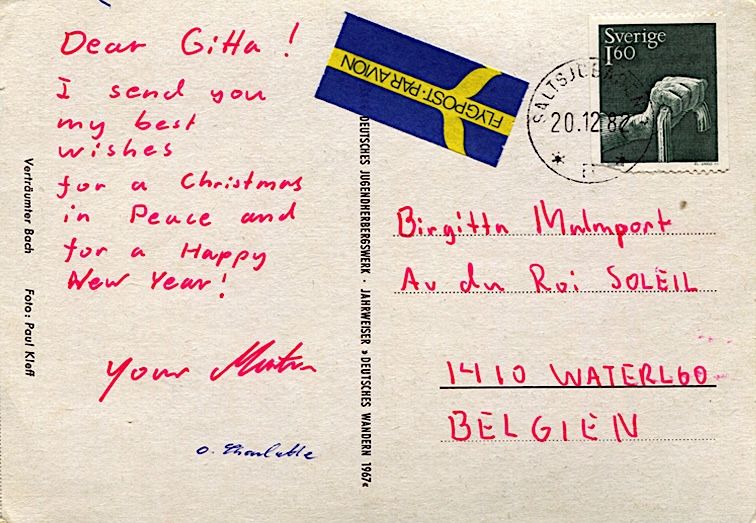
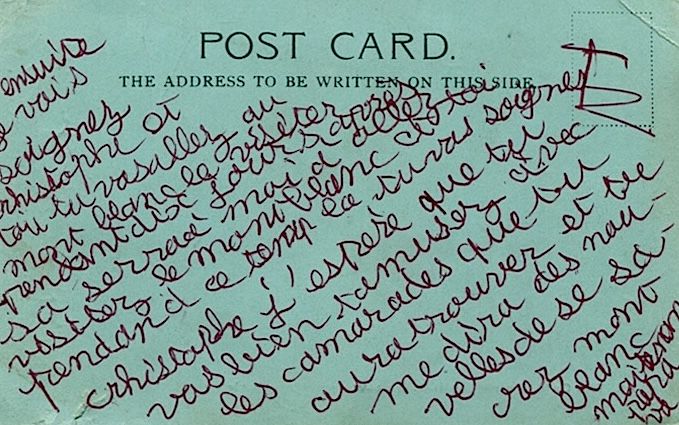
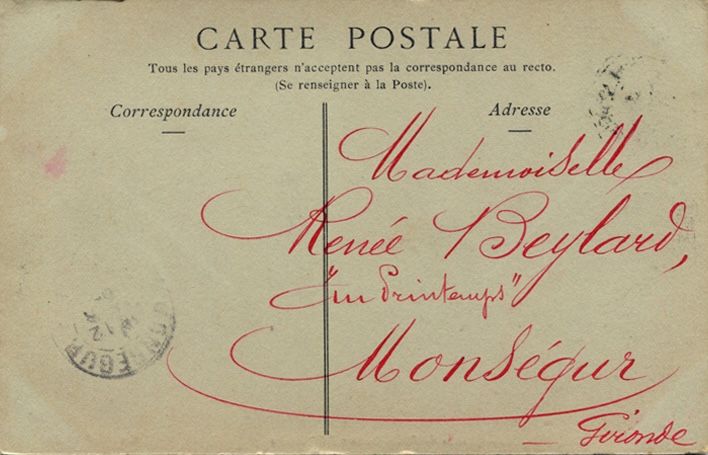
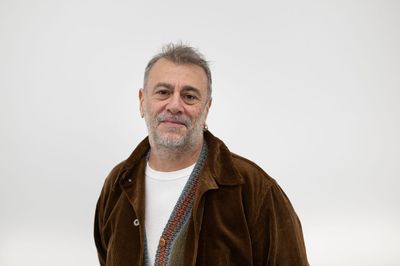
Vilanova, who was born in Barcelona in 1980, captures this beautifully in Il dovere urgente di restare umani (“The urgent duty to remain human”, 2026), his latest postcard installation on view at Conciliazione 5, the Dicastery for Culture and Education’s contemporary art space. Building on Los Restos (“The Remains”, 2026), Vilanova’s presentation of more than 50,000 postcards covering the walls of the Spanish pavilion at this year’s Venice Biennale, the new installation, Il dovere urgente, similarly features rows of postcards, but this time they have been flipped over, so that their image is hidden. We see instead the traces of the human hands that touched it: the message, the address of the recipient, the stamps.
“Postcards were capable of holding multiple expressions of the very human experience of being alive”
Each postcard is a relic, and so is the postage—I glimpsed stamps from countries that no longer exist, such as Yugoslavia and the Belgian Congo. The handwriting styles and their mediums are also telling: the floral cursive of a 1916 postcard written in fountain pen, the more recent ballpoint ink of a 1970s postcard that relays a chance encounter with Sidney Poitier, elsewhere smudges and crossed-out mistakes. Then there are the cards that were never posted, but presumably hand-delivered or unsent, such as a gorgeous 1901 postcard where the minute script winds around a lakeside vista of Geneva. Some are telegraphic: “The weather is lovely. I wish you were here. Love.” All of them invariably bear the trace of a living body bent over the paper, a signalling of care, and of what Cardinal José Tolentino de Mendonça, prefect of the Dicastery as well as a poet, refers to as: “The wound of the distance, the rush to overcome it.”
The postcards are united by an unusual trait: they are all written in red ink on a white background, conveying a sense of alarm (for those of us who used to write homework by hand, it might remind us of the red pen used by teachers to draw our attention to mistakes). The red colour communicates an urgency, also suggested by the work’s title, a stubbornly and beautifully analogue call to action to preserve what it means to be human in a time that is overwhelmingly pushing us to surrender everything—even the very process of thinking—to stochastic machine-learning models. It is a tribute to messiness, fragility and vulnerability.
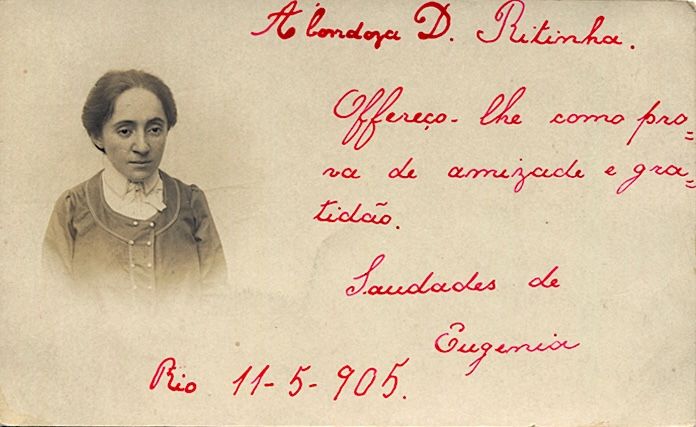
But Vilanova’s installation is neither a nostalgic nor a sentimental display. Red ink was traditionally used to indicate financial deficit (being “in the red”); perhaps the artist’s use of it here also looks to communicate something about the nature both of loss and of debt. What do we owe one another? In an era of immediate communication, there is no distance, and no wound, as per the Cardinal’s phrasing; but it means that there is also no space for longing. One card from 1905 in the display has no address, suggesting it was hand-delivered. Encountered here, it reads like a startling missive from the past. “I offer this to you as a sign of friendship and gratitude,” it reads. “Missing you, Eugenia.”—[O]

A respected voice in contemporary art discourse.
Focusing on ambitious storytelling and insightful art-world commentary. Ocula Magazine publishes in-depth interviews, critical essays and timely analysis on the artists, exhibitions and ideas driving the global art world.
Learn more about Ocula Magazine
Showcasing the best of the art world.
Ocula partners with galleries from around the world to highlight their artists, artworks and exhibitions. Gallery membership is by application and invitation, with each member vetted by an independent panel.
Learn more about Ocula Membership
Specialises in the sale of major artworks.
Led by a team with deep ties to the world’s leading auction houses, galleries and collectors. Ocula’s advisory team offers bespoke services to high-net-worth clients from around the world who are looking to acquire the best of contemporary and modern art.
Learn more about our team and services