The art world in focus
Subscribe to our newsletter for news and insights on artists, galleries and exhibitions.

Khoja Kalon Mosque. Image courtesy Uzbekistan Art and Culture Development Foundation.
Along with Samarkand, Bukhara, in modern-day Uzbekistan, was the epicentre of Persian culture in medieval Central Asia, and a significant trading site over the following centuries. The city was sacked during the Mongol invasion under Genghis Khan in the 13th century, but recovered under the Timurid Empire in the 14th; the historic centre of the city is now a UNESCO World Heritage Site.
The exploration of this history forms a key part of the second edition of the Bukhara Biennale, the first details of which were announced earlier this week, including its theme: The Long Welcome. Set across historic buildings and public spaces, the exhibition, which opens in September 2027, will draw on Bukhara’s history as a meeting point along the Silk Road—an international trade route that also became a place to share cultures and ideas.
“People arrived from different parts of the world bringing their knowledge, skills, beliefs and ideas, and in doing so became woven into the fabric of the city,” explained Gayane Umerova, chair of the state-backed Uzbekistan Art and Culture Development Foundation and commissioner of the biennial. “In these times of great global division and uncertainty I think that there is much to learn from our own history.”
In the interest of promoting this spirit of exchange, the 2025 edition of the biennial introduced a collaborative model, pairing international artists with local artisans to create new commissions. In 2027, this format will be expanded to include local ecologists, historians, economists, musicians, teachers and children, who will work with artists to create around 60 projects made exclusively in Uzbekistan.
Artists taking part in the edition include British-Indian sculptor Anish Kapoor; installation artist Koo Jeong A, who represented South Korea at the 2024 Venice Biennale; Uzbek interior and object designer Sevara Haydarova Donazzan; New York-based multidisciplinary artist and poet Precious Okoyomon and British designer Bethan Laura Wood, known for her bold and playful explorations of colour and texture.
According to Kulapat Yantrasast, artistic director of the Bukhara Biennale, many of the works created via these collaborations will remain as everyday infrastructure for the city: gardens, fountains, sundials, benches, playgrounds—even public toilets and bins. The aim, he said, is to create art that people live with, not just visit.
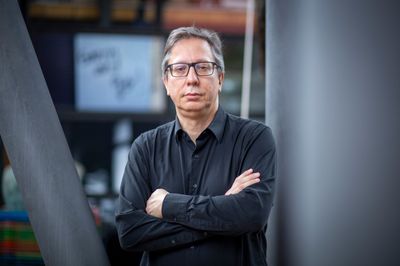
“I want everyone to feel that art belongs to them and that anyone can help make it,” the Bangkok-born architect explained. “An artist may lead the process, but… anyone who loves art can take part in exploring an idea and bringing it to life. Each of them brings knowledge of this place that no single discipline could offer alone.”
Uzbekistan, which is still considered an “authoritarian state”, has been described by biennale organisers as in the midst of a “cultural renaissance”. The exhibition comes amid several years of significant investment in the arts by the country’s government, including the establishment of the Centre for Contemporary Arts Tashkent in a Soviet-era generator room, and the ongoing construction of a new New National Museum of Uzbekistan, designed by Tadeo Ando.
For Umerova, this cultural renaissance means continuing to build on progress already made, including with the first edition of the biennale, which attracted 1.8 million visitors, half of whom came from Uzbekistan. However, she said: “It’s not about opening museums or organising major international events—it’s about building an environment in which artists, researchers, craftspeople and audiences can all participate in shaping the country’s cultural future.”
Bukhara Biennial (3 September–21 November 2027), throughout the city


A respected voice in contemporary art discourse.
Focusing on ambitious storytelling and insightful art-world commentary. Ocula Magazine publishes in-depth interviews, critical essays and timely analysis on the artists, exhibitions and ideas driving the global art world.
Learn more about Ocula Magazine
Showcasing the best of the art world.
Ocula partners with galleries from around the world to highlight their artists, artworks and exhibitions. Gallery membership is by application and invitation, with each member vetted by an independent panel.
Learn more about Ocula Membership
Specialises in the sale of major artworks.
Led by a team with deep ties to the world’s leading auction houses, galleries and collectors. Ocula’s advisory team offers bespoke services to high-net-worth clients from around the world who are looking to acquire the best of contemporary and modern art.
Learn more about our team and services