





GEORGES SEURAT
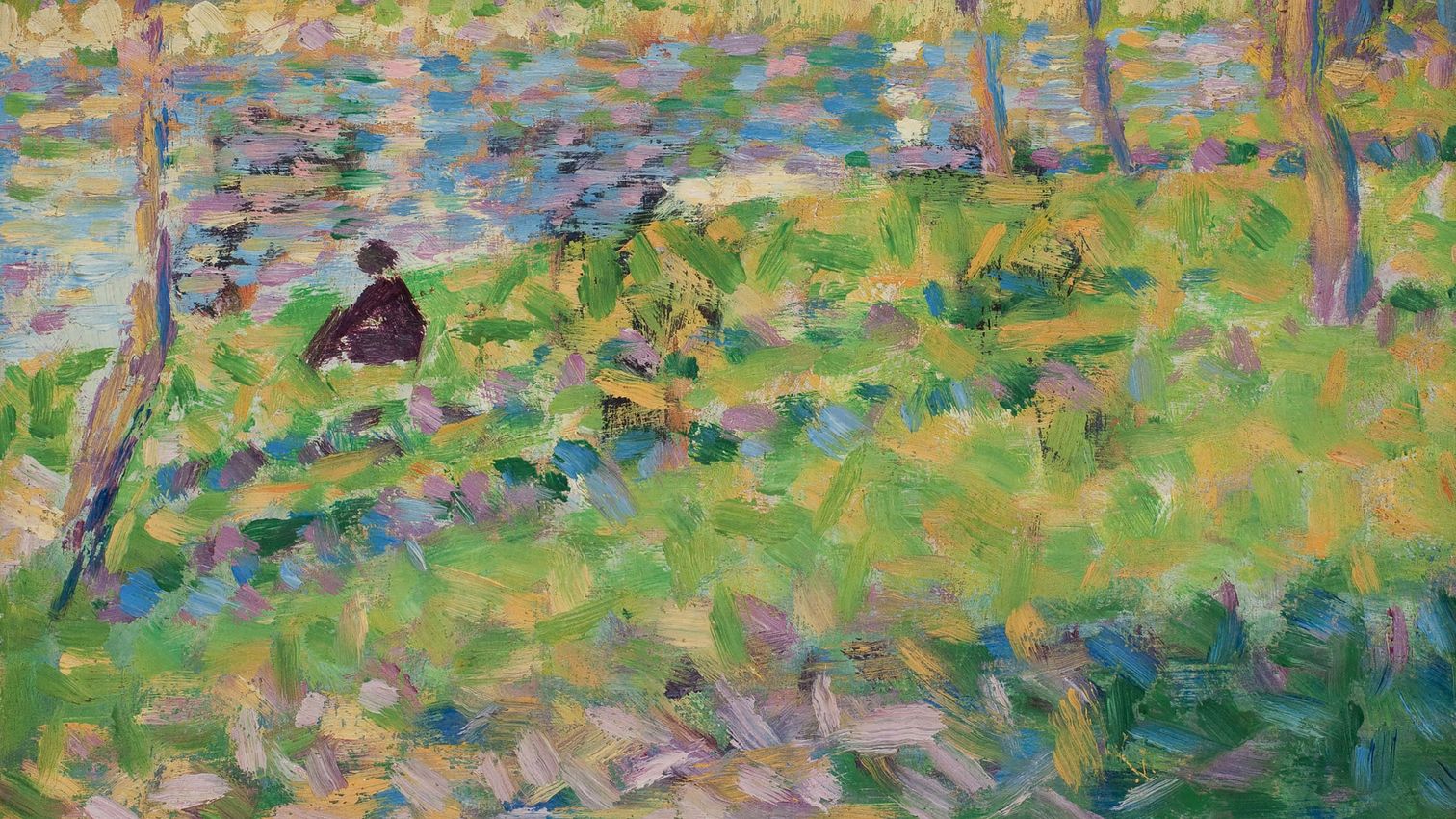
1859-1891, FranceGeorges Seurat (born on the 2nd of December 1859, Paris, France - died on the 29th of March 1891, Paris, France) was a French painter andillustrator known for belonging to the movement calledNeo-Impressionism, and more specifically for being leading protagonistof Pointillism. He notably coined, with scientific rigour, the painterlytechnique of Divisionism, a method based on optical illusion and lightproperties, and which inspired many of his contemporaries including PaulSignac and Camille Pissarro, but also Vincent Van Gogh. In 1876 Seurat starts his studies at the Ecole Nationale des Beaux-Arts - aperiod that will also be shaped by his numerous visits to the Louvre,drawings after Eugène Delacroix, as well as his participation to Puvisde Chavanne’s workshops. But probably the most defining moment is hisreading of chemist Eugène Chevreul’s book titled De la loi du contraste simultané des couleurs (1839). This marks Seurat’s passage from Pointillism - which relies onthe random juxtaposition of points - to a more rigorous and scientificmethod of dividing touches of paint by applying the principle of”juxtaposed contrasts”. With Divisionnism, paint is no longer mixed onthe palette or on the canvas to avoid tarnishing vivid hues. Insteadthis pictural style involves the juxtaposition of distinct touches ofpure colours, whose nuances and mixes are obtained through the opticalillusion as the viewer’s eye synthesise the information generated by anaccumulation of colourful dots. In 1884 Seurat exhibited Une baignade à Asnières (1884) at the first Salon des Indépendants, and then, for the show’s second edition, presented Un dimanche après-midi à la Grande Jatte (1886), the first of his masterpiece known for illustrating theprinciples of Divisionism with rigour, in an almost scientific approach.Seurat’s artworks are also known for depicting the different socialclasses found in Paris at the time, showing the elite, the bourgeoisieand social workers, all seamlessly involved in leisure activities.Today, Seurat’s work takes part in major museum collections, includingthe Musée d’Orsay in Paris, the National Gallery and the CourtauldInstitute in London, the Metropolitan Museum in New York and the ArtInstitute in Chicago.



Explore and Follow Artists Shaping Contemporary Art
A respected voice in contemporary art discourse.
Focusing on ambitious storytelling and insightful art-world commentary. Ocula Magazine publishes in-depth interviews, critical essays and timely analysis on the artists, exhibitions and ideas driving the global art world.
Learn more about Ocula Magazine
Showcasing the best of the art world.
Ocula partners with galleries from around the world to highlight their artists, artworks and exhibitions. Gallery membership is by application and invitation, with each member vetted by an independent panel.
Learn more about Ocula Membership
Specialises in the sale of major artworks.
Led by a team with deep ties to the world’s leading auction houses, galleries and collectors. Ocula’s advisory team offers bespoke services to high-net-worth clients from around the world who are looking to acquire the best of contemporary and modern art.
Learn more about our team and services