





HIROSHI FUJIMATSU
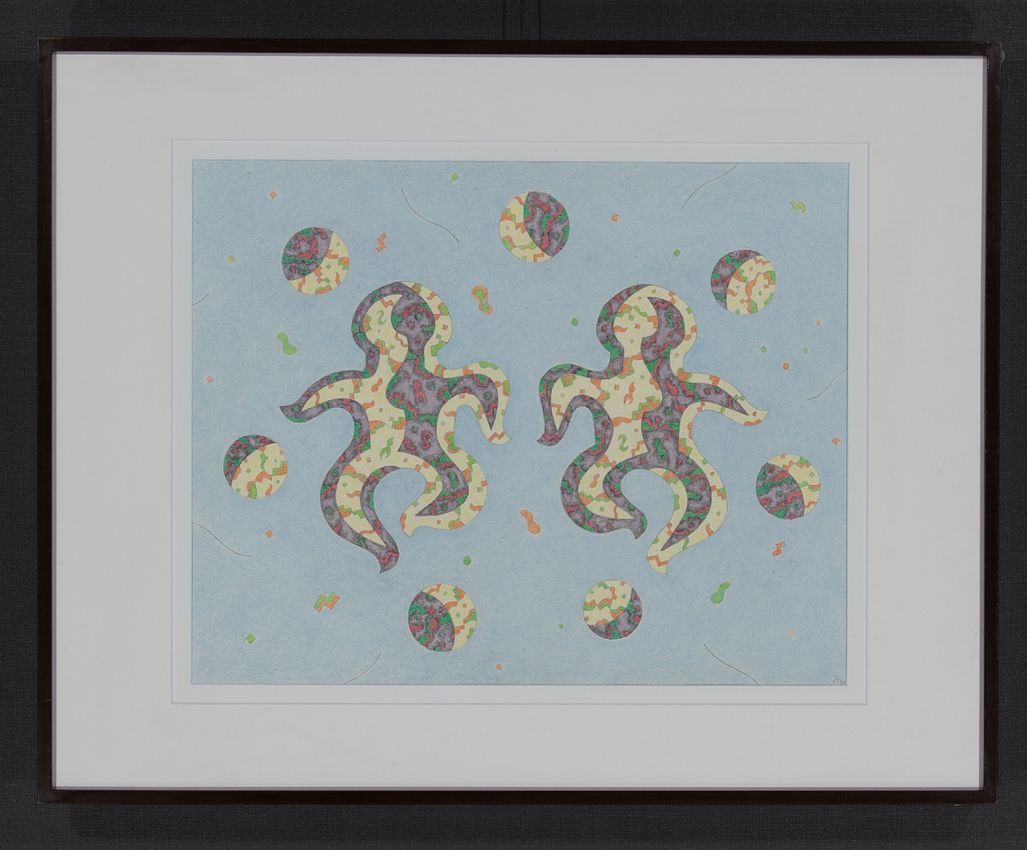
1922-1996, JapanHiroshi Fujimatsu (藤松 博 1922–1996) was one of the most active painters during the postwar years of Japanese art. His work was first recognised by the major Japanese modern art critic, Shuzo Takiguchi, who popularised Fujimatsu in Japan’s wider art circles. Although the artist’s style varies across works, the artist’s calm and frank disposition is a unique constant, which manifests in all his paintings.
Following the war, many Japanese artists, including Fujimatsu, craved new methods of expression and turned their attention to trends in Western art. During which the ‘Yomiuri Independent’ exhibitions, described a place where you could encounter new forms of expression, which began in 1949, became a major event. In the 1950s, Fujimatsu continued to exhibiting and experimenting with various styles. Despite receiving much praise from numerous art critics, such as the eminent Shuzo Takiguchi, the artist left for New York. Remaining for two years, Fujimatsu aimed to develop his own, original style. His aesthetic continued its evolution following his return to Japan with his iconic series that focused on the shape of bodies.
His comprehensive oeuvre is a testament to the incredible journey the artist undertook throughout his career that further highlights the artist’s love of growth and experimentation. In 1996, the artist passed away at 74 years old. His works were exhibited posthumously at the Matsumoto City Museum of Art in 2013 and Kashima Arts and Gallery Kawafune in 2017.
Courtesy √K Contemporary









Explore and Follow Artists Shaping Contemporary Art
A respected voice in contemporary art discourse.
Focusing on ambitious storytelling and insightful art-world commentary. Ocula Magazine publishes in-depth interviews, critical essays and timely analysis on the artists, exhibitions and ideas driving the global art world.
Learn more about Ocula Magazine
Showcasing the best of the art world.
Ocula partners with galleries from around the world to highlight their artists, artworks and exhibitions. Gallery membership is by application and invitation, with each member vetted by an independent panel.
Learn more about Ocula Membership
Specialises in the sale of major artworks.
Led by a team with deep ties to the world’s leading auction houses, galleries and collectors. Ocula’s advisory team offers bespoke services to high-net-worth clients from around the world who are looking to acquire the best of contemporary and modern art.
Learn more about our team and services