





HYUN-SOOK SONG
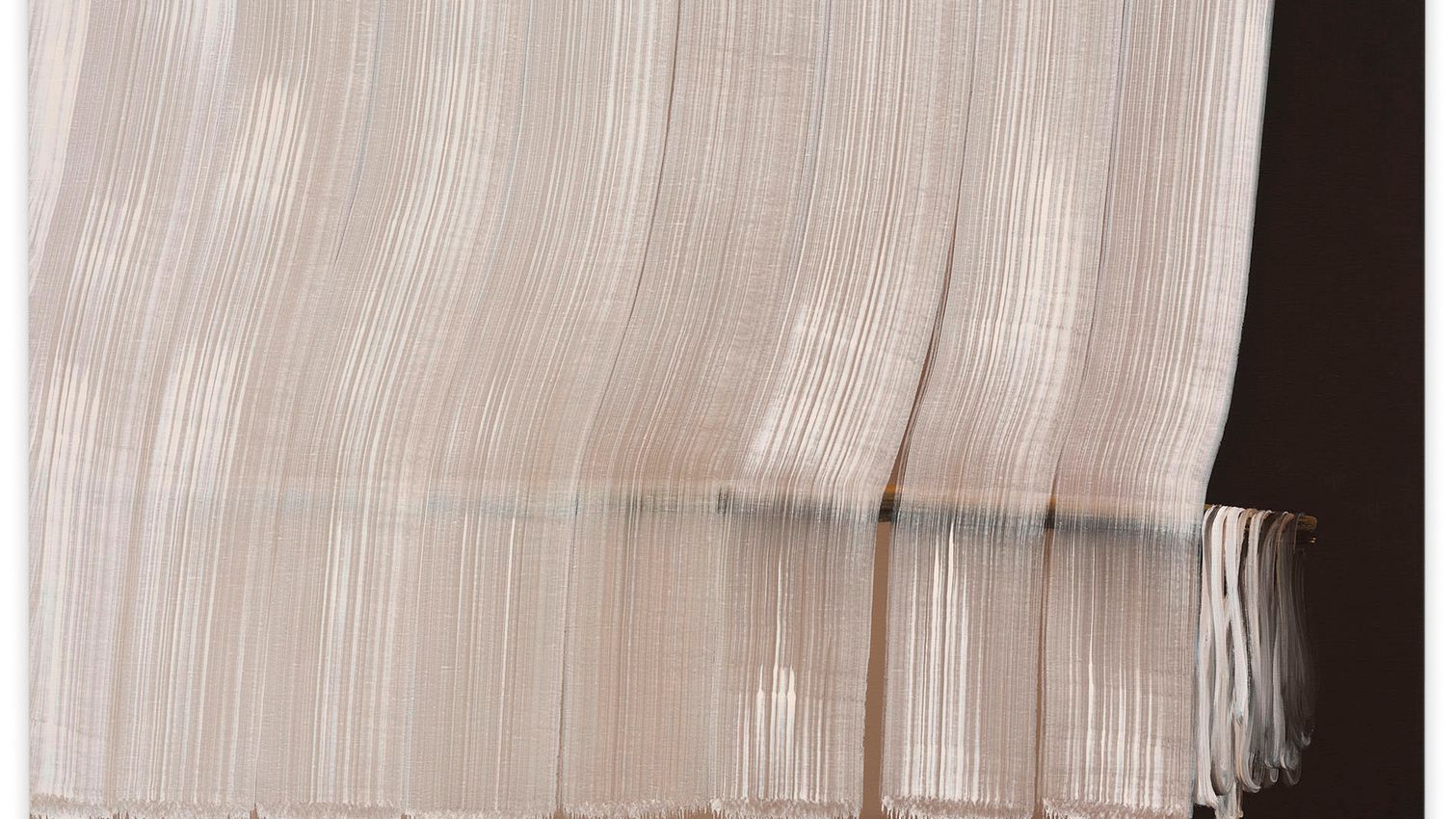
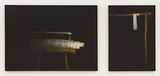
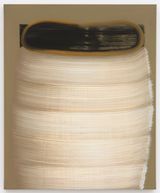
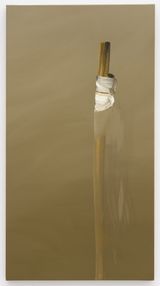
b. 1952, South KoreaHyun-Sook Song (Damyang, Jeollanam-do, Korea) lives and works in Hamburg, Germany. Since the 1980s, Song has created a body of work with several repeating motifs: clay pots, wooden poles, silk ribbons and woven textiles take centerstage atop tranquil monochromatic grounds. The presence of light and movement through and around the objects gives Song’s canvases a powerful, nostalgic invocation; each painting references the ephemeral nature of objects housed in the artist’s memory, as well as the ever-changing perception of memory more broadly.
Song traveled to West Germany in 1972 as a guest worker with plans to return after a few years of paid labor as a nurse. She kept diary entries and wrote letters home during this time, developing a visual-symbolic language in the process: calligraphic signs expanded to express her experience of western modernity as well as her deeply felt social isolation. Song’s art-making provided a means to fashion a home space that was now primarily in her memory, since the small rice-farming village where she was born also experienced the transformations of modernity in her absence.
Rather than return to Korea, Song completed her studies in art at the Hochschule für bildende Künste, Hamburg, where she evolved a unique mark-making technique using tempera paint—a blend of egg and pigment linked to the traditions of western medieval art. While tempera was commonly employed for its opacity, Song’s broad, sweeping brushstrokes are semi-transparent and applied with seemingly impossible economy. Often with only four or five strokes (her paintings’ titles record the total number), a fully formed object materializes across the picture plane as if from thin air.
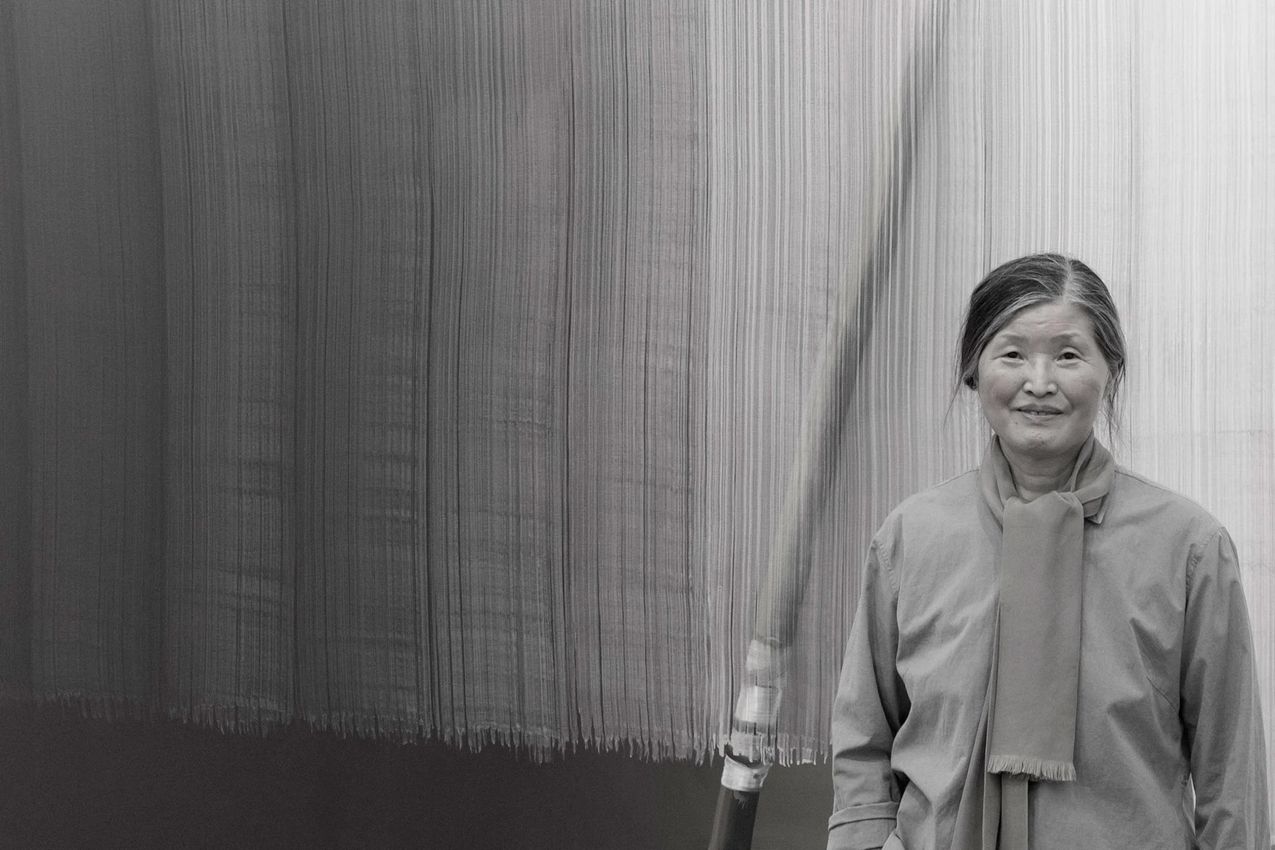
Song paints while standing upright, with the canvas on the floor, and the creation of each work is itself a physical performance. Balancing on a wooden plank placed above stretched canvas, Song exacts the control and release of her brushstrokes with intense meditation and measured breathing; each calligraphic stroke records one unique motion and documents the artist’s inner state of mind, thus locating her firmly in the Post-Dansaekhwa movement. At the same time, the sober balance of abstraction and figuration in Song’s works relate to the history of minimalist and conceptualist painting, in which reduced, repetitive actions make space for endless variation.
For many of Song’s Korean artist contemporaries, the influence of western imagery and materials marked a departure from traditional eastern or Korean motifs; yet these remain the primary subjects of Song’s works. In terms of East and West, Song’s work is a production of both and neither—the expression of an artist living and working first and foremost in a domain of her own creation.
Courtesy Sprüth Magers


Works at Sprüth Magers




Works Elsewhere







Explore and Follow Artists Shaping Contemporary Art
A respected voice in contemporary art discourse.
Focusing on ambitious storytelling and insightful art-world commentary. Ocula Magazine publishes in-depth interviews, critical essays and timely analysis on the artists, exhibitions and ideas driving the global art world.
Learn more about Ocula Magazine
Showcasing the best of the art world.
Ocula partners with galleries from around the world to highlight their artists, artworks and exhibitions. Gallery membership is by application and invitation, with each member vetted by an independent panel.
Learn more about Ocula Membership
Specialises in the sale of major artworks.
Led by a team with deep ties to the world’s leading auction houses, galleries and collectors. Ocula’s advisory team offers bespoke services to high-net-worth clients from around the world who are looking to acquire the best of contemporary and modern art.
Learn more about our team and services