






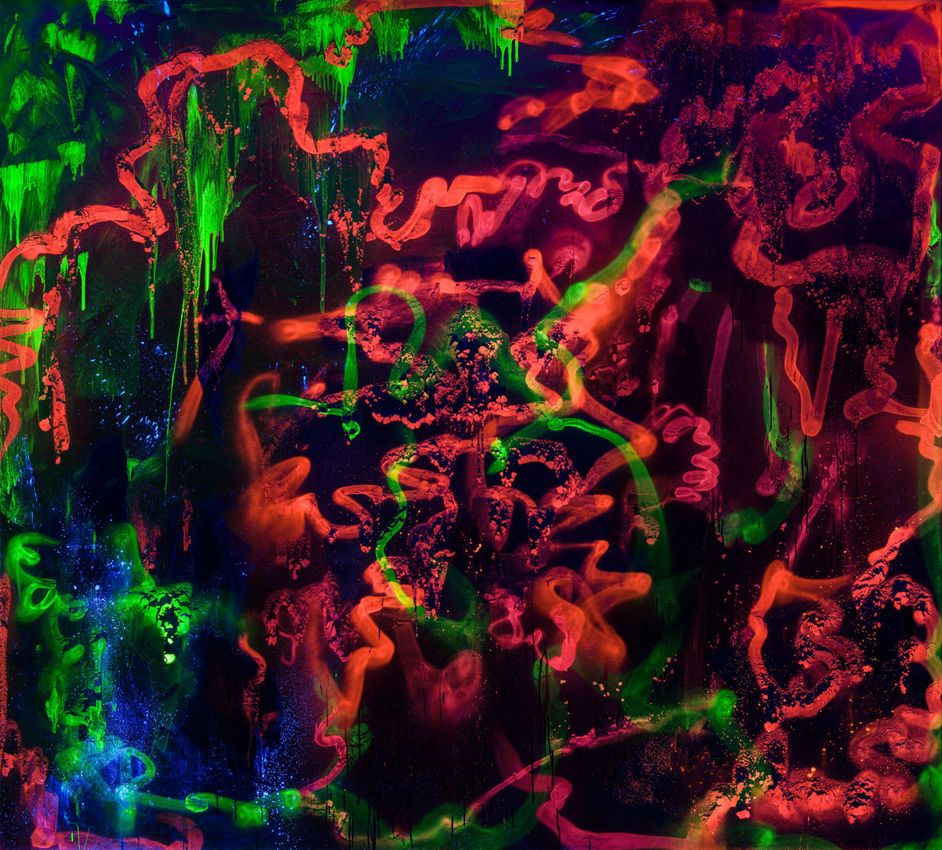
JACQUELINE HUMPHRIES
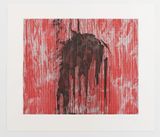
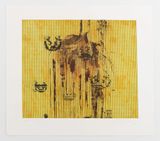
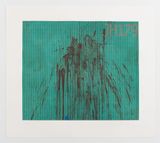
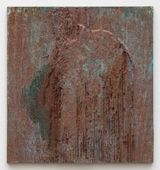
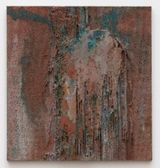
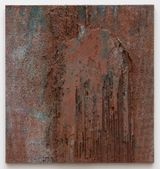
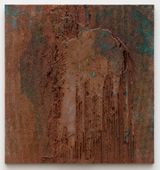
b. 1960, United StatesBy the mid-1980s painting had been declared “dead” several times over. But for the contemporary painter Jacqueline Humphries, the medium became a “rogue practice”; however risky, it has remained her foundation. “Painting can adapt to anything,” she notes. Throughout her career Humphries has thus adapted to—and subverted—painting’s formal and discursive conditions, often with reference to both art history and cutting-edge technological formats. Early canvases, such as those in her 1995 Greene Naftali show (the gallery’s first solo presentation), probe the legacy of Abstract Expressionism, envisioning that movement’s chaotic drips not as destructive but constructive—as a sort of code which Humphries manipulates to form the basis of her own works. Balancing conceptual maneuvers and striking opticality in the ample space of her canvases, Humphries, like her peers Laura Owens and Charline von Heyl, betrays “a profound knowledge of how to make, and fake, marks on canvas,” writes Mark Godfrey—“how to navigate the histories and associations of those marks and control what impact they might have on viewers.”
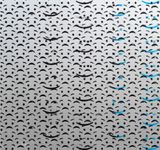
Humphries has extended these strategies into the present, reimagining her analog medium in digital terms, as a screen or interface. “Painting is my machine for thinking,” she says, and whether canvas or computer, she is “using these machines to communicate, to ‘express.’” Her silver paintings of the mid-2000s produce a quasi-cinematic effect, their metallic surfaces providing for both projection and reflection. The subsequent Black Light series utilized fluorescent paint, transmitting past aesthetics—from ‘60s psychedelia to ‘80s nightclubs—through present communicative networks.
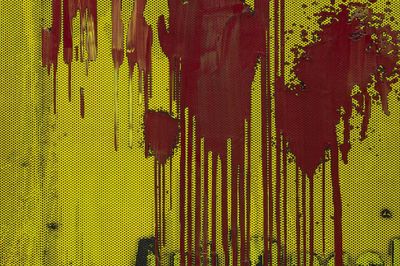
Since the mid-2010s Humphries has studded her canvases (exhibited in a major survey at the Wexner Center for the Arts) with cascading, stenciled Emoticons and ASCII icons: digital languages, already outmoded, rendered in thick oil paint as if to enter real space. Today, “there’s no _definitive _image,” Humphries points out, “just an endless torrent. The screen itself is the unifying element, and compresses within itself this multitude.” If her art unifies, it remains singular in turn, uniquely attuned to the media of its moment. As the _New York Times _declared, “few painters today engage with the challenges of new technology as persuasively as Jacqueline Humphries.”
Courtesy Greene Naftali

Works at Greene Naftali















Explore and Follow Artists Shaping Contemporary Art
A respected voice in contemporary art discourse.
Focusing on ambitious storytelling and insightful art-world commentary. Ocula Magazine publishes in-depth interviews, critical essays and timely analysis on the artists, exhibitions and ideas driving the global art world.
Learn more about Ocula Magazine
Showcasing the best of the art world.
Ocula partners with galleries from around the world to highlight their artists, artworks and exhibitions. Gallery membership is by application and invitation, with each member vetted by an independent panel.
Learn more about Ocula Membership
Specialises in the sale of major artworks.
Led by a team with deep ties to the world’s leading auction houses, galleries and collectors. Ocula’s advisory team offers bespoke services to high-net-worth clients from around the world who are looking to acquire the best of contemporary and modern art.
Learn more about our team and services