






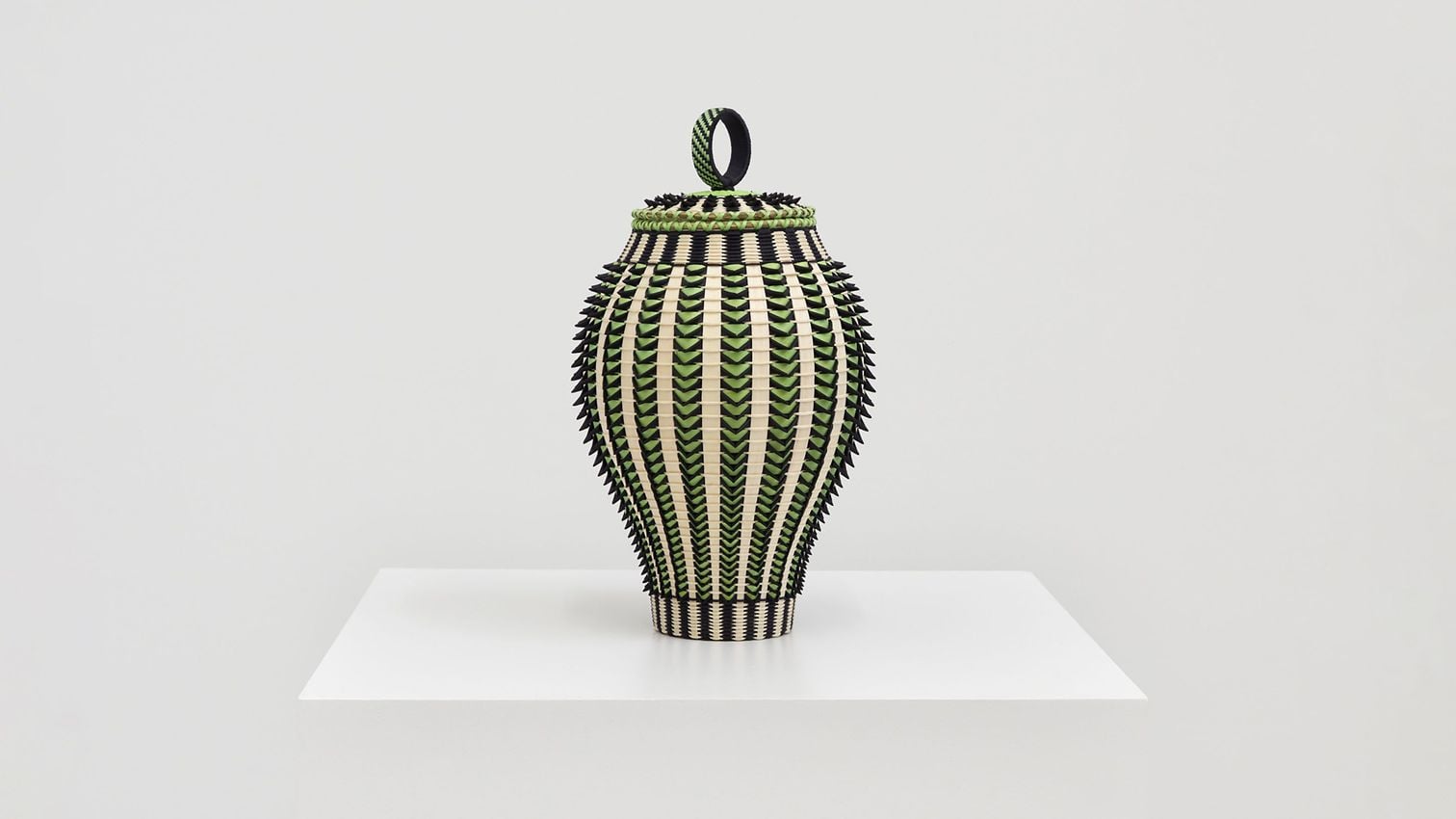
JEREMY FREY
b. 1978, United StatesJeremy Frey’s intricate, striking baskets show that it’s possible to preserve traditional techniques without simply reproducing the works of previous generations. The Maine-based artist adapts Wabaniki methods, adding colour and embellishment to his baskets to produce unique forms. His works are held in several museums and institutions across the United States and in 2025 he was named a MacArthur Fellow.
Early Years
Born in 1978 on the Passamaquoddy Indian Township Reservation in Maine, Jeremy Frey comes from a creative family. He learned how to weave baskets using traditional Wabaniki methods from his mother Frances, while his uncle Moose showed him how and where to source materials including brown ash and sweetgrass. Frey was an apprentice at the Maine Indian Basketmakers Alliance and has also been inspired in his use of colour by his wife Ganessa, a member of the Penobscot tribe. Frey lives in Maine. (Wabaniki is a confederation of five First Nations Tribes: Passamaquoddy, Penobscot, Abenaki, Mi’kmaq and Wolastoqiyik.)
Jeremy Frey: Artworks
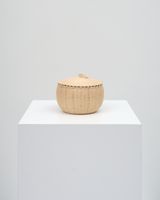
Jeremy Frey’s creative process respects traditional materials, but his baskets use them in new ways. For example, a traditional Wabaniki pattern is the porcupine, featuring triangular points at regular intervals—Frey updates this using vibrantly dyed ash strips. His double-walled baskets feature inner and outer layers with different patterns. Frey plays with colour, using similar shades to create an iridescent glow. He also embellishes his baskets, embroidering images from nature with dyed porcupine quills.
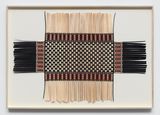
Frey has expanded his practice into creating two-dimensional works such as woven wall-hangings and embossed relief prints. To make these, he has come up with a way of flat weaving that can be passed through a printing press.
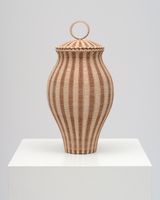
- Navigating Tradition (2023) has an undyed ash exterior while the interior features a pattern of purple and red columns and horizontal stripes
- Watchful Spirit (2022) was commissioned for the Denver Museum of Art. Made from ash tree splints, sweet grass, porcupine quills, birch bark and dyes, it took Frey six months to complete
- Nearly Monochrome (2022) is one of Frey’s largest works at around 79cm (31 inches) tall. It features braided ash around its neck
Jeremy Frey: Exhibitions
Select Solo Exhibitions
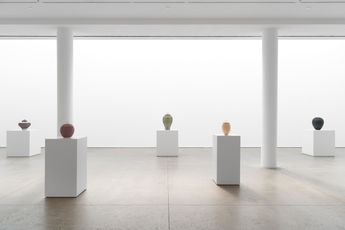
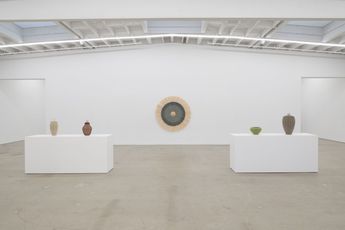
- Permanence, Karma, New York City (2026)
- Woven (travelling, 2024–2026), Portland Museum of Art, Maine; Bruce Museum, Connecticut; Art Institute of Chicago, Cantor Arts Centre, Stanford University, California
- Out of the Woods, Karma, New York City (2023)
Select Group Exhibitions
- still/emerging: Native American Works on Paper, The Cleveland Museum of Art, Ohio (2026)
- A Celebration of Craft (Loewe Foundation Craft Prize), Palais de Tokyo, Paris (2024)
- Art of Native America, Metropolitan Museum of Art, New York (2024)
- This Present Moment: Crafting a Better World, Renwick Gallery of the Smithsonian Museum of American Art, Washington DC (2022)
- New England Triennial (2022)
- Frey’s work is also held in the public collections of the Smithsonian American Art Museum, Washington, DC; the Abbe Museum, Bar Harbor, Maine; the Denver Art Museum, the Portland Museum of Art, Maine, and others.
Further reading
- Jeremy Frey’s artist page at Karma gallery, New York
- Jeremy Frey’s Instagram
- The Portland Museum of Art in Maine explores the technique and tradition of Jeremy Frey’s basketmaking (2024)
- Featured interview with Jeremy Frey on Art Basel’s website
Jeremy Frey FAQs
What materials does Jeremy Frey use in his basketweaving?
Jeremy Frey uses wood sourced from Maine, particularly the brown ash tree, whose wood is flexible and can be cut into the splints that comprise the basket structure. He also uses birch bark (applied as panels), coastal sweetgrass (braided into baskets), cedar bark and spruce roots. He occasionally dyes the ash splints in vivid colours.
How does Jeremy Frey make a basket?
Jeremy Frey makes the splints for his baskets from the wood within the growth rings of a brown ash tree, which he soaks in water. Vertical ash splints (called standards) are placed around one of Frey’s hand-carved basket moulds, and he weaves horizontal splints (called weavers) under and over the standards.
Is Jeremy Frey Native American?
Jeremy Frey is a seventh-generation knowledge keeper in the Passamaquoddy tribe, and many of his family members are basket-makers or culture bearers.
Ocula

Works at Karma








Recently Exhibited





Explore and Follow Artists Shaping Contemporary Art
A respected voice in contemporary art discourse.
Focusing on ambitious storytelling and insightful art-world commentary. Ocula Magazine publishes in-depth interviews, critical essays and timely analysis on the artists, exhibitions and ideas driving the global art world.
Learn more about Ocula Magazine
Showcasing the best of the art world.
Ocula partners with galleries from around the world to highlight their artists, artworks and exhibitions. Gallery membership is by application and invitation, with each member vetted by an independent panel.
Learn more about Ocula Membership
Specialises in the sale of major artworks.
Led by a team with deep ties to the world’s leading auction houses, galleries and collectors. Ocula’s advisory team offers bespoke services to high-net-worth clients from around the world who are looking to acquire the best of contemporary and modern art.
Learn more about our team and services