






LOUISE BONNET
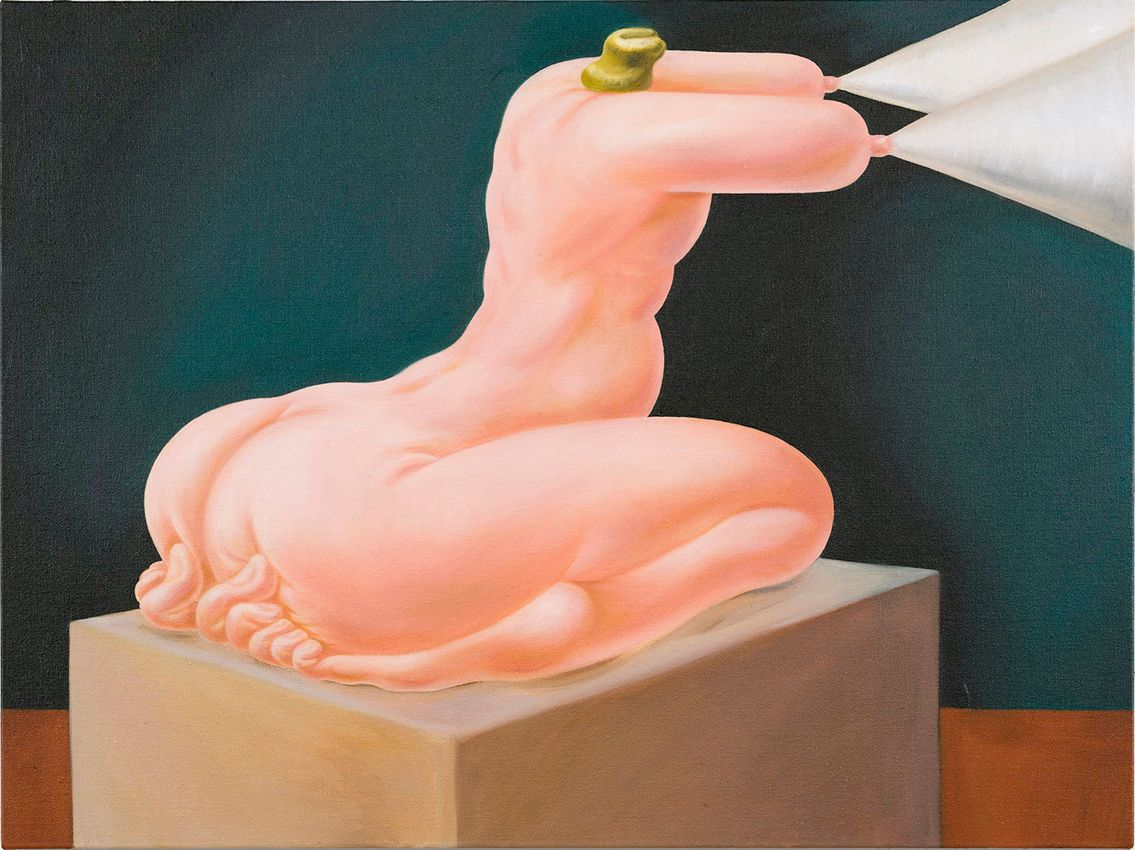
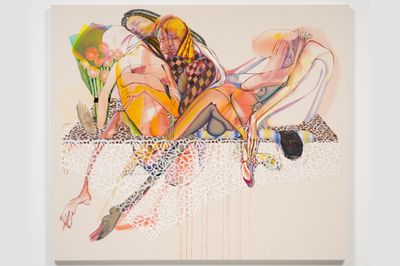
b. 1970, SwitzerlandThe figures that populate Louise Bonnet’s paintings and works on paper walk a line between beauty and ugliness, between absurdist, knockabout comedy and extreme psychological and physiological tension. Inhabiting sparse, eerie landscapes and boxed in by the edges of the canvas or the page, they act out dramas of profound discomfort that plumb the depths of the artist’s subconscious. Drawing on a range of sources, from Old Master painting to Surrealism and underground comix, Bonnet toys with signifiers—of gender and sexuality in particular—in a playfully confrontational style. Her subjects are at once monumental in scale and diminished in capacity, their limbs grotesquely bloated and their eyeless faces partially obscured by dense caps of hair.
Bonnet was born in Geneva, where she attended the Haute école d’art et de design. In 1994 she moved to Los Angeles for ‘a year off’ and never left. In 2008, having worked in illustration and graphic design, she launched her career as an artist with a solo exhibition at Subliminal Projects in Los Angeles, a gallery and project space founded by Shepard Fairey and Blaize Blouin. Five years later a move from acrylic paint into oils led Bonnet to new creative possibilities by allowing her to introduce a greater sense of light and volume to otherwise stark compositions. The change of medium also heralded a diversification and sharpening of themes and references; still focused on depicting the human body in extremis, she intensified her approach, combining the mordant wit of Philip Guston with the nuanced chiaroscuro of Caravaggio.
The representation of sex in Bonnet’s work is characterised by manic exaggeration and physical restraint. It also has a dreamlike quality that recalls such disturbing concoctions as René Magritte’s The Rape (Le viol) (1934), in which a nude female torso is recast as a face, and Hans Bellmer’s controversial sculptures of pubescent female dolls. Gender in Bonnet’s work is usually either overstated through cartoonlike inflation or left indeterminate, allowing the figures to function as universal stand-ins for unconscious drives and anxieties. In some images, this signature approach to the human figure is combined with an exploration of Christian imagery and its history in European painting.
Courtesy Gagosian

Recently Exhibited










Explore and Follow Artists Shaping Contemporary Art
A respected voice in contemporary art discourse.
Focusing on ambitious storytelling and insightful art-world commentary. Ocula Magazine publishes in-depth interviews, critical essays and timely analysis on the artists, exhibitions and ideas driving the global art world.
Learn more about Ocula Magazine
Showcasing the best of the art world.
Ocula partners with galleries from around the world to highlight their artists, artworks and exhibitions. Gallery membership is by application and invitation, with each member vetted by an independent panel.
Learn more about Ocula Membership
Specialises in the sale of major artworks.
Led by a team with deep ties to the world’s leading auction houses, galleries and collectors. Ocula’s advisory team offers bespoke services to high-net-worth clients from around the world who are looking to acquire the best of contemporary and modern art.
Learn more about our team and services