






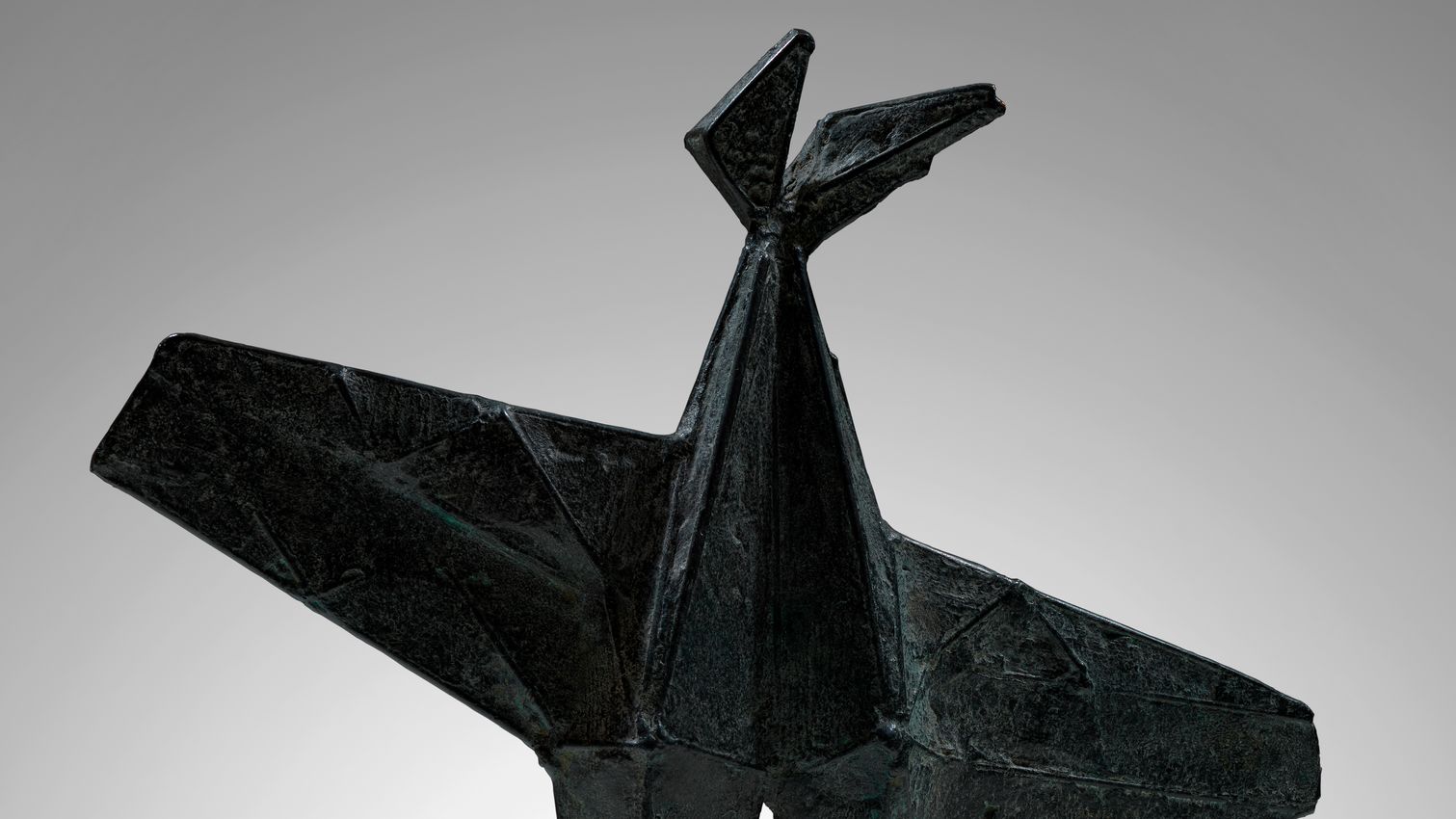
LYNN CHADWICK
1914-2003, United KingdomLynn Chadwick remains the most exciting of all the artists to emerge in the post war period in Britain. He won the international prize for sculpture at the Venice Biennale of 1956, becoming the youngest ever recipient of this prestigious prize: such triumph early in his career catapulted him overnight into being a major sculptor of the 20th century.
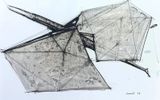
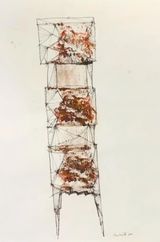
In the 1930’s Chadwick worked as an architectural draughtsman up until the Second World War, when he served as a pilot in the Fleet Air Arm. Subsequently, he succeeded in branching out as an independent sculptor. He focused on his kinetic works, characterised by sensuous moves that, undulating and rotating through space, could create virtual forms. These animated structures progressed in a varied and evolutionary process that culminated in an urgent need to make solid the implied forms. In 1950 Chadwick reached, through his newly acquired welding skills, his unique means of expression, ‘drawing in space’, in which he welded his steel rods together in triangulated structures and he subsequently filled the voids between the lines with a mixture of iron filings and gypsum.
Uninhibited by the constraints of a formal art education, Chadwick freely and instinctively invented images from his imagination, utilising his individual technique and creating a fantastic oeuvre of novel human and animal forms. His international recognition led to a dizzying programme of exhibitions and museum shows, private as well as public commissions.
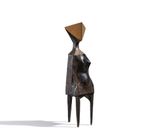
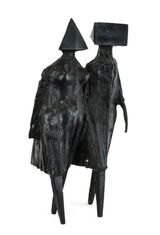
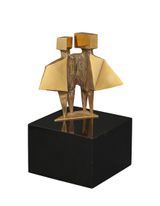
The 1970’s and 80’s saw further advancements and metamorphoses into a faceted figuration, imposing beings with winged or robed bodies perched on slender tapered legs. He also channelled the essence of his own earlier mobiles in an art of motion, balance and stance in pursuit of a kind of body language that Chadwick himself described as ‘Attitude’. The 1990’s saw the reinterpretation of beasts and couples with the ineffable attitude of Chadwick’s earlier inventions in the reflective panels of sheet stainless steel, including a final reworking of the mobile form, on a monumental scale.
After a career that spanned five decades, Lynn Chadwick made his last work, Ace of Diamonds, in 1996. He passed away in 2003, the year Tate Britain devoted a major retrospective to him.
Courtesy Perrotin

Recently Exhibited



Exhibiting Elsewhere


Works Elsewhere











Explore and Follow Artists Shaping Contemporary Art
A respected voice in contemporary art discourse.
Focusing on ambitious storytelling and insightful art-world commentary. Ocula Magazine publishes in-depth interviews, critical essays and timely analysis on the artists, exhibitions and ideas driving the global art world.
Learn more about Ocula Magazine
Showcasing the best of the art world.
Ocula partners with galleries from around the world to highlight their artists, artworks and exhibitions. Gallery membership is by application and invitation, with each member vetted by an independent panel.
Learn more about Ocula Membership
Specialises in the sale of major artworks.
Led by a team with deep ties to the world’s leading auction houses, galleries and collectors. Ocula’s advisory team offers bespoke services to high-net-worth clients from around the world who are looking to acquire the best of contemporary and modern art.
Learn more about our team and services