





MICHAEL RAEDECKER
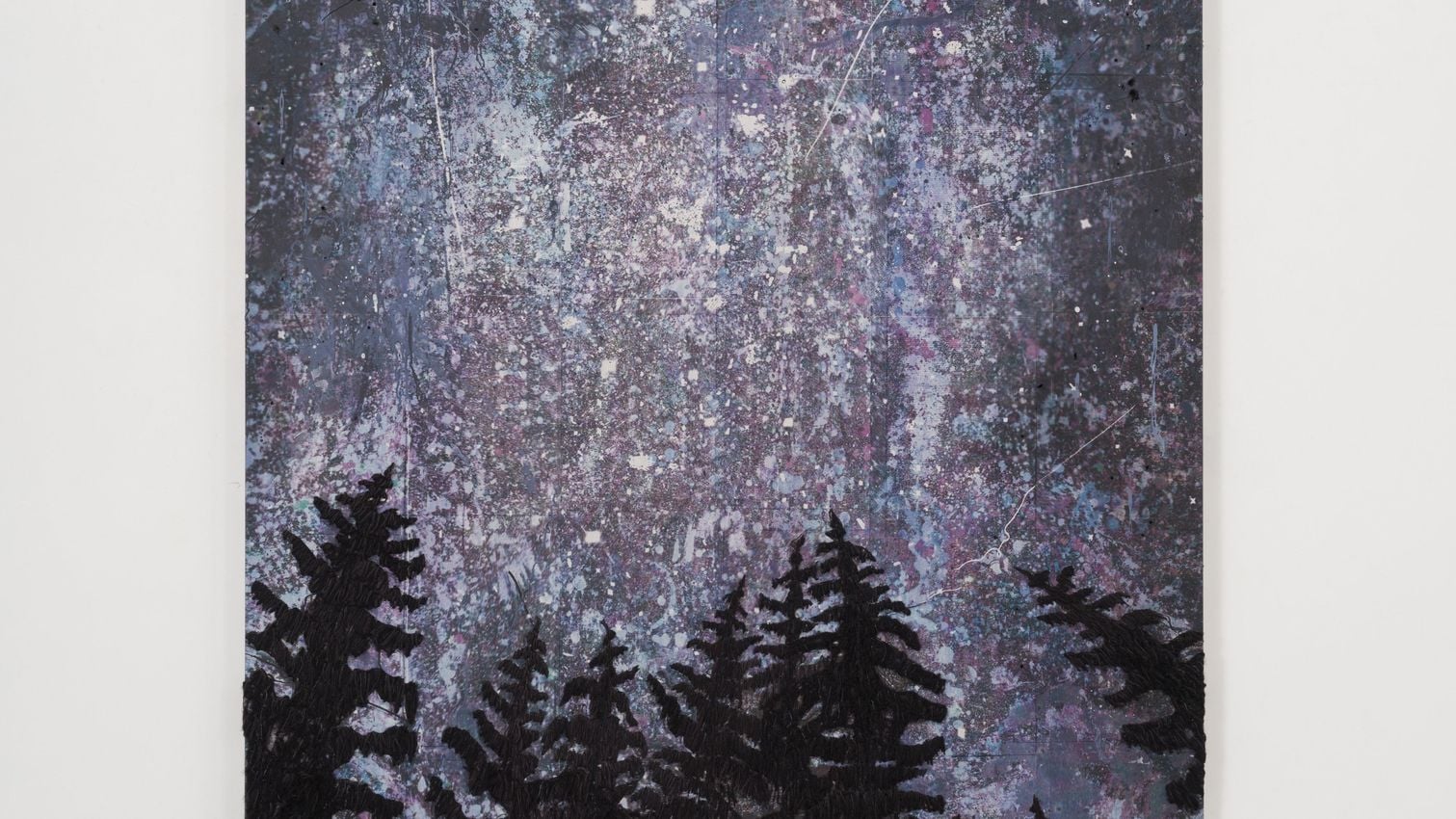
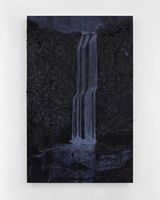
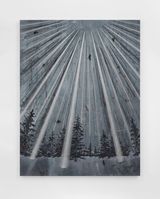
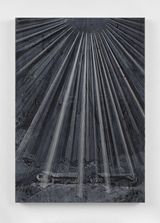
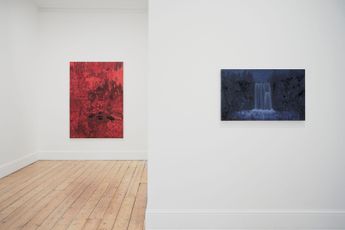
b. 1963, United KingdomMichael Raedecker’s work seeks to make sense of the symbiotic and often parasitic relationship between nature and humanity—to understand our place in the world and draw attention to the proximity and power of nature in relation to the urban environment. His distinctive practice blends painting with richly textural embroidery, conjuring scenes that hold the urban in an uneasy balance with nature which creeps and sprawls across the canvas, over open car doors, solitary sun loungers, and vacant pools. In both its content and form, Raedecker’s work engages with the act of deconstruction and reconfiguration, resisting the perceived distinctions between ‘fine art’ and craft, and drawing attention to competing surface qualities and the illusion of representation as he subverts the painted canvas with textured details.
Over the course of his career, Raedecker has consistently explored the impact of a changing world on the meaning and context of his work, interrogating not only the subject matter but the medium through which it is communicated. Building on an initial idea in paint and thread, Raedecker photographs and digitally manipulates the piece before transposing it onto a large canvas on which he builds up a sculpted surface through paint and thread again, restoring the human hand to the digital reproduction. Traversing the handmade and the mechanical, Raedecker collapses the original into the copy and back into the original. The resulting work captures a prevailing sensation of the uncanny – capturing the presence of humanity through our visual absence in relation to the environment. Recurring motifs such as swimming pools and empty cabins suggest an absent figure – highlighting the strangeness of the suburban terrain sitting at the junction where the landscape meets man-made dwellings. A placid, dark palette is set in violent contrast with vivid blues, greens, and pinks, capturing Raedecker’s haunting observations on our own ephemerality.
In 2024, Raedecker had a major solo museum survey, called material worlds at the Kunstmuseum, The Hague (NL).
The artist received his BA in Fashion Design from the Gerrit Rietveld Academie, Amsterdam (NL), and continued his studies at the Rijksakademie van Beeldende Kunsten, Amsterdam (NL), as well as Goldsmiths College, London (UK). In 2000, Raedecker was shortlisted for the Turner Prize.
Selected collections: Van Abbemuseum, Eindhoven (NL); ABN AMRO Art Collection (NL); AkzoNobel Art Collection, Amsterdam (NL); Art Institute of Chicago, Chicago, IL (US); Astrup Fearnley Museum, Oslo (NO); British Council, London (UK); THE EKARD COLLECTION; He Art Museum, Foshan (CN); ENECO Art Collection, Utrecht (NL); Guggenheim Museum, New York, NY (US); ING Art Collection, Amsterdam (NL); Istanbul Modern Collection, Istanbul (TR); Kunstmuseum, The Hague (NL); MAXXI National Museum of XXI Century Arts, Rome (IT); Museum van Bommel van Dam, Venlo (NL); De Nederlandsche Bank (NL); Rabo Art Collection (NL); Tate, London (UK); Museum Voorlinden, Wassenaar (NL); Walker Art Gallery, Liverpool (UK)
Courtesy GRIMM, Amsterdam/London/New York.











Explore and Follow Artists Shaping Contemporary Art
A respected voice in contemporary art discourse.
Focusing on ambitious storytelling and insightful art-world commentary. Ocula Magazine publishes in-depth interviews, critical essays and timely analysis on the artists, exhibitions and ideas driving the global art world.
Learn more about Ocula Magazine
Showcasing the best of the art world.
Ocula partners with galleries from around the world to highlight their artists, artworks and exhibitions. Gallery membership is by application and invitation, with each member vetted by an independent panel.
Learn more about Ocula Membership
Specialises in the sale of major artworks.
Led by a team with deep ties to the world’s leading auction houses, galleries and collectors. Ocula’s advisory team offers bespoke services to high-net-worth clients from around the world who are looking to acquire the best of contemporary and modern art.
Learn more about our team and services