





PEGGY KUIPER
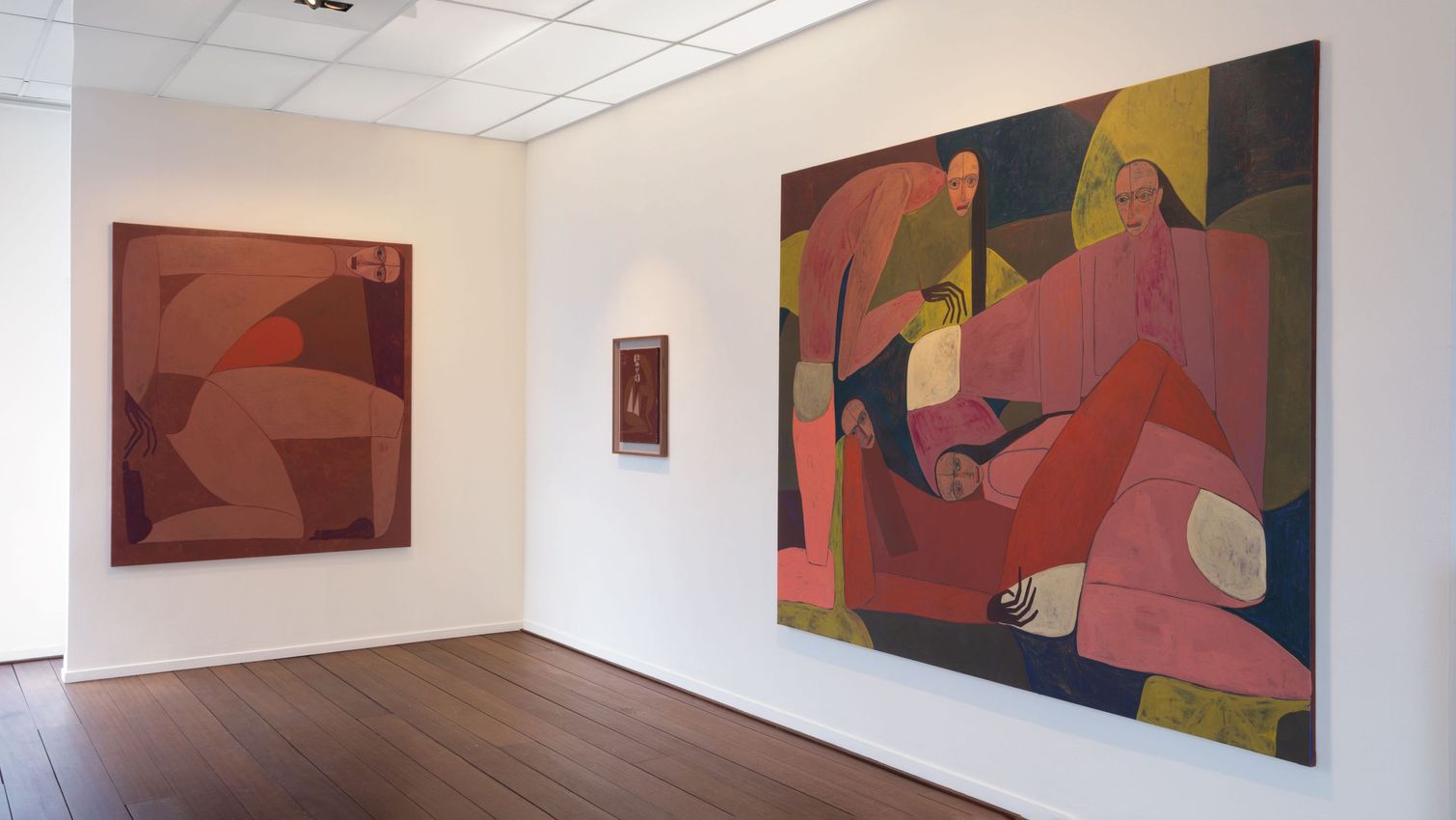
b. 1986Peggy Kuiper’s paintings capture brief moments of emotion—the exaggerated body shapes and open faces she depicts in acrylics embody memory and sensation. Known for her large-scale portraits of female figures, her artworks convey the combination of power and vulnerability familiar to women around the world.
Early Years
Born in 1986 in Haarlem, Peggy Kuiper drew a lot as a child, although her real passion was dance: she studied both classical and contemporary styles. However, she gave up dance training when she was 17. She studied graphic design at St Joost School of Art and Design, following which she worked for the late Anthon Beeke, the renowned Dutch designer. Her career then pivoted to photography, where she specialised in fashion. It was not until she was in her thirties that she began to paint again—a decision vindicated by the Covid-19 pandemic, when photography assignments dwindled.
Peggy Kuiper: Artworks
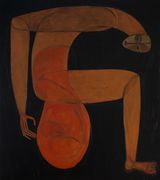
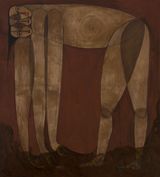
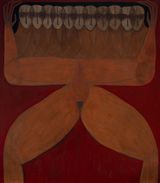
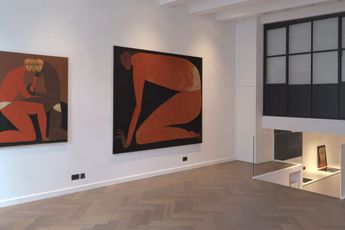
Kuiper’s flat, muted figures, with their long limbs, splayed toes and stretched fingers, often look straight out at the viewer through their almond eyes, yet with expressions that suggest they don’t actually want to be seen. Bodies touch and caress; at other times single figures dominate the frame. Kuiper’s colour palette, inspired by nature, spotlights browns and beiges, yet these are cut through with bright greens, blues, and reds. Kuiper layers her artworks, often painting over completed work if she is unhappy with it.
- Abyss (2023) sees a female figure bending away from view, yet with her face turned towards—and staring at—the viewer, her muscles and limbs rendered in flat panels of muted browns and toes splayed apart.
- The Bathers II (2023), which featured in Kuiper’s 2024 solo exhibition _The Conversation That Never Took Place, shows a pile of limbs and figures, rendered in acid green, deep red and bright pink.
- Peggy Kuiper has also created etchings and sculptures—she has described her 2024 bronze Equilibrium as embodying “a symphony of opposing forces, where memories shape the human journey and colours infuse every endeavour”.
Peggy Kuiper: Select Exhibitions
Select Solo Exhibitions
- Colouring the Echoes of the Past, Art Basel Hong Kong (2026)
- The Conversation That Never Took Place, Reflex Amsterdam (2024)
Select Group Exhibitions
- It’s Summer After All, Reflex Amsterdam (2026)
- Wünder Womxn: The Female Figurative, Beers London (2021)
Further Reading
- Peggy Kuiper’s Instagram
- Artist profile page at Reflex Amsterdam
- 2024 Q&A from the FT
- 2023 Interview in Juxtapoz
- 2024 exhibition review from wallpaper
- Peggy Kuiper on the artists who inspire her, Harper’s Bazaar (2024)
Peggy Kuiper FAQs
What is Peggy Kuiper’s signature style?
Peggy Kuiper paints angular faces with almond or narrow eyes and prominent cheeks. She has been inspired by African masks, but also aims to keep her facial shapes reasonably simplistic to elicit emotion from the viewer, rather than being an obvious depiction of a recognisable person.
What materials and techniques does Peggy Kuiper use?
Peggy Kuiper favours acrylics for their speed and flexibility, although also uses oil stick. She has said that she paints quickly because she feels a sense of urgency and wants to capture the emotion she is feeling in a certain moment. Her use of colour is inspired by nature and seasons, but she also uses colour as a way to evoke the mood of a painting. Despite her photography background, she doesn’t paint from photos, instead mining her own memories, dreams and emotions.
Who are Peggy Kuiper’s influences?
Kuiper has said that she was drawn to abstract art—as a child, she liked paintings by Amedeo Modigliani and Paul Klee, which she first encountered when visiting her grandmother. Artists she admires as a practising creative include Hilma af Klimt, Louise Bourgeois, Pat Steir, Martha Jungwirth, Joan Mitchell, Helen Frankenthaler and Cecily Brown—all female and whose works Kuiper has described as having “a deeply emotional component”.
Ocula








Explore and Follow Artists Shaping Contemporary Art
A respected voice in contemporary art discourse.
Focusing on ambitious storytelling and insightful art-world commentary. Ocula Magazine publishes in-depth interviews, critical essays and timely analysis on the artists, exhibitions and ideas driving the global art world.
Learn more about Ocula Magazine
Showcasing the best of the art world.
Ocula partners with galleries from around the world to highlight their artists, artworks and exhibitions. Gallery membership is by application and invitation, with each member vetted by an independent panel.
Learn more about Ocula Membership
Specialises in the sale of major artworks.
Led by a team with deep ties to the world’s leading auction houses, galleries and collectors. Ocula’s advisory team offers bespoke services to high-net-worth clients from around the world who are looking to acquire the best of contemporary and modern art.
Learn more about our team and services