





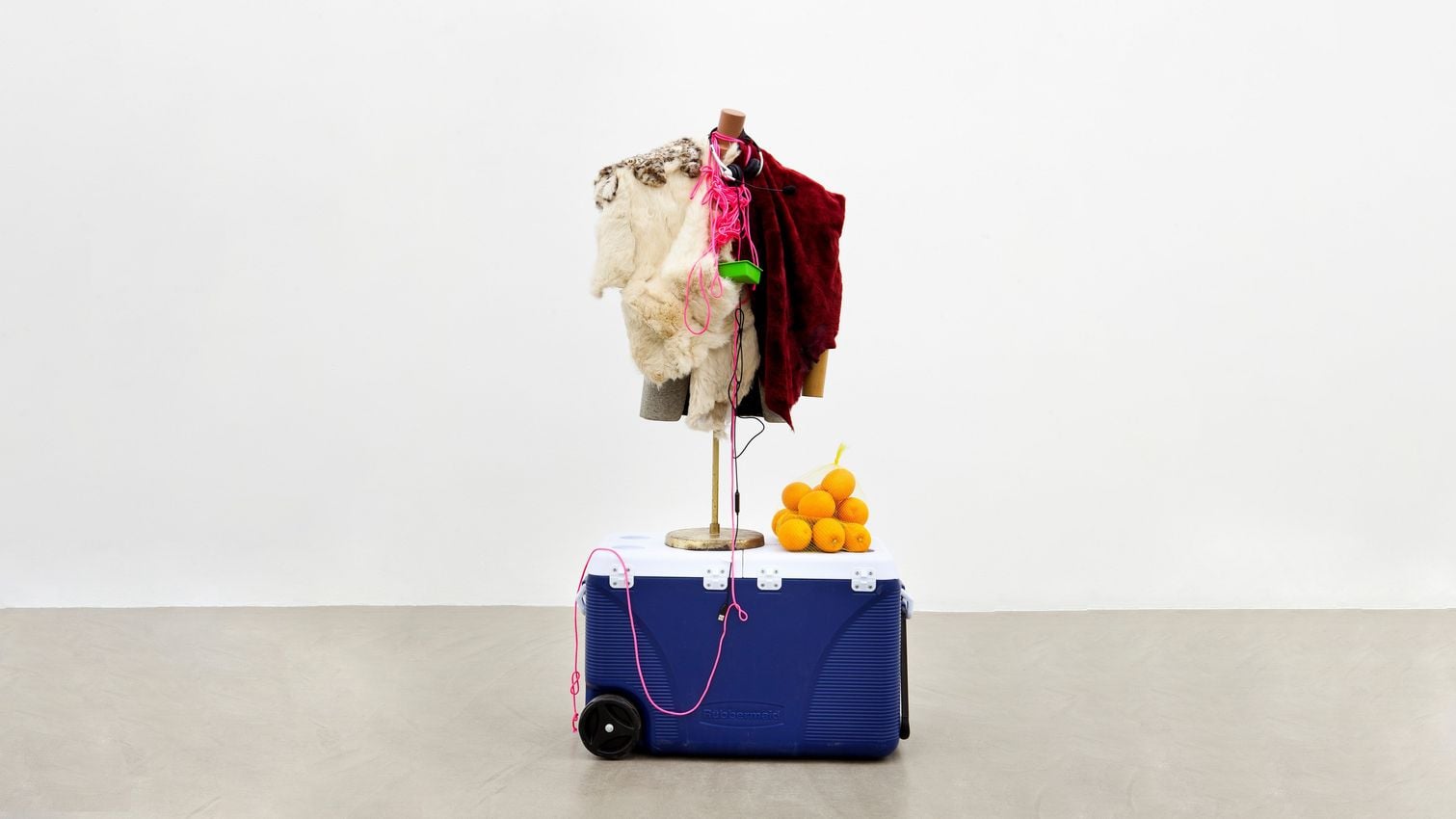
RACHEL HARRISON
b. 1966, United StatesSince the early 1990s, Brooklyn-based artist Rachel Harrison has developed a visual language at once citational and abstract, built up of three-dimensional shapes that tempt recognition but exist, in the artist’s words, as “forms that can’t be described.” Across sculpture, photography, video, and drawing, Harrison deploys strategies resonant with, yet independent of, art movements including Neo-Dada, Pop, Minimalism, and Conceptual Art. Her wry use of celebrity imagery and commercial objects suggests what Johanna Burton terms “inappropriation”: “not really _taking _a thing so much as acknowledging its multifaceted nature in a world that will shape it and reshape it.” Often, Harrison effects the reshaping herself, lodging familiar images within roguish assemblages of artistic and para-artistic matter, from rope and household tools to polystyrene and cement, the latter materials often painted in vivid colors to forge her distinctive sculptural style. Toying with signs, surfaces, and modes of display, her objects can serve as framing devices—to repurpose Harrison’s term for a recent body of work—inviting both semiotic and phenomenological readings without submitting to either mode of interpretation. Circumambulating a Harrison provokes continual cross-referencing and new revelations, with respect not just to the work at hand but to the particular space and viewer it activates.
Conversant in the language of postwar avant-gardes (her work has variously referenced Michael Asher, Fred Sandback and Anne Truitt, among others), Harrison nevertheless carved her own path early on. If her deft, sometimes jarring use of multiple media and taste for the absurd or grotesque—in both material and ideological form—align her with closer contemporaries like Mike Kelley or Cady Noland, her vision of America has a singular cast. For Hal Foster, that vision is filtered through a keen eye for “the mythic thinking that persists in popular culture.” Harrison’s work, Foster writes, is “concerned less with exposing cultural myths than with retelling them, often in a perverse way.” Appreciative but skeptical, engaged but esoteric, and shot through with a fierce sense of humor, Harrison jumbles hierarchies of taste and form. In turn, she provides an off-kilter examination of our shifting art, pop, and political landscapes, with a prescience that has infused numerous international solo exhibitions, such as Rachel Harrison Life Hack, a major 2019-20 survey at the Whitney Museum.
Courtesy Greene Naftali

Works at Greene Naftali

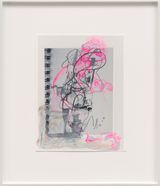

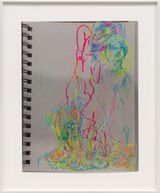


Recently Exhibited

Exhibiting Elsewhere

Works Elsewhere



Explore and Follow Artists Shaping Contemporary Art
A respected voice in contemporary art discourse.
Focusing on ambitious storytelling and insightful art-world commentary. Ocula Magazine publishes in-depth interviews, critical essays and timely analysis on the artists, exhibitions and ideas driving the global art world.
Learn more about Ocula Magazine
Showcasing the best of the art world.
Ocula partners with galleries from around the world to highlight their artists, artworks and exhibitions. Gallery membership is by application and invitation, with each member vetted by an independent panel.
Learn more about Ocula Membership
Specialises in the sale of major artworks.
Led by a team with deep ties to the world’s leading auction houses, galleries and collectors. Ocula’s advisory team offers bespoke services to high-net-worth clients from around the world who are looking to acquire the best of contemporary and modern art.
Learn more about our team and services