






RICHARD WRIGHT
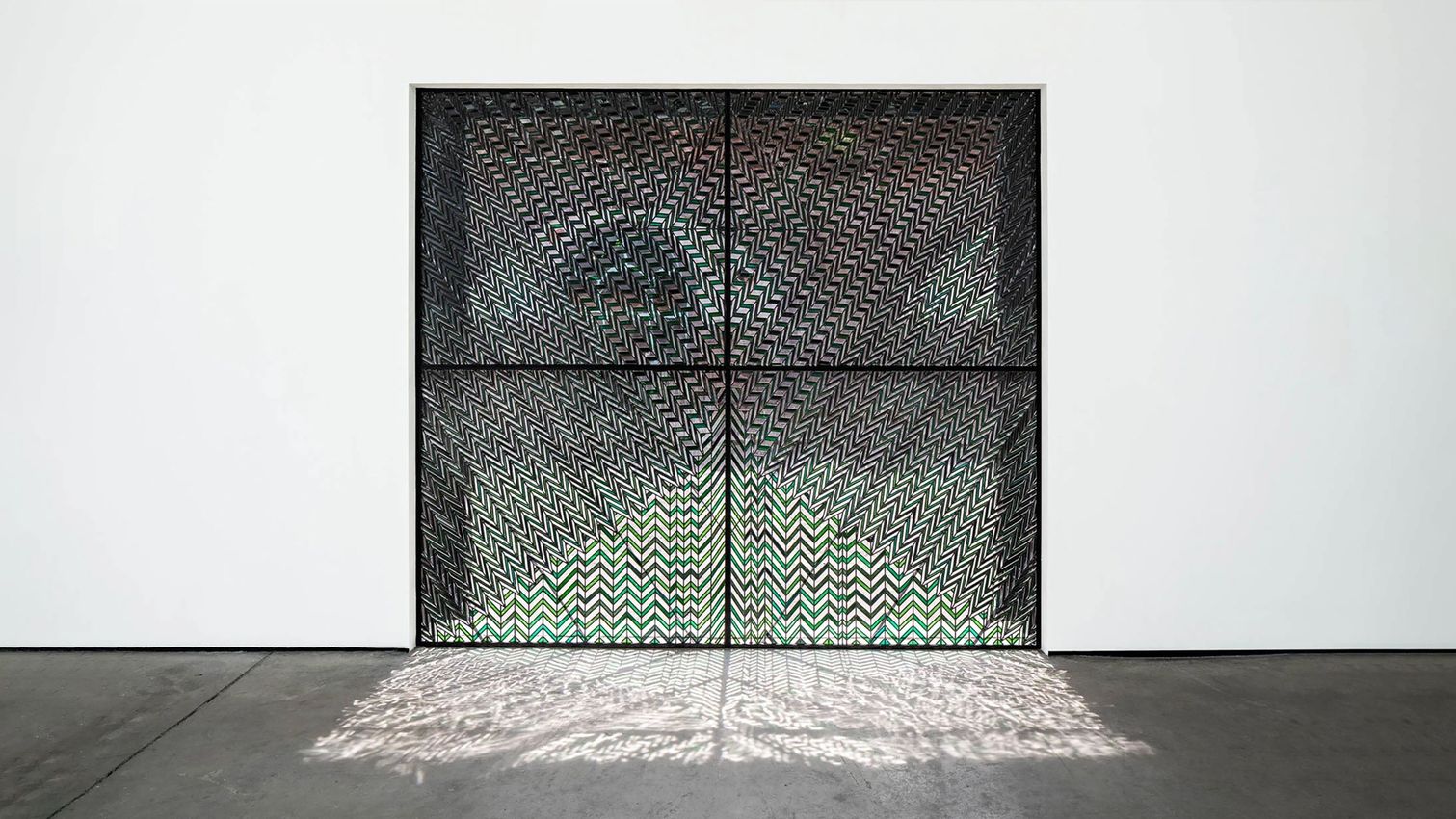
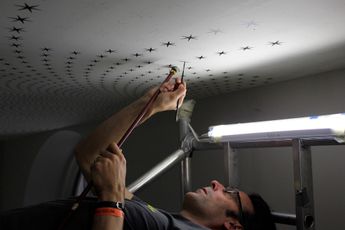
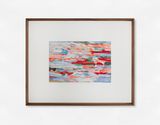
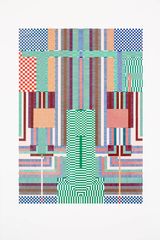
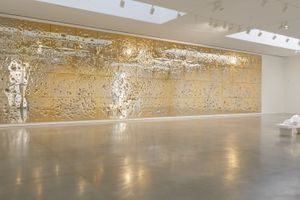
b. 1960, United KingdomRichard Wright is best known for his site-specific yet transient works that unite painting with graphic and typographic elements, charging architectural spaces with a fourth dimension of subtle yet extreme optical complexity and subverting the traditionally static dynamic between painting and viewer. His paintings and applied metal-leaf schemes connote memory and ephemerality—these works are short-lived, oftentimes lasting only as long as the exhibition. Alongside works on interior surfaces such as walls and ceilings, Wright’s works on paper encompass a range of handmade prints, ink drawings, gilding, and watercolours. More recently, Wright has installed leaded glass into existing window or skylight apertures, allowing the work to meld with the fabric of the building. These interventions, utilising various mediums, serve to shift the viewer’s perception of the space. As Sofia Karamani commented in her text for the Turner Prize in 2009:
‘Wright’s profound understanding of art and its history is reflected in his diverse imagery; minimalist patterns and baroque ornamentations to gothic iconography and typography. His wall paintings can occupy whole rooms, appearing convoluted and extensive, to create a sublime impact. Others, subtle and delicate, are awkwardly placed, claiming a modest existence on a ceiling, a cornice, the edge of a wall. As Wright invents alternative spatial arrangements, solid structures can look broken up, reconfigured, or seem transparent and fluid.’
Wright was born in 1960 in London. The first solo exhibition of his work took place in 1994 at Transmission Gallery in Glasgow, Scotland. His work has been shown in major exhibitions worldwide since, including Kunsthalle Bern, Switzerland (2001); Tate Liverpool, England (2001); Dundee Contemporary Arts, Scotland (2004); GAMeC, Bergamo, Italy (2005); Carnegie International, Pittsburgh (2008); Scottish National Gallery of Modern Art, Edinburgh (2010); Theseus Temple, Kunsthistorisches Museum, Vienna (2013); and Walk through British Art, Tate Britain, London (2013). In addition to permanent private commissions, Wright’s public institutional commissions include the Museum of Contemporary Art San Diego (2007); Middlesbrough Institute of Modern Art, England (2007); Dean Gallery, Scottish National Gallery of Modern Art, Edinburgh (2010); The Millbank Project at Tate Britain, London (2011–2013); and Rijksmuseum, Amsterdam (2013). Current commissions include a large-scale gold-leaf work for the Crossrail in London at the new Tottenham Court Road station, opening in December 2018.
Wright was awarded the Turner Prize in 2009 and is considered one of the key artists in the generation that emerged out of Glasgow in the 1990s, together with Martin Boyce, Douglas Gordon, and Simon Starling.
Wright lives and works in Glasgow, Scotland.
Courtesy Gagosian

Recently Exhibited

Works Elsewhere









Explore and Follow Artists Shaping Contemporary Art
A respected voice in contemporary art discourse.
Focusing on ambitious storytelling and insightful art-world commentary. Ocula Magazine publishes in-depth interviews, critical essays and timely analysis on the artists, exhibitions and ideas driving the global art world.
Learn more about Ocula Magazine
Showcasing the best of the art world.
Ocula partners with galleries from around the world to highlight their artists, artworks and exhibitions. Gallery membership is by application and invitation, with each member vetted by an independent panel.
Learn more about Ocula Membership
Specialises in the sale of major artworks.
Led by a team with deep ties to the world’s leading auction houses, galleries and collectors. Ocula’s advisory team offers bespoke services to high-net-worth clients from around the world who are looking to acquire the best of contemporary and modern art.
Learn more about our team and services