





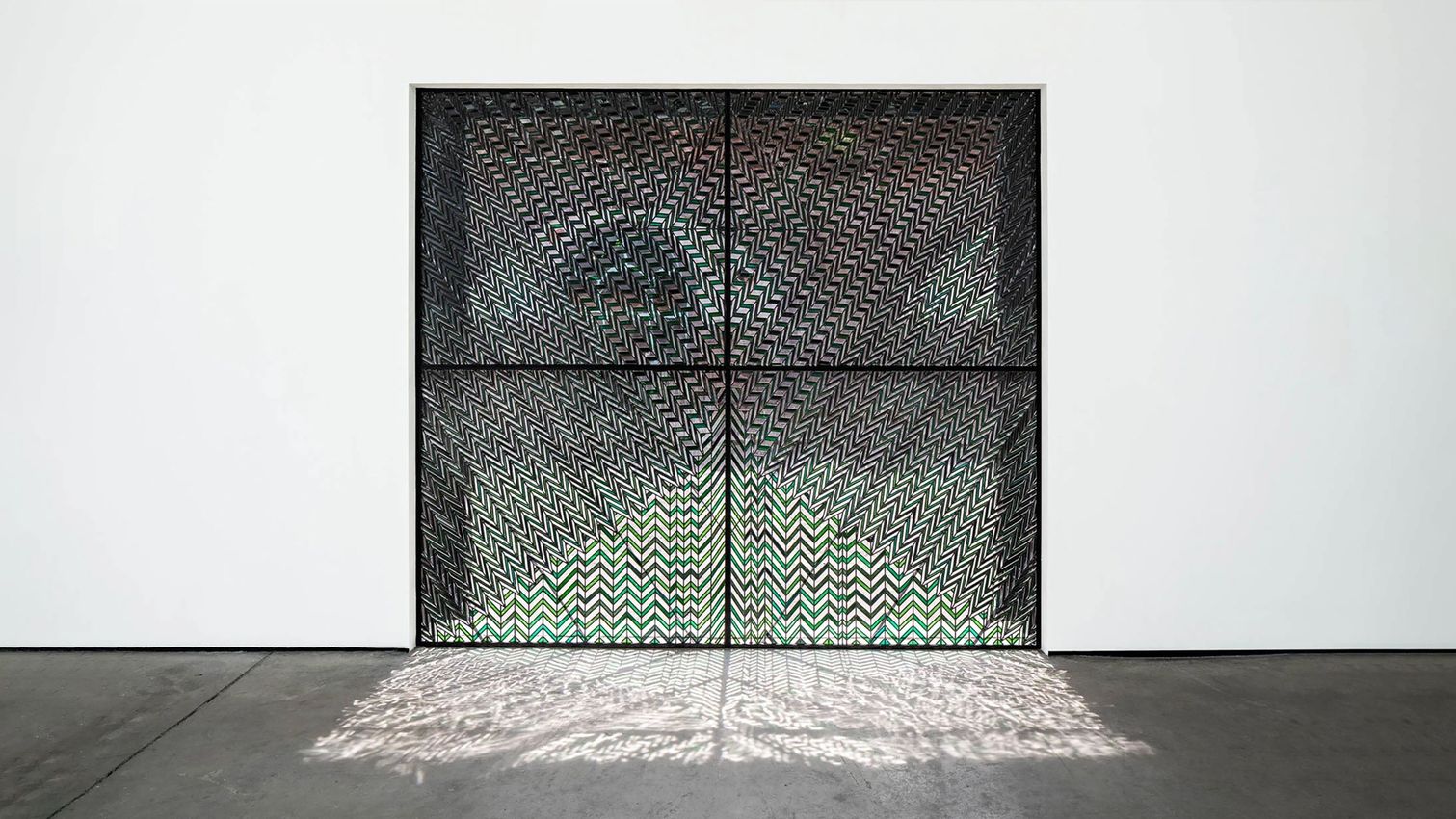
RICHARD WRIGHT
b. 1960, United KingdomRichard Wright is a Turner Prize-winning contemporary artist celebrated for his intricate, site-specific wall paintings that blur the boundaries between artwork and architecture, permanence and transience.
Early Years
Born in London in 1960, Richard Wright grew up in the UK and studied at Edinburgh College of Art, followed by the Glasgow School of Art. His early training in painting soon expanded into an interest in conceptual and process-based art, shaped in part by his time living and working in Glasgow during the 1990s. The city’s vibrant art scene and the artist-run spaces of the period deeply influenced Wright’s approach to collaborative, context-responsive installation.
Wright continues to live and work in Scotland, maintaining a studio practice grounded in drawing while developing temporary artworks designed to disappear over time.
Artworks
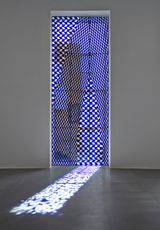
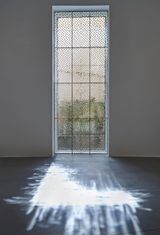
Richard Wright’s artwork is defined by precision, repetition, and impermanence. Using traditional materials such as gold leaf, gouache, and fresco, he creates hand-painted installations that respond intimately to their architectural contexts.
Ephemeral Frescoes and Wall Paintings
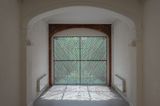
In the early 1990s, Richard Wright began making site-specific wall paintings that would become his signature. These hand-painted works often covered entire architectural surfaces—walls, ceilings, windows—yet were destined to be painted over once an exhibition ended. Drawing on influences from medieval manuscript illumination, minimalism, and sacred geometry, his works hover between decorative pattern and conceptual depth. By erasing the artwork after each show, Wright focuses attention on the present-tense experience of viewing, turning each artwork into a moment of heightened attention. These frescoes challenge conventional ideas of permanence and authorship in contemporary art and remain among his most celebrated contributions to the field.
Gold Leaf Works
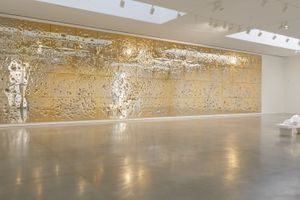
Wright’s use of gold leaf, developed in the 2000s, represents a shift towards more materially radiant yet equally delicate compositions. Inspired by Renaissance art and Byzantine iconography, his gilded works shimmer with spiritual resonance while retaining a rigorous formalism. His Turner Prize-winning piece at Tate Britain in 2009 featured a kaleidoscopic gold pattern applied high on a gallery wall—subtle enough to elude immediate notice but mesmerising upon discovery. Gold leaf allowed Wright to explore notions of light, divinity, and the sublime within secular architectural contexts. These pieces often appear weightless, suspended between ornament and asceticism, challenging the viewer’s expectations of grandeur and spectacle in large-scale art.
Permanent Architectural Commissions
Though known for creating temporary artworks, Wright has completed several major permanent commissions that maintain his contemplative approach. At the Queen’s House in Greenwich (2016), he designed a gold-leaf ceiling mural resembling constellations, blending celestial motifs with the building’s classical geometry. In 2014, he painted a monumental staircase wall in the Rijksmuseum, Amsterdam, combining hand-drawn flourishes with symmetrical patterns inspired by 17th-century engraving. These works extend his interest in how painting can harmonise with space, using subtle visual rhythms to enhance the viewer’s movement through architecture. While permanent, these commissions retain a quiet intensity—never dominating their surroundings but instead deepening them with layers of meaning.
Public Commissions
- Tottenham Court Road Elizabeth Line Station, London. Commissioned by Crossrail Art Programme (opened in 2020).
- Great Hall at Queen’s House, Royal Museums Greenwich, London (2016)
- Tate Britain, London (2013)
- Awards and Accolades
- Elected Royal Academician (2017)
- Winner of the Turner Prize, Tate Britain (2009)
Exhibitions
Richard Wright has been the subject of both solo exhibitions and group exhibitions at important institutions. A selection of important exhibitions are provided below.
Solo Exhibitions
- Richard Wright, Camden Art Centre, London (2025)
- Theseus Temple, Kunsthistorisches Museum, Vienna (2013)
- Works on Paper, Kelvingrove Art Gallery and Museum, Glasgow International Festival of Visual Arts, Scotland (2012)
Group Exhibitions
- The Love of Print, Kelvingrove Art Gallery and Museum, Glasgow (2022)
- The TURNER, Royal Glasgow Institute of Fine Arts, Scotland (2019)
- Generation: 25 Years of Contemporary Art in Scotland, National Galleries of Scotland, Edinburgh (2014)
- Walk Through British Art, Tate Britain, London (2013)
- Still Life: Between Image and Object, Lismore Castle Arts, Lismore, Ireland (2011)
- The Sleeping Congregation, Tate Modern, London (2010)
- Turner Prize 2009. Tate Britain, London
Critical Reception
Richard Wright’s work has been featured in leading publications including Artlyst, The Art Newspaper, and The Guardian.
Richard Wright FAQs
What is Richard Wright best known for?
Richard Wright is best known for his intricate, site-specific wall paintings that are meticulously hand-painted and then intentionally destroyed after exhibition. These temporary installations often draw on architectural elements, merging Renaissance techniques with modern minimalism. His best-known work, which won the 2009 Turner Prize, featured a dazzling gold-leaf pattern applied to the walls of Tate Britain. Wright’s art stands out in the contemporary art world for its emphasis on impermanence, craftsmanship, and the unique, unrepeatable experience of encountering a work in situ.
Why does Richard Wright destroy his artworks?
Wright destroys his artworks to challenge conventional ideas of permanence, ownership, and commodification in contemporary art. For him, the value of an artwork lies not in its preservation but in the viewer’s live encounter with it. By making his works temporary, he prioritises presence and attentiveness, allowing each piece to exist as a fleeting, unrepeatable moment. This radical gesture also resists market pressures and invites reflection on the nature of memory, time, and the often overlooked ephemerality of visual experience.
What techniques does Richard Wright use in his art?
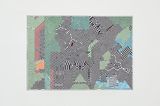
Richard Wright employs time-honoured techniques such as fresco painting, gilding with gold leaf, and hand-drawn patterning using gouache or graphite. His process is painstaking and entirely manual, often involving intricate mathematical systems and repetitive mark-making. Influenced by illuminated manuscripts, Islamic geometry, and baroque ornament, Wright adapts these historical forms within contemporary spaces. Whether painting directly on a museum wall or designing a permanent ceiling commission, his technical skill reflects a deep commitment to labour-intensive craftsmanship and the integration of painting with architecture.
Ocula | 2025














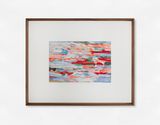

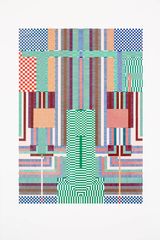


Explore Richard Wright's Exhibitions


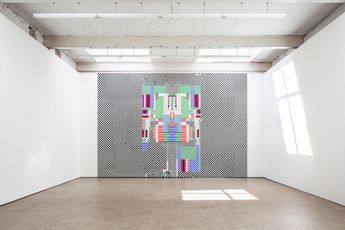

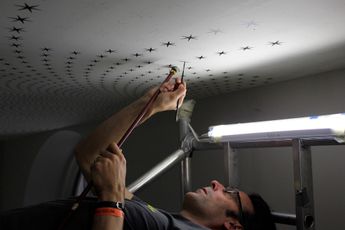



Explore and Follow Artists Shaping Contemporary Art
A respected voice in contemporary art discourse.
Focusing on ambitious storytelling and insightful art-world commentary. Ocula Magazine publishes in-depth interviews, critical essays and timely analysis on the artists, exhibitions and ideas driving the global art world.
Learn more about Ocula Magazine
Showcasing the best of the art world.
Ocula partners with galleries from around the world to highlight their artists, artworks and exhibitions. Gallery membership is by application and invitation, with each member vetted by an independent panel.
Learn more about Ocula Membership
Specialises in the sale of major artworks.
Led by a team with deep ties to the world’s leading auction houses, galleries and collectors. Ocula’s advisory team offers bespoke services to high-net-worth clients from around the world who are looking to acquire the best of contemporary and modern art.
Learn more about our team and services