Vexation Island (1997) is Rodney Graham’s most well-known artwork.
Shot in 35mm, Graham’s short film is screened in a loop and depicts a shipwrecked character on a small tropical island. Graham plays the protagonist, who we first encounter under a palm tree with a large wound on his forehead. He stands up to look out to sea, then returns to the coconut palm which he begins to shake. Expectedly, a coconut comes loose and falls on his head. He stumbles while the coconut rolls towards the sea. Viewers are shown different camera angles of the coconut falling and rolling, until the film begins again.
Graham’s tropical island is host to a character in an inescapable loop. By casting himself as the only character in a never-ending plot that verges on absurd, Graham considers the different relationships between the natural world and civilisation. Vexation Island also reflects on the tradition of linear narratives. Graham introduces humour, irony and absurdity to the narrative by displacing and remodelling traditional stories.
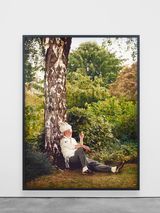
Graham often casts himself as the lead protagonist of his films. The films How I Became a Ramblin’ Man (1999), City Self/Country Self (2000) and Phonokinetoscope (2001) all feature Graham acting as a fictional character engaged in an infinite loop of activity. His films are often inspired by and reference well-known writers and musicians including Sigmund Freud, Lewis Carroll, Edgar Allan Poe and Kurt Cobain.
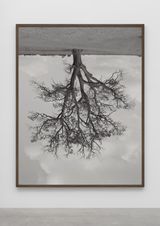
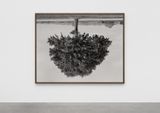
Welsh Oaks #1 (1998)
Welsh Oaks #1 (1998) is a series of photographs shot on a large format camera that depicts ancient oak trees in the English countryside. Graham inverts the photographs so that the trees are cast upside down. By experimenting with the work and the way it is displayed, Graham transforms the oak trees into something unfamiliar and disorientating. Welsh Oaks #1 shifts perspectives of the natural landscape by placing the sky where the ground should be and swapping clouds for tree roots.