





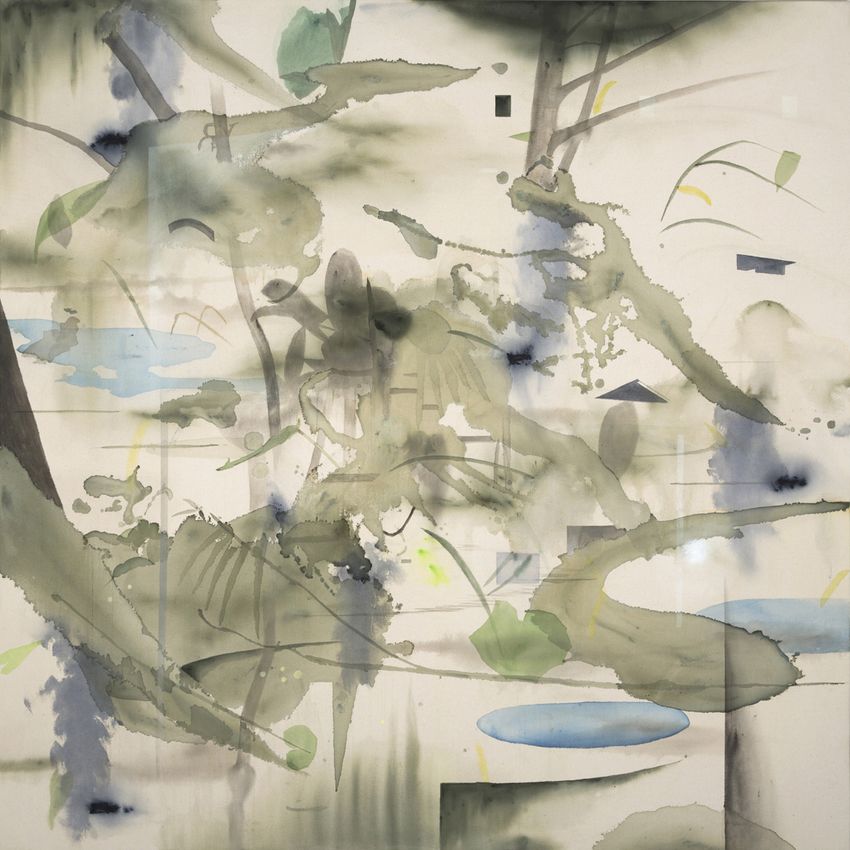
SHINPEI KUSANAGI
b. 1973, JapanShinpei Kusanagi was born in Tokyo in 1973, where he continues to live and work.
Kusanagi is a painter whose works comprise of mainly paintings in acrylic and coloured pencil on canvas, although he also produces drawings on paper and various media on wooden panels. His paintings are masterfully controlled, a single brush stroke able to imply anything from a cloud, to a building, telephone line or a tree so that the viewer has the freedom to interpret it as they will. He takes his inspiration from nature, particularly plants and surrounding landscapes, mixing their forms and shapes into something new. Unclear lines and shapes recall our memories. Some of his works will take you on a stroll through the backstreets of Japan in a fusion of urban landscape and nature. Kusanagi’s paintings unfold in a dreamlike sequence of suburbia.
Kusanagi majored in English Studies at Reitaku University in Chiba (Japan), graduating in 1997 and has also studied visual design at Kuwasawa Design School. However, his career started as a successful illustrator, providing images for several book covers and magazines. He has also taken part in various artist residency programs, including in Austria and Switzerland in 2005 and 2007 respectively. It was during his time in Austria that Kusanagi’s paintings took on a different feel, becoming increasingly abstract with the use of light colours to invoke flashes of light, making his works more dynamic than before. From 2007 to 2012 Kusanagi created works on a monthly basis to illustrate a novel called Mizu no Katachi (The shape of water) by Teru Miyamoto which was serialised in a magazine. These paintings were based solely on the landscapes and plants of the Kiyosumishirakawa area of Tokyo. These paintings were then published in Kusanagi’s first book named Kiyosumi Kaiwai (Kiyosumi and its Environs), by Kyuryudo in 2013.
Not limited to brushes, Kusanagi has also produced works utilising stained untreated cotton and hemp. This method provides the fading, unclear colours to his works which generate the ephemeral, dream-like quality within his paintings. The light strokes are fleeting, filled with nostalgia and wistful memories. He works with tight control over his paintings, paying as much attention to what is not painted as to what is. Kusanagi’s works are at once static and dynamic, causing the viewer to feel as if they have seen that scenery before, yet the memory is too vague to fully recall. Therein lies the magic of Kusanagi’s paintings.

Explore Shinpei Kusanagi's Exhibitions



Explore and Follow Artists Shaping Contemporary Art
A respected voice in contemporary art discourse.
Focusing on ambitious storytelling and insightful art-world commentary. Ocula Magazine publishes in-depth interviews, critical essays and timely analysis on the artists, exhibitions and ideas driving the global art world.
Learn more about Ocula Magazine
Showcasing the best of the art world.
Ocula partners with galleries from around the world to highlight their artists, artworks and exhibitions. Gallery membership is by application and invitation, with each member vetted by an independent panel.
Learn more about Ocula Membership
Specialises in the sale of major artworks.
Led by a team with deep ties to the world’s leading auction houses, galleries and collectors. Ocula’s advisory team offers bespoke services to high-net-worth clients from around the world who are looking to acquire the best of contemporary and modern art.
Learn more about our team and services