





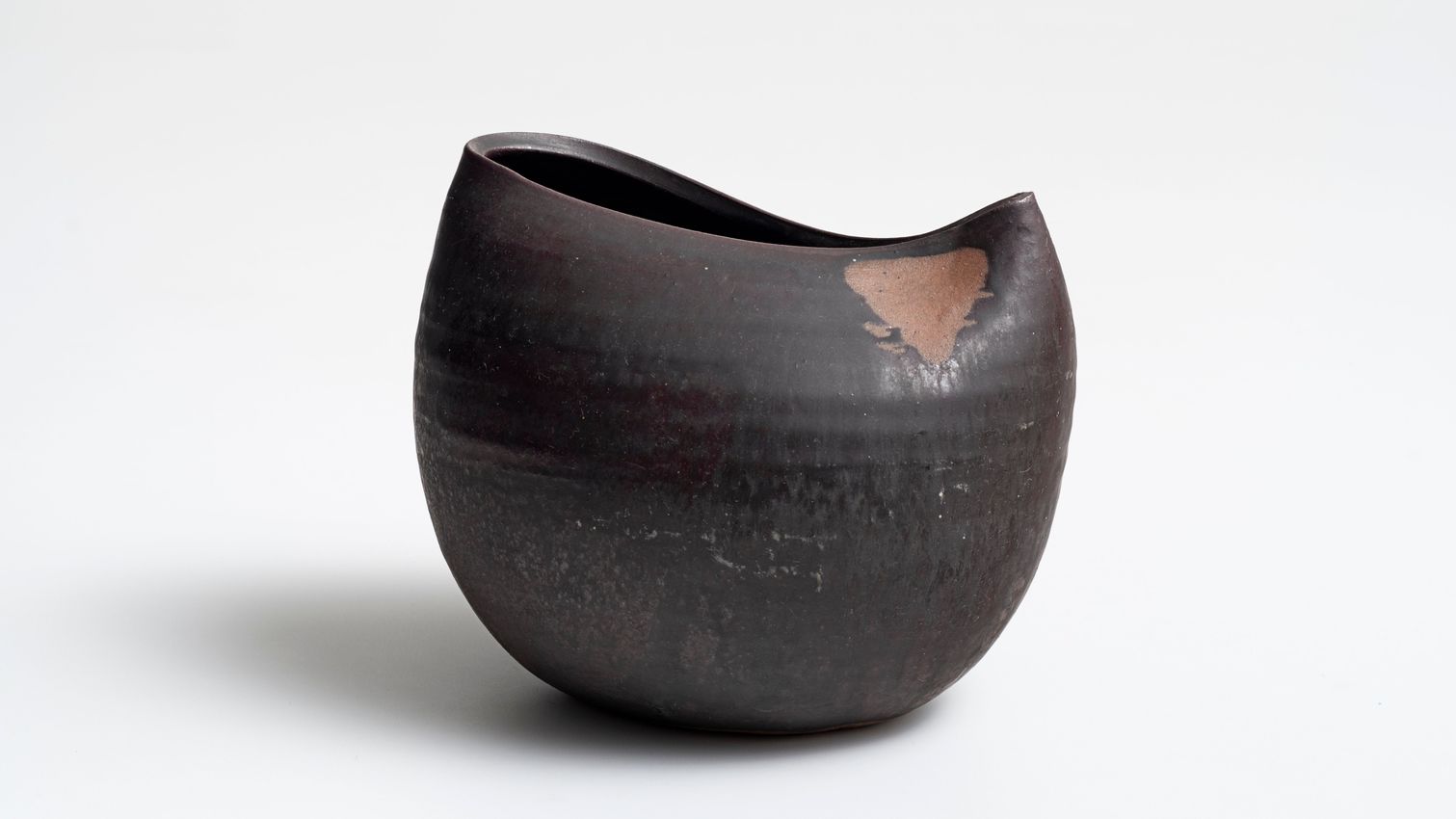
SHOKO SUZUKI
b. 1929, Japan1929, Tokyo, Tokyo, Japan
Lives and works in Cotia, São Paulo, Brazil
From her noborigama1 kiln, Shoko Suzuki extracts an artistic universe that has been discussing and broadening the conceptual horizon of the so-called utilitarian and decorative arts for more than 50 years, with the ancient Japanese ceramic art as the basis of her technique, without limitations in terms of language. Shoko Suzuki’s poetic sensibility intensified during the course of her great personal adventure: choosing Brazil as her new home. In Brazil since 1962, Suzuki has been reinventing her forms and inscribing symbols on her pieces that are characteristic of her production. The ceramicist was responsible for introducing high-temperature firing in a noborigama kiln in Brazil, a practice later adopted by Akinori Nakatani in Mogi das Cruzes and disseminated in the Cunha, with Mieko and Toshiyuki Ukeseki, Alberto Cidraes, Kimiko Suenaga, among others.
Suzuki began to exhibit individually in 1955, still in Tokyo, when she took part in an exhibition of young ceramists at the Ando Gallery. Before crossing the ocean to the port of Santos (Brazil), she exhibited in several galleries and museums in her hometown, such as the Mitsukoshi Gallery, the Tokyo National Museum and the Yoseido Gallery. In Brazil, she has had individual exhibitions at the Galeria Achei (São Paulo, 1968); the Galeria Bonino (Rio de Janeiro, 1976); Fundação Cultural do Distrito Federal (Brasilia, 1984); Museu da Casa Brasileira in the wake of the celebrations of her 50- year career (São Paulo, 2003), among others. Collectively, she has participated in several exhibitions of contemporary ceramics in institutions such as the Museu de Arte de São Paulo Assis Chateaubriand – MASP (São Paulo, 1988 and 1996); Centro Cultural de Campinas (Campinas, 1992); Tokushima Kyodo Museum (Tokushima, Japan, 1995); Espaço Cultural dos Correios (São Paulo, 2001); Instituto Tomie Ohtake (São Paulo, 2008); Pinacoteca de São Paulo (São Paulo, 2008), among others. In 2023, her work was part of the group show The Sun’s Path, held at Gomide&Co, in São Paulo, Brazil.
In 2024, her work was part of the group show Tocar a Terra, curated by Rachel Hoshino, which was part of the Diasporas Asiáticas program at the Instituto Tomie Ohtake in 2024.
—
1. Noborigama is a type of tradi-onal Japanese wood-fired kiln, of Chinese origin, used in Japan since the 17th century. The kiln is an advanced technique adapted from the single-chamber Anagama kiln da-ng from the early 5th century. The noborigama, which uses less firewood than its predecessor, is built on a slope, taking advantage of the slope of the land. It usually contains three interconnected chambers, each on a certain level. A noborigama can burn for up to 35 hours - this slow burning prevents the pieces from cracking. In the etymology of the word, we can superficially translate nobo as “to rise”, and gama, more objec-vely, would be “kiln”.
Courtesy Gomide&Co




Explore and Follow Artists Shaping Contemporary Art
A respected voice in contemporary art discourse.
Focusing on ambitious storytelling and insightful art-world commentary. Ocula Magazine publishes in-depth interviews, critical essays and timely analysis on the artists, exhibitions and ideas driving the global art world.
Learn more about Ocula Magazine
Showcasing the best of the art world.
Ocula partners with galleries from around the world to highlight their artists, artworks and exhibitions. Gallery membership is by application and invitation, with each member vetted by an independent panel.
Learn more about Ocula Membership
Specialises in the sale of major artworks.
Led by a team with deep ties to the world’s leading auction houses, galleries and collectors. Ocula’s advisory team offers bespoke services to high-net-worth clients from around the world who are looking to acquire the best of contemporary and modern art.
Learn more about our team and services