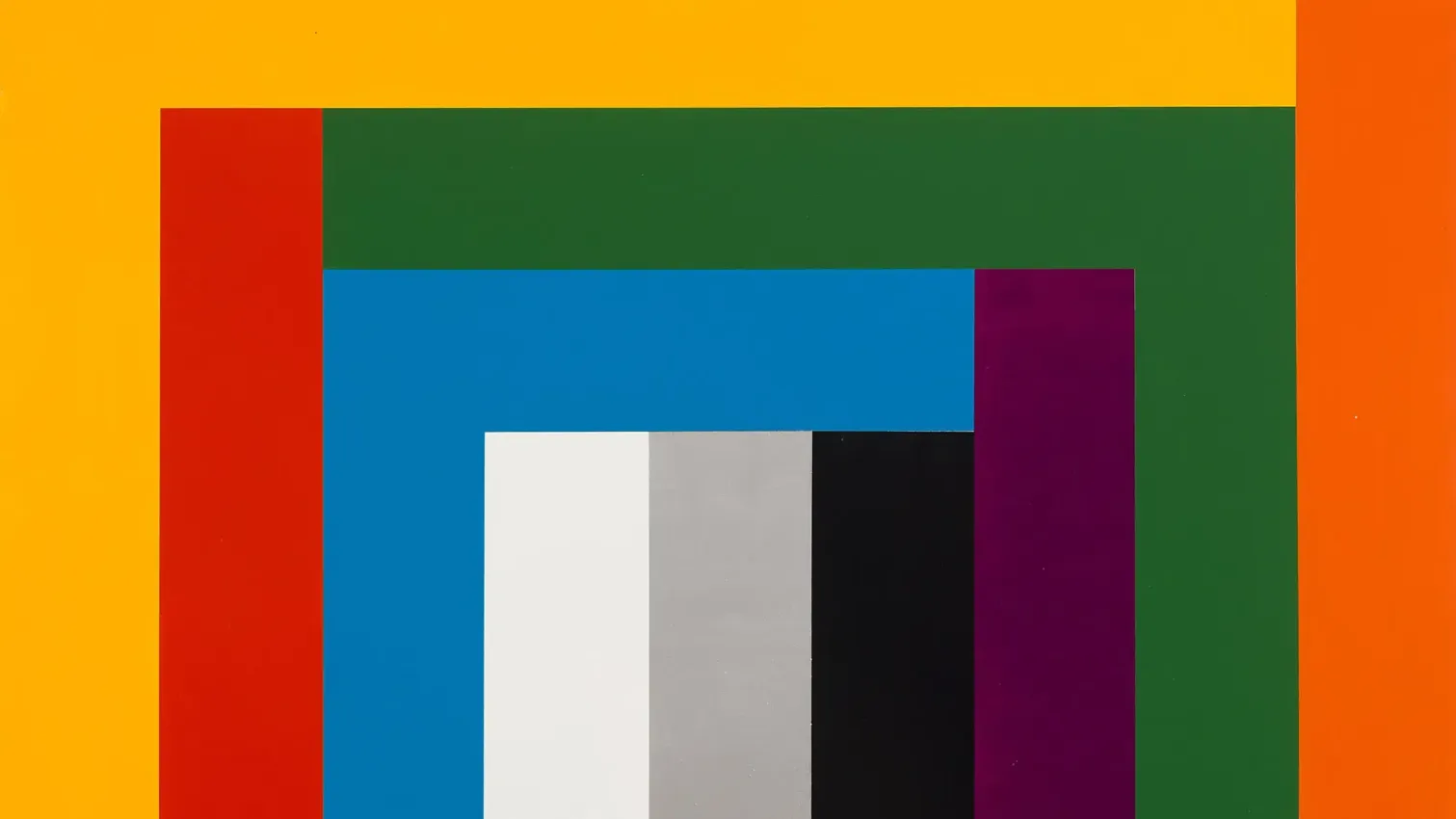
For over five decades, Australian artist John Nixon (1949–2020) produced abstract art driven by a spirit of experimentation and a deep engagement with radical modernism. An influential and collaborative figure both in Australia and internationally, Nixon is celebrated for the remarkable breadth of his practice. While abstract and non-objective painting remained his primary focus—explored under the banner of his Experimental Painting Workshop (EPW)—his expanded concept of art extended across multiple disciplines, including experimental music, photography, theatre, film, and printmaking.
Song of the Earth 1968–2020 is the first major survey to trace Nixon’s career from his beginnings in the late 1960s and 1970s as a minimal and conceptual artist, through to his striking 1980s installations combining paintings with readymade objects, and into the final decades of his life, marked by continued experimentation and the expansion of his painting practice. With a profound personal belief in the intertwining of art and life, Nixon often incorporates found objects and materials into his paintings and installations. This fusion lends his work both intellectual rigour and poetic resonance, the everyday objects at once ordinary and elevated. ‘My art is not only an analysis of form (the conceptual edge of painting and sculpture) ... but a metaphor for life’,__Nixon said in 1993.
Sydney-born contemporary artist John Nixon was a leading figure of Australian abstraction and experimental art. Spanning more than half a century from the late 1960s, his career was defined by formal experiments and innovation that encompassed painting to collage, photography, video, dance and experimental music performance.

Heide Museum of Modern Art, commonly known as Heide, is a public art museum in Bulleen, on the banks of the Birrarung/Yarra River around nine kilometres north-east of central Melbourne, Australia. Established as a museum in 1981, Heide occupies the former home and property of arts patrons John and Sunday Reed, who bought the then-dairy farm in 1934 and transformed it into a hub for Australian modernism. Set within 16 acres of heritage-listed gardens and sculpture park, the museum now presents modern and contemporary art across three main buildings and is recognised as one of Australia’s most important cultural sites. Heide’s intertwined histories of art, architecture, landscape, and progressive social experiment give it a distinctive place within Melbourne’s cultural ecology.

A respected voice in contemporary art discourse.
Focusing on ambitious storytelling and insightful art-world commentary. Ocula Magazine publishes in-depth interviews, critical essays and timely analysis on the artists, exhibitions and ideas driving the global art world.
Learn more about Ocula Magazine
Showcasing the best of the art world.
Ocula partners with galleries from around the world to highlight their artists, artworks and exhibitions. Gallery membership is by application and invitation, with each member vetted by an independent panel.
Learn more about Ocula Membership

Specialises in the sale of major artworks.
Led by a team with deep ties to the world’s leading auction houses, galleries and collectors. Ocula’s advisory team offers bespoke services to high-net-worth clients from around the world who are looking to acquire the best of contemporary and modern art.
Learn more about our team and services
