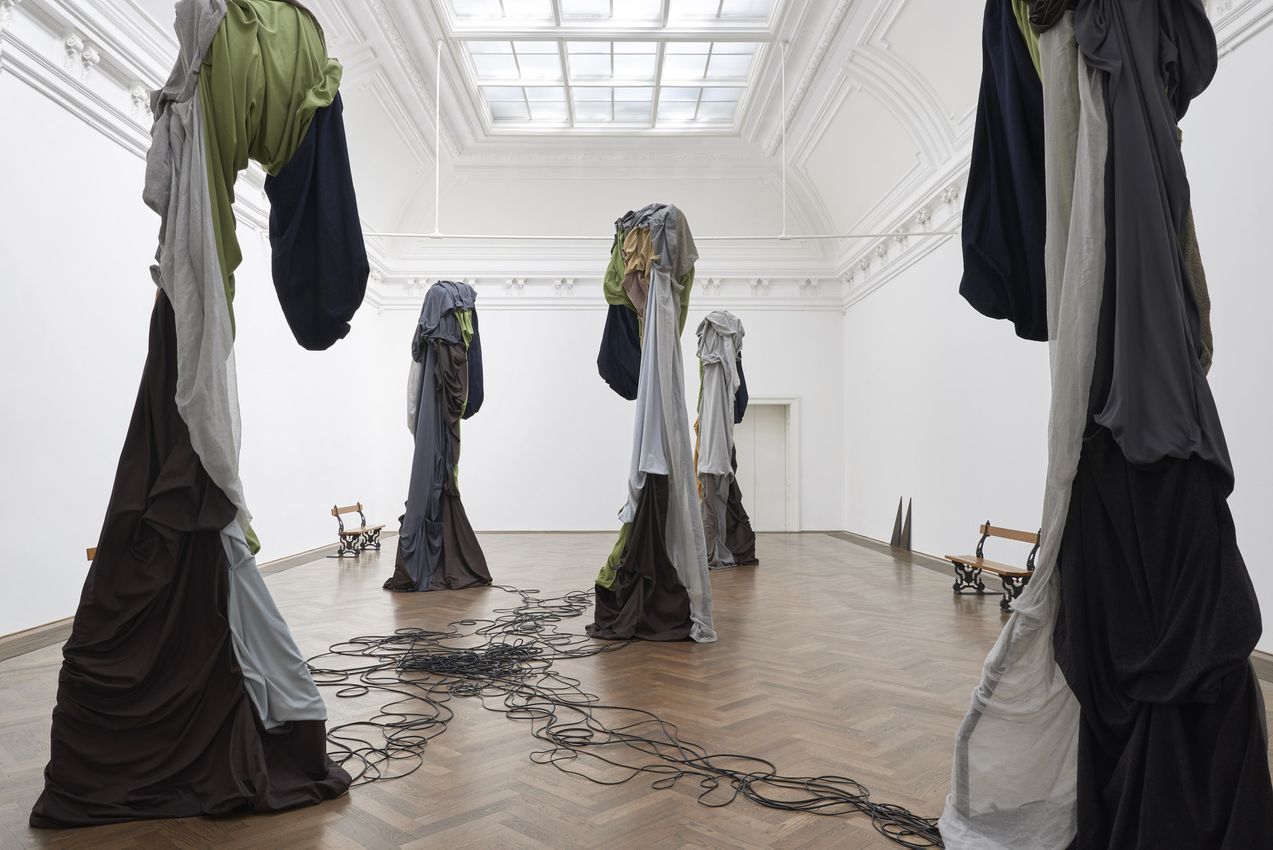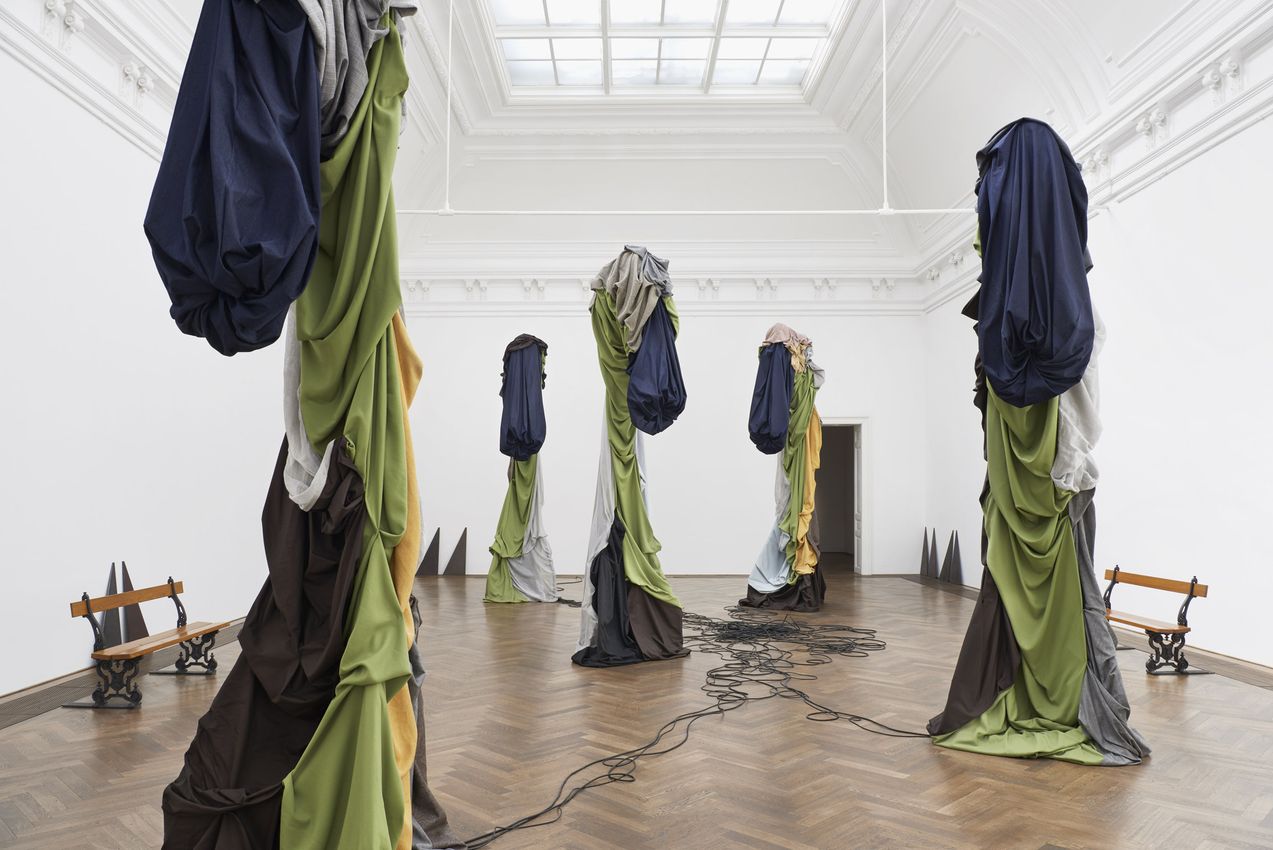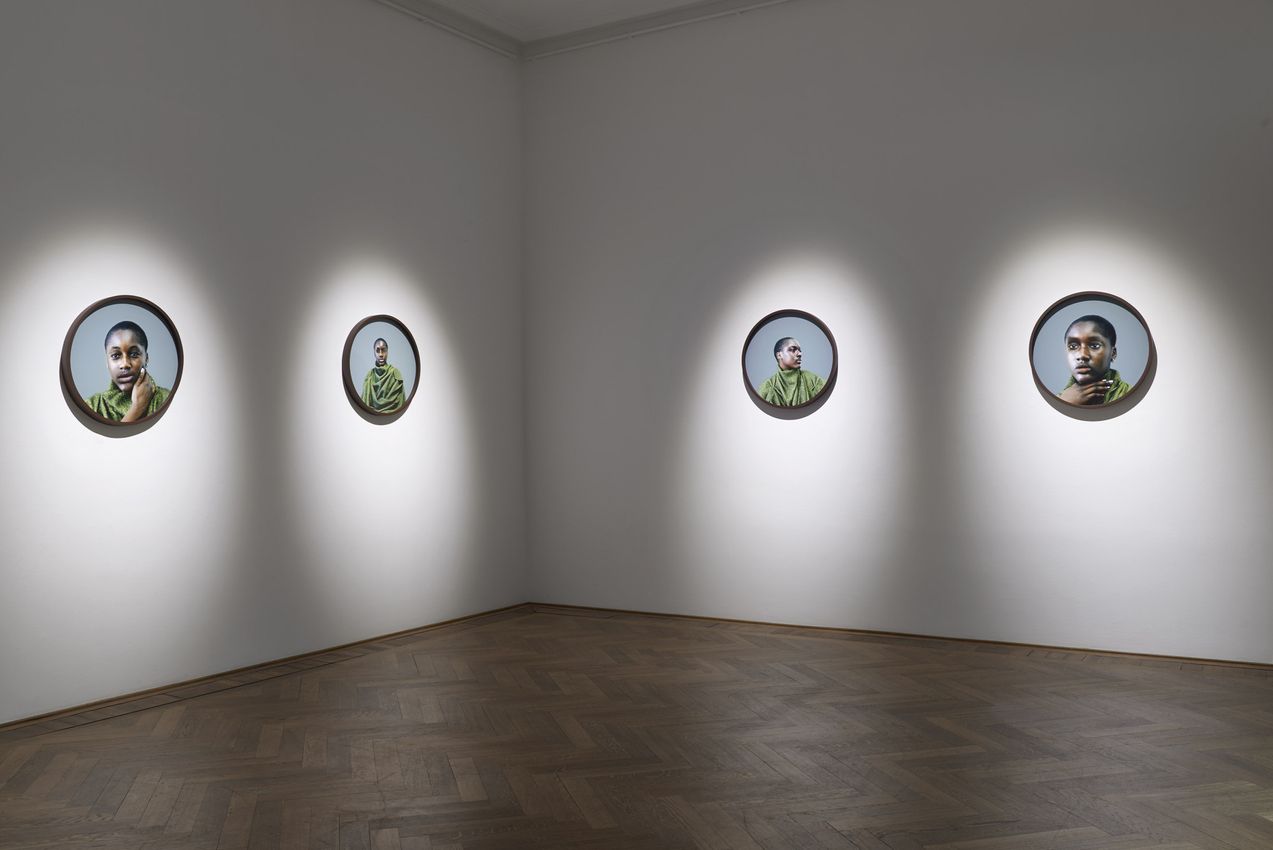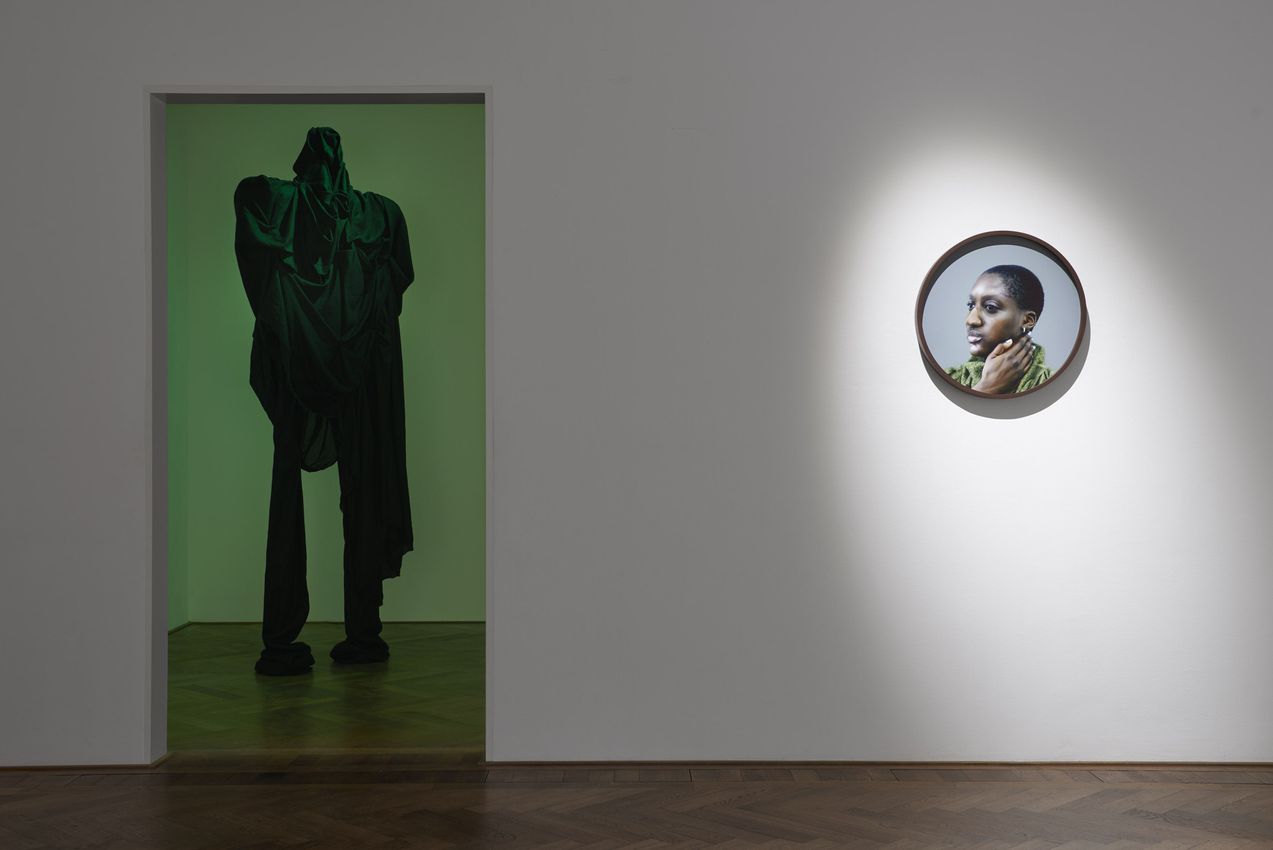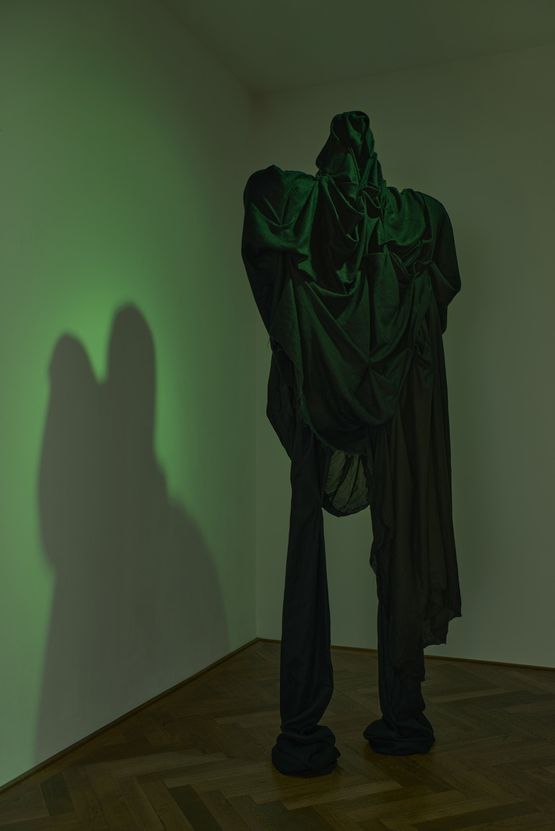
For Time as a Shield, the first institutional solo exhibition in Switzerland of Sandra Mujinga (*1989), the artist presents a new, atmospherically dense installation specifically designed for Kunsthalle Basel. Mujinga has developed a practice that deploys sound, ambiences, and imposing sculptures to often unsettling effect. Central to her new installation is a choir of ghostly figures and a series of photographs that confront issues of the body, technology, surveillance, and survival.
The exhibition is generously supported by François Gutzwiller, and by the Office for Contemporary Art Norway, with additional support from the Rudolf Augstein Stiftung and the Ernst und Olga Gubler-Hablützel Stiftung.
In the middle of a forest, trees stand as ancient witnesses, their branches offering sanctuary to myriad creatures. These silent observers weave themselves into the intricate tapestry of life, forging symbiotic bonds that transform them into living resonators. As one steps into this realm, the initial hush gives way to the vivid presence of birdsong—a testament to the deep bond between trees and their companions. This symbiosis is not merely functional but protective; it creates a community where safety, refuge, and nurture coexist.
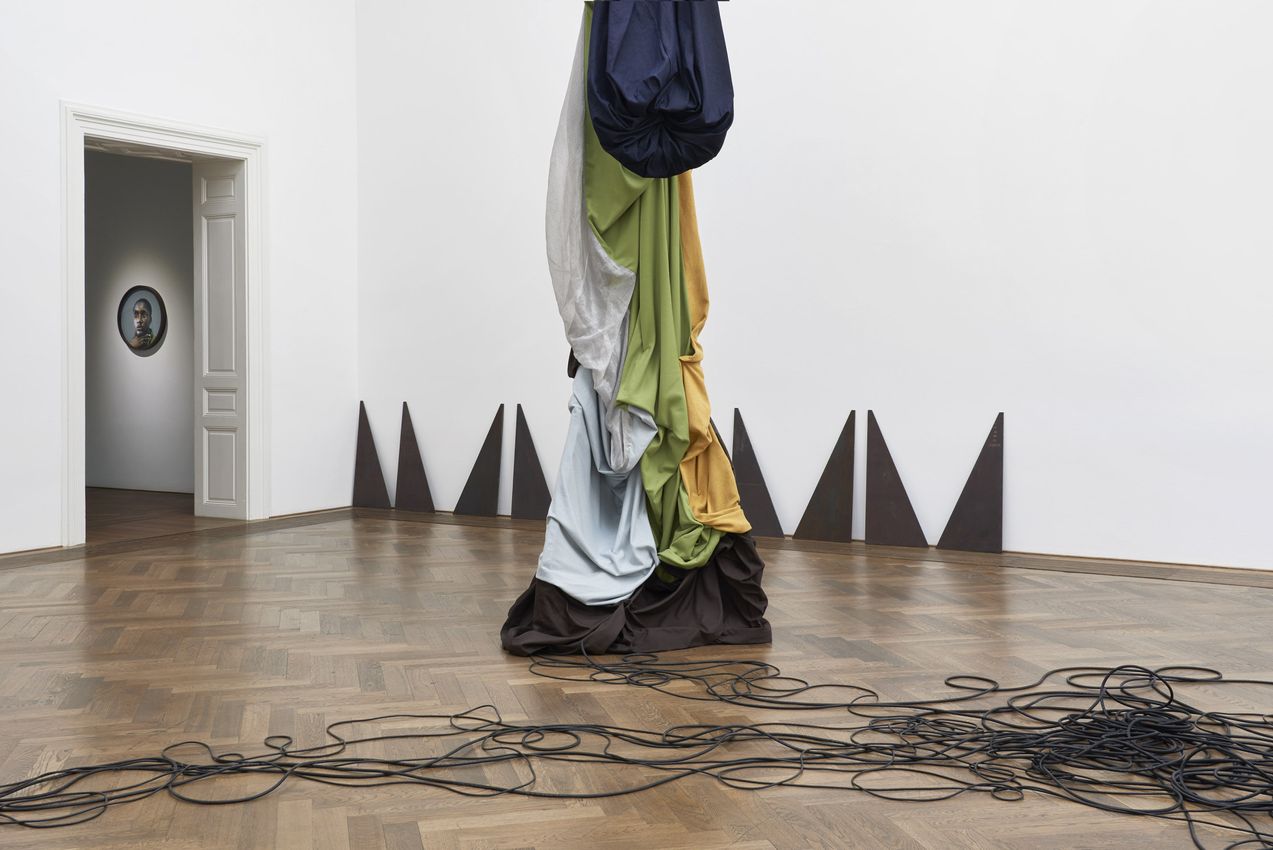
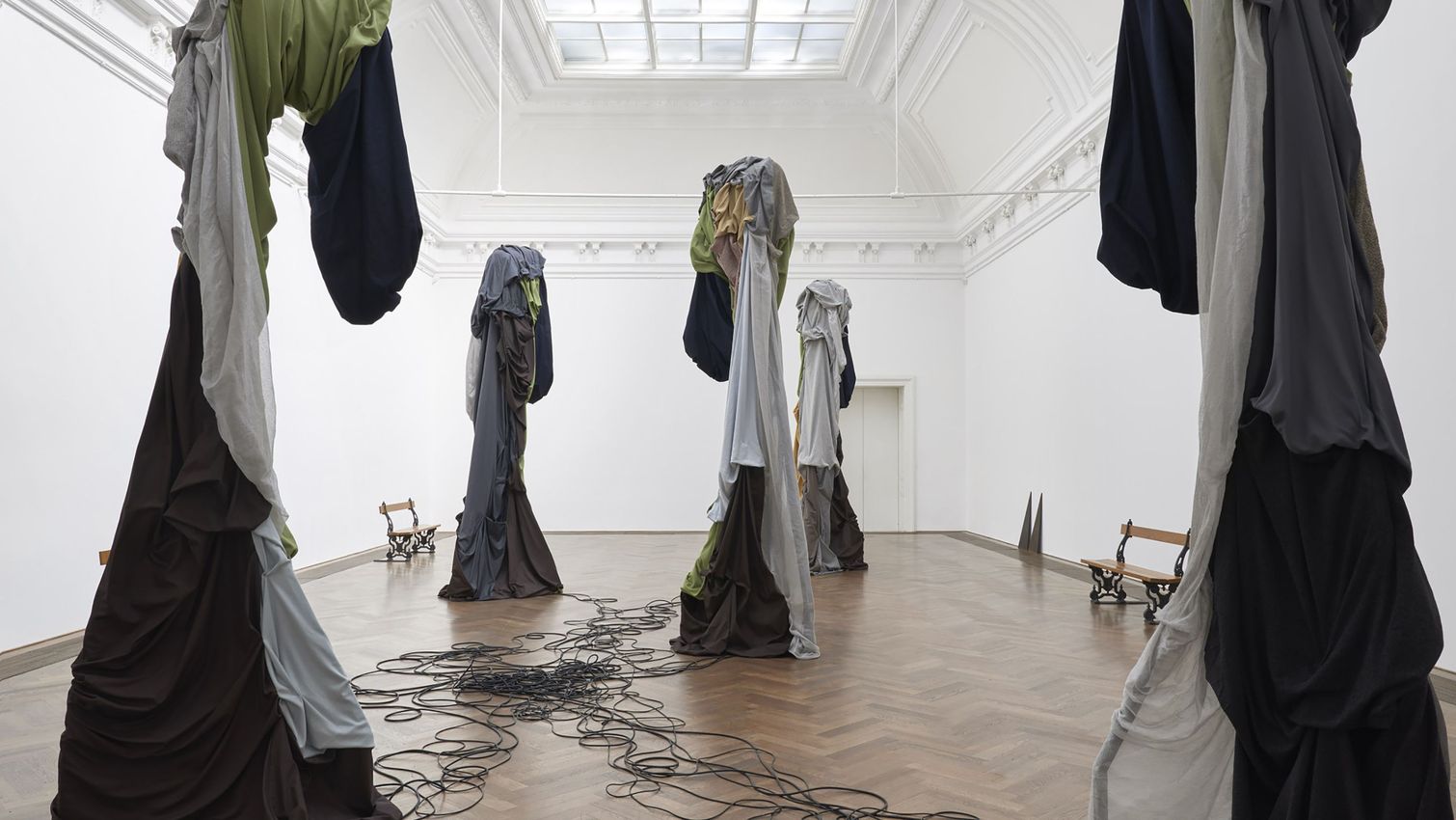
In Time as a Shield, Sandra Mujinga’s first solo exhibition in Switzerland, this natural liaison f inds a powerful echo in a forest of human creation. Here, time, like an invisible thread, weaves past, present, and future into a tapestry of resilience. In an enigmatic landscape of monumental, tree-like sculptures draped in textiles, time becomes both a protector and a witness. These towering figures, with heavy branches encircling their trunks and multiple roots extending across the room, embody an existence, positioned on the threshold between nature and technology. In their arrangement rela- tive to one another, the sculptures suggest safety, hospitality, but also confrontation.
The formation is encircled by the work series Ghost Forest 1–7, 2024, cast on the walls like shadows or spectral traces of trees. In this way, the series points the way to other areas of the exhibition, but also allows a glimpse beyond the physical boundaries of the gallery space, facilitating the perception of an invisible yet present dimension of past times. Inspired by subtle remnants of the past—archaeological imprints and the other-worldly presence of ghost forests—they emphasize that time leaves its mark on all things. Thus, they remind us that every being, every structure, and every landscape leaves behind an echo that continuously shapes and defines our world.
Central to Mujinga’s exhibition at Kunsthalle Basel is her deep engagement with the concept of bearing witness as an act of resilience. How can accumulated experiences form a protective shield that enhances resistance? In many societies, elders serve as living libraries, preserving and transmitting histories and traditions through storytelling and communal ex- change. This process of sharing experiences across generations continuously shapes collective memory. In the first room, Mujinga’s “singing trees” exemplify this concept, emitting singing of a choir from their crowns. Filling the gallery space with various voices, tones, and pauses creates an immersive interplay of shared memories. These voices, which can sometimes synchronize arbitrarily, evoke communication among the trees as witnesses to historical transformations as well as to the echoes of climate change and conflicts.
New technologies have enabled the development of flawless, synthetic voices that can replicate human and posthuman sounds with precision.
➔ Exhibition text (PDF)

Sandra Mujinga’s multidisciplinary practice is driven by a profound interest in the body – and its absence. In her uncanny installations, ghostly hooded figures, sculptures resembling flayed skins, and fantastical hybrid creatures are made instruments of observation.
Dynamic, experimental, rigorous, open-minded, and accessible, Kunsthalle Basel is a place for audacious art and exhibitions by emerging artists. Established in 1872 by the Basler Kunstverein (Basel Art Association), Kunsthalle Basel is world renowned for engaging with pioneering practices in contemporary art.

A respected voice in contemporary art discourse.
Focusing on ambitious storytelling and insightful art-world commentary. Ocula Magazine publishes in-depth interviews, critical essays and timely analysis on the artists, exhibitions and ideas driving the global art world.
Learn more about Ocula Magazine
Showcasing the best of the art world.
Ocula partners with galleries from around the world to highlight their artists, artworks and exhibitions. Gallery membership is by application and invitation, with each member vetted by an independent panel.
Learn more about Ocula Membership

Specialises in the sale of major artworks.
Led by a team with deep ties to the world’s leading auction houses, galleries and collectors. Ocula’s advisory team offers bespoke services to high-net-worth clients from around the world who are looking to acquire the best of contemporary and modern art.
Learn more about our team and services