





Museo Experimental El Eco
Mexico City Learn more about what's on at Museo Experimental El Eco and the artists shaping its programme.A landmark experimental art space in Mexico City, El Eco merges pioneering emotional architecture with contemporary artistic practice.
Overview
Museo Experimental El Eco is a contemporary art museum in Mexico City, Mexico, located in the San Rafael neighbourhood of Cuauhtémoc. Housed in a seminal modernist structure designed by German-born sculptor and architect Mathias Goeritz in 1952–53, El Eco stands as one of the most significant architectural achievements of twentieth-century Mexico and a paradigmatic model for museum design that prioritizes emotional and sensory experience over functionalism.
Goeritz conceived the building as a ‘penetrable sculpture’—a spatial manifesto against European Functionalist design. His 1954 manifesto on ‘Emotional Architecture’ outlined a radical philosophy: architecture should stimulate creativity and psychological response rather than serve purely utilitarian purposes. The structure opened on September 7, 1953, featuring monumental works by Henry Moore and Carlos Mérida, alongside Goeritz’s sculptural installation The Serpent in the central patio. Though it closed within a year, the building subsequently hosted diverse cultural events—functioning as a restaurant, nightclub, theatre, and political meeting space—before the Universidad Nacional Autónoma de México (UNAM) acquired it in 2004. Following careful restoration, El Eco reopened in 2005 as an experimental art institution committed to spatial investigation and interdisciplinary artistic discourse.
Art and Exhibitions
El Eco’s exhibition programme emphasises experimental and contemporary artistic practice across multiple media, with particular attention to works that engage directly with the architecture’s phenomenological qualities. The museum’s curation draws connections between Mexican and international contemporary art, creating platforms for emerging and established artists to explore themes of spatial perception, emotional response, and cultural inquiry.
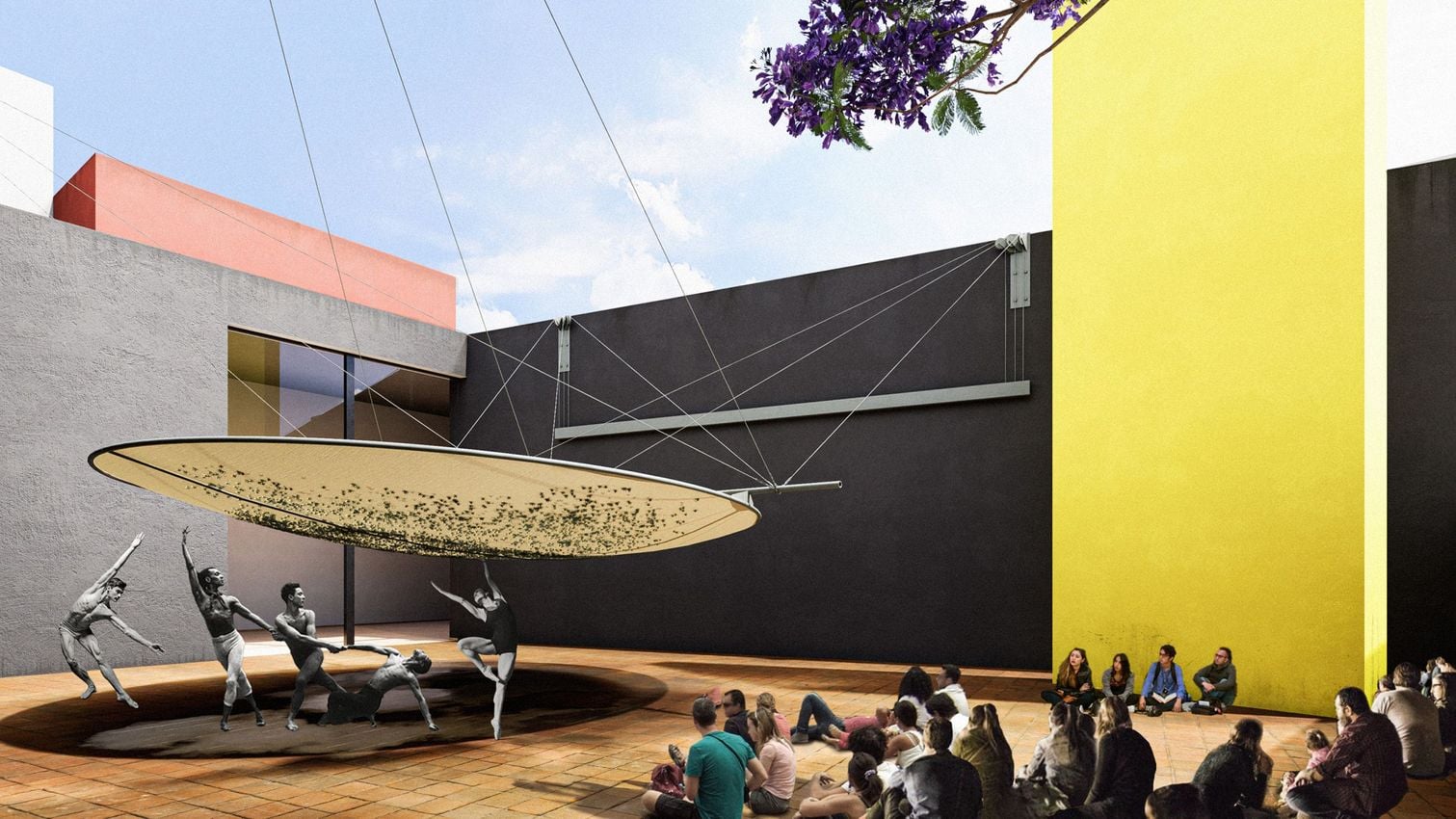
Rotating exhibitions feature solo presentations, thematic surveys, and collaborative commissions that often link local art histories to global contemporary networks. Since 2010, El Eco has hosted the annual Pabellón Eco architectural intervention competition, inviting architects to propose temporary or permanent structures that extend Goeritz’s legacy of spatial experimentation. Recent exhibitions have featured diverse artistic voices investigating everything from phenomenology and material inquiry to socio-political intervention, consistently positioning the museum as a vital laboratory for experimental practice within Mexico City’s contemporary art landscape.
Visiting Information
Located at James Sullivan 43 in the San Rafael neighbourhood, Museo Experimental El Eco is open Tuesday through Sunday, 11 AM to 6 PM (closed Mondays). Admission is free. The building prioritizes accessible design; while the original 1952 structure presents some physical challenges typical of mid-century architecture, the UNAM-managed site continues to improve accessibility. For current exhibition details, opening hours, and information on public programmes including curator talks and artist events, visit the official website at eleco.unam.mx. The museum is easily reached via public transport or ride-sharing services from central Mexico City.
Museo Experimental El Eco FAQs
What makes Museo Experimental El Eco a key contemporary art institution in Mexico City?
El Eco is uniquely significant as both an iconic modernist building and a living experimental art space. Its architecture—designed by Mathias Goeritz as a critique of functionalism—remains internationally influential in museum and phenomenological design. As a UNAM-managed institution, it anchors Mexico City’s contemporary art ecology by fostering interdisciplinary artistic research and providing curatorial platforms for emerging Mexican and international artists exploring spatial and perceptual practice.
What kind of art and exhibitions are at Museo Experimental El Eco?
El Eco presents contemporary art across media—sculpture, installation, painting, video, and performance—with curatorial emphasis on works engaging spatial experience and emotional response. Exhibitions range from solo artist presentations to thematic surveys and architectural interventions. The annual Pabellón Eco competition invites architectural proposals, linking Goeritz’s legacy to current experimental design practices. Programming connects local artistic inquiry to international contemporary discourse.
What are Museo Experimental El Eco’s opening hours?
The museum operates Tuesday through Sunday, 11 AM to 6 PM, and is closed Mondays. Extended hours may apply during special events or exhibitions. Visitors should verify current hours on the official website or contact the museum directly, as schedules may change seasonally or for major cultural events in Mexico City.
How do I get Museo Experimental El Eco tickets?
Admission is free. No advance booking is required for individual visits, though group visits and curator-led tours should be arranged in advance through the museum’s website or by contacting the institution directly. The museum is easily accessible by public transport (metro and bus) or by taxi and ride-sharing services from central Mexico City locations.
Does Museo Experimental El Eco offer tours or public programmes?
Yes. El Eco regularly offers curator-led tours, artist talks, and educational events aligned with current exhibitions. Public programmes often explore the intersection of architecture, phenomenology, and contemporary artistic practice. Visitors should consult the museum’s website or social media for detailed schedules of tours, lectures, and special events accompanying exhibitions.


More Mexico City Museums and Galleries



A respected voice in contemporary art discourse.
Focusing on ambitious storytelling and insightful art-world commentary. Ocula Magazine publishes in-depth interviews, critical essays and timely analysis on the artists, exhibitions and ideas driving the global art world.
Learn more about Ocula Magazine
Showcasing the best of the art world.
Ocula partners with galleries from around the world to highlight their artists, artworks and exhibitions. Gallery membership is by application and invitation, with each member vetted by an independent panel.
Learn more about Ocula Membership
Specialises in the sale of major artworks.
Led by a team with deep ties to the world’s leading auction houses, galleries and collectors. Ocula’s advisory team offers bespoke services to high-net-worth clients from around the world who are looking to acquire the best of contemporary and modern art.
Learn more about our team and services